Understanding OBD-II: codes, ports and live data
What OBD-II is, how to read codes, where the port is and how live data turns a guess into a diagnosis.
What OBD-II is
On-Board Diagnostics II is the standardized system fitted to cars since 1996. The engine computer monitors hundreds of sensors and stores a diagnostic trouble code when something is outside the expected range.
How to read a code
Codes are five characters. The first letter identifies the system: P powertrain, C chassis, B body, U network. The remaining digits narrow it down — P03xx are misfires, P0171 is "too lean", P0420 is catalyst efficiency.
Where the port is
Usually under the dashboard, driver’s side — near the steering column, fuse box or hood release. It is a grey or black trapezoid with 16 pins. Any OBD-II reader, or the free AutoTools live scanner with a BLE adapter, plugs in.
Codes vs live data
A code is a symptom, not a verdict. Live data — fuel trims, RPM, coolant temperature, oxygen sensor switching — tells you what is really happening. A code plus live data is how professionals diagnose without guessing.
Questions about this article
Related articles

Best Multimeters for Automotive Diagnostics in 2026
Discover the best multimeters for automotive diagnostics in 2026. From budget picks to professional-grade tools, learn which features matter and how to choose the right meter for your garage.
Read the article →
Top 10 Must-Have Car Diagnostic Tools in 2026
Discover the 10 best car diagnostic tools for 2026 — from Bluetooth OBD2 scanners to professional bi-directional tablets. Learn which tool matches your budget and skill level, and stop guessing when your check engine light appears.
Read the article →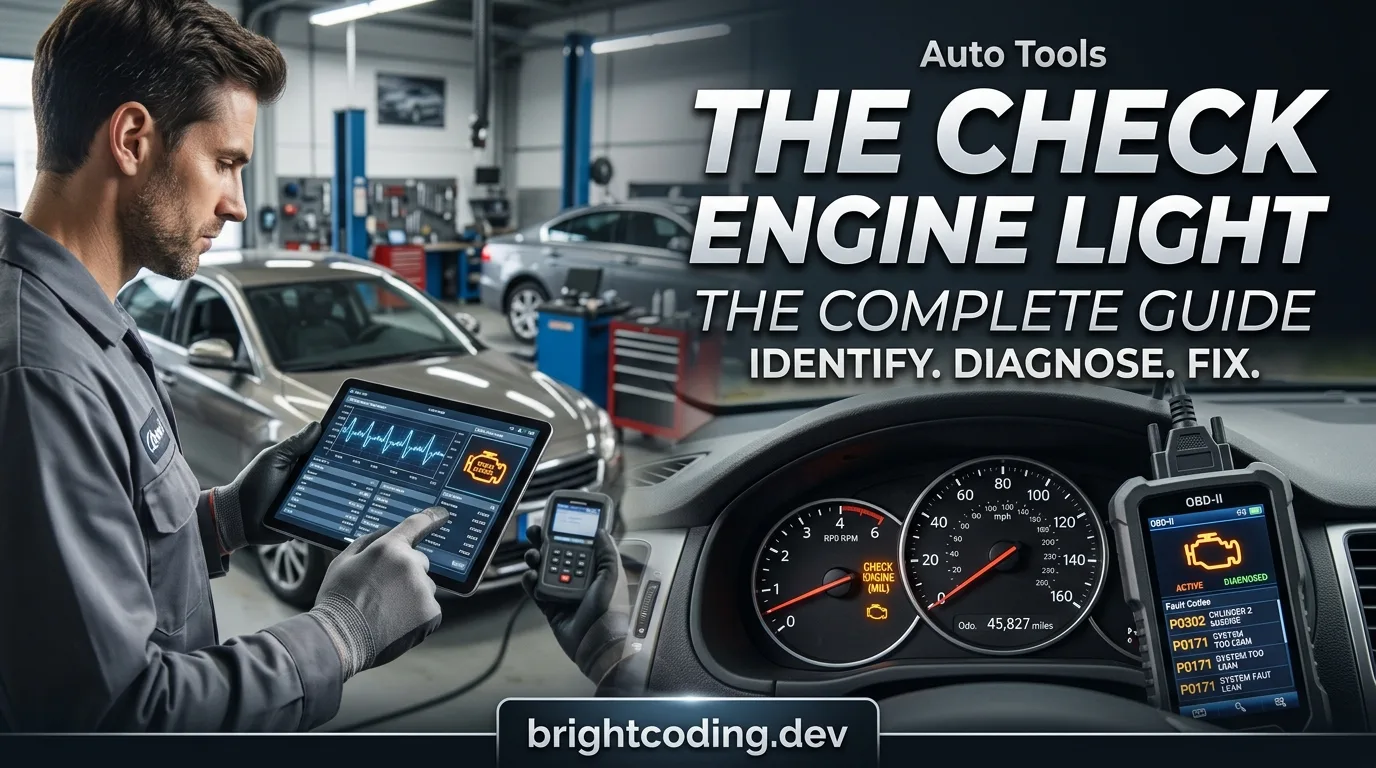
The check engine light: the complete guide
What the check engine light means, what to do first, how to read codes and what each common code says — the complete walkthrough.
Read the article →
10 Gasoline Engine Maintenance Tips to Make Your Car Last Longer
Your engine doesn't die suddenly. It dies by a thousand small neglects, most of them cheap to fix and easy to postpone. This is the short list of habits that quietly add years to a gasoline engine, and the mistakes that quietly take them away.
Read the article →
Petrol vs Diesel: Which Engine Is Cheaper to Maintain?
You are standing in a dealer lot or scrolling through listings, and the same question keeps surfacing: petrol or diesel? The sticker price is only half the story. What you actually pay over five or seven years depends on servicing, parts, fuel, and how the car is driven. That is where the petrol vs…
Read the article →
Petrol vs Diesel Engine: Which One Is Really Better in 2026?
Buying a car in 2026 means you cannot dodge the petrol versus diesel question, especially if you are shopping used or looking at a nearly-new car that still has a combustion engine under the hood. Read this and you will know how to match the engine to your actual driving, work out what the fuel and…
Read the article →