Carburetor vs. Fuel Injection: Which System Is Better?
You already know the short answer: fuel injection wins on paper. It has won in showrooms for decades, and there is no serious argument left about which system meters fuel more precisely. So why does the question still come up in the bay every week?
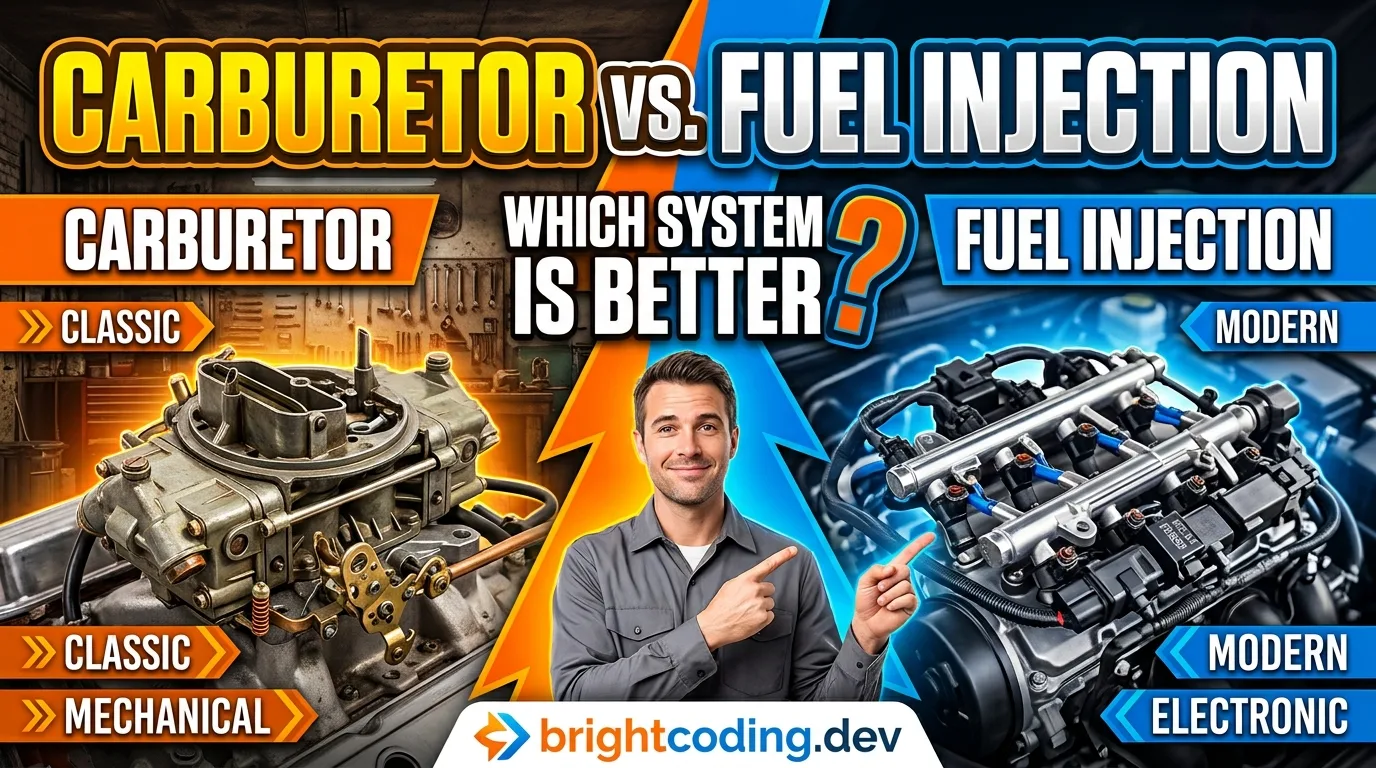
You already know the short answer: fuel injection wins on paper. It has won in showrooms for decades, and there is no serious argument left about which system meters fuel more precisely. So why does the question still come up in the bay every week?
Because "better" depends on what you are actually doing. If you are diagnosing a rough idle on a 1972 small block, the answer is not the same as if you are quoting a daily driver who wants 200,000 trouble-free miles. Cost, longevity, safety, and how much of the work lands on your shoulders all pull in different directions. Let's break it down the way you'd actually talk it through with a customer.
Fuel Injection: the system that does the math for you
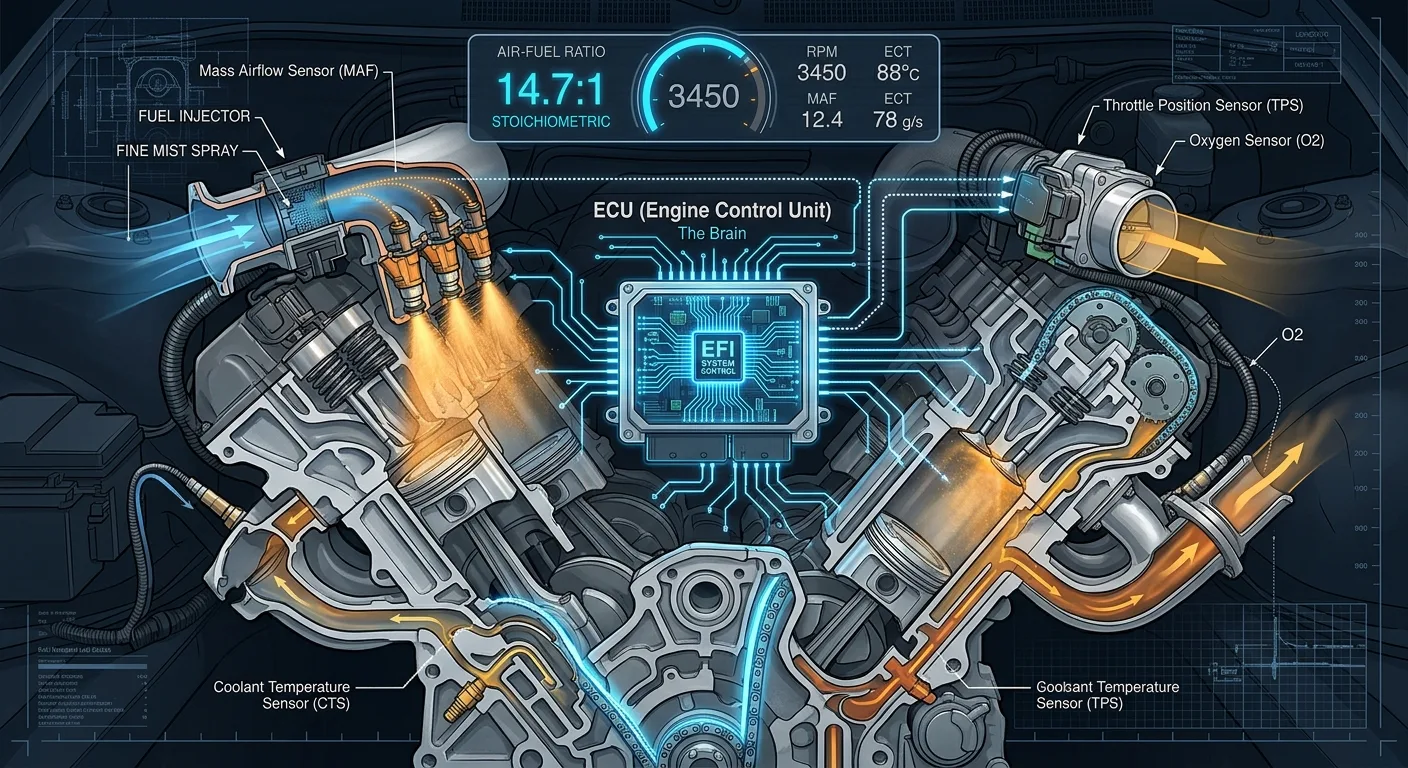
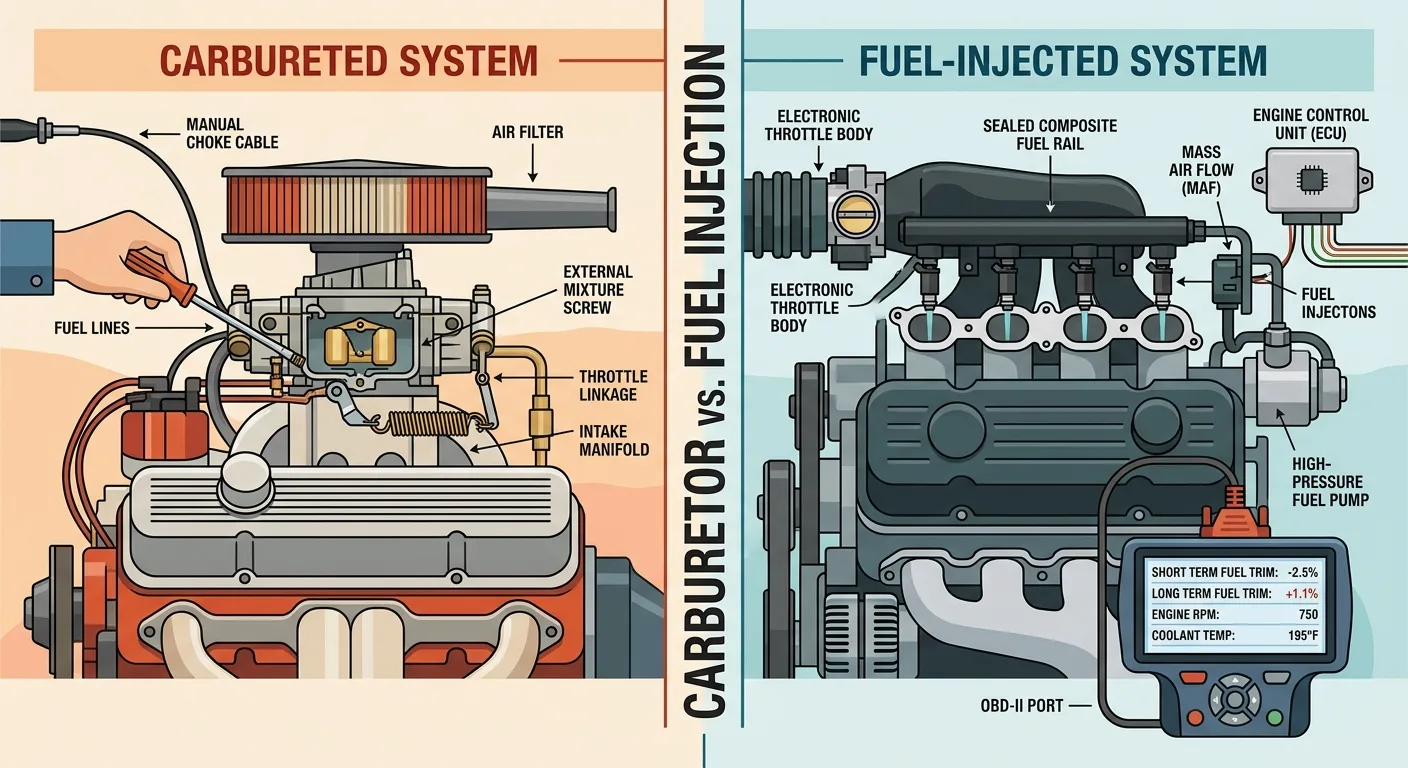
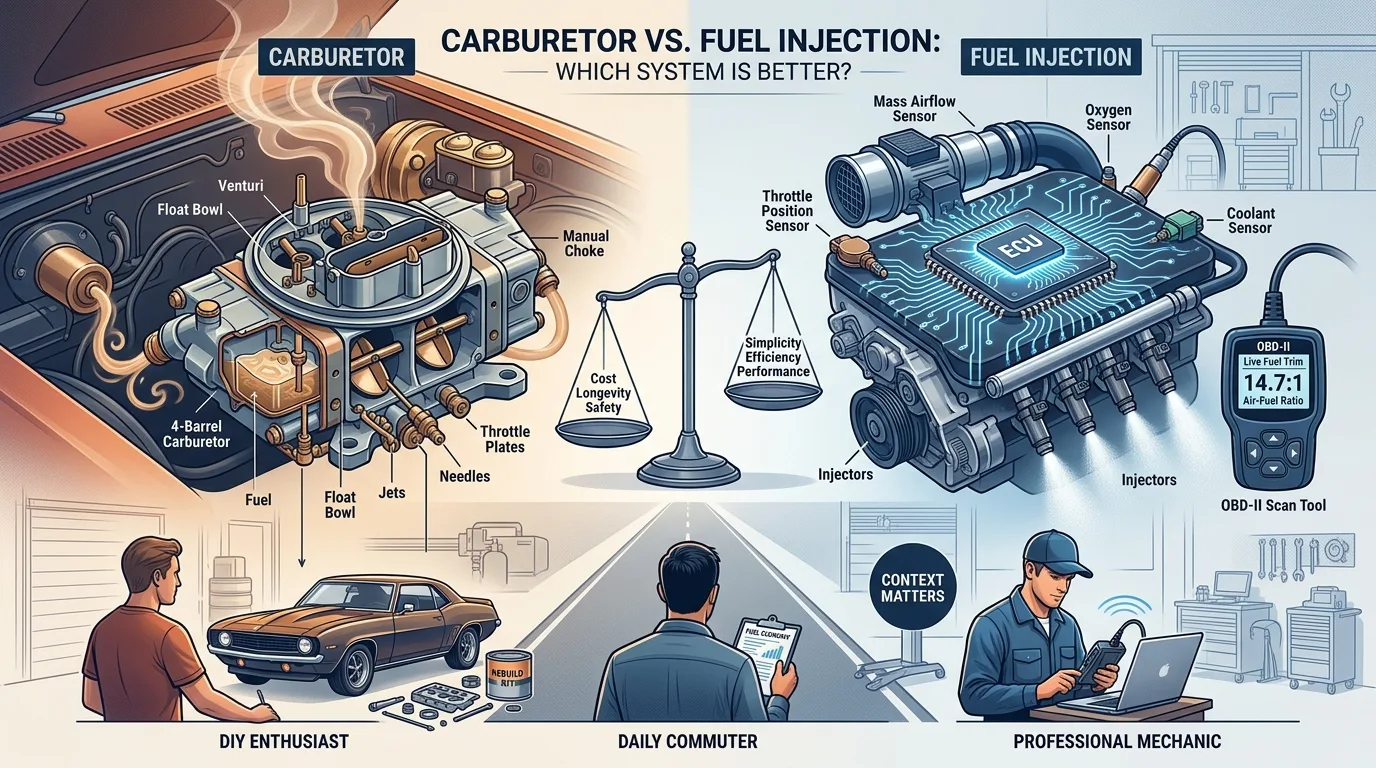
Modern EFI (electronic fuel injection) uses sensors and an ECU to deliver fuel based on real conditions: air mass, throttle position, coolant temp, oxygen content in the exhaust. The result is a stoichiometric air-fuel ratio that holds steady whether it's 10°F outside or the engine is heat-soaked in traffic.
Where it shines:
- Cold starts and drivability. No choke to fiddle with, no flooding, no feathering the pedal for two minutes. The ECU just handles it.
- Fuel economy and emissions. Precise metering means less wasted fuel. This is why every new car passes emissions without a technician babysitting it.
- Longevity of the engine itself. Better ratio control means less fuel dilution in the oil and less cylinder wash-down over time. A well-maintained injected engine routinely sees 200,000+ miles.
- Diagnostics. This is the big one for you. A fuel injection fault usually sets a DTC. Run the code, and you have a direction instead of a guess. You can look up the code here and often get a specific circuit or sensor to test rather than chasing a symptom.
Where it bites:
- Parts cost. A single injector can run $50-$150 depending on the application, and a set of eight adds up fast. A high-pressure fuel pump on a direct-injection engine can be $400-$1,200 or more, installed.
- Complexity. You need a scan tool, sometimes a scope, and the ability to read live data. A no-start can be a sensor, a wiring fault, a pump, or the ECU itself. That's a lot of branches before you turn a wrench.
- Not DIY-friendly for the average owner. You can swap a fuel filter. Diagnosing a P0171 lean condition across four possible causes is a different skill set.
For the shop, EFI is where the money and the repeat business live. For the DIY owner without scan tools, it can be frustrating.
Carburetor: simple, cheap, and honest about its limits
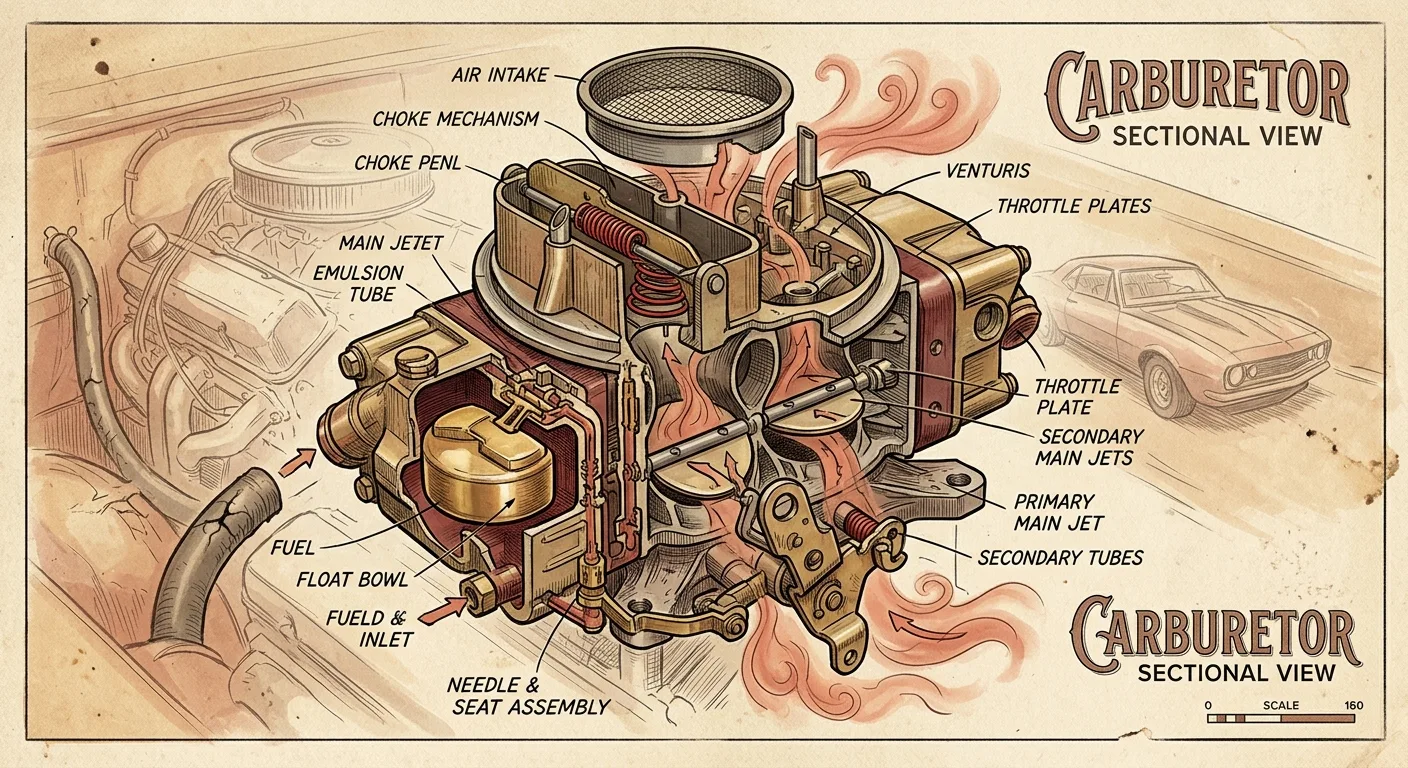
A carburetor is a mechanical metering device. Fuel is drawn through a venturi by airflow, and jets and needles set the ratio. No computer, no sensors, no wiring harness to chase. That simplicity is real, and it has real advantages.
Where it shines:
- Cost. A rebuilt or remanufactured carburetor is often $150-$400. A rebuild kit is $25-$60. Compare that to an injector set and it's not close.
- Serviceability. You can rebuild a carb on a bench with basic hand tools and a clean work surface. No scan tool required.
- No electronics to fail. No sensors to go bad, no ECU to brick, no harness chafe. If it runs badly, it's usually fuel, air, or a vacuum leak, and you can often hear or smell the problem.
- Great for restorations and vintage builds. If the car came with one, keeping it preserves originality and value.
Where it bites:
- Cold starts and warm-up. Chokes work, but they need to be set right, and they drift with temperature and wear. Flooding is a real risk if the float level is off.
- Fuel economy and emissions. A carb runs rich at cold start and can't adapt to altitude or load the way EFI does. It will not pass modern emissions standards.
- Drivability compromises. Flat spots, hesitation, and idle quality that changes with the weather are normal, not defects.
- Longevity of the engine. Chronic rich running dilutes oil and washes cylinder walls over years. That's not an instant failure, but it shortens engine life.
For the DIY owner with a classic, a carb is manageable and cheap. For a daily commuter, it's a step backward.
The criteria that actually decide it
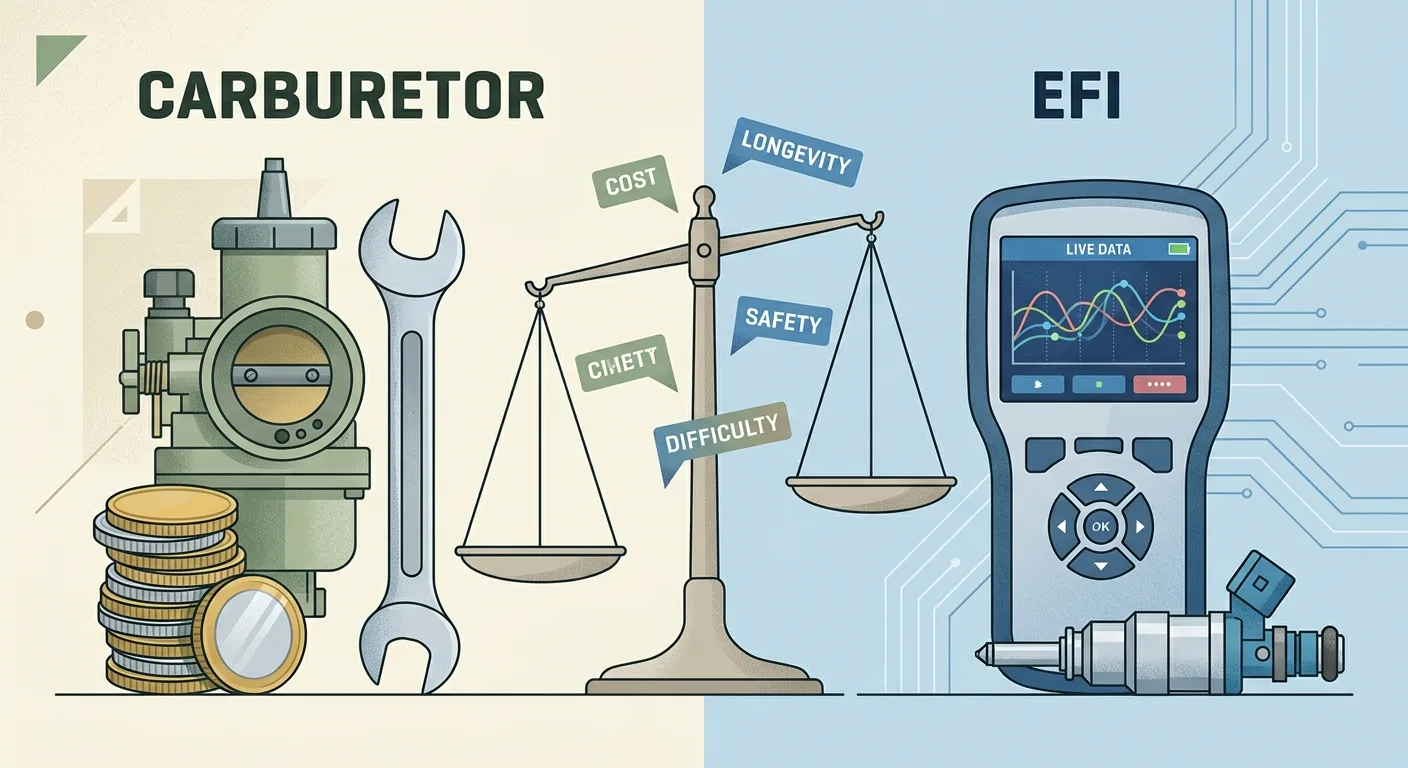
Cost. On parts alone, carb wins clearly. On total cost of ownership over 150,000 miles, EFI usually wins because of fuel savings and fewer engine-related repairs. Rough numbers: EFI repairs are front-loaded and expensive per event, carb repairs are cheap and frequent.
Longevity. EFI engines generally last longer because the fuel ratio stays correct. A carb engine can last just as long if the owner keeps it tuned, but that's a maintenance commitment, not a given.
Safety. EFI is safer. Carbureted systems have a fuel bowl under pressure and are more prone to vapor lock, flooding, and fuel spillage during service. Neither is dangerous when maintained, but EFI has fewer failure modes that dump raw fuel.
Difficulty. Carb is easier to understand and rebuild. EFI is easier to diagnose if you have the tools, and maddening if you don't. That asymmetry matters. For EFI work, live data is your friend; the OBD live-data tool lets you watch fuel trims and sensor behavior in real time instead of guessing.
Side-by-side comparison
| Criteria | Carburetor | Fuel Injection |
|---|---|---|
| Typical parts cost (approx.) | $150-$400 rebuilt; $25-$60 kit | $50-$150 per injector; $400-$1,200+ for some pumps |
| Cold start behavior | Needs choke, can flood | Handled automatically |
| Fuel economy | Lower, especially cold | Higher, adaptive |
| Emissions | Usually fails modern standards | Meets standards when healthy |
| Diagnostics | Mechanical, no scan tool | Needs scan tool and live data |
| DIY friendliness | High for rebuilds | Low to moderate |
| Engine longevity | Good with regular tuning | Good without babysitting |
| Best fit | Classics, budget builds, restorations | Daily drivers, modern vehicles, high-mileage use |
Which one should you choose?
There is no single right answer, so match it to the person and the car.

The DIY owner with a classic. Stay with the carb if it's original and you enjoy tuning it. A rebuild kit and a vacuum gauge go a long way. If you want modern drivability without an engine swap, an aftermarket EFI kit exists, but budget $1,000-$2,500 and expect a learning curve.
The daily commuter. Fuel injection, no question. The cold-start reliability, fuel economy, and emissions compliance matter every single day.
The high-mileage driver. EFI again. It protects the engine from fuel dilution and holds its tune for the long haul. Keep up with injector cleaning and fuel filter changes.
The shop. You need to be fluent in both, but your bread and butter is EFI diagnostics. Invest in a good scan tool and learn to read fuel trims. When a car comes in with a drivability complaint, work the car symptom finder to narrow it down before you open the hood, then verify with live data.
If you are mid-diagnosis and stuck, the AI mechanic assistant can help you think through a stubborn fuel-delivery problem, and the step-by-step guides cover the rebuild and testing procedures in detail.
FAQ
Can I convert a carbureted car to fuel injection? Yes, and aftermarket kits make it practical. Expect $1,000-$2,500 in parts plus labor if you don't do it yourself. You'll need a fuel system upgrade, a return line, and some wiring. It's a weekend project for a competent DIYer, not an afternoon one.
Is a carburetor cheaper to maintain? Per repair, yes. Over years, the fuel savings and reduced engine wear from EFI often offset the higher parts cost. It depends how many miles you drive.
Why did manufacturers switch to fuel injection? Emissions regulations and fuel economy. EFI meters fuel precisely enough to meet standards that a carb simply cannot hit consistently.
Do carbureted engines last as long as fuel-injected ones? They can, if the owner keeps them tuned and doesn't run rich. Left alone, a carb tends to run rich over time, which shortens engine life.
Can I diagnose a fuel injection problem without a scan tool? Sometimes, but you'll be guessing. Fuel trims and sensor data tell you where to look. Without them, you're replacing parts and hoping.
The takeaway

Fuel injection is the better system by every objective measure that matters for a modern car: economy, emissions, drivability, and engine longevity. It's also harder to diagnose without the right tools. Carburetors are cheaper, simpler, and genuinely satisfying to work on, but they can't compete on efficiency or cold-start behavior.
Pick based on the car and the owner, not on nostalgia or a spec sheet. And whatever you're working on, keep your diagnostic tools sharp and your fuel trims honest.
Related articles

How to Parallel Park Like a Pro: Simple Tricks That Work
Parallel parking is the one driving skill most people never really learn. They pass the test, then spend the next twenty years circling the block for a spot they can just pull into. That ends today.
Read the article →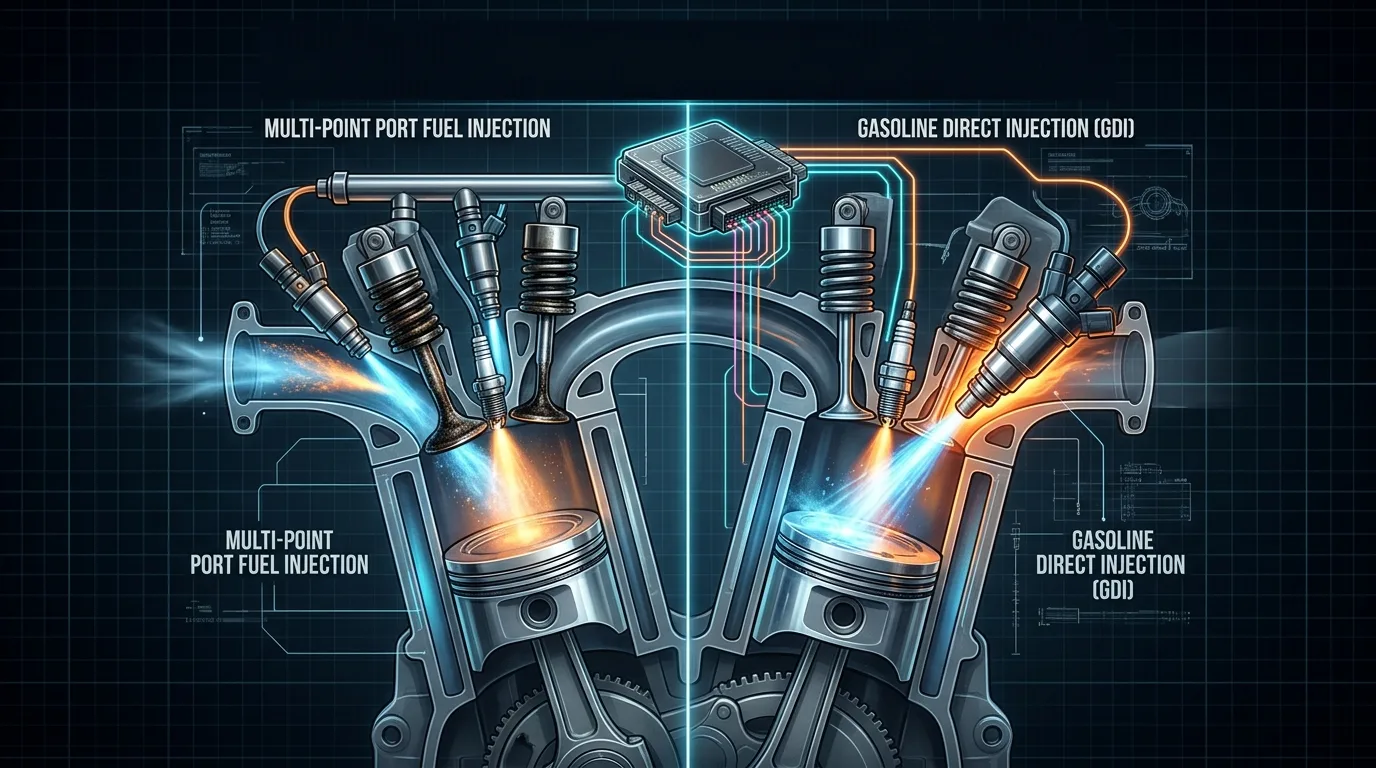
Gasoline Fuel Injection Systems Explained: The No-BS Guide to MPI, GDI, PFI, and Everything In Between
Confused by MPI, GDI, PFI, and dual injection? You’re not alone. no-BS guide breaks down every gasoline fuel injection system in plain English how they work, where they spray, and which one is best for your car. Learn real differences, common symptoms, and maintenance tips without textbook jargon.
Read the article →
How to Keep Your Car Safe When Parking Overnight
Most cars are stolen at night, and most of those thefts are crimes of opportunity, not master criminals outsmarting an alarm. A door left unlocked, a key fob hanging by the front door, a bag visible on the passenger seat: that is what gets a car taken.
Read the article →
What Thieves Look for Before Breaking Into a Car
Most car thefts are not spontaneous. A thief walks or drives past your car first, checks a short list of easy signals, and decides in seconds whether it is worth the risk. This article breaks down what that list looks like, why certain cars get picked over others, and the practical steps that actua…
Read the article →
25 Amazing Car Features Hidden in Plain Sight That Will Surprise You
Most cars carry a stack of clever features the owner never touches. The manual is 400 pages, nobody reads it, and the salesperson only had twenty minutes. This guide walks you through 25 of those features, one at a time, with what to do, why it matters and a tip that saves you the trial and error.
Read the article →
Gasoline Engine Systems: From Carburetor to Fuel Injection
Your car either has a carburetor or fuel injection, and the difference explains a lot about how it starts, idles, and drinks gas. Maybe you just bought an old truck with a carb under the hood and you are not sure what you are looking at. Or your modern car is running rough and someone told you it i…
Read the article →