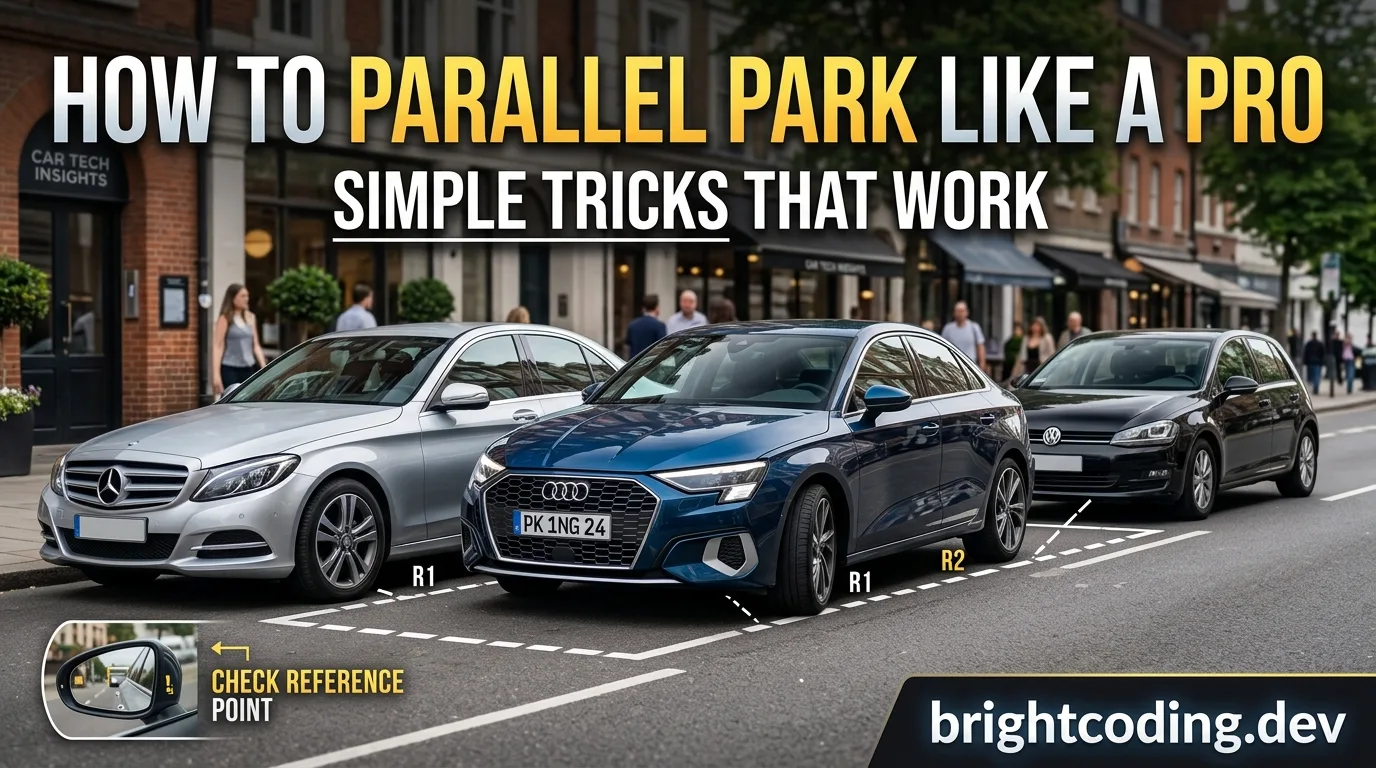
How to Parallel Park Like a Pro: Simple Tricks That Work
Parallel parking is the one driving skill most people never really learn. They pass the test, then spend the next twenty years circling the block for a spot they can just pull into. That ends today.
Parallel parking is the one driving skill most people never really learn. They pass the test, then spend the next twenty years circling the block for a spot they can just pull into. That ends today.
By the end of this guide you will be able to slot a car into a tight street space in three or four moves, know exactly when to turn the wheel, and understand why the car goes where it goes. Plan on 30 to 45 minutes of practice in a quiet spot, then a few real-world attempts. That is genuinely enough for most drivers.
One thing up front: this is a skill of reference points, not magic. Once you find your car's reference points, you can park it the same way every time.
What you need before you start
Honestly, very little. This is a technique problem, not a tool problem.
- Your own car, with working mirrors and a rear window you can actually see out of
- A quiet street or empty parking lot with cones, bins, or two parked cars you can use as guides
- A friend or passenger to spot for you at first (optional but useful)
- Chalk or tape to mark reference points on the ground while you practice
- A phone mount if you want to record yourself and review the angles afterward
If your car has a reversing camera or parking sensors, great, use them. But treat them as a second opinion, not the primary source. Cameras distort distance badly at the edges, and sensors miss thin poles. Your mirrors and your eyes still do the real work.
Step 1: Pick a space that actually fits
Drive past the space and look at it properly before you commit. You want a gap roughly one and a half times the length of your car to park comfortably as a beginner. A confident driver can do it in less, but you are not there yet and that is fine.
Check for the boring stuff: fire hydrants, driveways, yellow lines, and whether the cars in front and behind are parked legally and evenly. A car parked half on the curb will throw off your reference points.
Why it matters: Most failed parking attempts are failed space choices. If the gap is too small, no technique will save you.
Tip: If you are unsure whether the space fits, it probably does not. Circle the block. A 30 second detour beats a 5 minute embarrassment.
Step 2: Pull alongside the car in front
Signal, then pull up parallel to the car ahead of the space, close but not touching, roughly 60 to 90 cm (2 to 3 feet) away. Your rear bumper should line up with theirs, or slightly past it.
This alignment is the foundation of everything that follows. Get it wrong and every later step fights you.
Why it matters: Your starting position sets the whole arc. Lining up properly means your turn-in point is predictable.
Tip: Use a fixed reference on your own car, like the middle of your rear window or a point on your door, and check it against the other car's bumper every time. Same reference, same result.
Step 3: Reverse straight until you can see their rear bumper
Put the car in reverse and go straight back slowly until your car's rear bumper is level with the rear bumper of the car ahead. Stop.
Now turn the wheel hard toward the curb (the direction you want the rear of your car to go) and start backing in at a crawl.
Why it matters: The rear of the car steers the whole maneuver. Get the rear pointed at the curb early and the rest is cleanup.
Tip: Do not rush this. Idle speed, foot hovering over the brake. If you are on a slope, you need to think about your brakes and whether your parking brake holds properly before you start rolling. If the pedal feels soft or the car creeps when it should not, stop and get the brakes checked before you practice anything on a hill.
Step 4: Watch the curb in your mirrors, not your camera
As you reverse at an angle, watch the curb through your passenger side mirror (or driver's side if you are parking on the other side). The goal is to bring your rear wheel close to the curb without hitting it.
When your car reaches roughly a 45 degree angle to the curb, stop turning and straighten the wheel. Keep backing.
Why it matters: This is where most beginners scrape a wheel or bump the curb. The mirror shows you the true gap; the camera often does not.
Tip: If your car has power-folding mirrors, fold the curb-side mirror in just before you commit. It removes the temptation to use it and forces you to rely on your other references. Some drivers love this trick, some hate it. Try it once in a quiet lot.
Step 5: Straighten out and finish the job
Once your rear is in and your car is nearly parallel to the curb, turn the wheel the other way to swing the front in. Back up slowly until you are parallel, then stop.
You should now be roughly 15 to 30 cm (6 to 12 inches) from the curb. If you are further out, you are not parked, you are loitering. Adjust forward and back in small nudges.
Why it matters: A car parked too far from the curb is a hazard and a ticket magnet in many cities.
Tip: Allow a little extra room behind you if you can. It makes leaving easier and reduces the chance the car behind taps you when they leave.
Step 6: Secure the car and check your exit
Set the parking brake, put the transmission in Park (or first gear on a manual), and turn the wheels toward the curb if you are on a hill. Check local rules, because some places require wheels turned toward the curb, some away.
Before you open the door, look over your shoulder. Cyclists appear out of nowhere in exactly this moment.
Why it matters: Parking is not finished until the car is secured and you can get out safely.
Tip: If your car has an electronic parking brake, confirm it engaged. A dash warning light that will not clear is worth checking. You can pull the code with a free OBD code lookup and see whether it is something simple or a trip to a shop.
Pro tips
- Use the car ahead as your reference, not the space. Line up on its bumper and mirror, not on the painted lines. Cars are easier to see than asphalt.
- Slower than you think. If you feel like you are moving at a reasonable speed, you are too fast. Idle speed or a light brake drag is right.
- Adjust in small bites. If you are close, do not restart the whole maneuver. Nudge forward a foot, turn slightly, back up. Small corrections stack up.
- Know your car's turning circle. Every car is different. Practice in an empty lot until you can feel where your rear corners go without looking. Your owner's manual lists the turning radius if you want a number.
- Walk the space first if it is tight. Get out and look. It takes 10 seconds and prevents 90 percent of scrapes.
- Learn your car's blind spots properly. Mirrors set wrong make parking feel impossible. Most people have them angled too far inward. Set them so you barely see the side of your own car. If you want to understand what your car is actually doing mechanically while you practice, the mechanical encyclopedia is a good place to start.
Common pitfalls
Turning too early. You end up too close to the car in front and have to pull forward. Fix: line up your bumpers fully before turning.
Turning too late. You end up too far from the curb or hit it. Fix: start your turn when you can see the rear bumper of the car ahead in your mirror.
Watching the camera instead of the mirrors. Cameras warp distance at the edges. Fix: use mirrors for the curb, camera only as a backup check.
Rushing the final straighten. You clip the curb or the car behind. Fix: slow down. There is no prize for finishing fast.
Ignoring your surroundings. A pedestrian, cyclist, or scooter appears while you reverse. Fix: check all mirrors and look over your shoulder before every movement, not just the first one.
Useful resources
- The free car tools at /tools for quick calculators and reference material
- The OBD live-data tool if you want to see what your car is doing in real time while you diagnose warning lights
- The AI mechanic assistant for questions that come up while you are working on the car
- The step-by-step car guides for related maintenance tasks
- The tire size comparison tool if you are changing wheels and want to check fitment
- The car symptom finder when something feels off but you cannot name it
- Your owner's manual. Every time. It is the only source that is actually about your car.
FAQ
How long does it take to learn parallel parking? Most drivers get comfortable after 30 to 60 minutes of focused practice in a quiet spot, plus a handful of real attempts. Some take longer. That is normal.
Do I need a reversing camera? No. It helps, but drivers parked cars for a century without one. Learn the mirrors first, then use the camera as a bonus.
What if the space is smaller than one and a half car lengths? Experienced drivers can do it in tighter gaps, but as a beginner, skip it. Find a bigger space and build confidence first.
Why does my car keep hitting the curb? Usually you are turning in too late, or watching the camera instead of the mirror. Recheck your alignment with the car ahead and slow down.
Can I practice alone? Yes, but a spotter helps a lot at first. If you are alone, use cones in an empty lot and get out to check your position often.
One last thing
Parallel parking is not a talent, it is a set of reference points and a bit of patience. You will botch a few attempts. Everyone does. The drivers who look effortless just did the reps. Go find an empty lot this week and put in 20 minutes. That is all it takes to stop dreading the tight spot.
Ready to act on what you just read? Decode that warning light with the free OBD code lookup, run the matching car tools to check the numbers yourself, or browse more practical car articles for ideas.
Related articles

Carburetor vs. Fuel Injection: Which System Is Better?
You already know the short answer: fuel injection wins on paper. It has won in showrooms for decades, and there is no serious argument left about which system meters fuel more precisely. So why does the question still come up in the bay every week?
Read the article →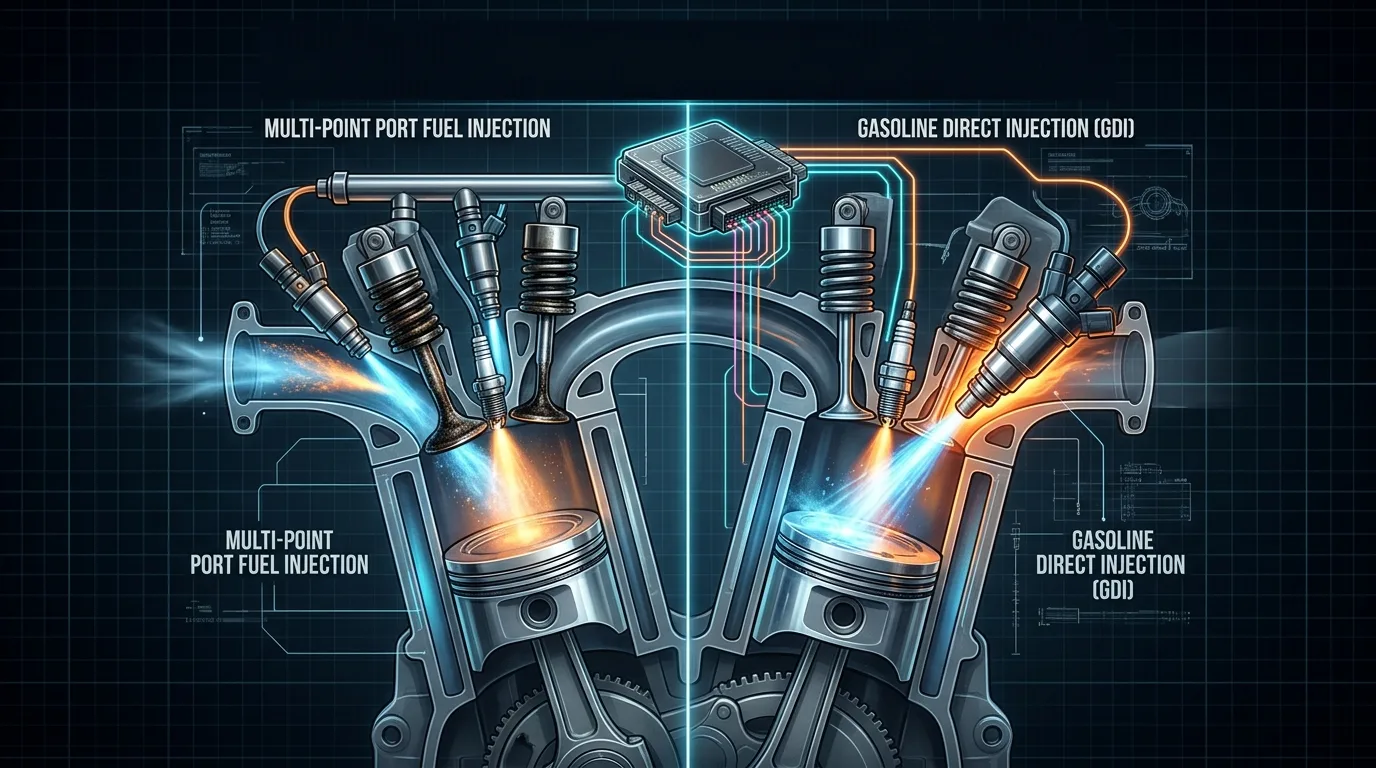
Gasoline Fuel Injection Systems Explained: The No-BS Guide to MPI, GDI, PFI, and Everything In Between
Confused by MPI, GDI, PFI, and dual injection? You’re not alone. no-BS guide breaks down every gasoline fuel injection system in plain English how they work, where they spray, and which one is best for your car. Learn real differences, common symptoms, and maintenance tips without textbook jargon.
Read the article →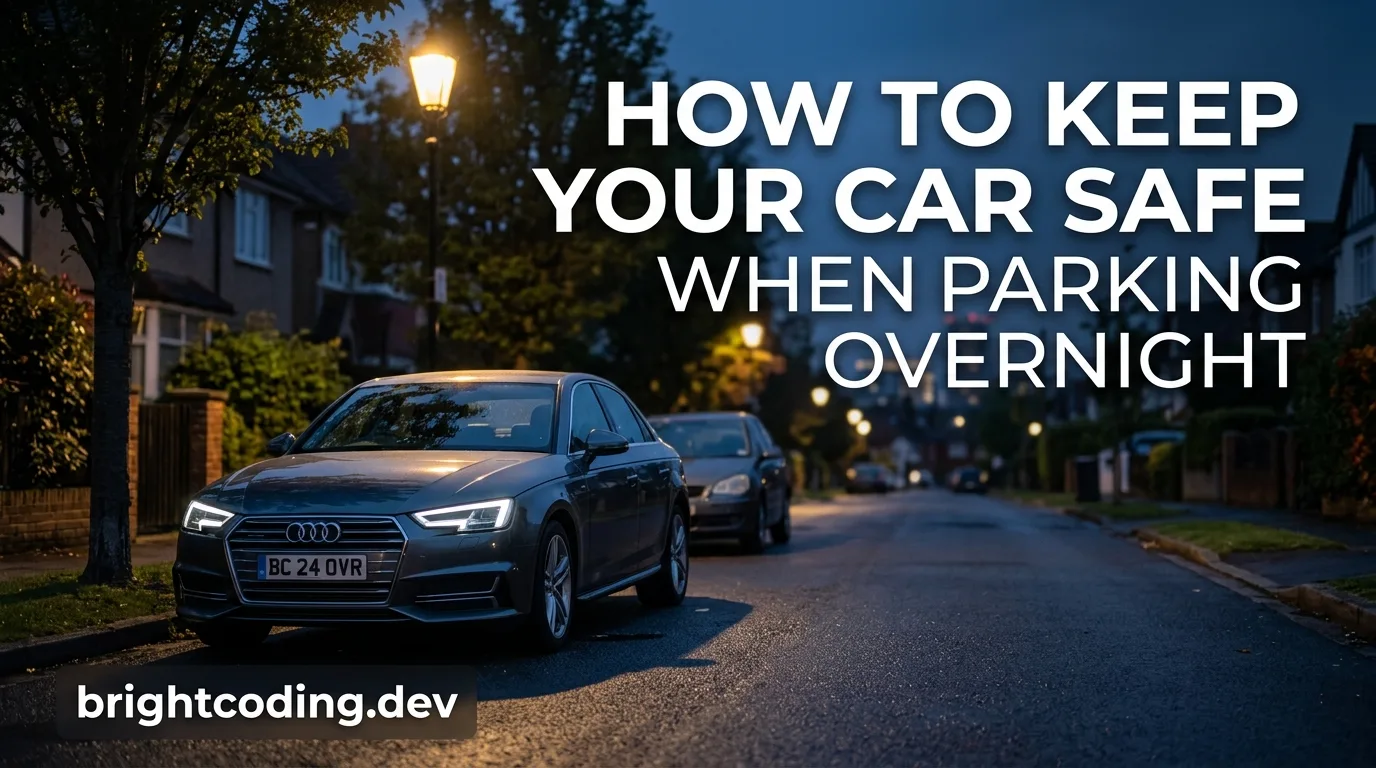
How to Keep Your Car Safe When Parking Overnight
Most cars are stolen at night, and most of those thefts are crimes of opportunity, not master criminals outsmarting an alarm. A door left unlocked, a key fob hanging by the front door, a bag visible on the passenger seat: that is what gets a car taken.
Read the article →
What Thieves Look for Before Breaking Into a Car
Most car thefts are not spontaneous. A thief walks or drives past your car first, checks a short list of easy signals, and decides in seconds whether it is worth the risk. This article breaks down what that list looks like, why certain cars get picked over others, and the practical steps that actua…
Read the article →
25 Amazing Car Features Hidden in Plain Sight That Will Surprise You
Most cars carry a stack of clever features the owner never touches. The manual is 400 pages, nobody reads it, and the salesperson only had twenty minutes. This guide walks you through 25 of those features, one at a time, with what to do, why it matters and a tip that saves you the trial and error.
Read the article →
Gasoline Engine Systems: From Carburetor to Fuel Injection
Your car either has a carburetor or fuel injection, and the difference explains a lot about how it starts, idles, and drinks gas. Maybe you just bought an old truck with a carb under the hood and you are not sure what you are looking at. Or your modern car is running rough and someone told you it i…
Read the article →