10 Gasoline Engine Maintenance Tips to Make Your Car Last Longer
Your engine doesn't die suddenly. It dies by a thousand small neglects, most of them cheap to fix and easy to postpone. This is the short list of habits that quietly add years to a gasoline engine, and the mistakes that quietly take them away.
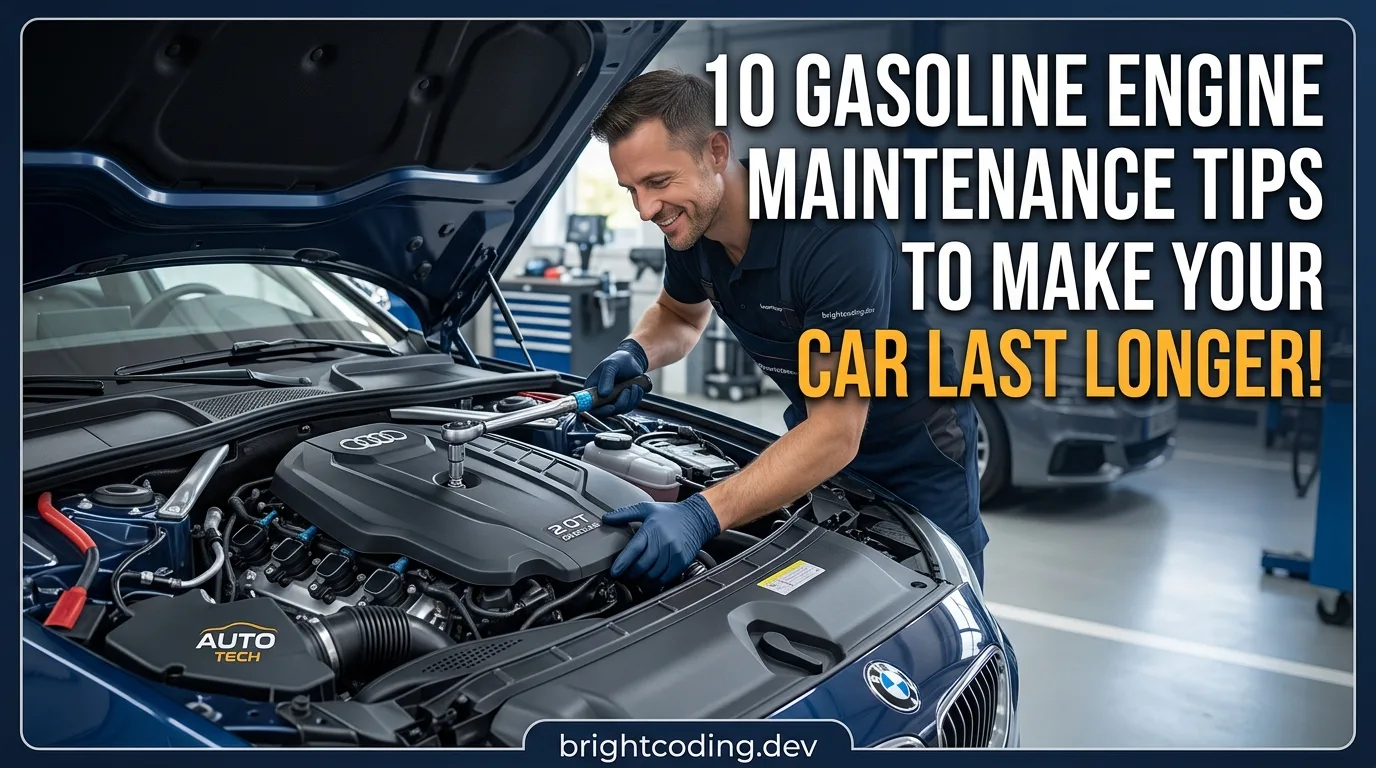
Your engine doesn't die suddenly. It dies by a thousand small neglects, most of them cheap to fix and easy to postpone. This is the short list of habits that quietly add years to a gasoline engine, and the mistakes that quietly take them away.
Why most people get this wrong
Car maintenance advice online is either too vague ("just do regular maintenance") or too aggressive ("replace everything every 10,000 miles"). Neither helps you make a decision on a Saturday morning with a limited budget.
The truth is that gasoline engines are forgiving, up to a point. They tolerate a lot of abuse, which is exactly why owners get lazy: the car runs fine, so nothing seems urgent. Then one day it doesn't.
This article is about the middle ground. Real habits, real symptoms to watch for, and the specific mistakes that shorten engine life. No scare tactics, no upsells, just what actually matters.
1 - Ignoring the oil level because the sticker said you're fine
You're 4,000 miles into a 7,500-mile oil interval, so the oil must be fine, right? Not if your engine burns a little oil, which many do as they age. That sticker is a guideline, not a guarantee.
People skip the dipstick check because it feels old-fashioned and the dashboard has a light for everything. But by the time the oil pressure light comes on, damage is already happening.
Check the level every couple of weeks, engine off and cool, on level ground. Top up with the grade listed in your owner's manual, not whatever's on sale.
2 - Stretching oil changes way past the interval
Synthetic oil is genuinely better than it was 20 years ago, and "every 3,000 miles" is mostly a shop habit. But that doesn't mean 15,000 miles is fine in city traffic with short trips.
Short trips are the killer. The engine never fully warms up, condensation and fuel dilute the oil, and the additives work harder. If most of your driving is under 10 minutes, your oil is aging faster than the odometer suggests.
Follow the severe-service interval in your manual if your driving is mostly short hops or stop-and-go. It's usually shorter than the standard one, and it exists for a reason.
3 - Running cheap or wrong-spec oil to save a few dollars
Oil isn't just lubrication. It carries heat, suspends contaminants, and protects the timing chain and bearing surfaces. Using the wrong viscosity or skipping the manufacturer's spec can quietly wear things down.
A realistic scenario: someone grabs the cheapest 5W-30 on the shelf when their engine actually calls for a specific specification. The car runs fine. For a while.
Match the viscosity and any specification listed in your owner's manual, and buy from a brand you can verify. If you're unsure what a spec means, the mechanical encyclopedia is a decent place to decode the jargon.
4 - Neglecting the cooling system until the temperature gauge moves
Coolant is one of those things people forget until it matters. A small leak or old, acidic coolant slowly eats at the radiator, water pump, and head gasket.
You might notice a sweet smell, a slowly dropping reservoir, or a heater that blows cold at idle. Ignore those and you're gambling with a head gasket job that can cost four figures.
Check the coolant level and condition monthly. If the color is rusty or the reservoir keeps dropping, find the leak before it finds you. The car symptom finder can help narrow down what a specific symptom usually points to.
5 - Treating the check engine light as decoration
That light isn't a suggestion. It's your engine's only way of telling you something is off, sometimes long before you'd notice anything from the driver's seat.
People ignore it because the car still drives, or because they're afraid of what a shop will say. So a $30 sensor turns into a misfire, a dead catalytic converter, and a much bigger bill.
Get the code read the same week the light comes on. You can look up what it means with a free OBD code lookup and decide whether it's urgent or something you can plan for.
6 - Skipping the air filter because "it's just a filter"
A clogged air filter doesn't just cost you a little power. It can throw off the air-fuel mix on some engines, dirty the mass airflow sensor, and make the computer work harder to compensate.
It's also one of the cheapest parts to replace and one of the easiest to check. Ten minutes, a screwdriver, done.
Replace it at the interval in your manual, or sooner if you drive on dusty roads. If you're the DIY type, the step-by-step car guides walk through the job on most common models.
7 - Ignoring odd noises because the radio covers them
A tick, a rattle, a faint whine. Most drivers turn the volume up and move on. That's how small problems become expensive ones.
Ticking from the top of the engine can mean low oil or a lifter issue. A belt squeal on cold start points to a worn belt or tensioner. A knock is never good and deserves immediate attention.
Drive once a week with the radio off for a minute. You'll hear things you'd otherwise miss, and you'll catch problems while they're still cheap.
8 - Redlining a cold engine
The engine is coldest for the first couple of minutes after a cold start, and that's when oil isn't fully circulating to every surface. Hammering the throttle right away wears bearings and cylinder walls faster than any other habit.
It's tempting because the car feels fine and modern engines warm up quickly. But "quickly" still means a minute or two, not five seconds.
Keep the revs moderate until the temperature gauge reaches normal. That's usually a few minutes of gentle driving, not a long idle in the driveway.
9 - Skipping the timing belt (or ignoring the timing chain)
Timing belts have a replacement interval for a reason, and it's not a suggestion. When one snaps, the pistons can hit the valves, and the engine is often done.
Timing chains last longer but aren't immortal. Stretched chains cause rough running and can jump a tooth. Either way, this is one of the few maintenance items where being late can total the car.
Check your manual for the belt interval and follow it, even if the car feels perfect. On chains, watch for a rattle on cold start and get it inspected if you hear one.
10 - Assuming the shop will catch everything
A mechanic sees your car for an hour, maybe two. They check what you asked them to check and what's obvious. They don't live with your car, so they don't hear the click that started last Tuesday.
You're the one who notices the small changes first: a rough idle, a new smell, a slightly longer crank. That information is worth more than any diagnostic tool.
Keep a note in your phone when something feels off. Mention it at the next service, even if it seems minor. If you want a starting point for what to check yourself, the free car tools cover the basics without a trip to the shop.
Do this instead
- Check the oil level every two weeks, engine cool, on flat ground.
- Follow the severe-service oil interval if you do mostly short trips.
- Use the viscosity and spec in your owner's manual, not the cheapest bottle.
- Look at the coolant level and color once a month.
- Read the check engine code within a week, not a season.
- Replace the air filter at the manual's interval, sooner if dusty.
- Drive with the radio off once a week and listen.
- Keep revs low until the temperature gauge is at normal.
- Follow the timing belt interval exactly, and listen for chain rattle.
- Write down anything that feels new and mention it at your next service.
FAQ
How often should I really change my oil?
It depends on your driving, not just your mileage. If you do a lot of short trips or stop-and-go, follow the severe-service interval in your manual. If you do mostly highway cruising, the normal interval is usually fine.
Can I use a different oil brand than the dealer recommends?
Yes, as long as it meets the viscosity and any specification in your owner's manual. Brand matters less than the spec. Don't guess on a specification you don't recognize.
My check engine light came on but the car drives fine. Can I wait?
You can, but you shouldn't wait long. Some codes are harmless, others point to a problem that gets much more expensive if ignored. Read the code and decide from there.
Is a timing chain really "lifetime"?
No. It lasts longer than a belt, but it stretches and wears. If you hear a rattle on cold start or the engine runs rough, have it checked. Don't assume "chain" means "never."
Do engine flushes and additives actually help?
Some do, many don't, and a few can cause problems in the wrong engine. Stick to the maintenance in your manual unless a mechanic you trust recommends otherwise.
The cheapest engine you'll ever own is the one you already have, and a few small habits are all that stand between it and another 100,000 miles.
Related articles
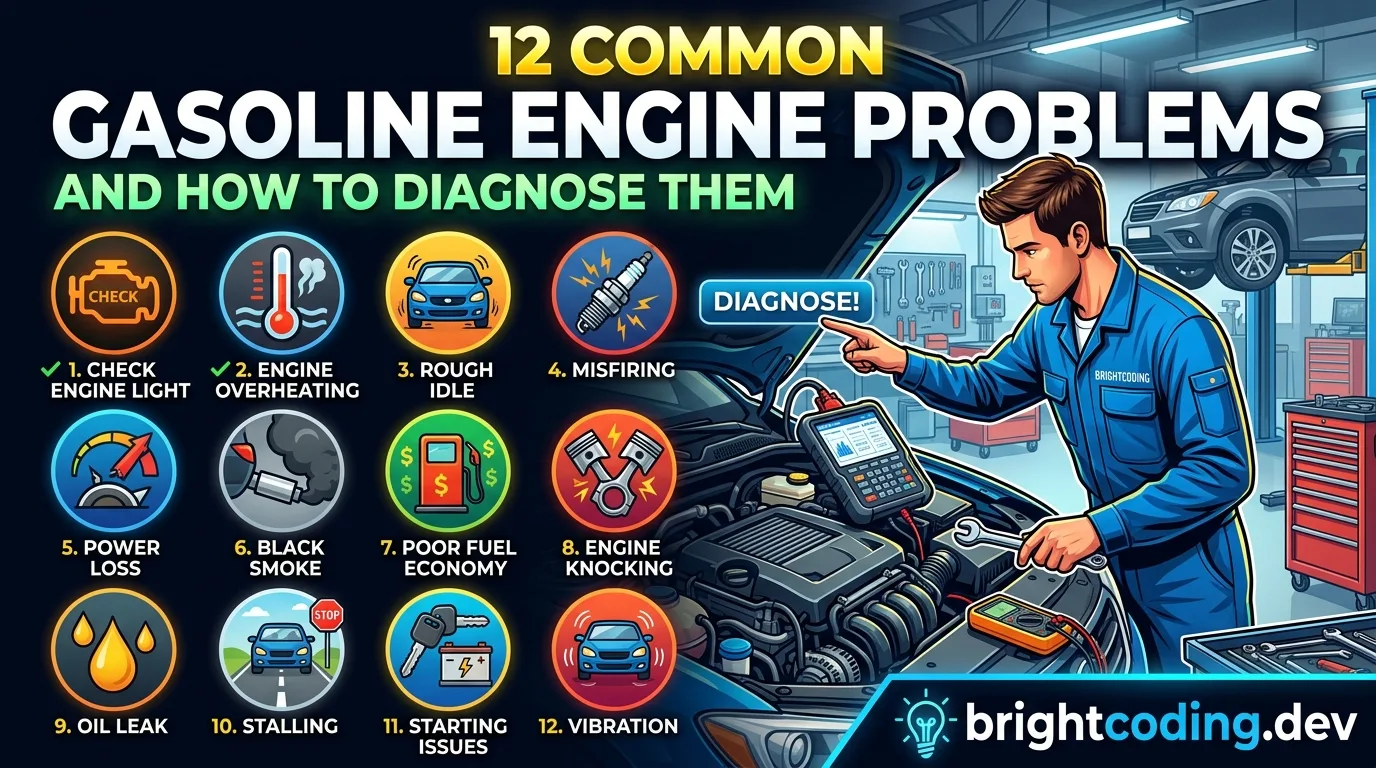
12 Common Gasoline Engine Problems and How to Diagnose Them
Your check engine light comes on. The engine starts shaking at a red light. You hear a noise that wasn't there last week. Most people do one of two things: panic and hand the car to a shop with a blank check, or ignore it until the problem gets expensive.
Read the article →
Petrol vs Diesel: Which Engine Is Cheaper to Maintain?
You are standing in a dealer lot or scrolling through listings, and the same question keeps surfacing: petrol or diesel? The sticker price is only half the story. What you actually pay over five or seven years depends on servicing, parts, fuel, and how the car is driven. That is where the petrol vs…
Read the article →
Petrol vs Diesel Engine: Which One Is Really Better in 2026?
Buying a car in 2026 means you cannot dodge the petrol versus diesel question, especially if you are shopping used or looking at a nearly-new car that still has a combustion engine under the hood. Read this and you will know how to match the engine to your actual driving, work out what the fuel and…
Read the article →
Carburetor vs. Fuel Injection: Which System Is Better?
You already know the short answer: fuel injection wins on paper. It has won in showrooms for decades, and there is no serious argument left about which system meters fuel more precisely. So why does the question still come up in the bay every week?
Read the article →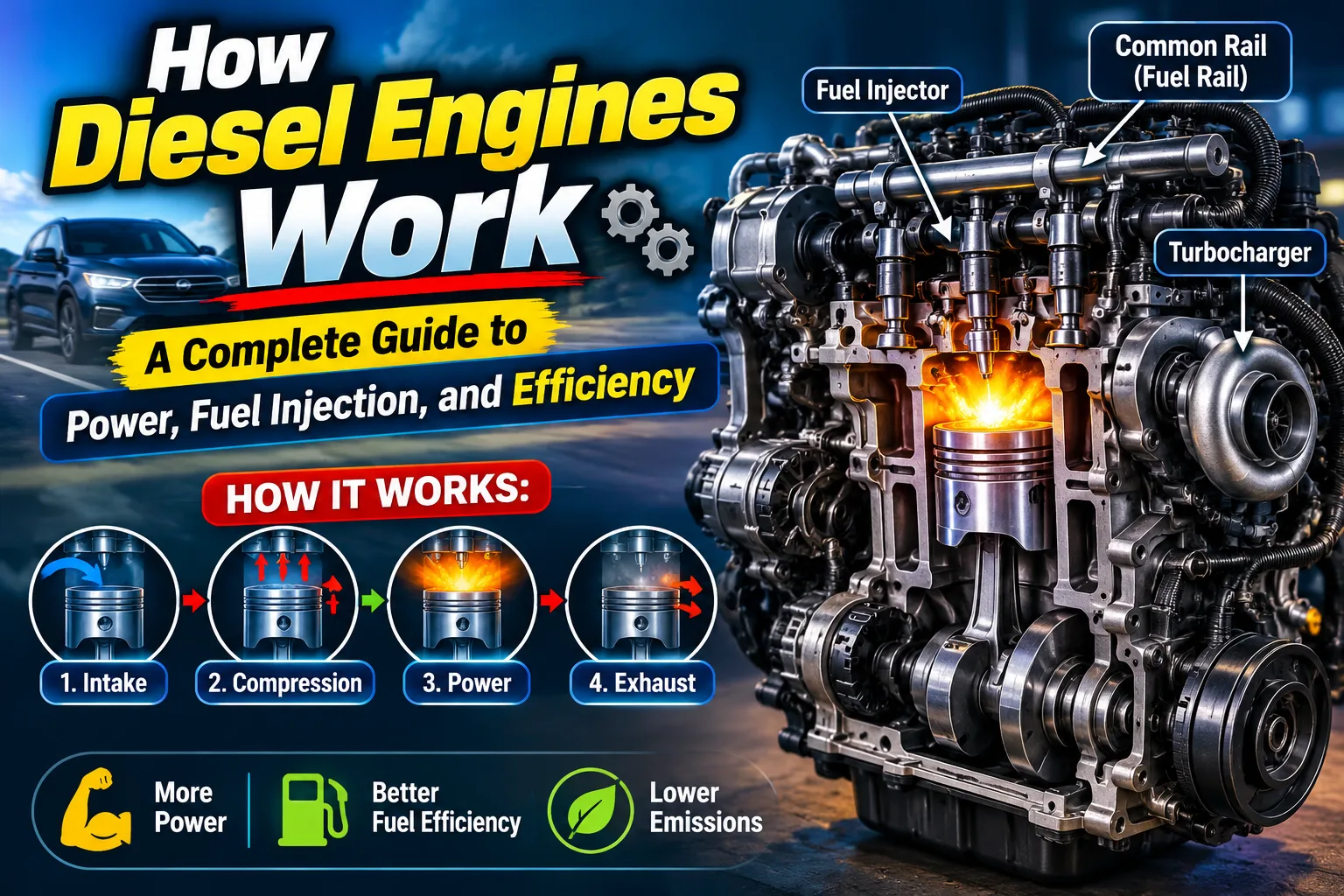
How Diesel Engines Work: A Complete Guide to Power, Fuel Injection, and Efficiency
By the end of this guide you will understand what actually happens inside a diesel engine, why it clatters at idle, why it makes so much torque, and why it sips fuel compared to a gasoline engine of similar size. You will also be able to follow a mechanic's explanation of injection timing and compr…
Read the article →
How to Parallel Park Like a Pro: Simple Tricks That Work
Parallel parking is the one driving skill most people never really learn. They pass the test, then spend the next twenty years circling the block for a spot they can just pull into. That ends today.
Read the article →