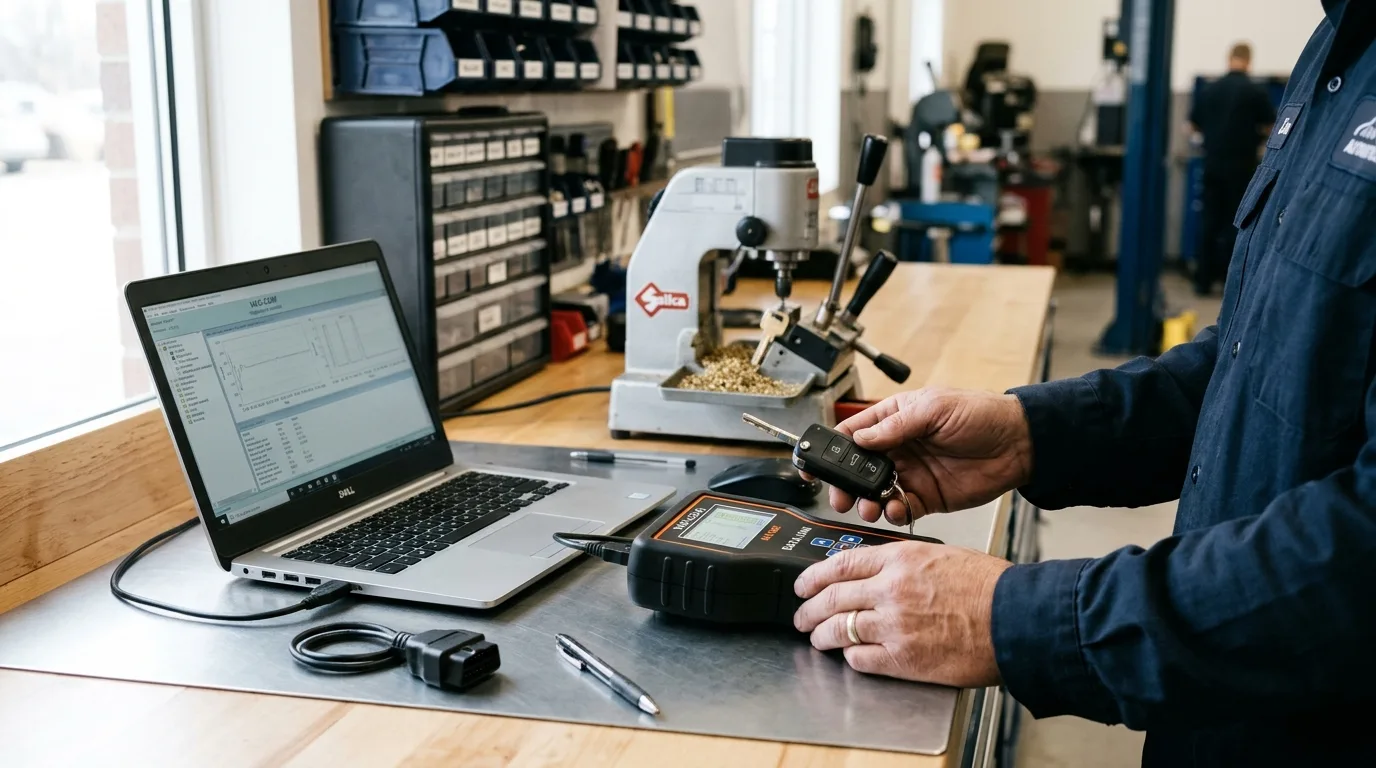
A dead injector circuit will ruin your day. The engine misfires, the scan tool throws a P0201 or similar code, and you're standing there wondering whether it's the injector, the wiring, or the computer. This guide walks you through the whole electrical side of that diagnosis, from a cold start to a confirmed fault. Work through it methodically and you'll know within an hour or two whether you're replacing a $60 injector or chasing a chafed wire under the intake.
Plan on 45 minutes for a single-cylinder check, a couple of hours if you're testing all of them or the fault is intermittent.
Before you start, pull the codes with the free OBD code lookup so you know which cylinder the computer is complaining about. That single step saves you from testing the wrong injector.
What you need before you start
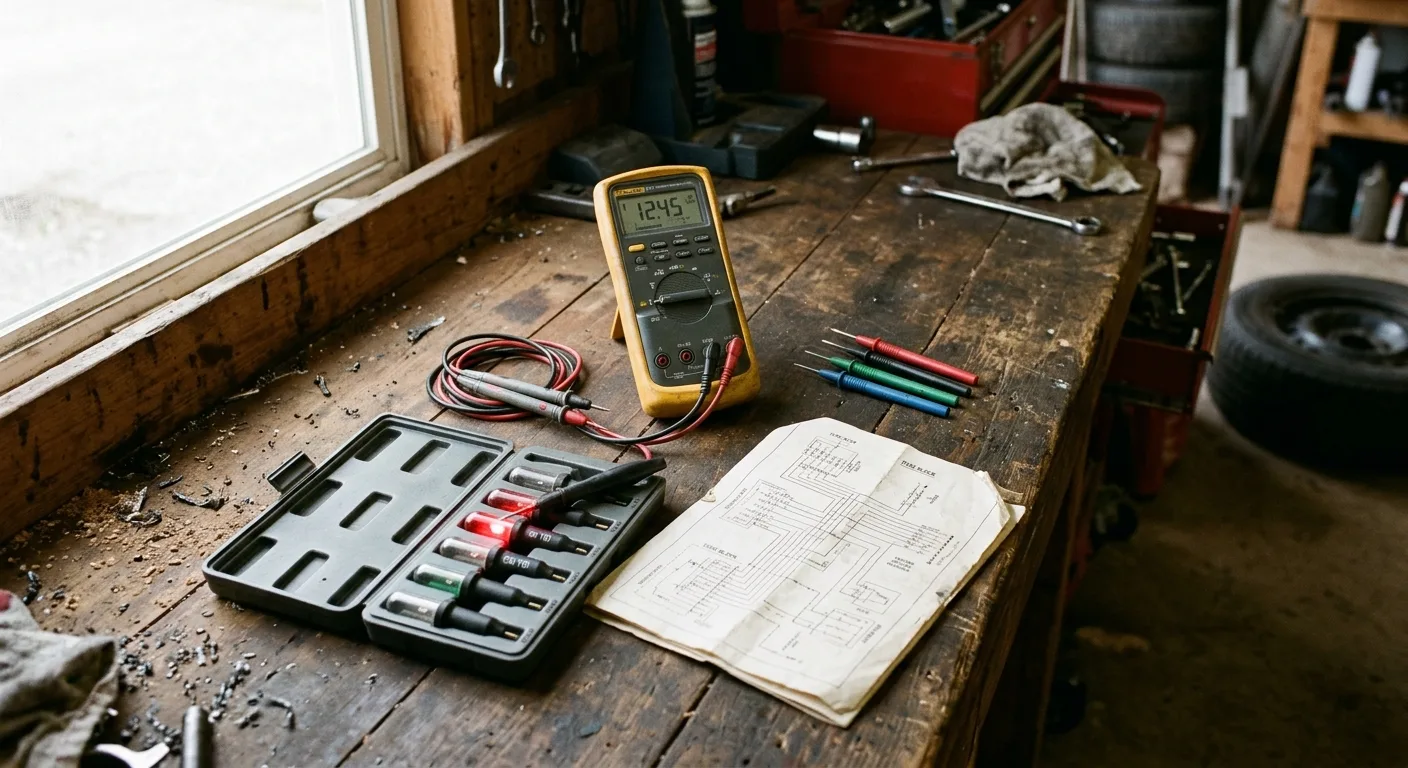
- Digital multimeter with a duty-cycle or frequency function if you have one
- A set of back-probe pins or fine needles (don't stab the insulation)
- Wiring diagram for your specific vehicle (factory service info or a reputable repair database)
- A noid light set, or a logic probe
- Fused jumper wire
- Basic hand tools to remove covers and the fuel rail if needed
- Safety glasses and nitrile gloves
You don't need a lab scope to get a solid answer, though it helps on the tricky ones. A decent multimeter and a noid light cover most fuel injector circuit diagnosis jobs.
Step 1: Confirm the misfire is actually electrical

Start by reading live misfire data if your scan tool supports it. A misfire that moves around when you swap coils or plugs points away from the injector. A dead miss that stays on one cylinder with a matching injector code points straight at the circuit.
Use the OBD live-data tool to watch misfire counters and fuel trims while you blip the throttle. If fuel trim goes lean on one bank, you're probably looking at a fuel delivery or injector problem, not spark.
Why it matters: Half of "bad injector" diagnoses are actually a bad coil or a vacuum leak. Confirm the cylinder before you touch a wire.
Tip: Note the exact code. P0201 (injector circuit, cylinder 1) is different from P0301 (misfire, cylinder 1). The first is electrical, the second is a symptom. Check what your code means with the OBD code lookup before you assume anything.
Step 2: Inspect the harness and connectors first

Pop the cover off and look at the injector connectors. You're hunting for cracked plastic, backed-out pins, corrosion, or rodent damage. Wiggle each connector while the engine idles and see if the misfire changes.
This is the cheapest, fastest test in the whole guide. Ten minutes with a flashlight finds more faults than an hour with a meter.
Safety: Let the engine cool before you reach near the exhaust or fuel rail. And keep hands clear of the fan and belts while it's running.
Tip: A misfire that appears when you hit a bump or turn a corner is a wiring problem, not an injector problem. That's your clue to keep looking at the harness.
Step 3: Check for power at the injector

Key on, engine off. Unplug the injector connector and back-probe the power feed pin (the diagram tells you which one). You should see battery voltage, or close to it. Most systems feed all injectors from a common relay or fuse, so if one has power, they all should.
If there's no power on any injector, check the fuse and the main relay. If it's just one, the fault is in the shared feed or the PCM's ground-side control.
Why it matters: No power means the injector can't fire. Chasing the ground side when the feed is dead wastes your afternoon.
Tip: Use a fused jumper to load the circuit if you're unsure the meter is reading a real feed. A high-impedance meter can show voltage on a broken wire through a tiny leakage path.
Step 4: Test the injector coil resistance

With the connector off, measure resistance across the two injector terminals. Compare to the spec in your service info, and compare all four or six injectors against each other. They should be close.
A reading that's wildly high or open means the coil is bad. A reading that's dead short means the same. If one injector reads noticeably different from its neighbors, replace it.
Cost note (approximate): A replacement injector runs anywhere from $40 to $200 depending on the vehicle, plus core charges on some. Verify pricing for your model, and never buy a used injector without testing it first.
Tip: Resistance testing doesn't catch every failure. An injector can ohm out fine and still be mechanically stuck or electrically lazy. That's why you keep testing.
Step 5: Test the ground-side control from the PCM

Key on, engine off. Back-probe the control wire at the injector connector and check for a ground pulse while cranking. A noid light plugged into the connector is the fastest way to see it: it should blink as the engine turns over.
No blink means the PCM isn't commanding that injector, or the wire between them is broken. Blink means the circuit is working and your problem is fuel-side or mechanical.
Why it matters: This is the test that splits the diagnosis. Noid light blinks, you're chasing fuel. No blink, you're chasing electrons.
Tip: If you don't own a noid light, a low-wattage test light or a logic probe works, but don't use an incandescent bulb on a modern low-side driver without checking the current draw. You can damage the PCM driver.
Step 6: Check for shorts and opens in the wiring
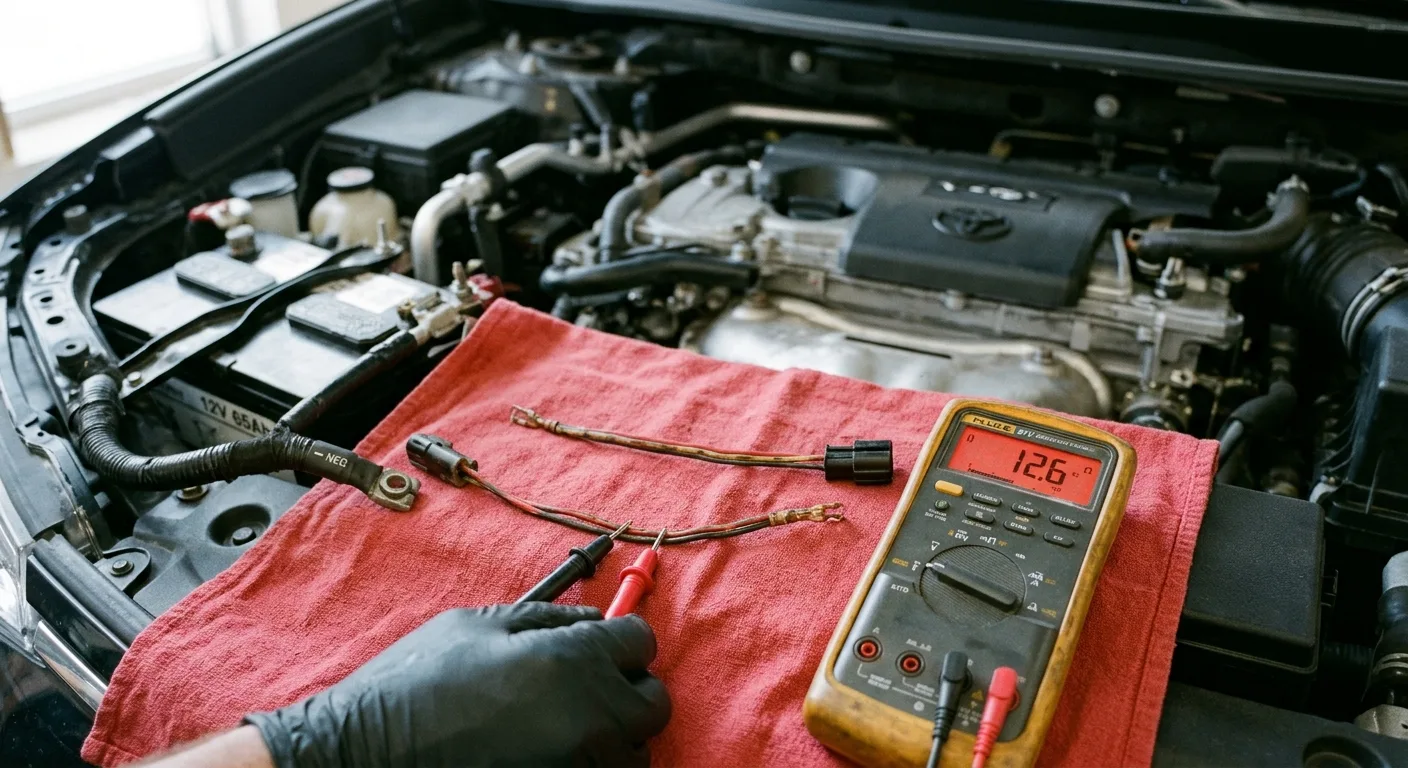
With the connector off and the PCM disconnected (battery negative cable removed first), measure resistance end to end on each wire. You want near zero ohms. Then check each wire to ground and to the other wire in the pair: you want no continuity.
A wire that reads open is broken somewhere, often at a bend or where it rubs the intake. A wire shorted to ground will blow the injector fuse or kill the driver.
Safety: Disconnect the negative battery terminal before you disconnect the PCM. Reconnect it only after everything is plugged back in.
Tip: Flex the harness by hand while watching the meter. Intermittent opens hide in the exact spot you're not looking at.
Step 7: Scope the injector if it's still a mystery
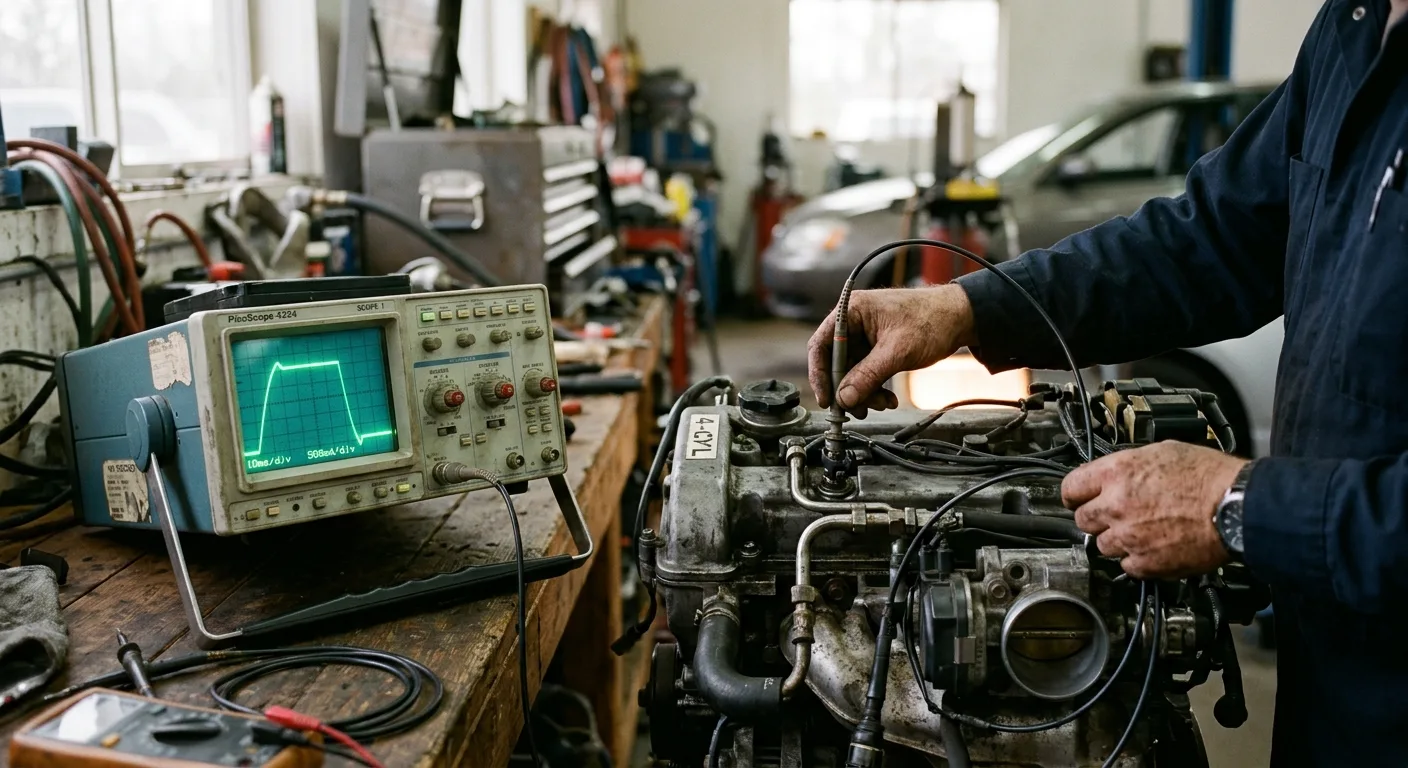
If everything checks out but the misfire persists, an oscilloscope or a good graphing multimeter shows you the current ramp and voltage spike. The shape of the waveform tells you whether the coil is firing cleanly or the driver is struggling.
You don't need this on every job. But when a car has been through two shops and still misses, the scope earns its keep.
Tip: Compare the suspect cylinder's waveform to a known-good cylinder on the same engine. The difference is usually obvious once you see them side by side.
Pro tips

- Test the whole injector bank, not just the suspect cylinder. A shared ground or feed fault will show up across several.
- Warm the engine and repeat the wiggle test. Heat expands connectors and exposes marginal pins.
- Write down your readings as you go. You'll forget the exact number by the time you're back at the parts counter.
- If you're replacing an injector, replace the O-rings and seals, and lube them with a drop of clean engine oil before seating.
- Snap a photo of the harness routing before you remove anything. Reassembly goes faster when you have a reference.
Common pitfalls
Testing the injector first. The injector is often the victim, not the cause. Test power, ground, and wiring in that order.
Using a test light on a low-side driver. Some PCMs don't tolerate the current draw. Use a noid light or logic probe, or verify the driver's rating in the service info.
Stabbing the insulation to back-probe. You create a future corrosion point and a new intermittent fault. Use proper back-probe pins or a breakout box.
Ignoring the misfire counter. If the count doesn't climb on the cylinder you're testing, you're on the wrong cylinder. Re-read the live data.
Forgetting to clear the code and recheck. A repaired circuit still shows the old code until you clear it and drive the monitor to completion.
Useful resources
- The step-by-step car guides for job-specific walkthroughs on your model.
- The free car tools page for calculators and reference tables.
- The mechanical encyclopedia for how the injection system actually works.
- The car symptom finder if you're starting from a symptom rather than a code.
- The AI mechanic assistant for a second opinion on an odd reading.
- The AutoTools blog and expert car tips for related diagnosis writeups.
- Test your knowledge with the mechanic quiz once you've done a few of these jobs.
FAQ
Can I drive with a bad injector circuit? Short answer: not far. A dead injector dumps raw fuel into the exhaust, which can overheat the catalytic converter. Limp it to a shop or your garage, don't road-trip it.
How do I know if it's the injector or the wiring? The noid light test in Step 5 tells you. Blinks means the wiring and PCM are commanding the injector, so the injector itself or fuel delivery is the problem. No blink means the circuit is at fault.
Can a bad injector throw a misfire code without an injector code? Yes. A mechanically stuck injector can cause a P0300 or P0301 without ever setting a P0201. That's why you test resistance and fuel flow, not just the electrical side.
What's the difference between a noid light and a test light? A noid light is designed for injector circuits and draws minimal current. A test light can pull too much current for a modern PCM driver. Use the right tool.
Do I need a scope to diagnose an injector circuit? No. A multimeter and a noid light solve most jobs. A scope helps on intermittent or "everything checks out but it still misses" cases.
One last thing
Injector circuit diagnosis rewards patience over guesswork. Work the steps in order, write down what you find, and don't skip the wiggle test. You'll fix more cars with a meter and a wiring diagram than most people fix with a parts cannon.