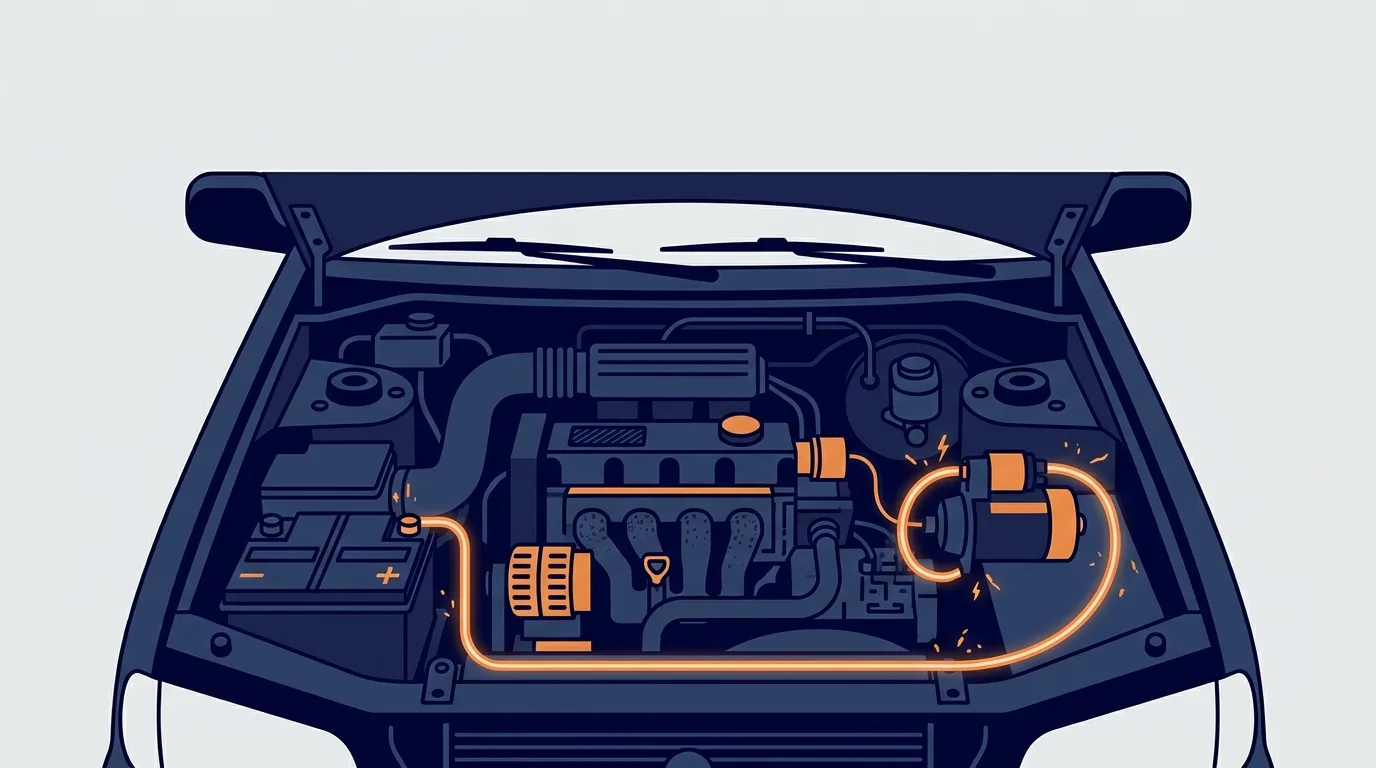
You flip a switch, the light comes on. You turn the key, the starter cranks. You never think about it, until something stops working and you're standing there wondering what actually went wrong inside that wire.
That's the moment most of us get curious about electricity. Not in a physics-class way, but in a "why won't my car start" way. This article answers the basic question, what is electricity, in plain language you can use, whether you're chasing a dead battery, a flickering dash light, or just tired of nodding along when someone mentions voltage and amps.
What is electricity, really?
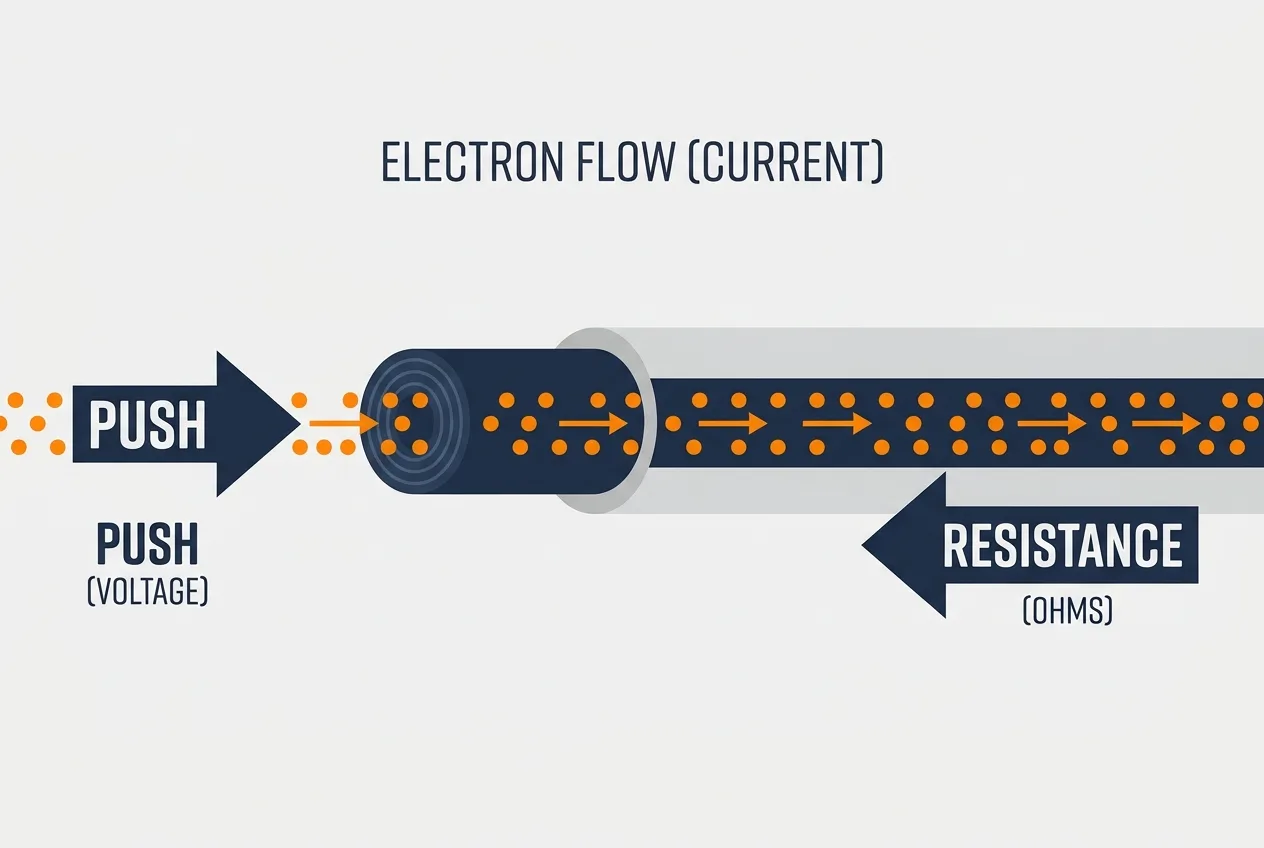
Here's the short version: electricity is the movement of tiny charged particles called electrons through a material, usually a metal wire. That's it. Push electrons through something, and you get current. The push comes from voltage. The resistance they meet along the way is called resistance.
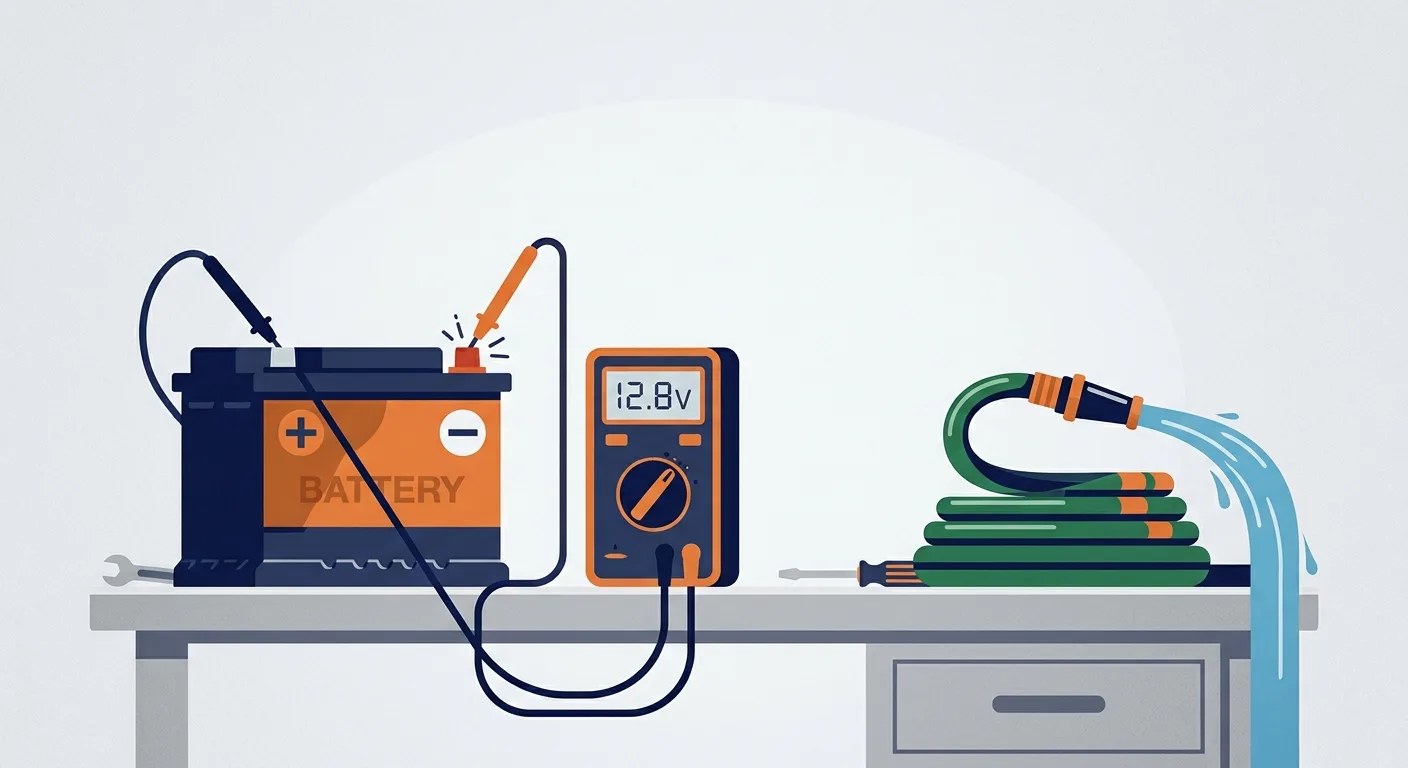
Most people learn the water-in-a-pipe comparison, and it's genuinely useful. Voltage is like water pressure. Current (measured in amps) is like the flow rate. Resistance is like a narrow section of pipe that slows the flow. A battery is the pump. The wire is the pipe.
But the analogy has limits, and knowing them matters if you're actually working on a car. Water leaks out and disappears. Electrons don't. They flow in a complete loop, out of the battery and back to it. Break the loop anywhere and everything stops. That's why one loose ground strap can kill your whole electrical system even when the battery is perfectly fine.
The problem most people are actually trying to solve

Nobody searches "what is electricity" out of idle curiosity at 2 a.m. Usually something in the car is misbehaving. The battery keeps dying. The starter clicks instead of cranking. A fuse blows every few weeks. The headlights dim when you hit the gas.
These symptoms all trace back to the same handful of fundamentals: voltage, current, resistance, and the circuit that ties them together. Once you understand those four things, a multimeter stops being a mystery box and becomes the most useful tool in your garage.
The common mistake is throwing parts at the problem. A new battery, then a new alternator, then a new starter, and the car still won't start. That gets expensive fast when a ten-minute test with a cheap meter would have found a corroded ground or a parasitic drain.
Why electrical problems happen in cars
A car's electrical system is a low-voltage DC system, typically 12 volts nominal, though a healthy battery at rest usually sits a bit higher and climbs past 14 volts when the engine is running and the alternator is charging. The whole thing depends on clean connections and a complete circuit.
Three things go wrong most often.
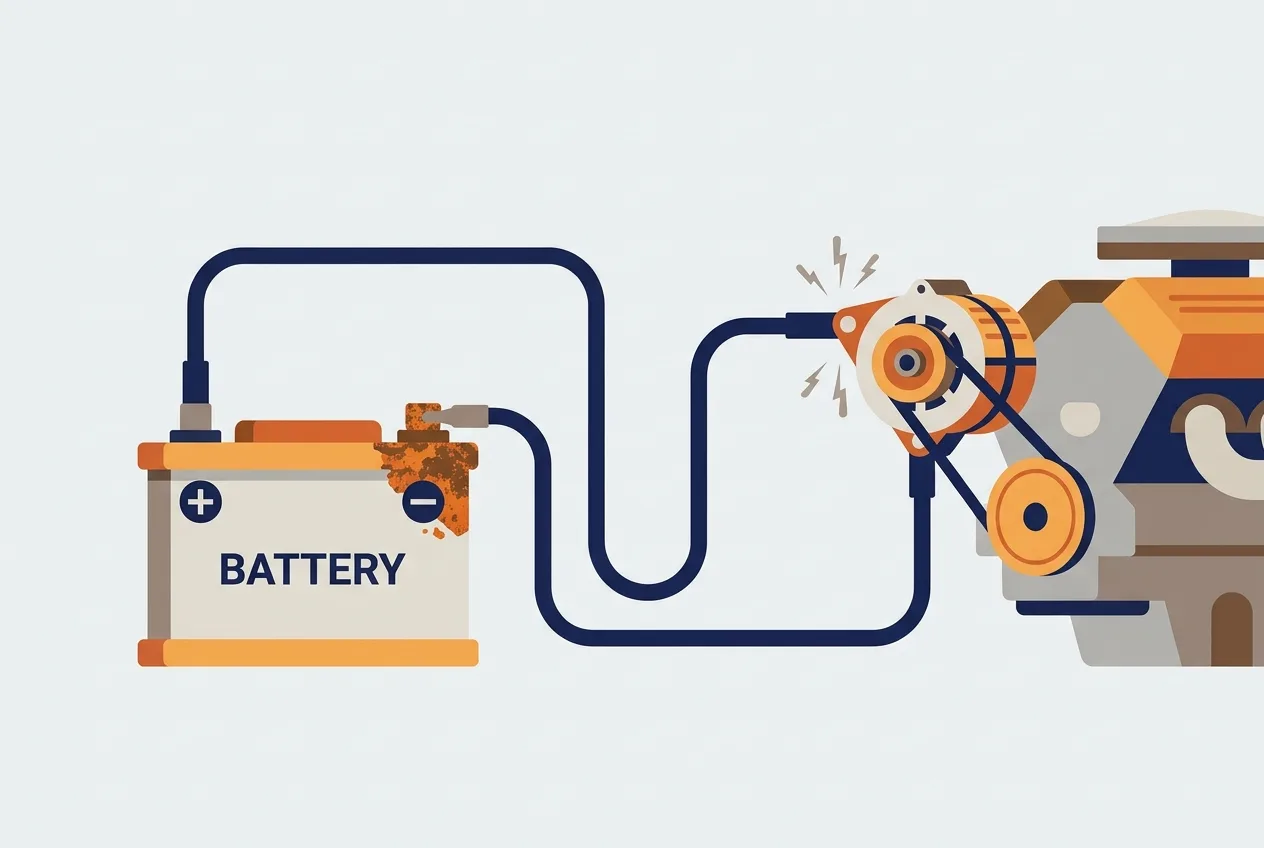
Resistance creeps up. Corrosion on a battery terminal, a rusty ground bolt, a frayed wire. Resistance rises, current drops, and whatever that wire feeds gets less power than it needs. This is where the water analogy earns its keep: squeeze the pipe, the flow falls.
The source weakens. A battery ages and can't hold a charge. An alternator wears out and stops topping it up. You get slow cranking, dim lights, or a dash full of warning lights.
Something drains power you didn't ask for. A light left on, a failing module that won't go to sleep, an aftermarket accessory wired straight to the battery. This is a parasitic drain, and it's one of the most frustrating things to track down.
One thing the water analogy gets wrong: electricity doesn't always take the path you expect. Current splits across every available path in proportion to resistance. That's why a bad ground can make one circuit misbehave while another works fine, and why chasing a fault by eye alone often fails.
Your options for diagnosing and fixing it
Option 1: Test with a multimeter yourself
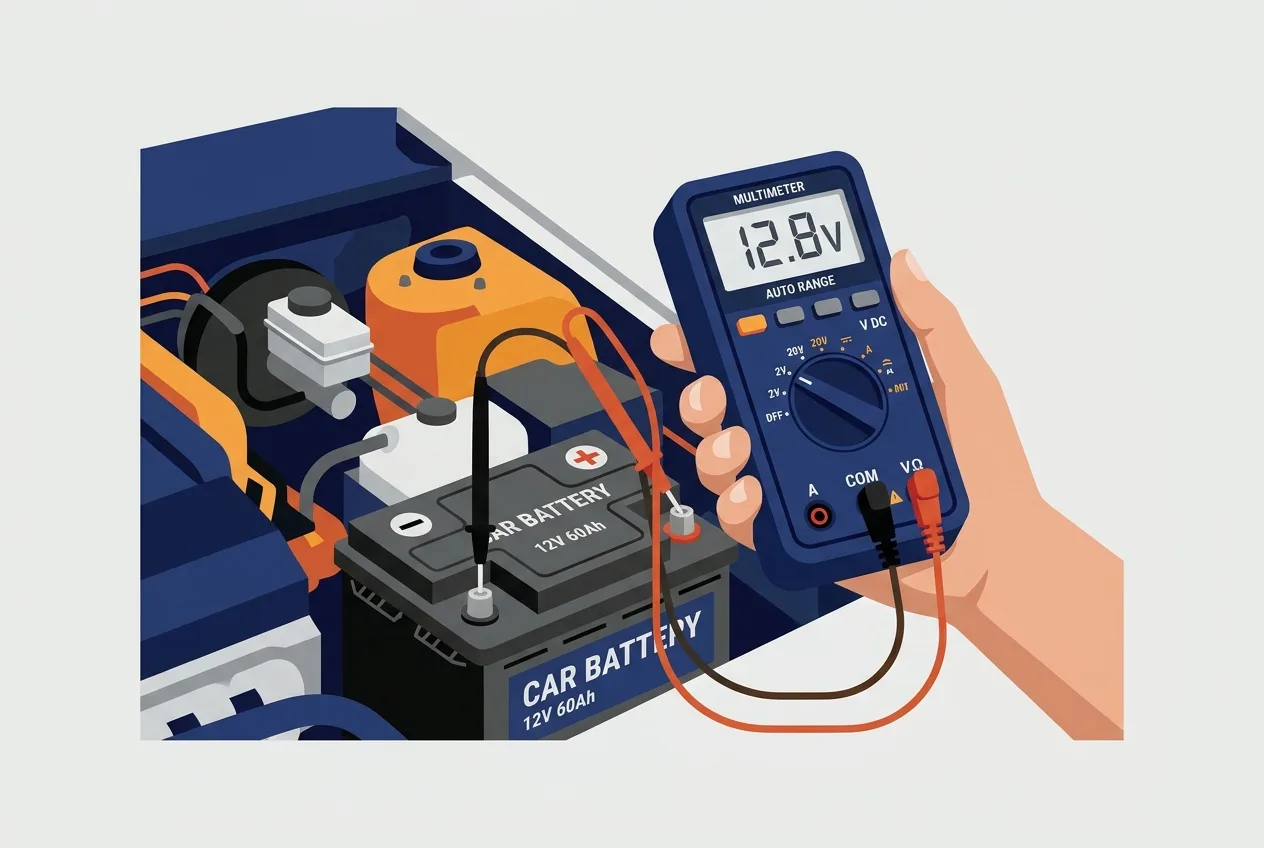
A basic digital multimeter costs somewhere around $20 to $50, and it tells you almost everything you need. You can check battery voltage at rest and while cranking, test for voltage drop across a connection, and confirm whether a circuit is getting power.
The advantage is cost and speed. You learn what's actually wrong instead of guessing. The disadvantage is you need to understand what the numbers mean and where to probe. For a beginner, that's a real learning curve.
This is where a free set of reference tools helps. The free car tools on AutoTools include code lookups and calculators that pair well with a meter reading, especially when a check engine light is involved.
Option 2: Scan for codes and let the car tell you
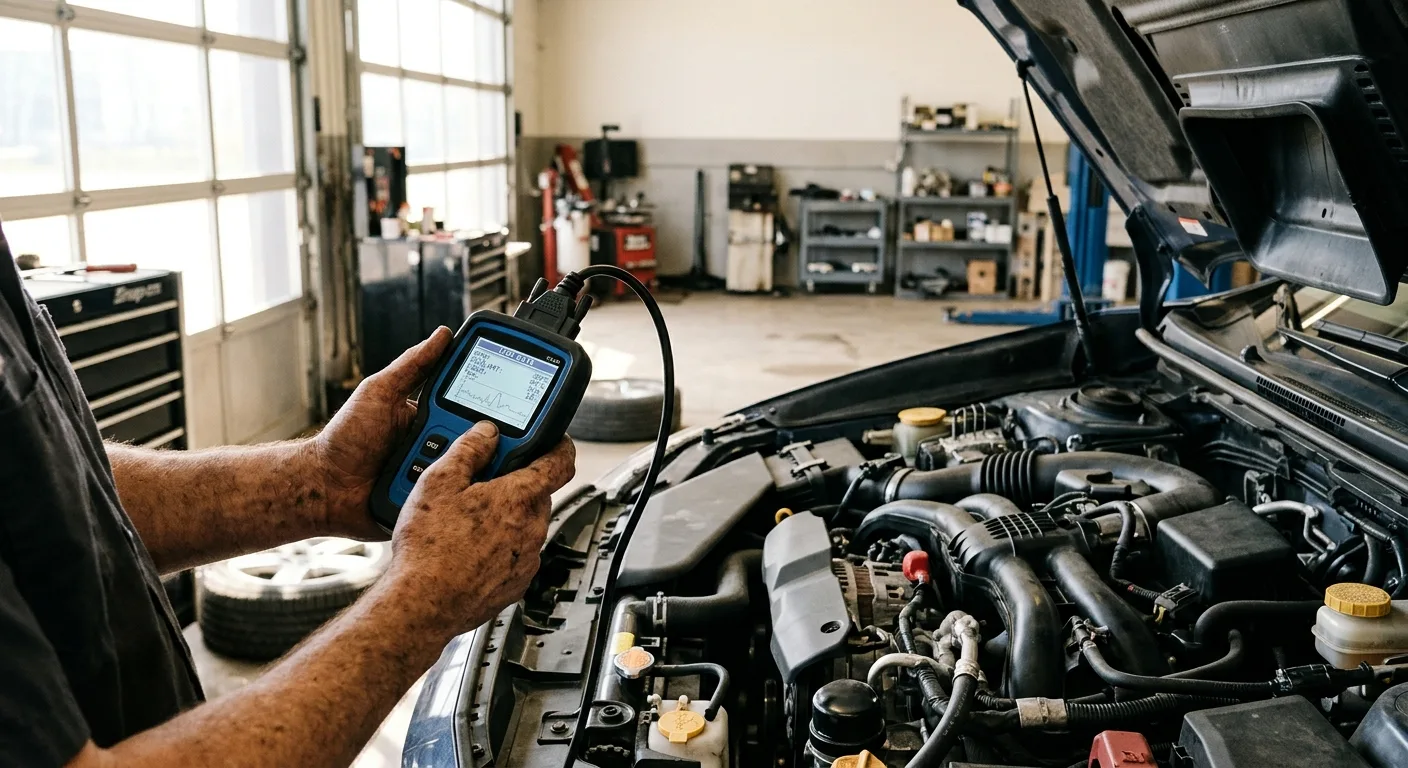
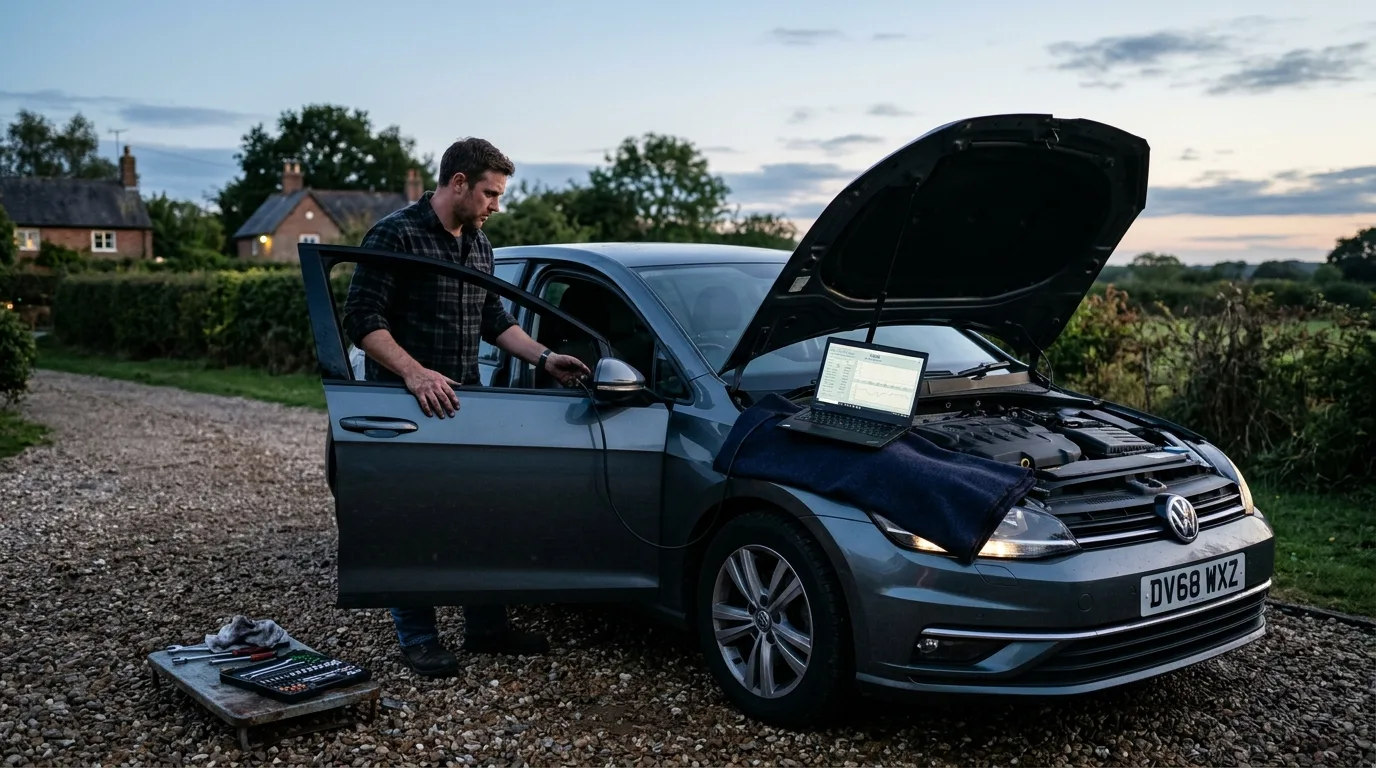
Modern cars monitor their own electrical systems. A scan tool or a cheap OBD2 adapter can pull codes that point you toward a circuit, a sensor, or a charging fault. If you've got a code, our step-by-step car guides walk through what each one usually means and how to test it.
The upside: fast, cheap, and it narrows the search. The downside: codes tell you which circuit is unhappy, not always why. A code for a low voltage sensor might be the sensor, or it might be a chafed wire two feet away.
Option 3: Load-test the battery and charging system
Most auto parts stores will test a battery and alternator for free. A proper load test puts the battery under real demand and shows whether it can still deliver cranking amps. If your battery is more than three or four years old and cranking has gotten sluggish, start here.
It's free and it rules out the most common culprit in minutes. The catch is it only tests the source, not the wiring.
Option 4: Hand it to a shop
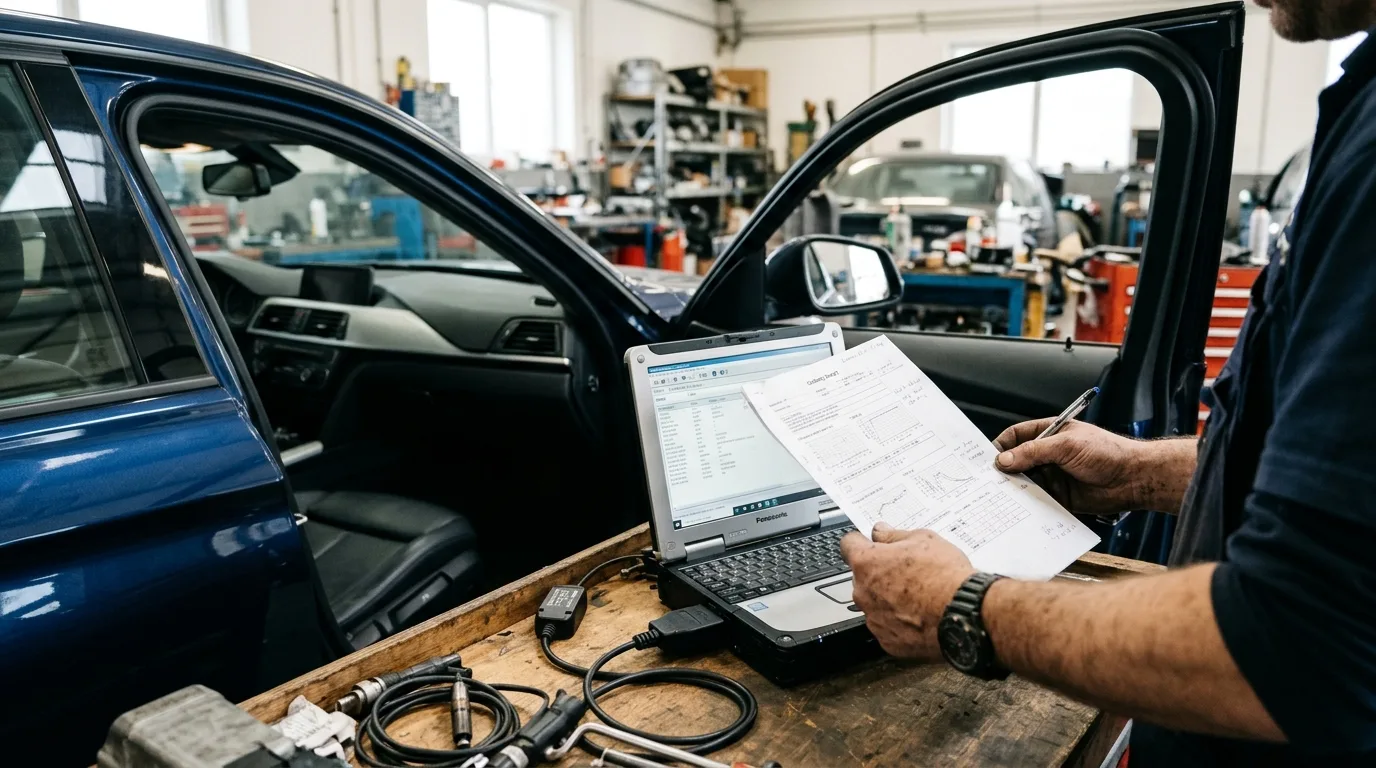
If the problem is intermittent, involves a module, or you've already replaced two parts with no luck, a good auto electrician is worth the money. Diagnostic labor typically runs somewhere in the $100 to $200 per hour range depending on where you live, and a tricky parasitic drain can eat a couple of hours. Get an estimate first.
Which approach fits your situation

If you're a DIY owner with a meter and some patience, start with your own testing. Measure the battery at rest, watch it during cranking, and check voltage at the alternator with the engine running. That trio answers most basic questions.
If you're a busy commuter with no tools and no time, the free battery and alternator test at a parts store is your first stop. It's fast and it catches the usual suspects.
If you've already thrown parts at it, or the fault comes and goes, stop guessing. A shop with a proper scan tool and wiring diagrams will find it faster than you will, and you'll spend less overall than buying another part you didn't need.
For background on how a specific component works before you dig in, the mechanical encyclopedia is a good place to check the theory without a textbook detour.
A practical action plan
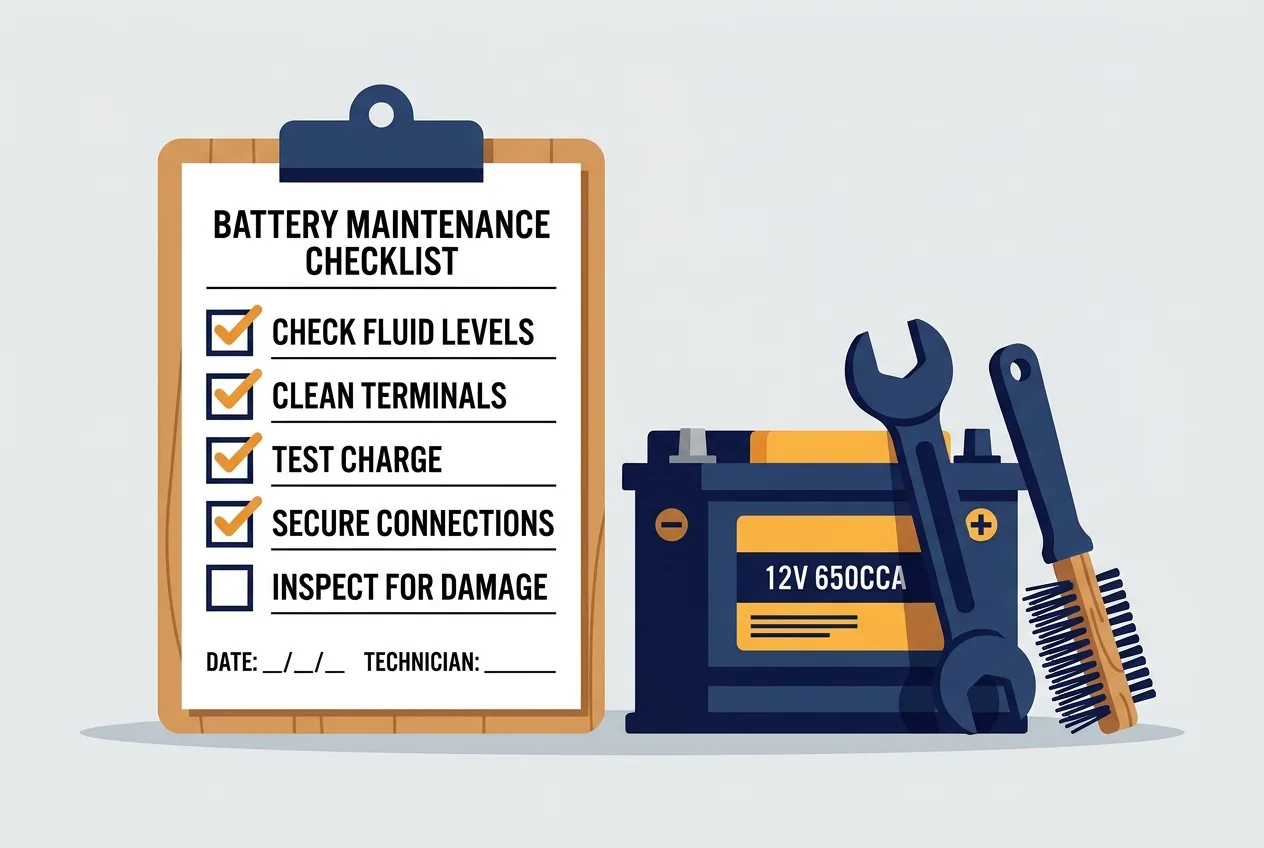
- Write down the symptom. When does it happen? Cold mornings, after rain, only at idle? Patterns narrow the cause.
- Check the battery terminals first. Loose or corroded clamps cause more electrical gremlins than almost anything else. Clean them and tighten snug, not gorilla-tight.
- Measure battery voltage at rest. A healthy, fully charged battery reads around 12.6 volts. Noticeably lower suggests a weak or discharged battery.
- Watch voltage while cranking. A big drop points to a battery that can't handle the load.
- Check charging voltage with the engine running. It should climb above resting voltage. If it doesn't, suspect the alternator or its wiring.
- Pull codes if a light is on. Use a scanner or an OBD code lookup to get pointed in the right direction before touching anything.
- Test for voltage drop on suspect connections. Measure across a connection while the circuit is loaded. A large drop means resistance where there shouldn't be any.
- Fix the cause, then retest. Confirm the repair with the same measurements that found the fault.
Safety notes: Always disconnect the negative battery terminal before working on wiring, and reconnect it last. Never short across battery terminals with a tool or watch band. Batteries produce hydrogen gas, so keep sparks and flames away, and wear eye protection when charging or load-testing. If you're lifting the car, use rated stands, never just a jack.
Common mistakes to avoid

- Replacing the battery without testing the charging system. Fix: check alternator output first, or the new battery will die too.
- Ignoring grounds. Fix: inspect and clean ground straps and bolts before condemning a component.
- Probing wires with the circuit live and a cheap test light. Fix: use a meter and know what you're touching.
- Assuming a code names the broken part. Fix: treat codes as a starting point and test the circuit.
- Over-tightening battery clamps. Fix: snug is enough; cracked terminals cause new problems.
- Leaving the ignition on while testing. Fix: key off unless the test requires power, to avoid draining the battery or triggering faults.
The one thing to remember
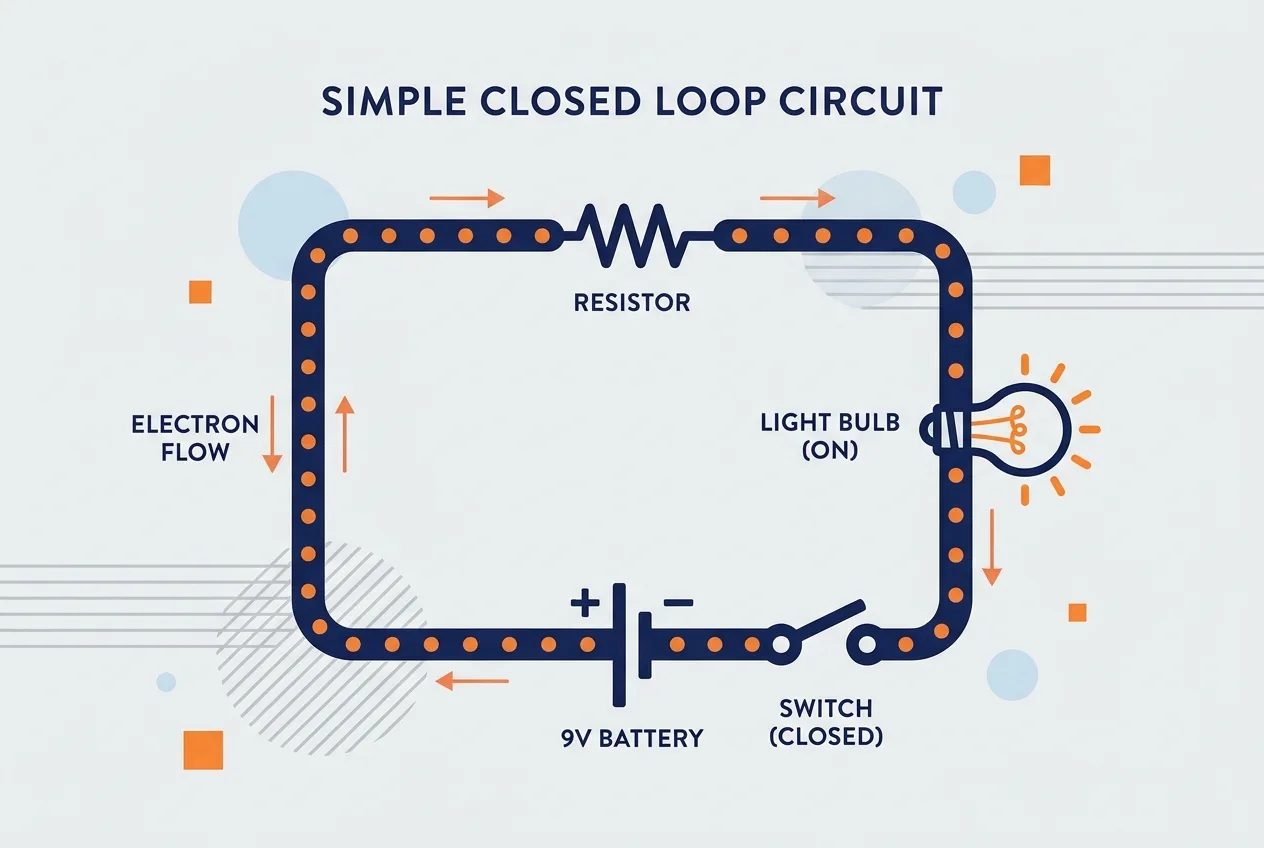
Electricity is just electrons pushed around a loop, and almost every car electrical fault comes down to a break in that loop, extra resistance, or a weak source. Learn to measure voltage, current, and resistance with a cheap meter, and you'll diagnose more problems in an afternoon than a parts cannon will solve in a month.
FAQ
What is electricity in simple terms? It's the flow of electrons through a conductor. Voltage pushes them, current is how many flow per second, and resistance opposes the flow. A complete circuit is required for anything to work.
Why does the water pipe analogy break down? Because electricity flows in a closed loop and doesn't leak away like water. Current also splits across every available path based on resistance, which is why a bad ground can affect one circuit and not another.
How many volts should a car battery read? A healthy, fully charged battery at rest is typically around 12.6 volts. With the engine running and the alternator charging, you'll usually see over 14 volts. Check your owner's manual for your specific model.
Can I test my car's electrical system without a mechanic? Yes, for most basic checks. A multimeter and a free battery test will cover the common failures. Intermittent faults and module problems are usually worth handing to a shop.
What causes a car battery to keep dying? Either the battery can't hold a charge anymore, the alternator isn't recharging it, or something is draining it while the car sits. Test the source first, then look for a parasitic drain.