10 Diesel Engine Maintenance Tips Every Owner Should Know
Diesel engines reward owners who pay attention. Treat yours well and it can run for hundreds of thousands of miles; neglect a few basics and you will be funding a very expensive repair.

Diesel engines reward owners who pay attention. Treat yours well and it can run for hundreds of thousands of miles; neglect a few basics and you will be funding a very expensive repair.
By the end of this guide you will know the ten maintenance jobs that matter most on a diesel, what each one protects, and how to tell when something is going wrong before it becomes a bill you cannot ignore. The full routine takes about two hours of hands-on time spread across a weekend, plus a few minutes of checking each week.
What you need before you start
- Owner's manual (the single most useful tool you own)
- Nitrile gloves and safety glasses
- Oil drain pan, funnel, and a wrench set that fits your drain plug
- New oil and a fresh filter rated for your engine
- Fuel filter and the tools to bleed the system if your car needs it
- A code reader or a phone app that talks to your OBD port
- A tyre pressure gauge and a jug of distilled water for the coolant
- Rags, a torch, and somewhere flat and level to work
If you are not sure which filter or oil your engine takes, stop and check the manual or ask a parts counter. Guessing here is how people kill injectors.
Step 1: Change the oil and filter on schedule, not on vibes
Diesel oil works harder than petrol oil. It deals with soot, higher compression, and often a turbo that cooks the oil when you shut down hot. Old oil stops protecting bearings and the turbo, and that is where the expensive damage starts.
Drain the oil when the engine is warm but not scalding, replace the filter, refill to the correct level, and run the engine for a minute before checking for leaks. Most owners are looking at somewhere between 5,000 and 10,000 miles depending on driving and oil spec, but your manual is the authority. Short trips and heavy towing mean you should lean toward the shorter interval.
Tip: Keep a note of the mileage on the filter box. Future you will thank present you.
Step 2: Never let the fuel filter go past its interval
This is the step diesel owners skip and then regret. Diesel fuel carries water and grit, and the filter is the only thing standing between that junk and your high-pressure pump and injectors. Those components are machined to tolerances you cannot see, and they do not forgive contamination.
Replace the filter at the interval in your manual, and if your car has a water-in-fuel warning light, drain the separator when it comes on. On many common-rail diesels you will need to prime or bleed the system after a filter change, so read the procedure first.
Tip: Fill the new filter with clean diesel before fitting it where the design allows. It saves a lot of cranking.
Step 3: Check the coolant level and condition cold, every week
Diesels run hot and rely on coolant to keep cylinder heads and EGR coolers alive. A slow leak you ignore becomes an overheating event, and an overheating event on a modern diesel can mean a warped head or a cracked EGR cooler.
Check the level only when the engine is cold. Never open a hot cooling system: pressurised coolant will scald you badly. Look at the colour and clarity too. If it is muddy, oily, or dropping steadily with no visible puddle, get it pressure-tested.
Tip: A sweet smell after a drive, or white smoke from the exhaust, points to coolant getting where it should not be. Do not ignore either.
Step 4: Watch your EGR and DPF like a hawk
Modern diesels carry an EGR valve and a diesel particulate filter that clog up with soot, especially on short journeys where the engine never gets hot enough to burn it off. Symptoms show up as rough running, limp mode, poor economy, or a warning light.
Give the car a proper motorway run now and then so the DPF can regenerate. If a warning light appears, read the codes rather than clearing them and hoping. You can look up what a fault code actually means with a free OBD code lookup before you decide what to do.
Tip: Lots of short town trips are the worst thing you can do to a DPF-equipped diesel. If that is your life, plan a longer run every couple of weeks.
Step 5: Change the air filter and check for intake leaks
A dirty air filter chokes the engine and makes the turbo work harder for less. On a diesel that means smoke, sluggish response, and worse fuel economy. It is one of the cheapest parts on the car and one of the easiest to swap.
While you are in there, run your hand along the intake hoses and look for splits, loose clamps, or oil mist. A boost leak will cost you power and can throw fault codes that look like something far worse.
Tip: If you see heavy oil in the intake pipe, that is often a sign of turbo wear. Get it looked at.
Step 6: Let the turbo cool before you switch off
After a hard drive or a long climb, the turbo is spinning fast and glowing hot. Shut the engine off instantly and the oil flow stops while the heat stays, and that cooks the oil inside the turbo bearings over time.
Give it 30 seconds to a minute of idling after a hard run. That is it. You do not need to idle for ten minutes in a car park, just long enough for the turbo to shed the worst of the heat.
Tip: This one habit alone can add real life to a turbo that would otherwise fail early.
Step 7: Check the glow plugs and cold-start behaviour
Hard starting when cold, rough idle for the first few seconds, or a puff of white smoke are classic glow plug symptoms on an older diesel. Glow plugs help cold combustion, and when they fail you stress the battery and the starter every morning.
If cold starts have got noticeably worse, get the glow plugs tested. On many engines they are not hard to replace, but they can seize, so do not force one.
Tip: A weak battery mimics glow plug faults. Test the battery before you blame the plugs.
Step 8: Inspect belts, hoses, and the timing system
A snapped timing belt on an interference diesel engine is often a write-off. Belts, tensioners, and water pumps have service intervals for a reason, and they are usually measured in miles or years, whichever comes first.
Check your manual for the interval and stick to it, even if the car feels fine. Rubber ages whether you drive or not. While you are under the bonnet, squeeze the coolant hoses and look for cracks, bulges, or hard, brittle rubber.
Tip: If you buy a used diesel with no proof the timing belt was done, budget for it immediately. It is far cheaper than a new engine.
Step 9: Check the battery and charging system
Diesels need strong cranking power and often run glow plugs on every cold start, so a tired battery shows up here first. Slow cranking, dim lights, and repeated jump starts are warning signs.
Clean and protect the terminals, check the charging voltage with a multimeter if you have one, and replace the battery before winter rather than during the first cold snap. When working around a battery, remove the negative terminal first and refit it last, and keep metal tools away from both posts to avoid a short and a face full of sparks.
Tip: If the car lives on short trips, a trickle charger over winter is cheap insurance.
Step 10: Check tyres, brakes, and do a weekly walk-around
This is the boring step that saves you the most. Under-inflated tyres cost you fuel and wear unevenly. Worn brakes, a dragging caliper, or a wheel bearing on its way out all put extra load on the drivetrain.
Once a week, walk around the car: tyre pressures, tread, and a look for fresh fluid drips under the engine. Every few months, check the brake pads and discs.
Safety first: If you jack the car up to check anything underneath, use axle stands on solid, level ground. Never work under a car supported only by a jack. Brakes and hot exhaust components are also a genuine burn and crush risk, so let everything cool and take your time.
Tip: A small puddle of clean oil under a diesel is usually a weeping seal. A puddle of diesel fuel is a fire risk. Treat the two very differently.
Pro tips
- Keep a logbook. Mileage, date, and what you changed. It makes fault finding faster and adds value when you sell.
- Buy quality filters and oil. On a diesel, cheap consumables cost more over the life of the car than they save.
- Learn your car's normal sounds. A new rattle or whistle is easier to catch early when you know what "right" sounds like.
- Fix small faults before they cascade. A boost leak becomes a turbo, a small coolant leak becomes a head gasket.
- Use the free car tools to stay organised and keep your intervals in one place instead of on scraps of paper.
- Do not clear fault codes without reading them first. You will erase the clue you needed.
Common pitfalls
- Stretching oil intervals to save money. It looks cheap until the turbo fails. Follow the manual and shorten it for hard use.
- Ignoring the fuel filter. Contaminated diesel destroys pumps and injectors. This is the one filter you never gamble on.
- Only doing short trips. DPFs and EGR systems clog. Give the car a proper run regularly.
- Cutting the engine off straight after a hard drive. Let the turbo cool for a minute. It costs you nothing.
- Clearing warning lights and driving on. The light is information. Read the code and act on it.
Useful resources
- Your owner's manual, for intervals and fluid specs specific to your engine.
- AutoTools step-by-step car guides for job walkthroughs, at /guides
- The mechanical encyclopedia for plain-English explanations of diesel parts, at /encyclopedia
- The car symptom finder to match what your car is doing to likely causes, at /symptom
- The free OBD code lookup to decode fault codes, at /obd
- Expert car tips for the smaller habits that add up, at /tips
FAQ
How often should I service a diesel engine? Follow the interval in your owner's manual. Most fall somewhere between 5,000 and 10,000 miles for oil, with fuel and air filters on their own schedule. Short trips and towing mean servicing sooner.
Is it bad to only drive short distances in a diesel? It is not ideal. Short trips stop the DPF from regenerating and load up the EGR system. If that is your routine, plan a longer run every couple of weeks and keep the servicing tight.
Why does my diesel smoke when I start it cold? A little white smoke on a cold morning can be normal. Lots of it, or smoke that continues once warm, usually points to glow plugs, injectors, or a fuelling issue. Get it checked.
Can I change my own diesel oil and filters? Yes, for most cars it is a straightforward job. The main catch is bleeding the fuel system after a filter change on some common-rail engines, so read the procedure first.
My engine light came on. Can I keep driving? A steady light usually means get it looked at soon. A flashing light, or one paired with limp mode, smoke, or a strange noise, means stop and diagnose. Read the code before you clear anything.
Final word
None of this is glamorous, and that is the point. Diesels fail slowly, through small ignored things, not one dramatic event. Spend a couple of hours now, keep a simple log, and your engine will pay you back with years of trouble-free miles. Start with the oil and fuel filter this weekend, and build from there.
Ready to act on what you just read? Decode that warning light with the free OBD code lookup, run the matching car tools to check the numbers yourself, or browse more practical car articles for ideas.
Related articles
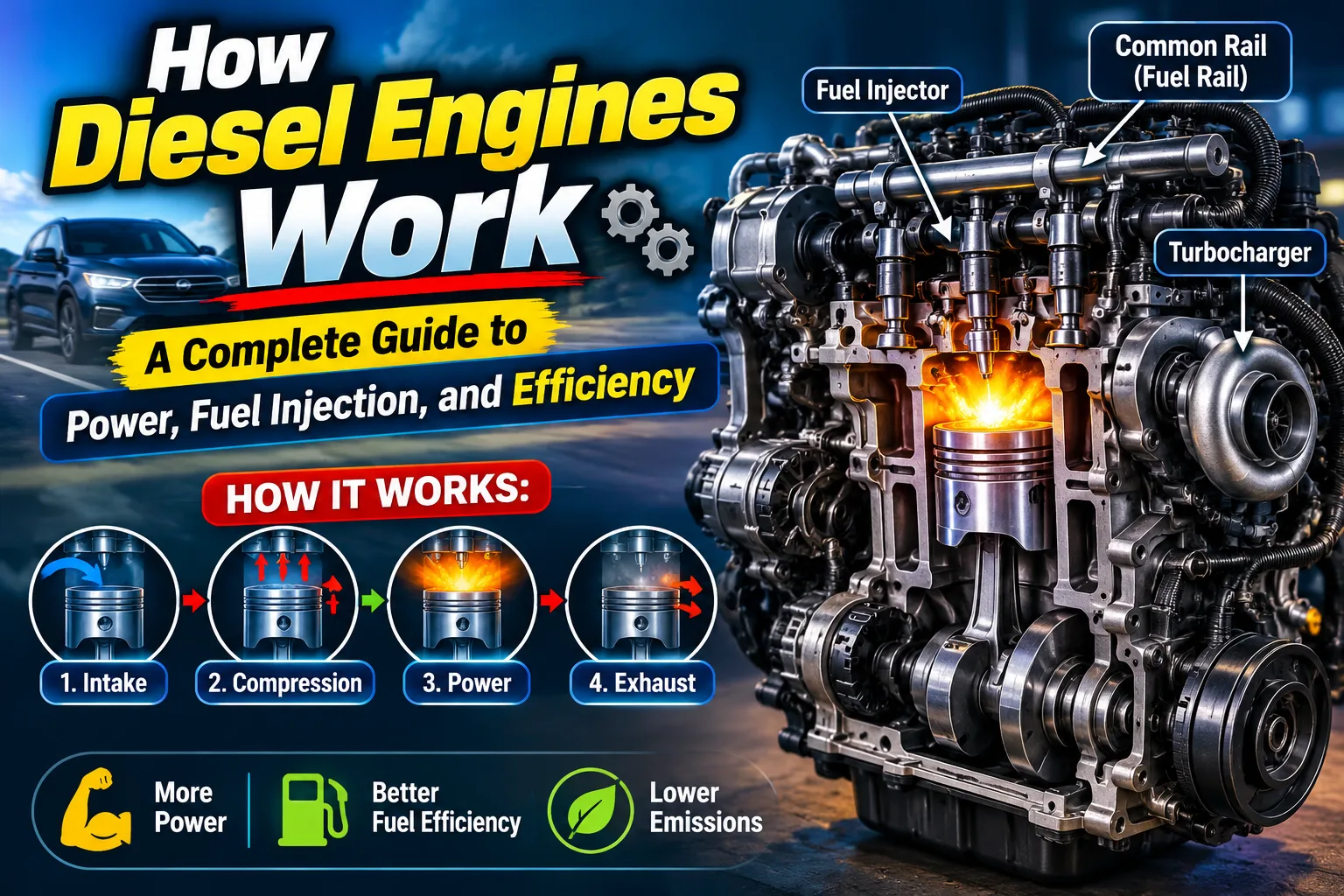
How Diesel Engines Work: A Complete Guide to Power, Fuel Injection, and Efficiency
By the end of this guide you will understand what actually happens inside a diesel engine, why it clatters at idle, why it makes so much torque, and why it sips fuel compared to a gasoline engine of similar size. You will also be able to follow a mechanic's explanation of injection timing and compr…
Read the article →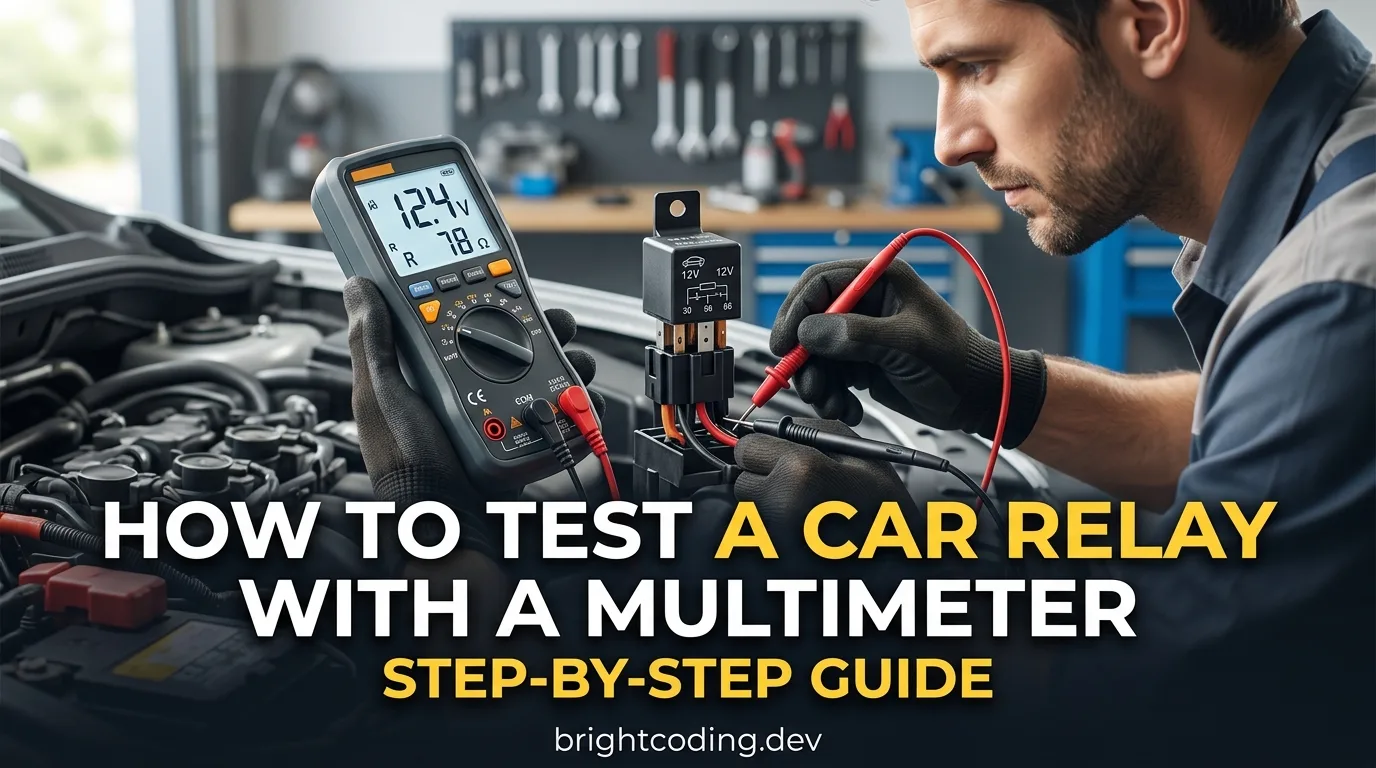
How to Test a Car Relay With a Multimeter: Step-by-Step Guide
A relay is one of the cheapest parts in your car and one of the most common reasons a fan, fuel pump, horn or headlight stops working. By the end of this guide you will be able to pull a suspect relay, test it on the bench with a multimeter, and know for certain whether it is dead or fine. Plan on…
Read the article →
Automotive Fuses Explained: Types, Functions, Sizes, and How to Test Them
A blown fuse is one of the few car problems you can diagnose completely on your own, with a tool that costs less than a coffee. By the end of this guide you will know what fuses actually do, how to tell the different types and sizes apart, how to test one in under a minute, and how to replace it sa…
Read the article →
10 Hidden Features in Your Car That Dealerships Rarely Explain
Most of the useful stuff in your car is buried in the owner's manual, and nobody reads the owner's manual. Not the salesperson, not the service advisor, and probably not you. That is fine. I am going to walk you through the features that actually change how you live with a car, the ones that make y…
Read the article →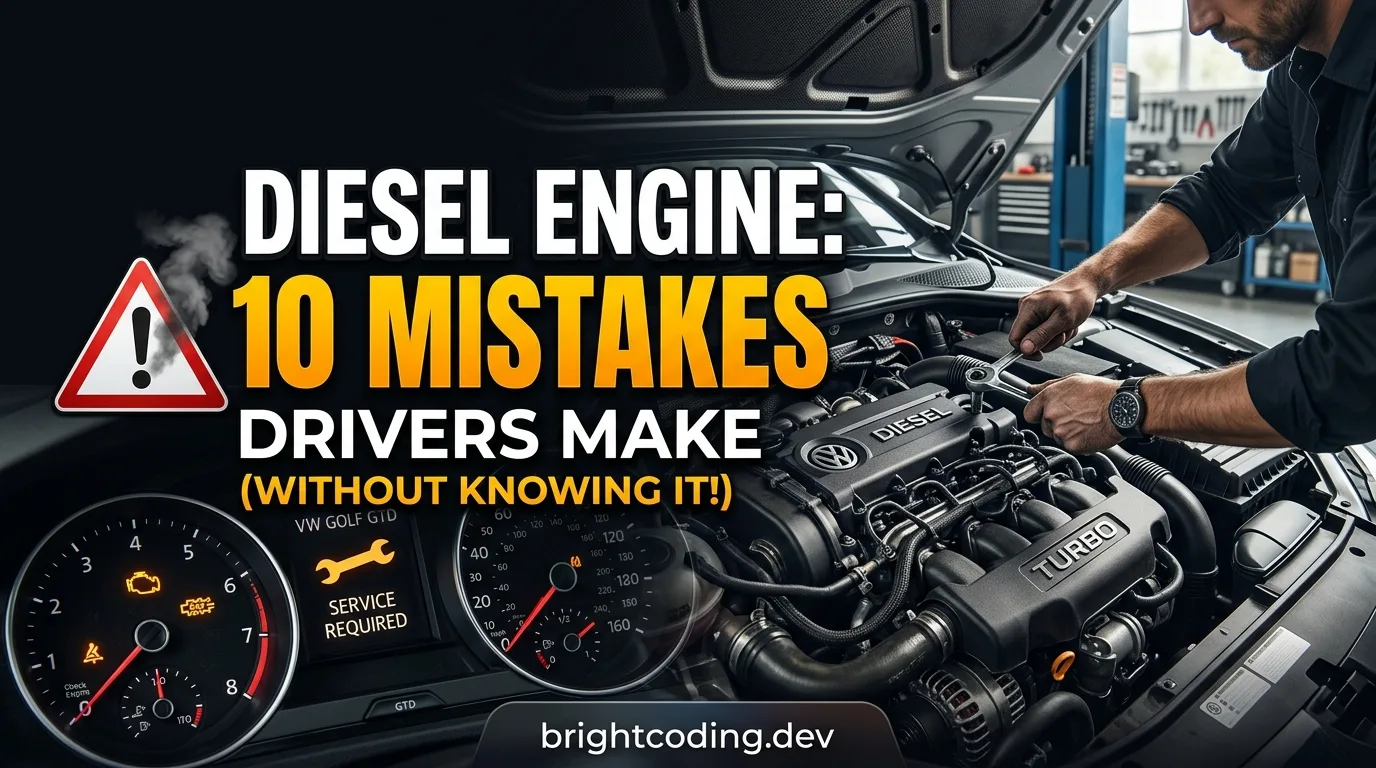
Diesel Engine: 10 Mistakes Drivers Make Without Knowing It
Diesel engines are tough, and that toughness fools people. A petrol car will often complain loudly when you treat it badly. A diesel just keeps going, quietly accumulating damage until the day it doesn't. That gap between "running fine" and "facing a four-figure repair bill" is where most owners lo…
Read the article →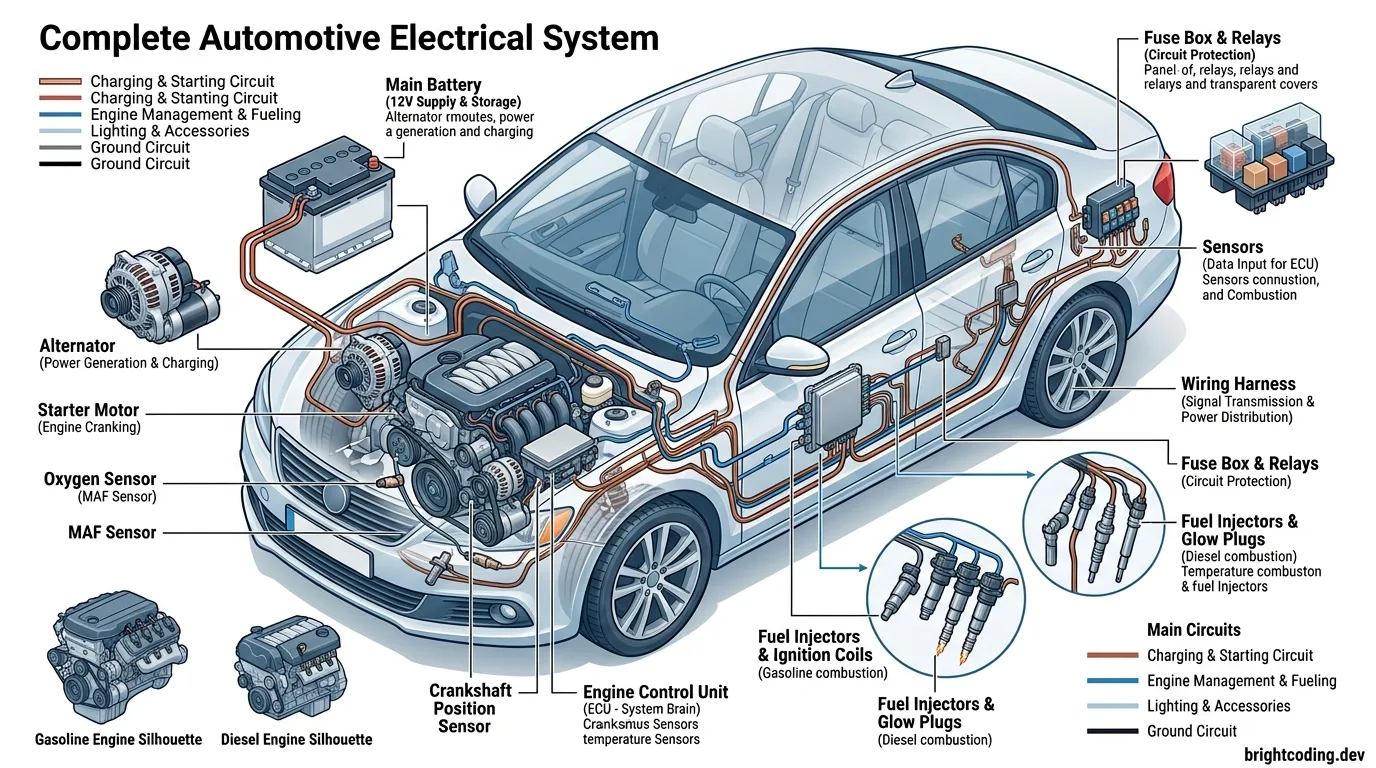
Understanding Automotive Electrical Systems: ECU, Sensors & Wiring
A complete guide to automotive electrical systems, covering batteries, alternators, starters, ECUs, sensors, actuators, wiring diagrams, diagnostics, safety, and the key differences between gasoline and diesel engine electrical systems.
Read the article →