How to Diagnose a Fuel Pump Circuit Using Fuses, Relays, and ECU Signals
A crank-no-start or a sudden stall can feel like a dead fuel pump. Often it isn't. The pump is fine, but the circuit feeding it has a blown fuse, a tired relay, a corroded ground, or an ECU that has decided not to send power. This guide walks you through checking the whole chain in a logical order…
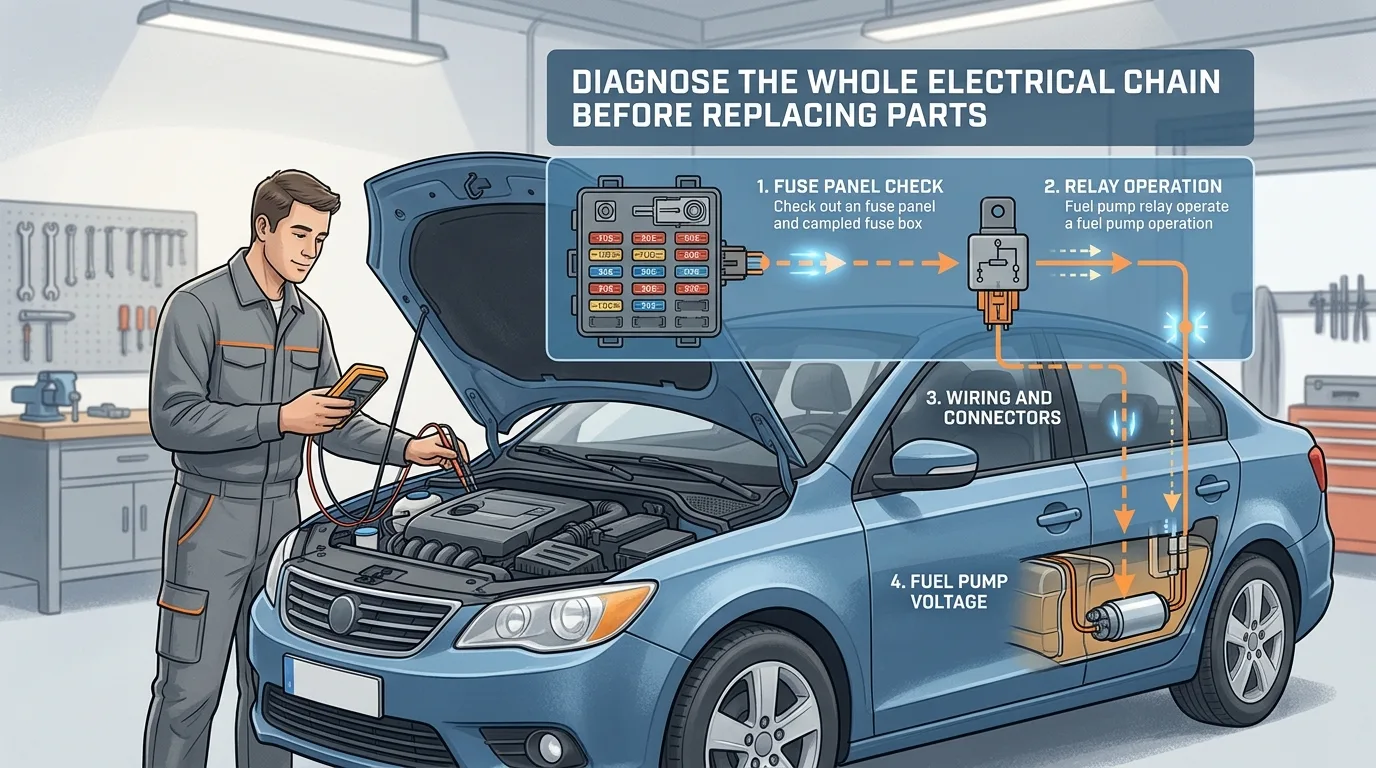
A crank-no-start or a sudden stall can feel like a dead fuel pump. Often it isn't. The pump is fine, but the circuit feeding it has a blown fuse, a tired relay, a corroded ground, or an ECU that has decided not to send power. This guide walks you through checking the whole chain in a logical order so you stop guessing and stop throwing parts at the car.
Done calmly with a basic multimeter, the whole diagnosis takes about an hour to ninety minutes. You'll be able to confirm whether power actually reaches the pump, whether the relay clicks and switches, and whether the ECU is commanding the pump on at all.
What you need before you start
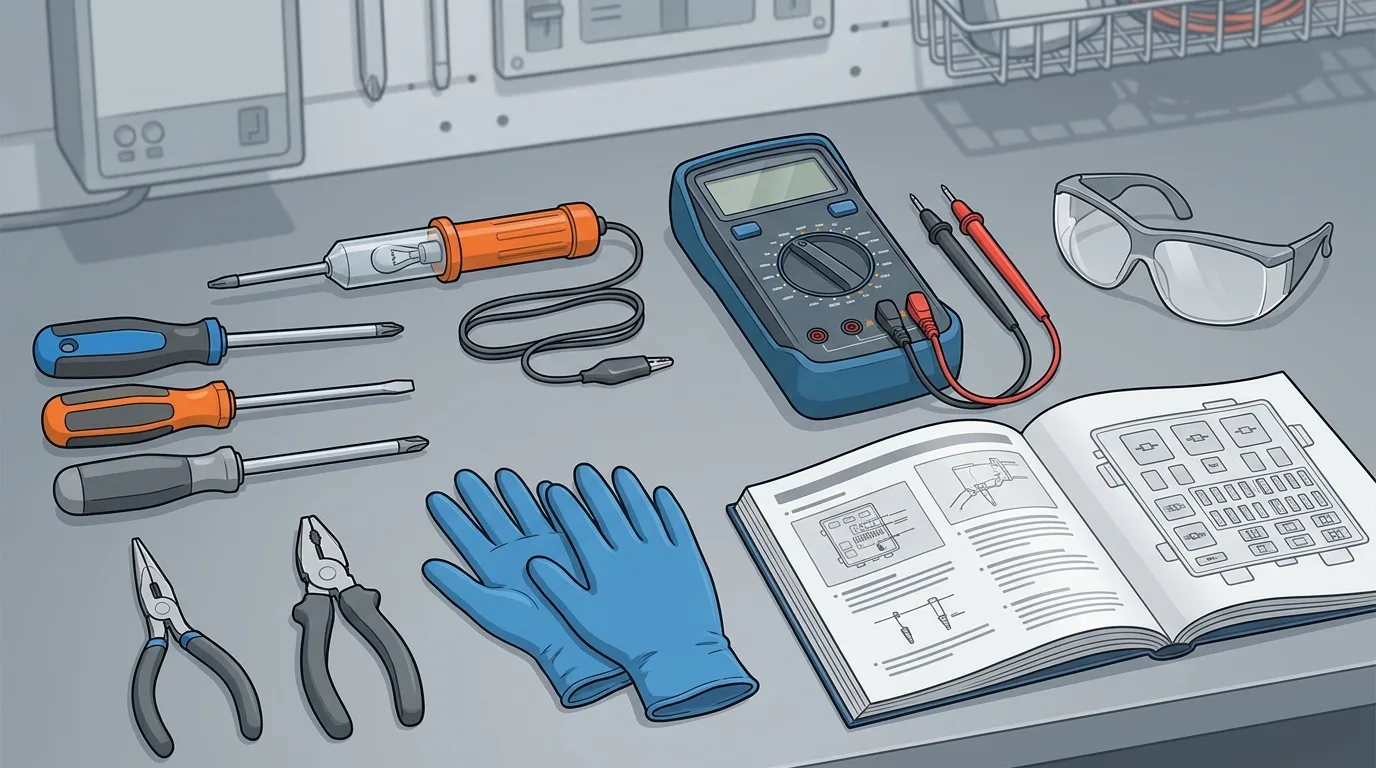
- A digital multimeter with a DC voltage setting and a continuity or resistance setting
- A test light (a proper incandescent one, not just an LED probe)
- The fuse box layout for your car, from the owner's manual or a factory service manual
- A wiring diagram for the fuel pump circuit if you can find one (Haynes manuals, factory service info, or a reputable online database)
- Basic hand tools: screwdrivers, pliers, and whatever trim tools your car needs to reach the pump or relay
- Safety glasses and nitrile gloves
- A helper is genuinely useful for the key-on steps
Before you crawl under anything, know this: gasoline is the obvious hazard, but the bigger everyday risk here is a short or a backfeed that fries the ECU. Disconnect the battery negative terminal before you unplug connectors or probe wires by hand. And never probe a fuel pump connector with the ignition on while the connector is loose near spilled fuel.
Step 1: Confirm it is actually a fuel delivery problem
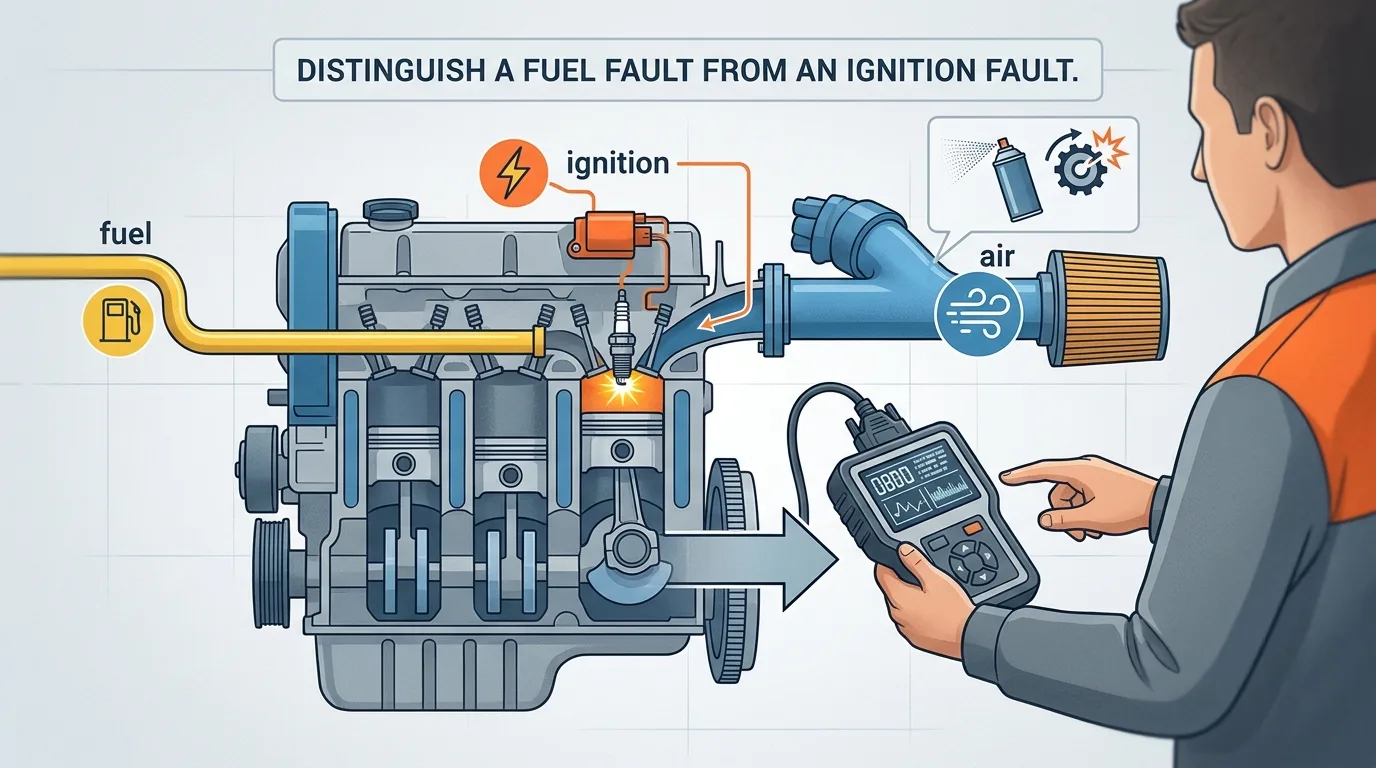
Before you touch the electrical system, verify the engine is missing fuel, not spark. A quick spray of starting fluid into the intake while cranking will tell you a lot: if it fires and dies, you have spark and a fuel problem. If it does nothing, look at ignition first.
You can also check for stored codes. A fuel pump circuit fault often sets a specific code, and our free OBD code lookup will help you interpret what your scanner pulled. Write down every code, not just the first one. A P0230-series code points straight at the pump circuit, which saves you a lot of time.
Tip: An engine that cranks strongly but never catches, with no fuel smell at the tailpipe, is a classic sign of a dead pump or dead pump circuit. An engine that sputters and dies points more toward a weak pump or a clogged filter. Different diagnosis, same starting point.
Step 2: Check the fuse, and check it properly
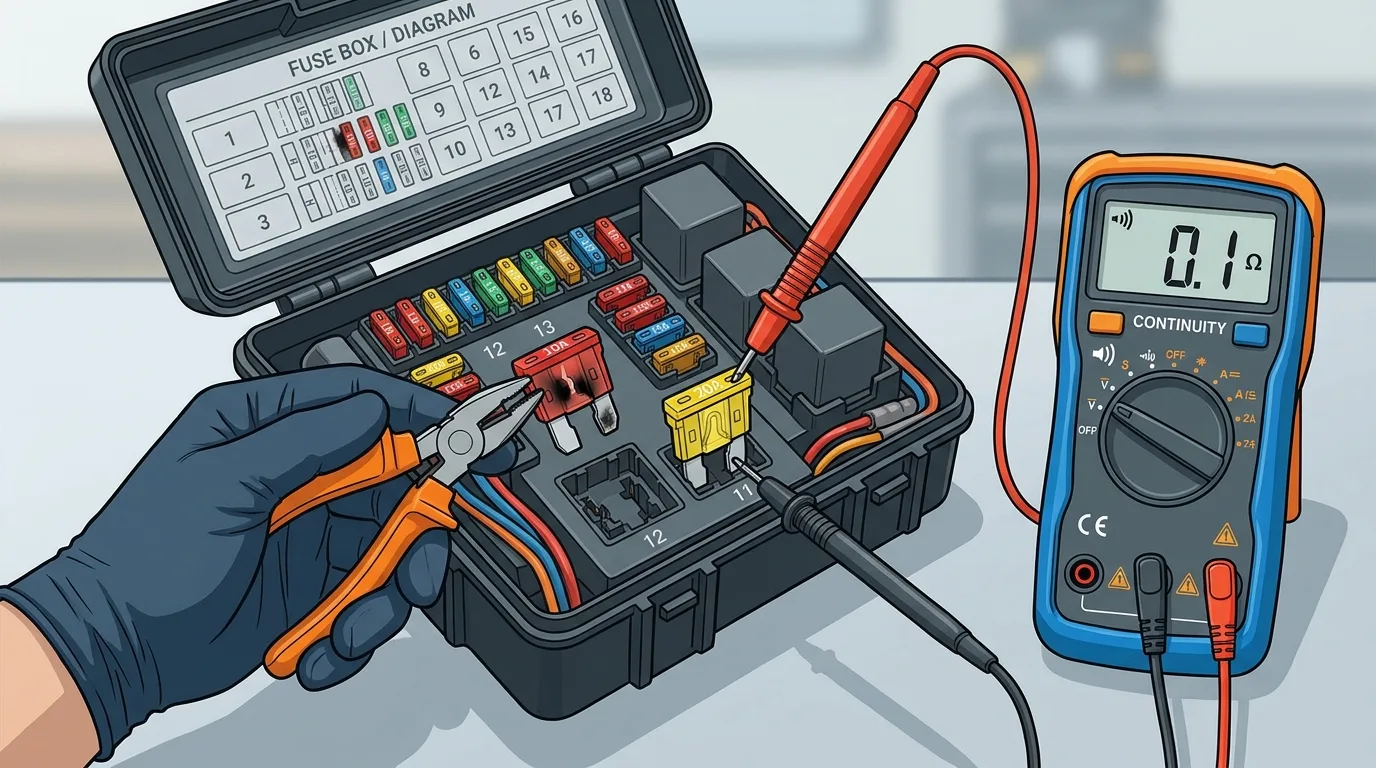
Locate the fuel pump fuse in the underhood or interior fuse box. Pull it and look at the element. A blown fuse has a visible break or a blackened, melted look. Sometimes the break is hairline and hard to see, so test it with your multimeter on continuity: a good fuse reads close to zero ohms, a blown one reads open.
If the fuse is blown, do not just replace it and drive off. Fuses blow for a reason. A shorted pump motor, a chafed wire, or a corroded connector can pop a fresh fuse in seconds. Replace it once, and if it blows again, stop and find the short.
Approximate cost: A replacement fuse is usually a couple of dollars. A whole assortment box is under twenty. Cheap insurance, and worth keeping in the glovebox.
Tip: Check the fuse box legend carefully. Many cars have two fuel-related fuses: one for the pump and one for the relay coil or ECU feed. A blown relay-coil fuse will stop the pump even though the main pump fuse looks fine.
Step 3: Listen for the relay and confirm it is switching
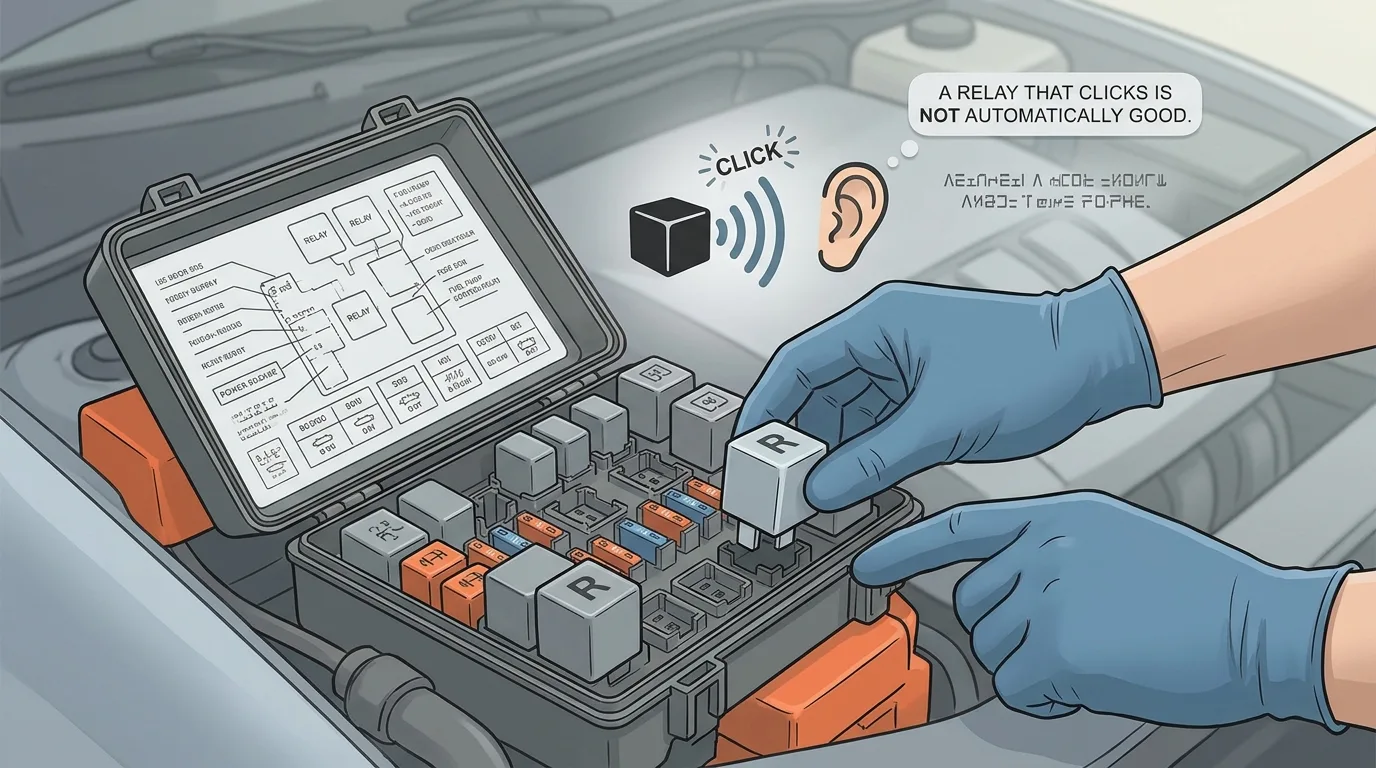
Turn the key to ON (not START) and listen near the fuse box. Most cars prime the fuel pump for a second or two, and you should hear a faint click from the relay and a brief hum from the tank. No click at all is a clue: the relay coil isn't being energized, or the relay is dead.
Pull the relay and inspect the terminals for corrosion, heat discoloration, or a loose fit. Swap it with an identical relay from another circuit in the same box (many cars share relay types) to see if the problem moves. If the pump primes with the borrowed relay, you found your culprit.
Approximate cost: A new fuel pump relay is typically in the fifteen to forty dollar range depending on the car. Verify the exact part for your model before buying.
Tip: A relay that clicks is not automatically good. The contacts inside can be burnt even though the coil still pulls. Swapping in a known-good relay is faster than testing the old one.
Step 4: Test for power and ground at the pump
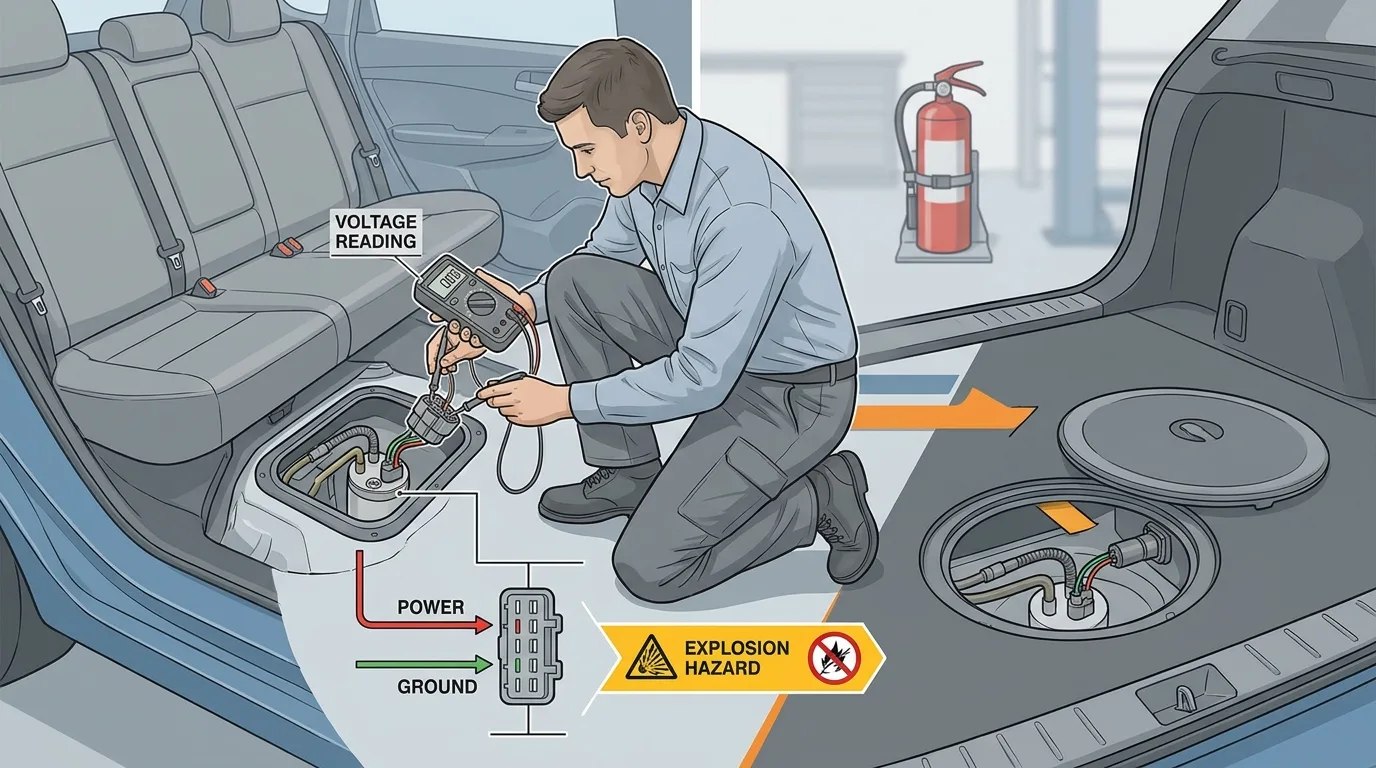
This is the step that separates "pump is dead" from "circuit is dead." Get to the pump connector. On most cars that means lifting the rear seat cushion or reaching through an access panel in the trunk floor. On some, unfortunately, it means dropping the tank, which is a bigger job.
With the connector unplugged and the key cycled to ON, probe the power wire (usually the one that reads battery voltage for the prime pulse) against a good ground. You should see roughly battery voltage for that brief prime window. Then check the ground wire for continuity to the chassis.
Safety: If you're working near the tank or an open fuel line, no smoking, no sparks, and keep a fire extinguisher within reach. Ventilate the area. Fuel vapor is heavier than air and pools in low spots.
Tip: If you have voltage at the connector but the pump doesn't run, the pump itself is the likely failure. If you have no voltage, the problem is upstream: fuse, relay, wiring, or ECU command. That single test changes everything you do next.
Step 5: Check the ground circuit, not just the power side
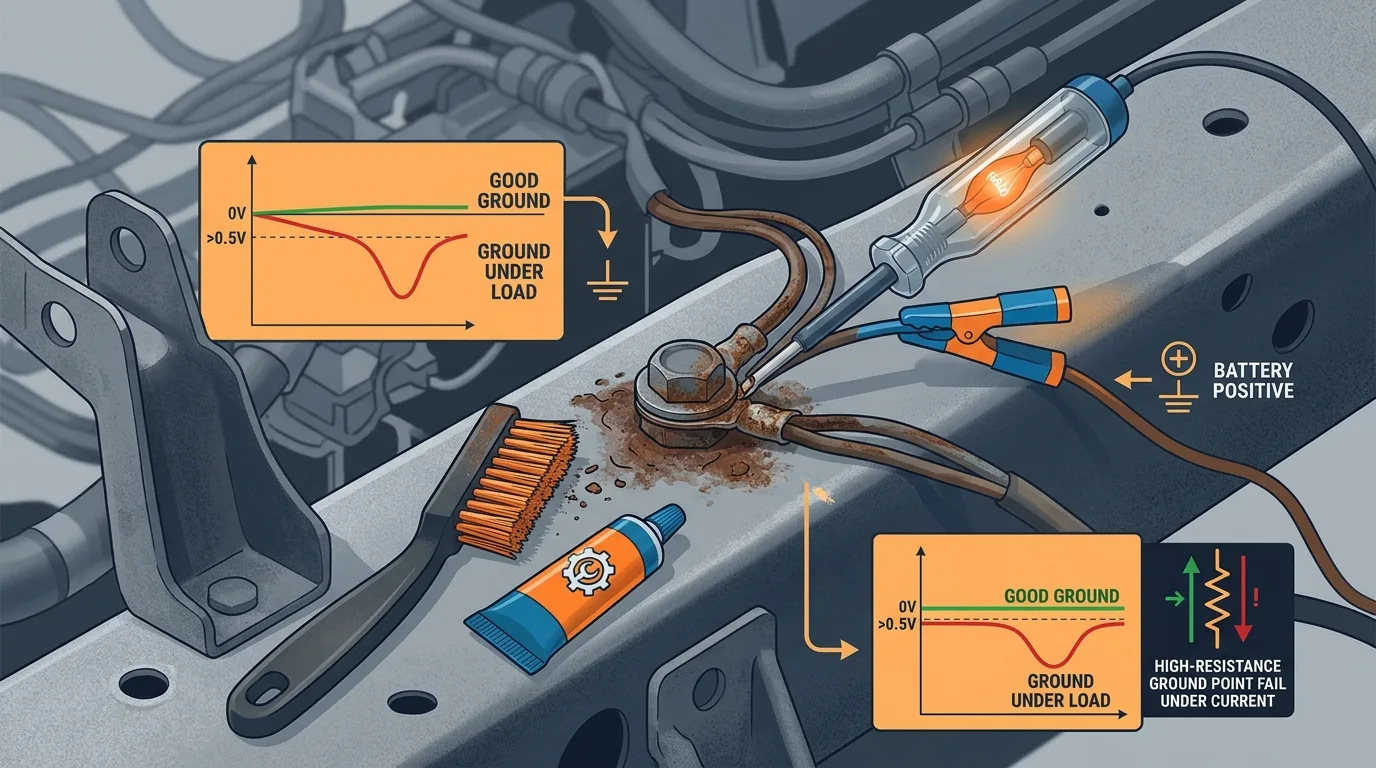
A surprising number of "dead pump" cases are bad grounds. The pump grounds to the chassis, often through a shared point that corrodes over time. With the key off, set your meter to continuity and check from the pump ground terminal to a clean chassis point. You want near-zero resistance. Anything more than a fraction of an ohm is suspect.
If the ground is bad, clean the terminal, tighten the fastener, and treat it with dielectric grease. Retest before you go further.
Tip: A test light is your friend here. Clip it to battery positive and touch the probe to the pump ground wire while cranking. If the light glows, the ground is working under load. A meter can read a good ground at rest and fail under real current.
Step 6: Verify the ECU is commanding the pump on
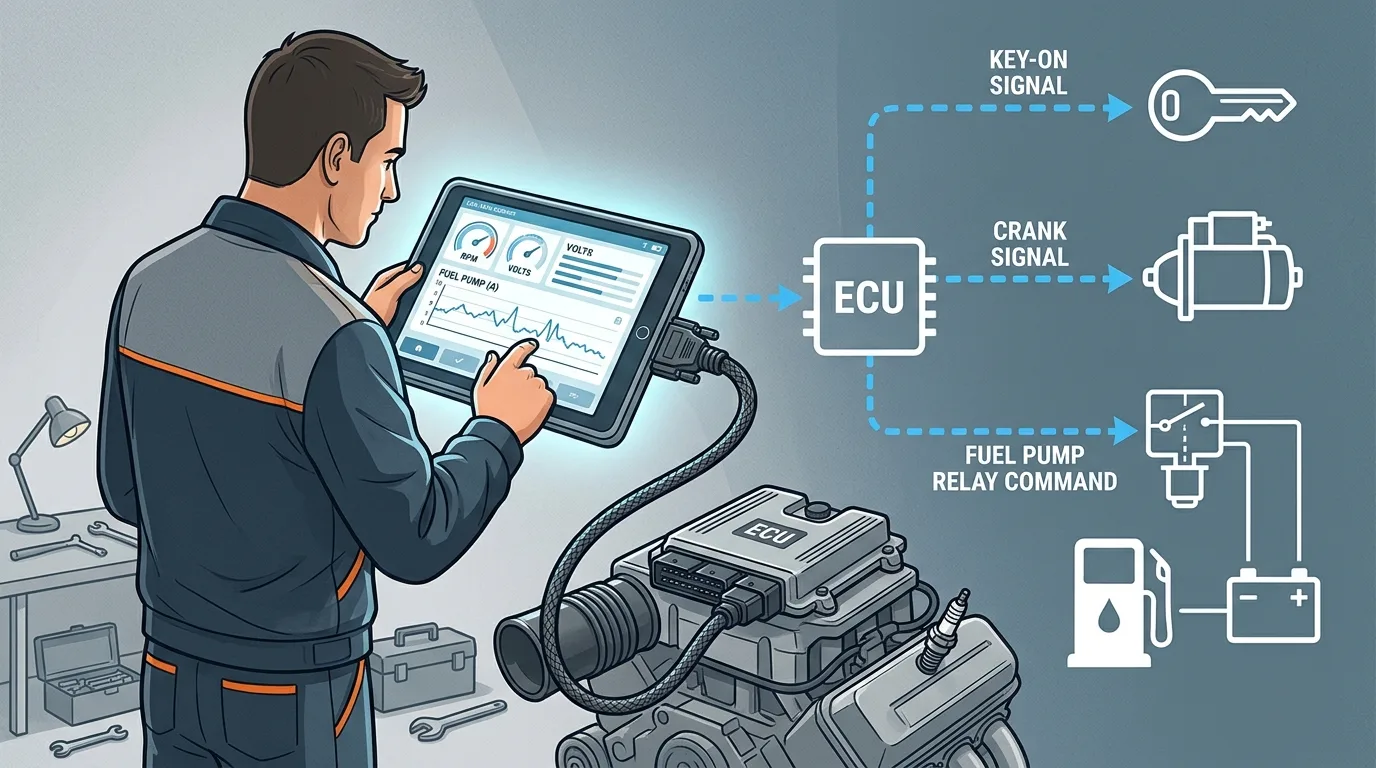
On most modern cars the ECU controls the pump relay, sometimes through a fuel pump control module. The ECU decides when to prime and when to run based on key position, crank signal, and sometimes a fuel pressure sensor. If the ECU isn't commanding the relay, the pump never gets power no matter how good the wiring is.
Use a scanner with live data to confirm the ECU sees the key on and crank signal. Our OBD live-data tool can help you watch those parameters in real time. If the ECU isn't seeing a crank signal, it may not command the pump at all, and you're chasing the wrong circuit.
Tip: Some cars only prime the pump when the ECU sees the engine cranking, not just key-on. If you're testing key-on and hearing nothing, try cranking while a helper listens. Don't assume silence at key-on means a fault.
Step 7: Check the fuel pump control module if your car has one
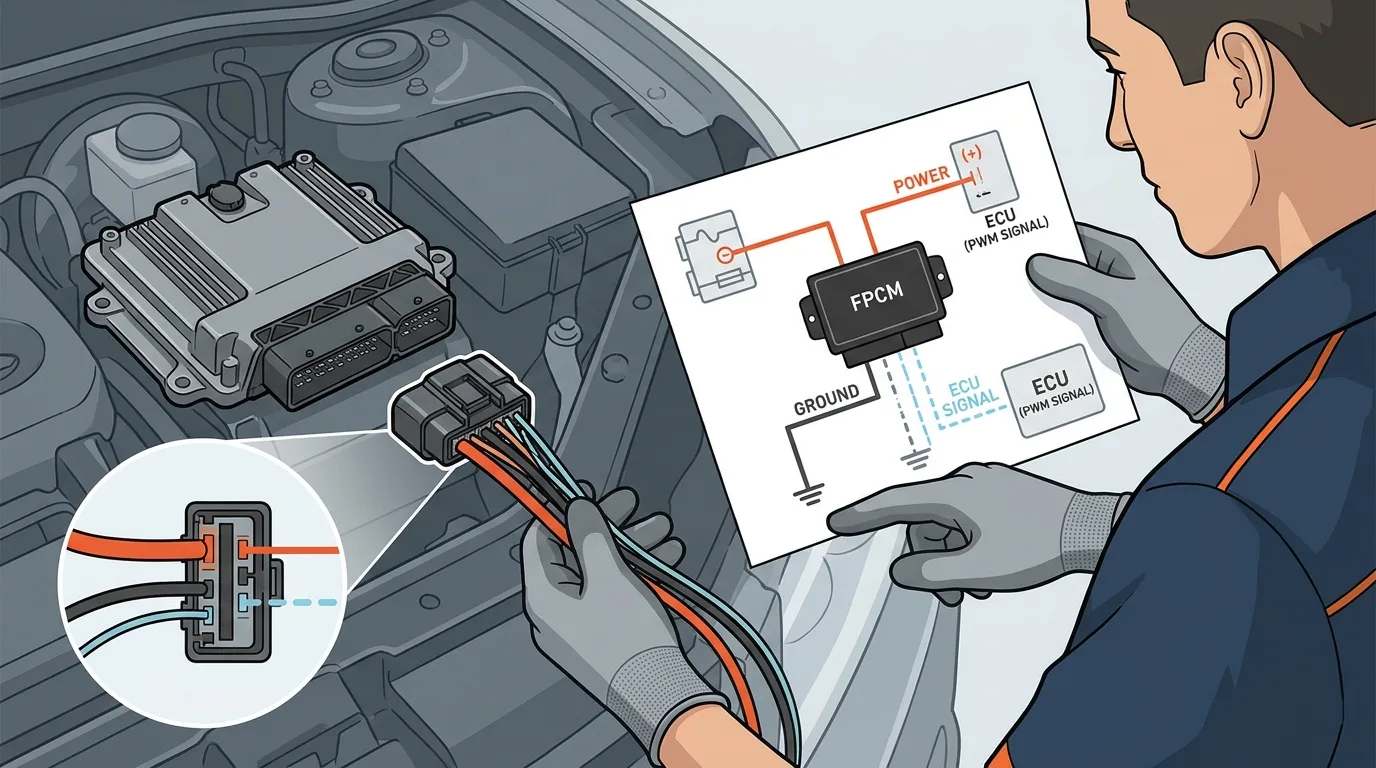
Many newer vehicles use a fuel pump control module (FPCM) that varies pump speed instead of a simple relay. These modules can fail, and they often throw their own codes. If your car has one, check for power and ground at the module, and look for a signal from the ECU.
This is where a factory wiring diagram earns its keep. Without one, you're guessing which wire does what. If you're stuck, the AI mechanic assistant can help you reason through the circuit based on your symptoms and codes, but always confirm against your car's actual diagram.
Approximate cost: An FPCM replacement can run from around fifty to several hundred dollars depending on the vehicle. Confirm the part number and price for your model.
Step 8: Confirm fuel pressure before you condemn the pump
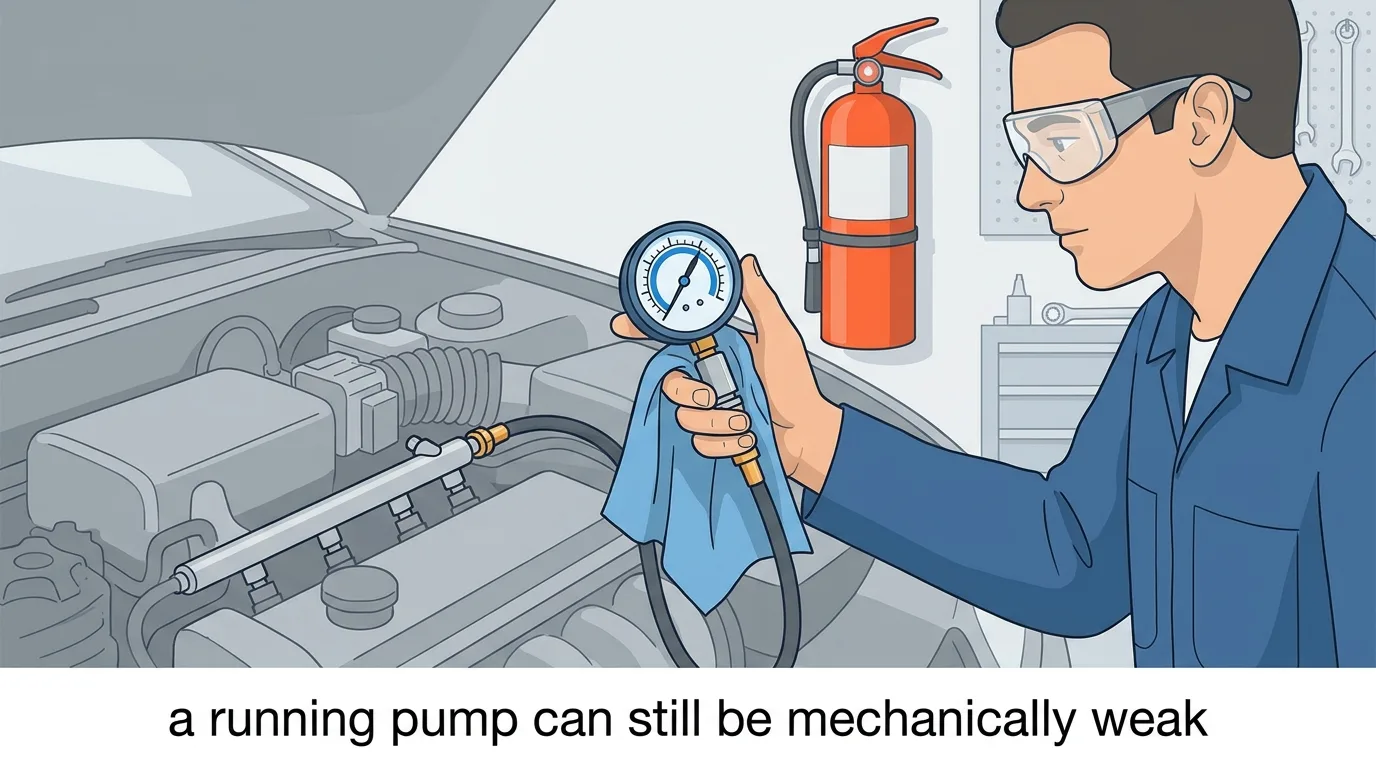
Even with a healthy circuit, low fuel pressure can mimic an electrical fault. If you have a fuel pressure gauge, check pressure at the rail or test port. Compare it to the spec in your service manual. A pump that runs but can't build pressure is failing mechanically, not electrically.
Safety: Relieve fuel pressure before opening any fuel line. Wrap a rag around the fitting, wear eye protection, and keep your face clear.
Tip: If pressure is low but the pump runs, check the filter and the pressure regulator before replacing the pump. Those are cheaper and easier.
Pro tips
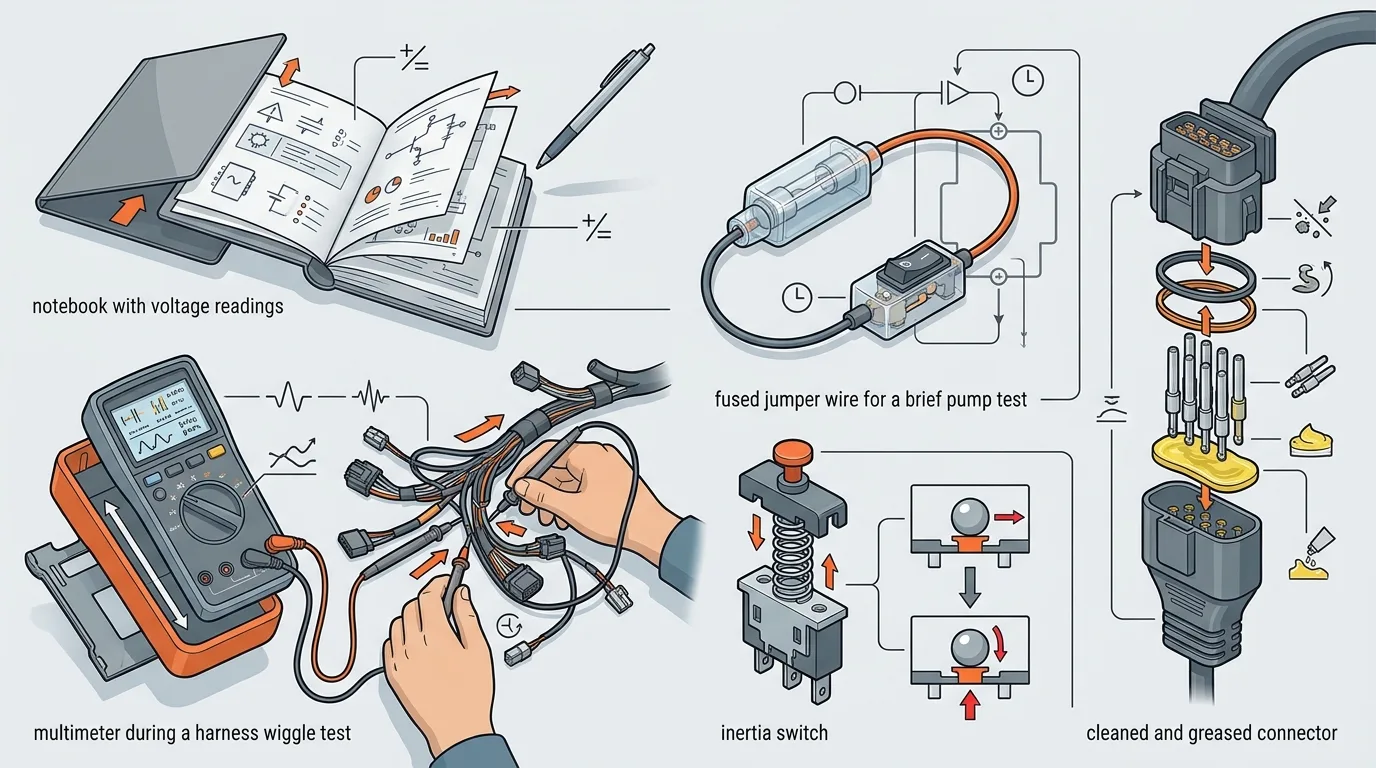
- Write down voltages as you go. A notebook beats memory when you're three steps deep and second-guessing yourself.
- Wiggle test the harness while watching your meter. Intermittent faults hide in chafed wires and loose pins.
- Use a fused jumper wire to bypass the relay and run the pump directly, but only briefly. It confirms the pump works and isolates the circuit.
- Check the fuel pump inertia switch if your car has one. A tripped switch cuts power to the pump and looks exactly like a dead pump.
- Clean and grease every connector you touch. Half the "fixed it" moments are just a clean connection.
- If the car has been sitting, stale fuel and a stuck pump are more common than electrical faults. Don't overlook the simple explanation.
Common pitfalls
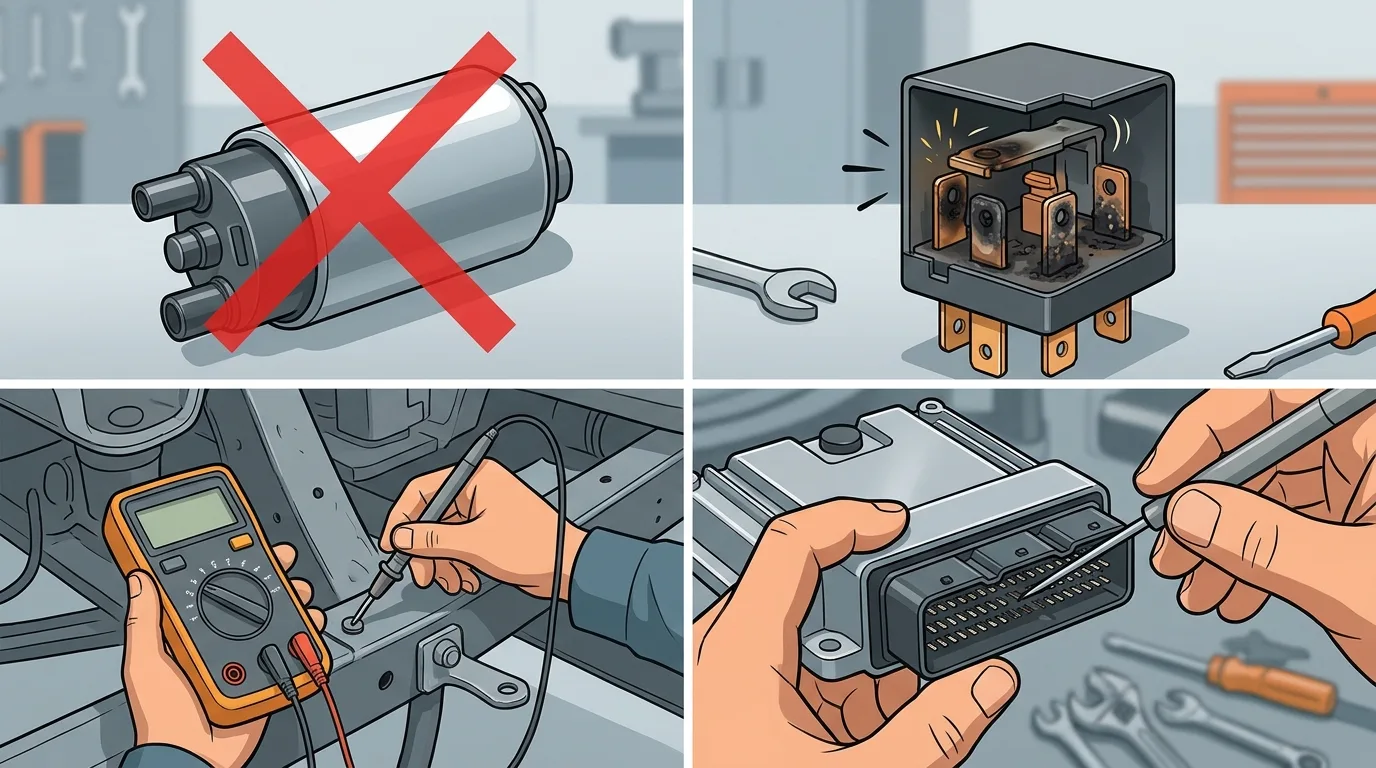
- Replacing the pump before testing the circuit. This is the most expensive mistake. Test power and ground at the connector first; it takes ten minutes and can save hundreds.
- Ignoring the relay coil fuse. A blown coil fuse kills the pump even when everything else looks fine. Check every fuse in the chain, not just the obvious one.
- Trusting a clicking relay. A click means the coil works, not that the contacts do. Swap it with a known-good relay to be sure.
- Skipping the ground check. A bad ground reads fine at rest and fails under load. Test it with a test light, not just a meter.
- Probing the ECU connector carelessly. One slipped probe can backfeed the ECU and create a new, worse problem. Use proper back-probe pins and keep the battery disconnected when unplugging modules.
Useful resources
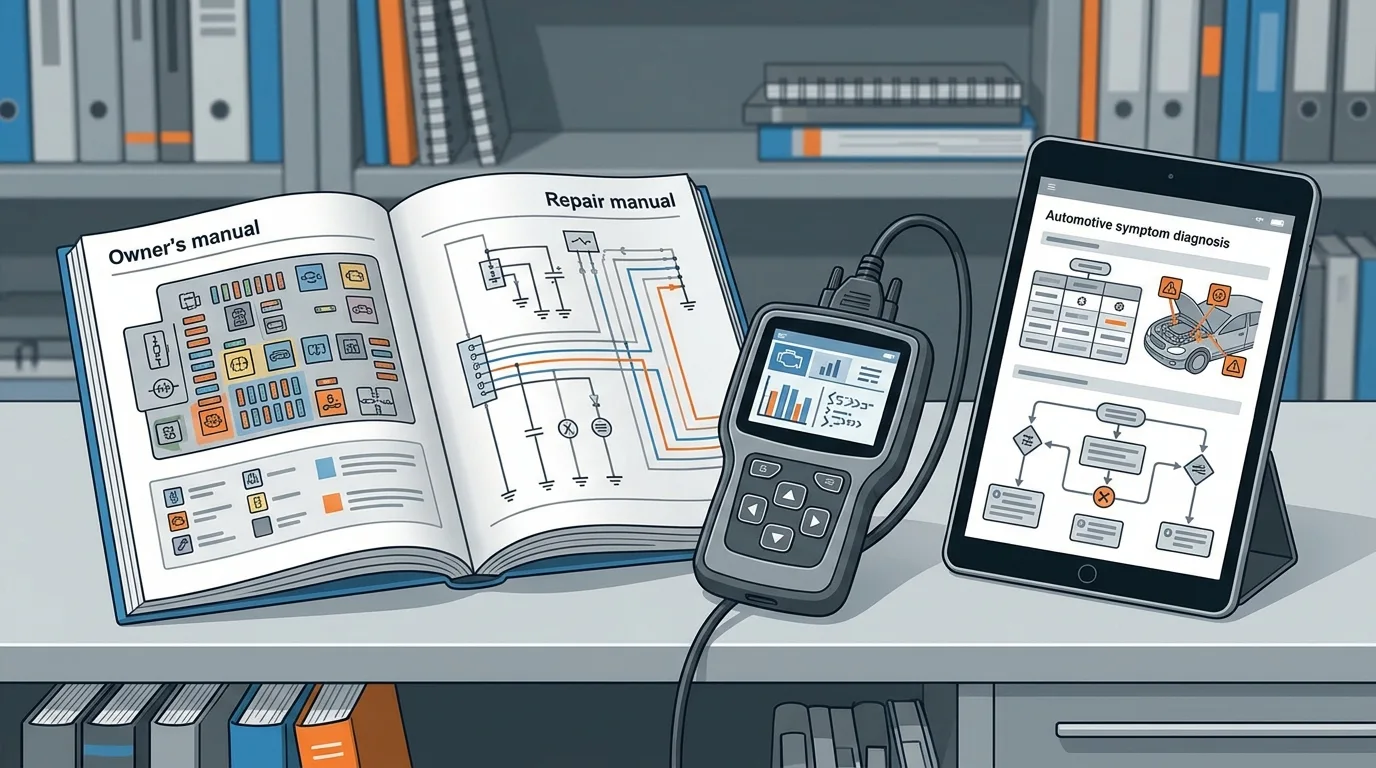
Your owner's manual is the first stop for fuse layouts and relay locations. A factory service manual or a reputable repair database gives you the wiring diagram you'll need for the ECU and control module steps. For generic OBD code definitions, use our free car tools page. If your symptoms are vague, the car symptom finder can point you toward the right system before you start probing.
FAQ
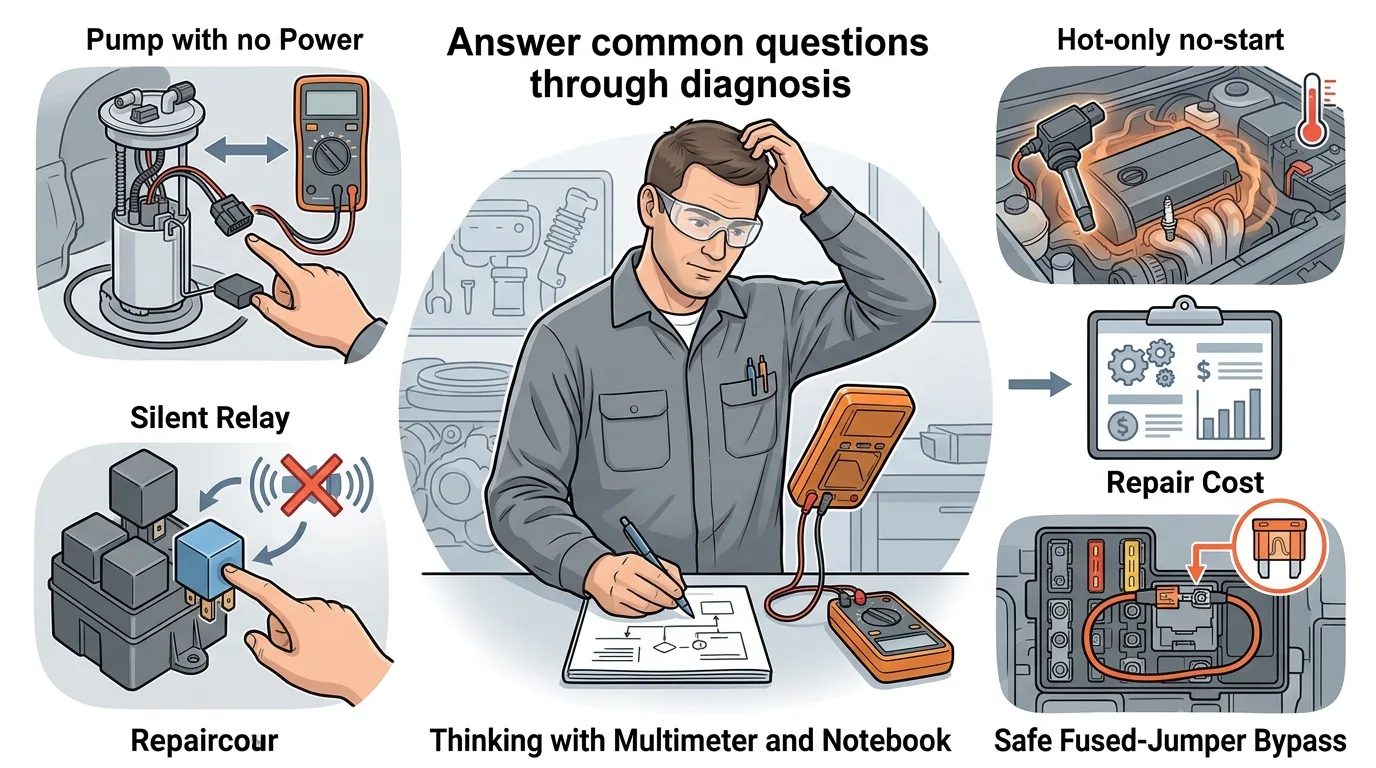
How do I know if my fuel pump is bad or just not getting power? Test for voltage at the pump connector during the prime window. Power there but no pump hum means the pump is likely bad. No power means the fault is upstream in the fuse, relay, wiring, or ECU command.
Can a bad relay cause a no-start without any codes? Yes. A relay with burnt contacts can fail silently and set no codes at all. That's why the swap test in Step 3 matters.
Why does my car crank but not start only when it's hot? Heat-soaked pumps and failing relays both act up when warm. Test the circuit when the car is hot and failing, not when it's cold and working.
How much does it cost to fix a fuel pump circuit? It depends entirely on what failed. A fuse is a few dollars, a relay is typically under fifty, and a pump or control module can run into the hundreds. Always diagnose before buying parts.
Is it safe to bypass the fuel pump relay to test the pump? Briefly, with a fused jumper, and only with the ignition off until the jumper is set. Never leave a bypass in place, and never do it near spilled fuel.
Final word
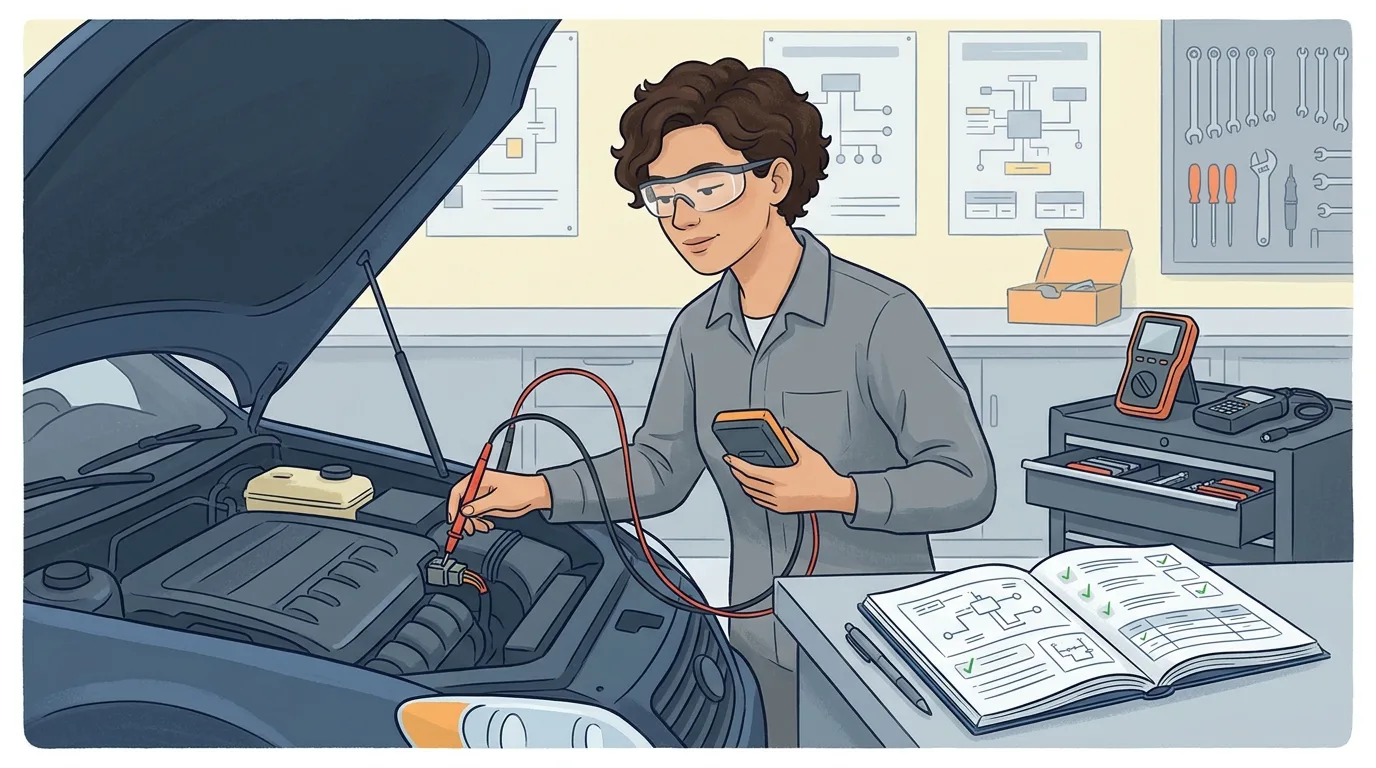
Fuel pump circuit diagnosis is mostly patience and a cheap multimeter. Work from the fuse outward, confirm power and ground at the pump, and check what the ECU is actually commanding. You'll find the fault, and you'll probably save yourself the cost of a pump you didn't need. Take your time, keep fuel safety first, and trust the meter over the guess.
Related articles
Stop Throwing Parts at Your Car: The 4-Step Sensor Diagnostic Method That Actually Works
A fault code points to a circuit or behavior—not automatically a failed sensor. This practical guide covers the 8 engine sensors every DIYer and technician should understand, plus the 4-step test process that prevents expensive parts-swapping and misdiagnosis.
Read the article →
The Ultimate Guide to Engine Sensors: 40+ Types, Functions, and Failure Symptoms (Gasoline & Diesel)
Engine sensors control performance, fuel economy & emissions. Learn 40+ sensor types, failure symptoms, testing methods, and OBD-II codes for gas & diesel engines.
Read the article →
OBD2 Scanner Guide: How to Choose and Use One
A check engine light comes on and your stomach drops a little. It shouldn't. With a cheap OBD2 scanner and about twenty minutes, you can read the code, understand what it means, and decide whether to fix it yourself or hand it to a shop with a clear description of the problem. This guide walks you…
Read the article →
10 Hidden Car Settings You Can Activate Today
Most modern cars ship with features the previous owner never turned on, and the manual buries them three sections deep. This article answers the questions car owners actually search for: which settings are hiding in plain sight, how to find them, and what to do when the option seems missing. No too…
Read the article →
How to Reprogram a Car Key Remote After a Battery Change
You changed the battery in your key fob, and now the car won't lock. Or it locks but the trunk button does nothing. Annoying, and a little alarming.
Read the article →
Bad ECU Symptoms: 15 Warning Signs You Should Never Ignore
Your car starts fine one morning, then cranks forever the next. Or it idles rough, stalls at a light, and the dash lights up like a Christmas tree. The ECU (engine control unit) is the computer that runs fuel, spark, and a dozen other systems, and when it misbehaves, the symptoms look like everythi…
Read the article →