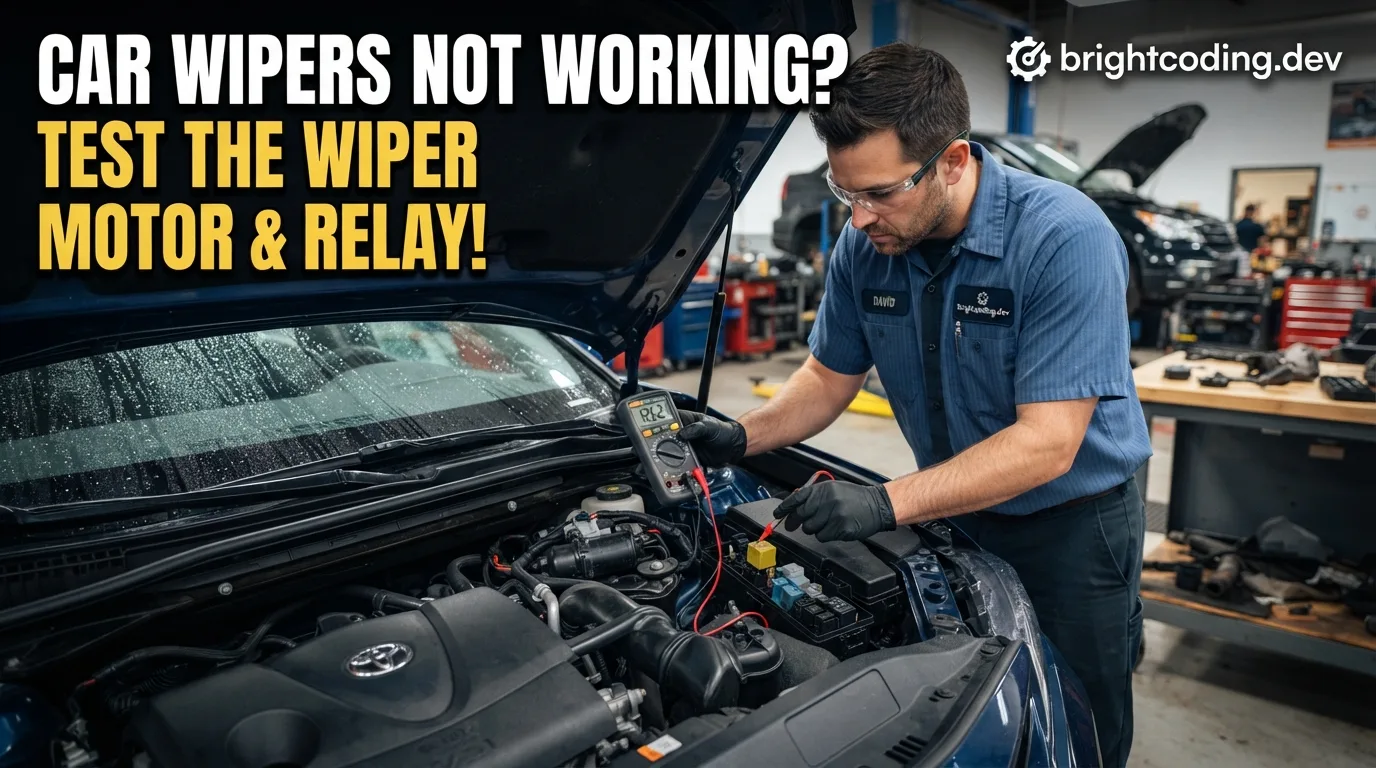
Car Wipers Not Working? Don't Panic, Test the Wiper Motor and Relay First (Save $300+)
Rain starts pounding the windshield. You flick the wiper stalk. Nothing. Or worse they crawl, screech, or stop dead in the middle of the glass while traffic stacks up behind you. Before you reach for your wallet and let a shop replace the entire wiper assembly, take a breath. Most "dead wiper" horror stories end with a $10 fuse, a $25 relay, or a five-minute ground fix not a $400 motor job.
This guide walks you through the two most overlooked culprits: the wiper motor and the wiper relay. You'll learn the exact tests to run, the tools you need (a basic multimeter and a 12V source), and the red flags that tell you when to stop testing and start replacing. By the end, you'll know whether you're dealing with a DIY-friendly fix or a genuine motor failure and you'll have the confidence to prove it before spending a dime.
First: The 60-Second "Cheap Checks" That Save Hundreds
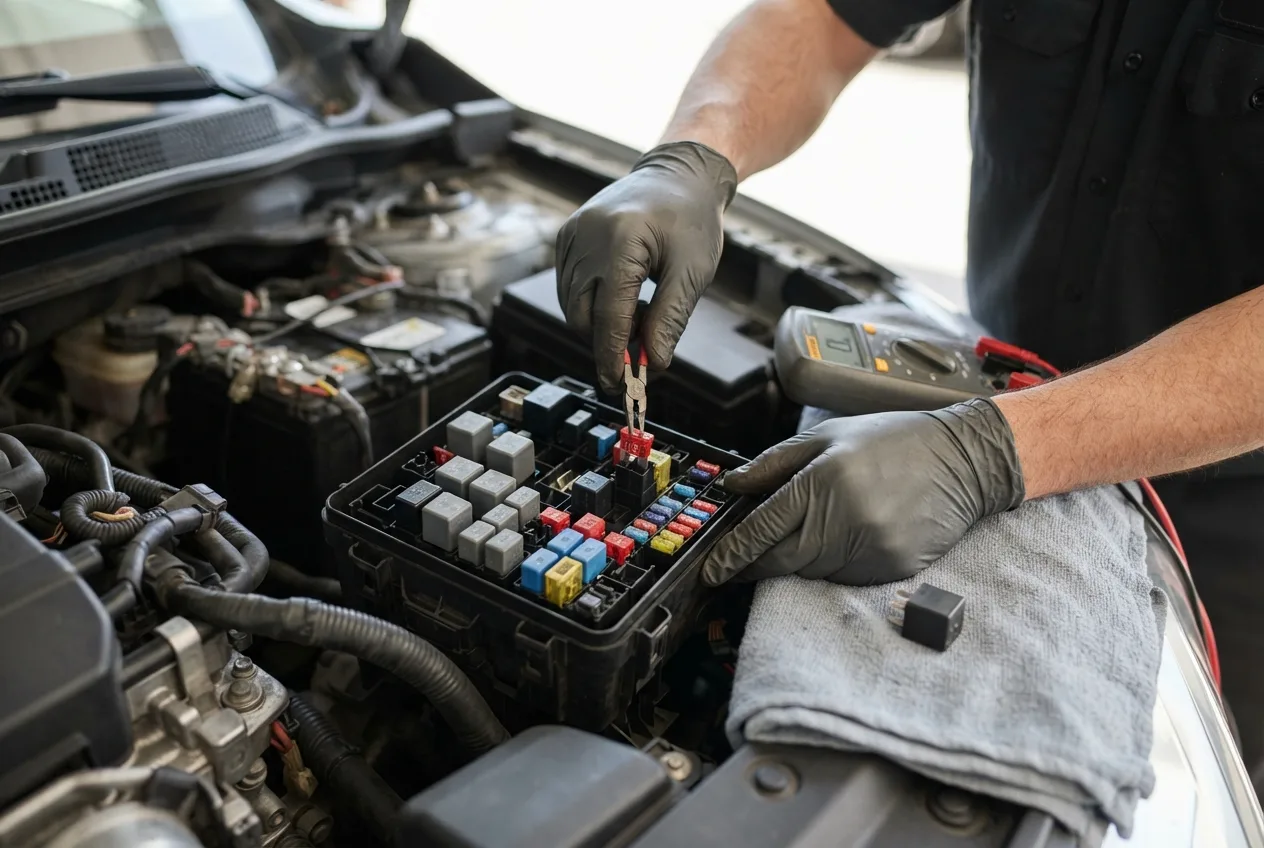
Before you touch the motor or relay, eliminate the embarrassingly simple stuff. A blown fuse or a loose ground is responsible for a shocking number of "dead wiper" cases, and you can rule both out in under a minute.
Fuse first. The wiper fuse often shares a circuit with the washer pump or a body control module, so check the label on your fuse box lid rather than guessing. On many vehicles, the wiper fuse lives in the engine-compartment fuse block (look for a 20A or 25A fuse marked "WIP" or "Wiper"). Pull it, inspect the filament, and swap it with a known-good fuse of the same rating. If the new fuse blows immediately, you have a short stop and investigate before continuing.
Relay swap. Locate the wiper relay in the power distribution center (PDC) or fuse box. Pull it, look for burnt or discolored pins, and swap it with an identical relay from a non-critical circuit (like the horn or rear defroster). If the wipers spring to life, you've found your culprit in 60 seconds.
Ground check. Most wiper motors ground through their mounting bolts or a short strap to the body. Rust or corrosion under that mounting point can kill speed or stop the motor entirely. Don't just eyeball it a quick voltage-drop test will reveal a bad ground.
Once those three are clear, it's time to test the two big suspects.
How to Test the Wiper Relay (Bench Test with a Multimeter)
The wiper relay is an electrical switch that tells the motor when to run, how fast to run, and when to park. When it fails, you get classic symptoms: wipers stuck on one speed, no intermittent function, wipers that won't turn off, or a humming motor that never moves the blades. Testing it takes about five minutes with a multimeter.
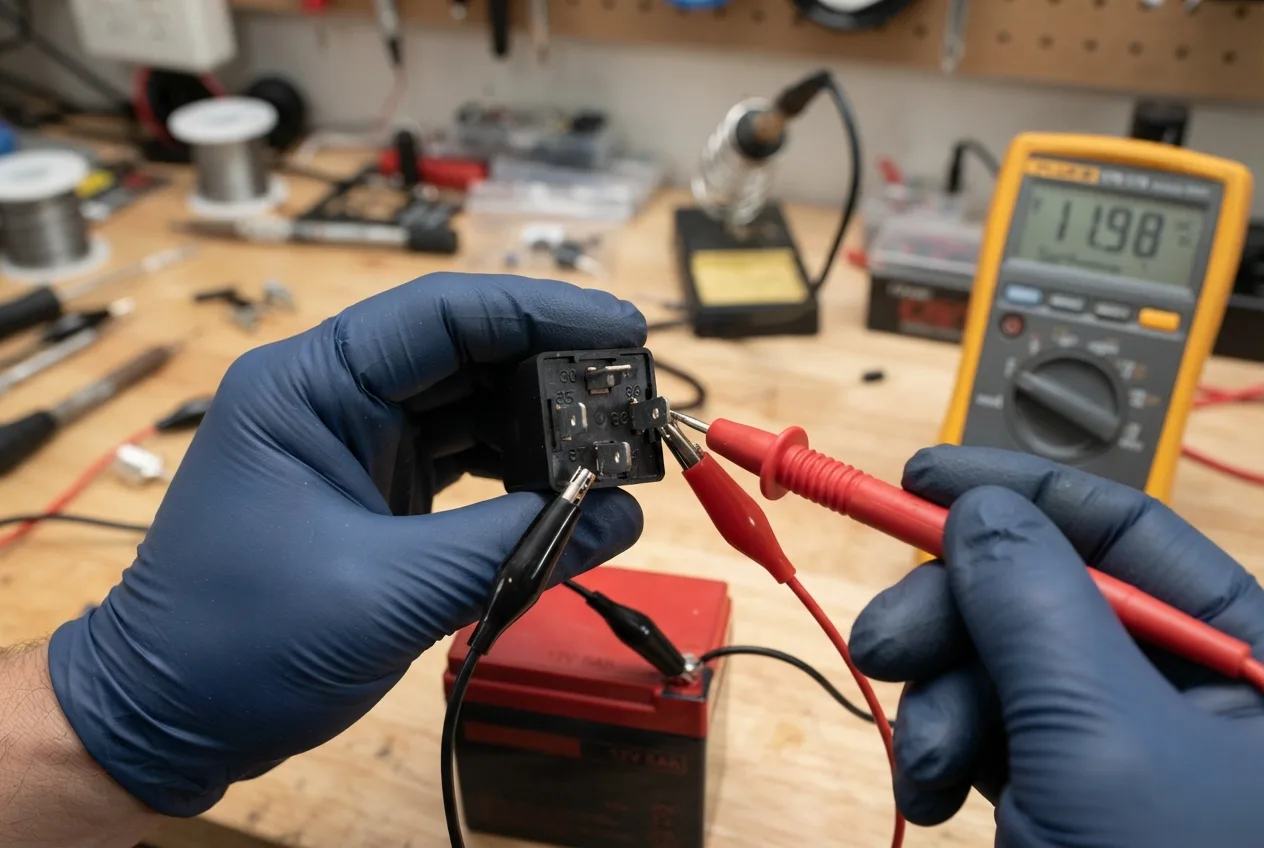
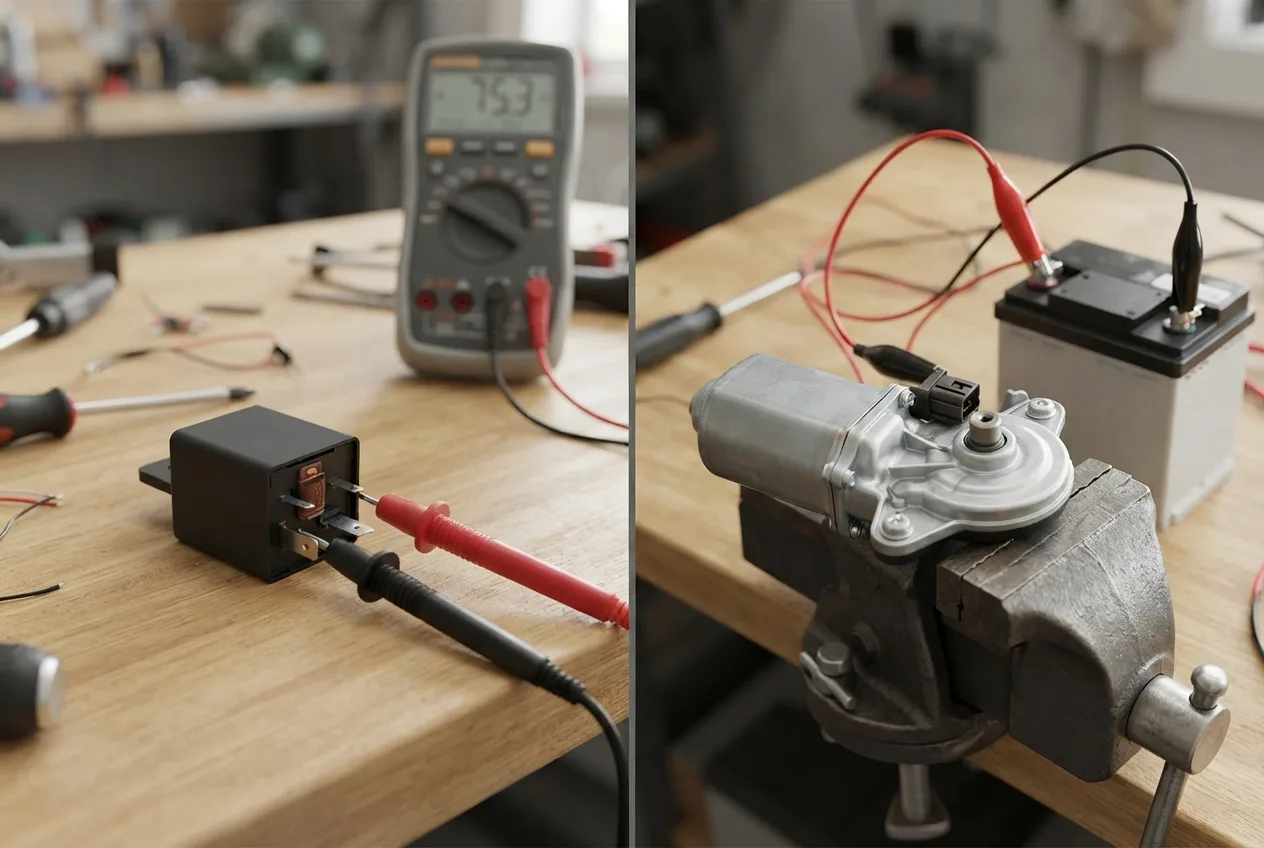
Step 1: Identify the relay terminals. Most automotive relays use standard pin numbering: 85 and 86 are the electromagnet coil, 30 is the common power feed, 87 is the normally-open output, and 87A is the normally-closed output. Check the diagram printed on the relay body don't rely on pin position alone.
Step 2: Test the coil resistance. Set your multimeter to ohms (Ω) and touch the probes to pins 85 and 86. A healthy 12V automotive relay should read 50–120 Ω. On many wiper relays, the specification is tighter 75 ± 5 Ω is a common factory value. An open circuit (OL) or a wildly different reading means the coil is fried replace the relay.
Step 3: Test the de-energized contacts. With no power applied, check continuity between terminals 30 and 87A. You should have continuity (near 0 Ω). Between 30 and 87, you should have no continuity. If either result is wrong, the relay's internal contacts are worn or stuck.
Step 4: Energize the relay and re-test. Apply 12V to pin 86 and ground to pin 85 (a 9V battery often works for a quick bench test, though 12V is ideal). You should hear or feel a faint click. With the relay energized, continuity should now exist between 30 and 87, and no continuity between 30 and 87A. If the relay fails any of these steps, replacement is cheap and easy often under $25.
Pro tip: If the relay clicks but the wipers still don't move, the relay's coil is fine but its high-current contacts may be burned. The bench test above will catch that. If the relay passes every test, move on to the motor.
How to Test the Wiper Motor (Bench Test with a 12V Source)
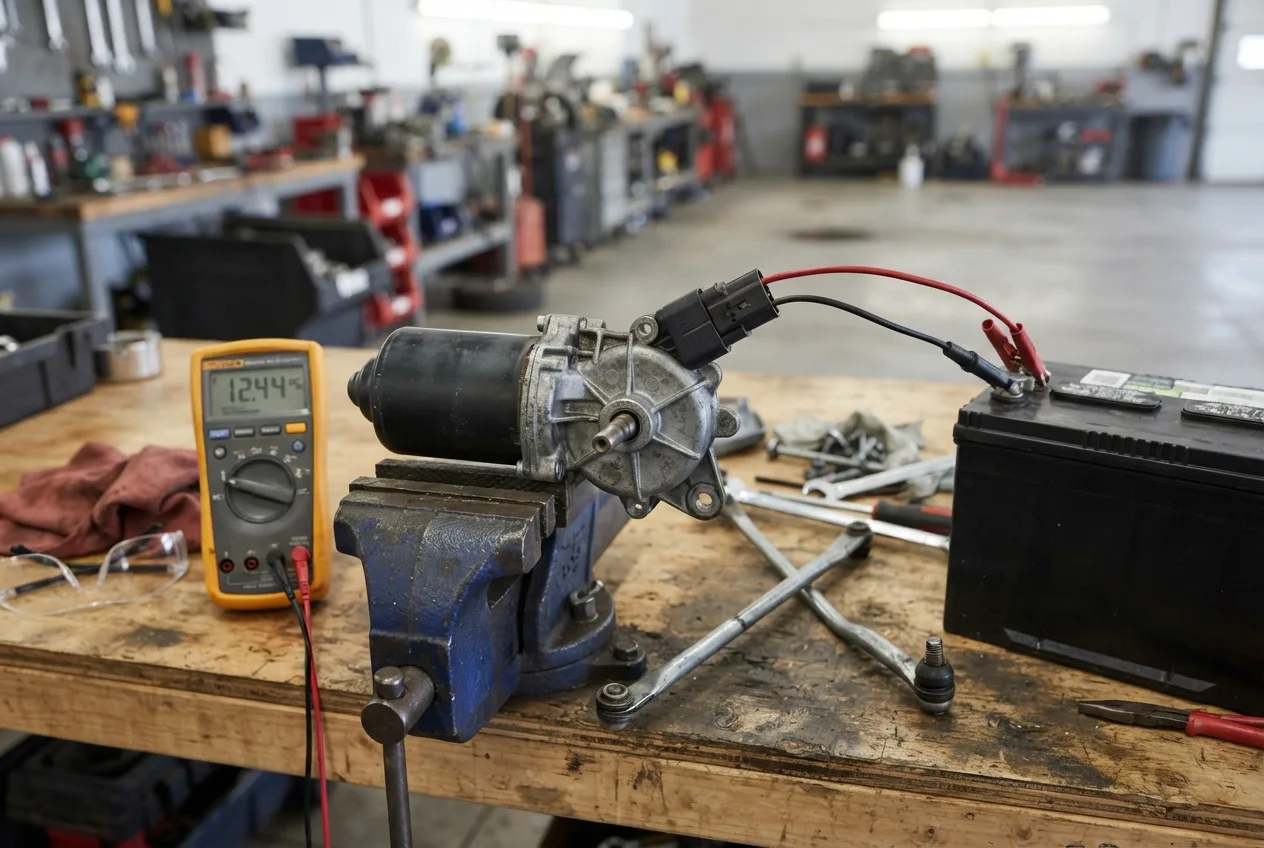
The wiper motor is a permanent-magnet motor with three brushes: one for low speed, one for high speed, and one for the park function. If your wipers work on high but not low (or vice versa), you're almost certainly dealing with a worn brush not a relay or a switch. If they stop wherever they please instead of parking at the bottom, the park contact inside the motor is the problem.
Safety First
- Disconnect the negative battery cable before unplugging the motor.
- Never run the wipers on a dry windshield the drag draws massive current, overheats the motor, and scratches the glass.
- Work in a well-ventilated area and keep loose clothing away from the linkage.
The Bench Test (Motor Out of the Car)
This is the definitive test. If the motor runs smoothly on both speeds on the bench, the motor is fine the fault is upstream in the switch, relay, or wiring.
- Disconnect the linkage from the motor and unplug the electrical connector.
- Identify the motor terminals. The exact pinout varies by vehicle, but most wiper motors have a ground terminal (often labeled 31) and separate low-speed and high-speed power terminals (often 53 and 53B). Consult your service manual or the wiring diagram on the motor body.
- Ground the motor case. Connect a jumper wire from the motor's metal housing (or its designated ground terminal) to the negative post of a 12V battery or a fused 12V power source.
- Test low speed. Touch a jumper wire from the positive 12V source to the low-speed terminal. The motor should spin smoothly and at a moderate pace.
- Test high speed. Move the positive jumper to the high-speed terminal. The motor should spin noticeably faster.
- Test the park function (if accessible). Connect power to the park terminal (often labeled 53A). The motor should run and then stop at a specific position the park position. If it doesn't stop consistently, the internal park switch is failing.
What the results mean:
- Both speeds run smoothly: The motor is healthy. Your problem is a relay, switch, wiring, or ground issue.
- One speed works, the other doesn't: A brush is worn. The motor needs replacement or rebuild.
- Neither speed works, but the motor hums or gets warm: The motor is seized or the internal gears are stripped.
- Nothing happens at all: Check your ground connection and jumper wires first, then suspect a dead motor.
The In-Car Voltage Test (If You Can't Remove the Motor)
If removing the motor is a hassle, you can test the circuit at the motor connector with the motor still installed.
- Disconnect the motor connector.
- Turn the ignition on and the wiper switch to low speed.
- Use a multimeter set to DC voltage. Backprobe the low-speed power terminal (positive probe) and a good chassis ground (negative probe). You should see battery voltage (12V+) at the connector.
- Repeat for high speed.
- If you have power at the connector but the motor doesn't run when plugged back in, the motor is bad. If you don't have power at the connector, the fault is upstream relay, switch, fuse, or wiring.
Relay vs. Motor: A Quick Symptom Cheat Sheet
| Symptom | Most Likely Culprit | Quick Test |
|---|---|---|
| Wipers dead on all settings | Fuse, relay, or ground | Check fuse; swap relay; voltage-drop test ground |
| Only one speed works (e.g., high but not low) | Wiper motor (worn brush) | Bench test motor on both speeds |
| No intermittent function; wipers only run continuously | Wiper relay | Bench test relay coil and contacts |
| Wipers won't turn off | Wiper relay (stuck contacts) | Swap relay with known-good unit |
| Wipers stop mid-windshield, won't park | Motor park switch | Bench test park terminal |
| Motor hums but blades don't move | Seized linkage or stripped motor gears | Disconnect linkage; test motor unloaded |
| Wipers slow in rain, fine when dry | Dry/sticking linkage bushings (not electrical) | Lubricate pivots before replacing motor |
The Cost Reality: DIY vs. Shop (and What You Actually Need to Replace)
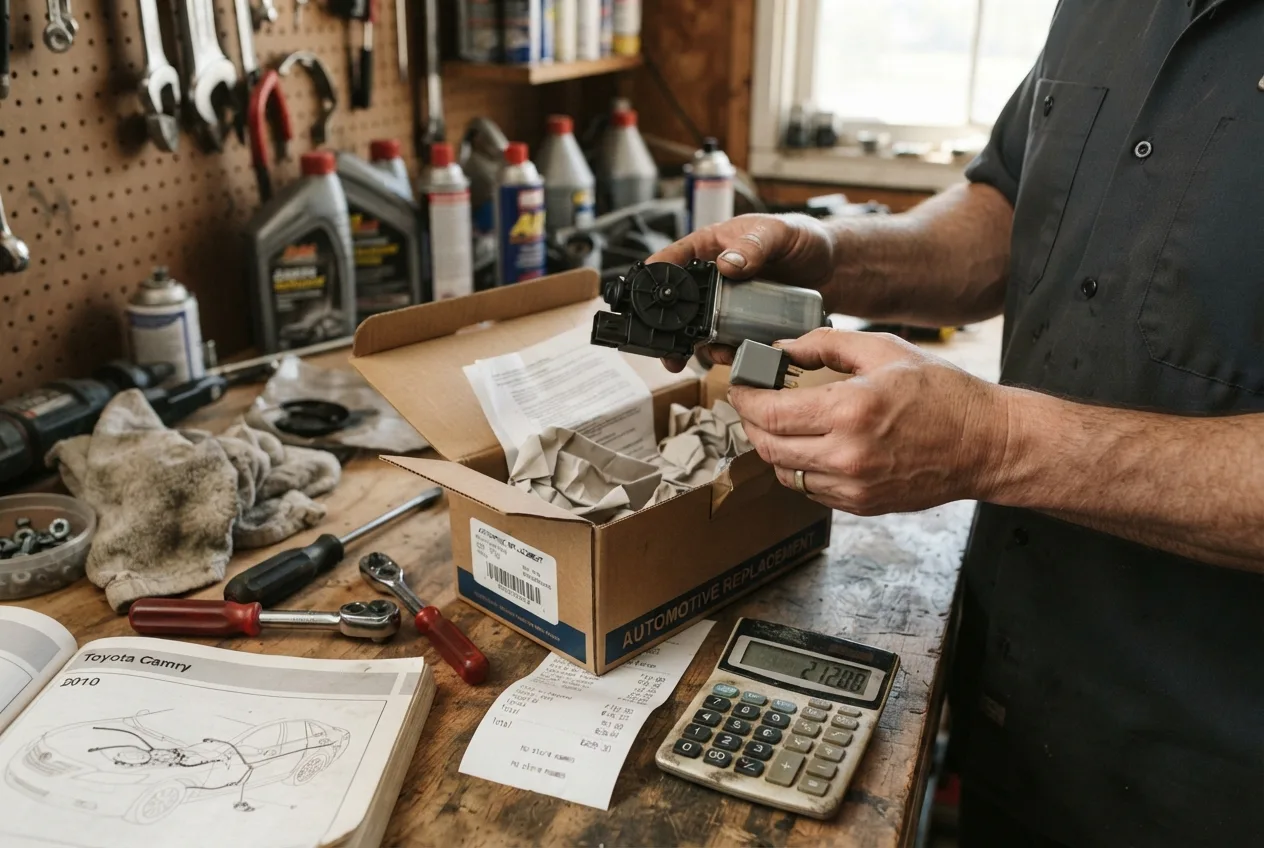
Here's where the stakes get real. A full wiper motor replacement at a shop typically runs $300 to $800, with parts alone costing $150 to $400 and labor adding another $100 to $350. OEM motors can push the part cost to $250–$600, while aftermarket units range from $43 to $385.
But if you've done the tests above and found that the motor is fine, you might be looking at a $10 fuse, a $25 relay, or a free ground cleaning. That's the difference between a weekend project and a car payment.
DIY difficulty: Replacing a wiper motor is rated moderate, taking roughly 1.5 to 3.5 hours for a DIYer with basic tools. The hardest part is often accessing the motor you may need to remove the wiper arms, cowl panel, and linkage. If you're comfortable with that, you can save $100–$350 in labor by doing it yourself.
When to stop and call a pro: If you've confirmed the motor is dead and the replacement requires removing complex cowl panels or navigating sensitive electronic modules (common on modern luxury vehicles), the extra labor cost may be worth avoiding the risk of broken plastic clips or damaged wiring.
FAQs: Your Wiper Motor and Relay Questions, Answered

Q: Can a bad relay damage the wiper motor? Yes. A failing relay can send erratic voltage or cause the motor to run continuously, which can overheat and prematurely wear the motor. That's why testing the relay is step one.
Q: Why do my wipers only work on high speed? This is a classic sign of a worn low-speed brush inside the wiper motor. It's not usually a relay or switch issue. A bench test will confirm it.
Q: My wipers won't turn off is it the relay or the switch? It's most commonly the relay (stuck contacts or internal timer failure). Swap the relay with an identical one from another circuit. If the problem follows the relay, replace it.
Q: How do I know if my wiper motor is bad or just the linkage? Disconnect the linkage from the motor and run the motor by itself. If the motor spins freely on both speeds, the motor is fine the linkage is seized, binding, or has stripped bushings.
Q: Where is the wiper relay located? It's usually in the power distribution center (PDC) in the engine compartment, or in the interior fuse box. Check the layout label on the inside of the fuse box lid for the exact location and relay number.
The Bottom Line
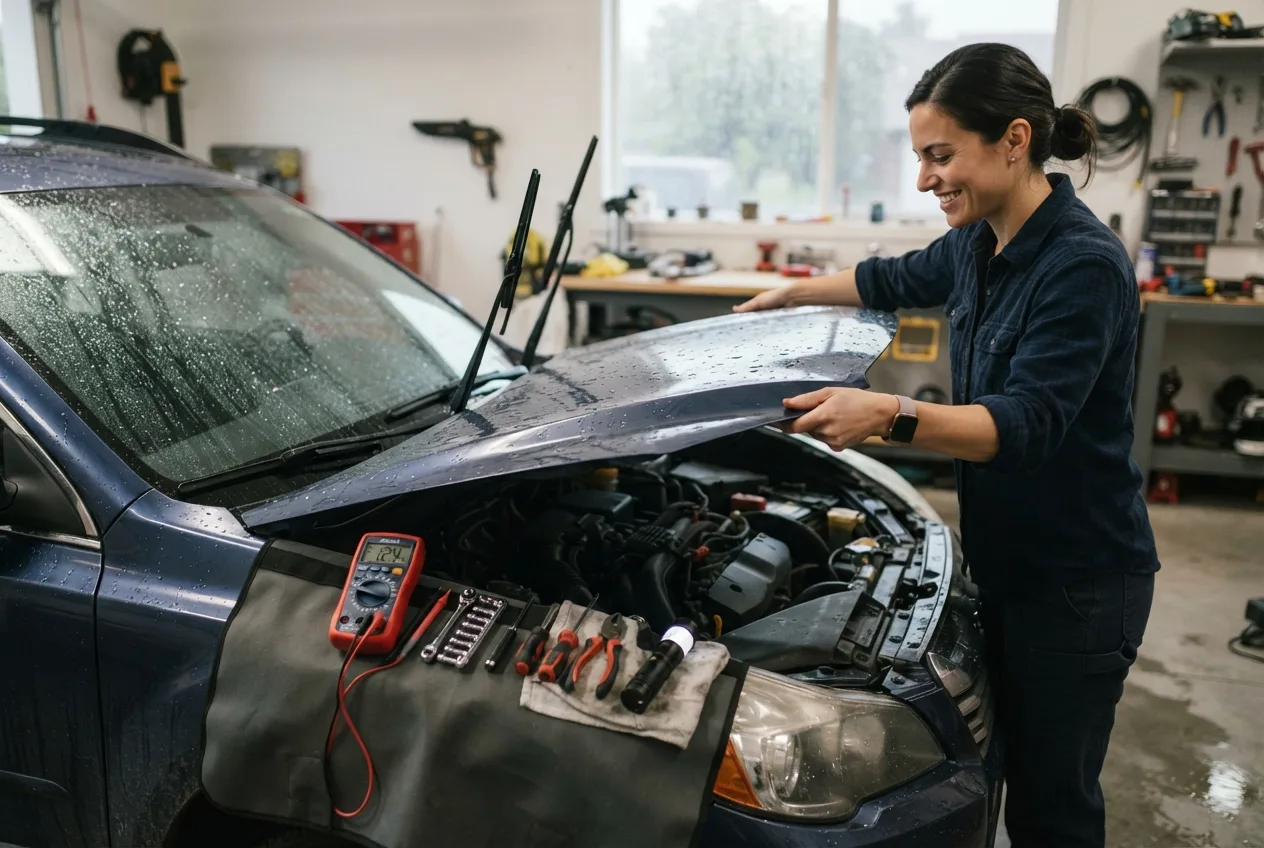
Don't let a $10 problem become a $500 repair. Before you replace the wiper motor, test the relay. Before you replace the relay, check the fuse and the ground. And before you blame the linkage, bench-test the motor. Ten minutes with a multimeter and a 12V source can tell you exactly where the fault lies and put the power back in your hands (and the rain back on the glass, where it belongs).
Your next step: Grab your multimeter, pop the hood, and run the relay test first. It's the fastest, cheapest, and most overlooked diagnostic in the wiper system. If the relay passes, move to the motor bench test. And if you get stuck, drop your vehicle's make, model, and year in the comments we'll help you track down the wiring diagram and pinout.
Drive safe, see clearly, and never let a wiper relay ruin your day.