Car Fuse Box Explained: What Every Fuse and Relay Does
A dead cigarette lighter, a radio that won't wake up, headlights that quit on one side: these are fuse problems far more often than people expect. By the end of this guide you'll know how to find your fuse box, read the car fuse box diagram printed on it, test a fuse in under a minute, and tell the…
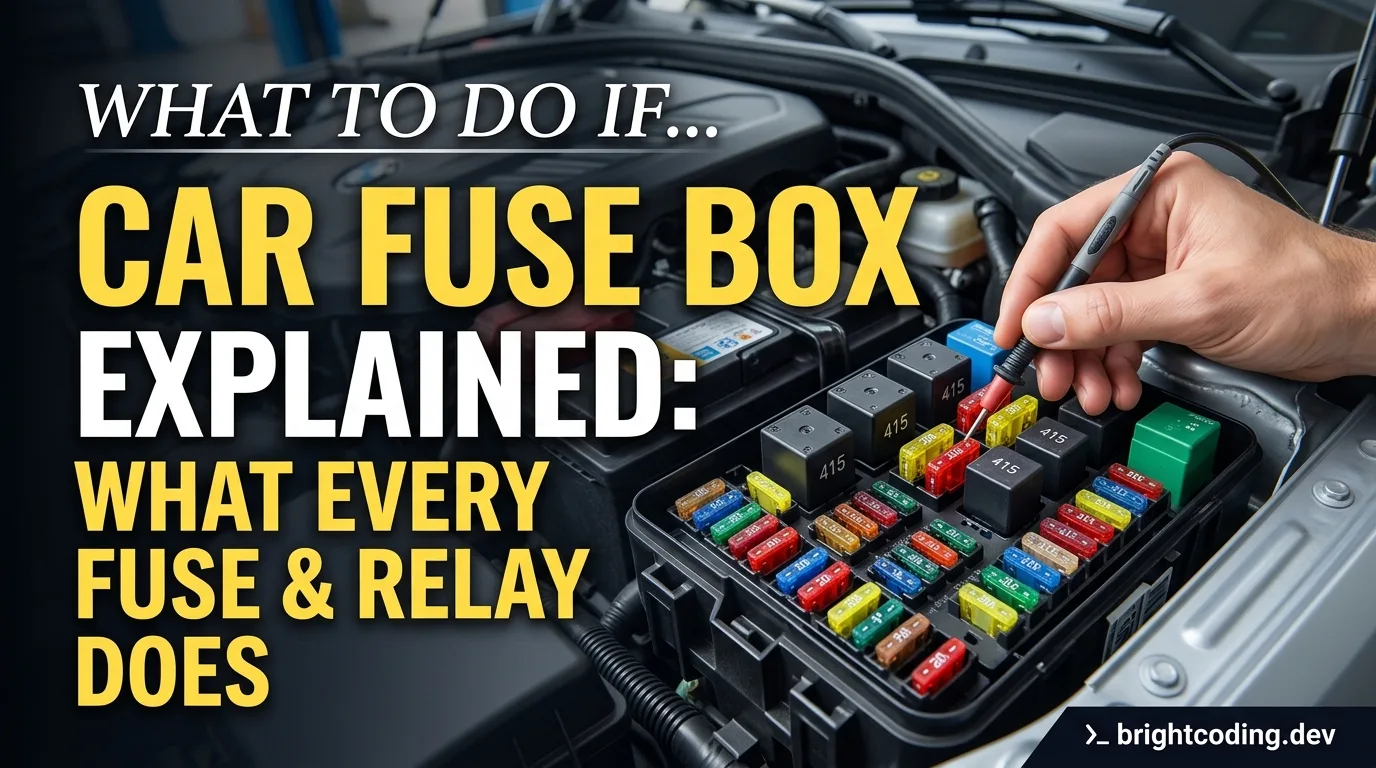
A dead cigarette lighter, a radio that won't wake up, headlights that quit on one side: these are fuse problems far more often than people expect. By the end of this guide you'll know how to find your fuse box, read the car fuse box diagram printed on it, test a fuse in under a minute, and tell the difference between a blown fuse and a failing relay. Most of this takes 20 to 40 minutes, and you can do the whole thing with a test light and a plastic puller.
What you need before you start
- Your owner's manual (it lists every fuse box location and the fuse ratings)
- A fuse puller, usually clipped inside the fuse box lid
- A test light or a cheap digital multimeter
- A small flashlight or your phone light
- A few spare fuses of the correct amperage (check the diagram before you buy)
- A clean rag and maybe a phone camera
That last one sounds silly. It isn't. Photograph the fuse box before you touch anything.
Step 1: Find every fuse box in the car
Most cars have at least two: one under the dash and one under the hood. Many have a third in the trunk or behind a side panel. The owner's manual tells you where they are and what each one covers.
Why it matters: people spend an hour chasing a "missing" fuse box that was behind the glovebox the whole time. Knowing all the locations saves you from tearing apart trim you didn't need to touch.
Tip: if the manual is gone, search online for your exact model and year plus "fuse box location." Layouts change between trim levels, so match the year closely.
Step 2: Read the car fuse box diagram properly
The lid usually has a sticker or molded diagram mapping each fuse number to a system: "RADIO 15A," "HORN 20A," "ABS 40A." Relays are often marked separately with a small box symbol. This diagram is your map, and it's the single most useful thing in the whole job.
Why it matters: pulling fuses at random is how people create new problems. The diagram tells you exactly which circuit to check for a given symptom.
Tip: fuse numbers and ratings differ between model years of the same car. Don't trust a diagram from a forum unless it matches your year and engine. Cross-check against the owner's manual or a shop.
Step 3: Understand what fuses and relays actually do
A fuse is a deliberate weak link. Too much current melts the metal strip inside and cuts the circuit before wiring overheats or a component burns. A relay is different: it's an electrically operated switch that lets a small control current switch a large load, like a fuel pump or cooling fan.
Why it matters: a blown fuse is a symptom, not always the disease. If a fuse keeps blowing, something downstream is drawing too much current. Replacing it repeatedly just wastes money.
Tip: if you want to go deeper on how relays and circuits work, the mechanical encyclopedia explains the parts in plain language without the textbook fog.
Step 4: Test a fuse the right way
Safety first: turn the ignition off and remove the key before pulling any fuse. Never bridge a fuse holder with wire or foil. That trick has started real fires.
Pull the suspect fuse with the plastic tool. Hold it up to the light and look for a broken strip. Then confirm with your test light or multimeter: with the circuit powered, touch the probes to the two small metal test points on top of the fuse (many fuses have them). No light or no voltage on one side means it's blown.
Why it matters: a fuse can look fine and still be open. Testing beats guessing.
Tip: a test light costs very little and works on almost any 12V circuit. It's one of the handiest things in a glovebox.
Step 5: Replace with the correct rating, never higher
Match the amperage printed on the old fuse and on the diagram. A 10A fuse does not get replaced with a 20A "to be safe." That's how wiring melts.
Why it matters: the fuse rating is chosen for the wire gauge and load. Oversizing defeats the entire safety system.
Tip: if the correct fuse blows again within minutes, stop. You have a short or a failing component. That's the point to book a shop or start tracing the circuit.
Step 6: Check the relay when the fuse is fine
If the fuse is good but the component still doesn't work, the relay is the next suspect. Relays often click when they engage. Have someone turn the key or press the switch while you listen and feel the relay. No click, or a click with no action, points at the relay or its control circuit.
Why it matters: people replace good fuses over and over because they never test the relay.
Tip: relay pin layouts vary. Note the pin numbers molded on the relay body before swapping. Some relays are interchangeable with an identical neighbor for testing, but only if the part numbers and pin layouts match exactly. Verify before you swap.
Step 7: Know the high-current and safety fuses
Some fuses are big bolt-down units in the under-hood box: main, ABS, glow plug, cooling fan. These carry serious current. Safety note: disconnect the negative battery terminal before working near these, and never lean over a battery while it's connected.
Why it matters: a loose or corroded main fuse connection can cause weird, intermittent electrical faults across the whole car.
Tip: if several unrelated systems die at once (lights, dash, charging), suspect a main fuse or ground before chasing individual circuits.
Step 8: Check fuses before you chase a trouble code
A surprising number of "electrical fault" codes are caused by a blown fuse feeding a sensor or module. Before you dig into diagnostics, check the fuses for the affected system.
Why it matters: it's the cheapest five-minute test in the book. Many people skip it and start replacing parts.
Tip: if you do have a code, the free car tools on the site can help you look up what it means before you spend a dime.
Step 9: Reassemble and verify everything
Push each fuse fully home, refit the lid, and reconnect the battery if you disconnected it. Then test every function you touched: lights, radio, wipers, windows, horn.
Why it matters: a half-seated fuse causes intermittent faults that are a nightmare to find later.
Tip: keep a small card in the glovebox listing your fuse box locations and the ratings you use most. Future you will be grateful.
Pro tips
- Photograph the fuse box lid and the box itself before pulling anything. The photo is your cheat sheet.
- Buy a mixed pack of blade fuses in the common ratings, but check your diagram first because some cars use mini or micro blade fuses.
- When a fuse keeps blowing, unplug the component it feeds first. If the fuse survives with the component disconnected, the component is the problem.
- Clean corroded fuse contacts with a little contact cleaner and a soft brush. Corrosion causes voltage drop and ghost faults.
- If you're tracing an intermittent fault, wiggle the harness gently while watching your test light. It often reveals a bad connection fast.
Common pitfalls
- Replacing a fuse with a higher rating. It masks the fault and risks melting wiring. Use the exact rating.
- Ignoring the diagram and guessing. You'll pull fuses for systems you didn't mean to touch and create new problems. Read the map.
- Assuming a fuse that looks good is good. Test it with a meter or test light. Visual checks miss partial failures.
- Forgetting the second fuse box. Many cars have one under the hood and one in the cabin. Check both.
- Working on a live circuit. Turn the key off, disconnect the battery for high-current work, and never bridge a fuse holder.
Useful resources
- Your owner's manual (the definitive source for fuse locations and ratings)
- The step-by-step car guides on this site for related maintenance jobs
- A basic digital multimeter or test light, available at any auto parts store
- Your car's factory service manual, if you can find one for your model year
FAQ
Can I drive with a blown fuse? Only if the fuse controls something non-essential like the radio or a courtesy light. If it feeds headlights, brakes, ABS, or the fuel pump, don't drive until it's fixed.
Why does my fuse keep blowing? A short circuit or a component drawing too much current. Replace it once with the correct rating. If it blows again, stop and diagnose the circuit or see a mechanic.
How do I know which fuse is which without a diagram? You usually can't, reliably. Find the owner's manual or a factory diagram for your exact year and model. Guessing wastes time and risks new faults.
Can I use a fuse with a higher amp rating temporarily? No. It defeats the protection and can damage wiring. Carry spares of the correct ratings instead.
Do relays fail often? They can, especially in older cars and damp climates. Test for a click and check the control circuit before replacing one.
Final word
Fuse boxes look intimidating until you read the diagram once. Ten minutes with a test light and a phone photo will save you a garage visit for the simple stuff, and it'll make you a sharper owner for the tricky stuff. Start with the lid, follow the map, and test before you replace. That habit alone will keep you out of most electrical trouble.
Related articles

How Fuses, Relays, Sensors, and the ECU Work Together in a Car
A car's electrical system looks like a nest of wires until you understand the four parts that run it: fuses protect it, relays switch it, sensors read it, and the ECU decides what to do with it. Once those roles click, a no-start, a dead accessory, or a mystery warning light stops being a guess and…
Read the article →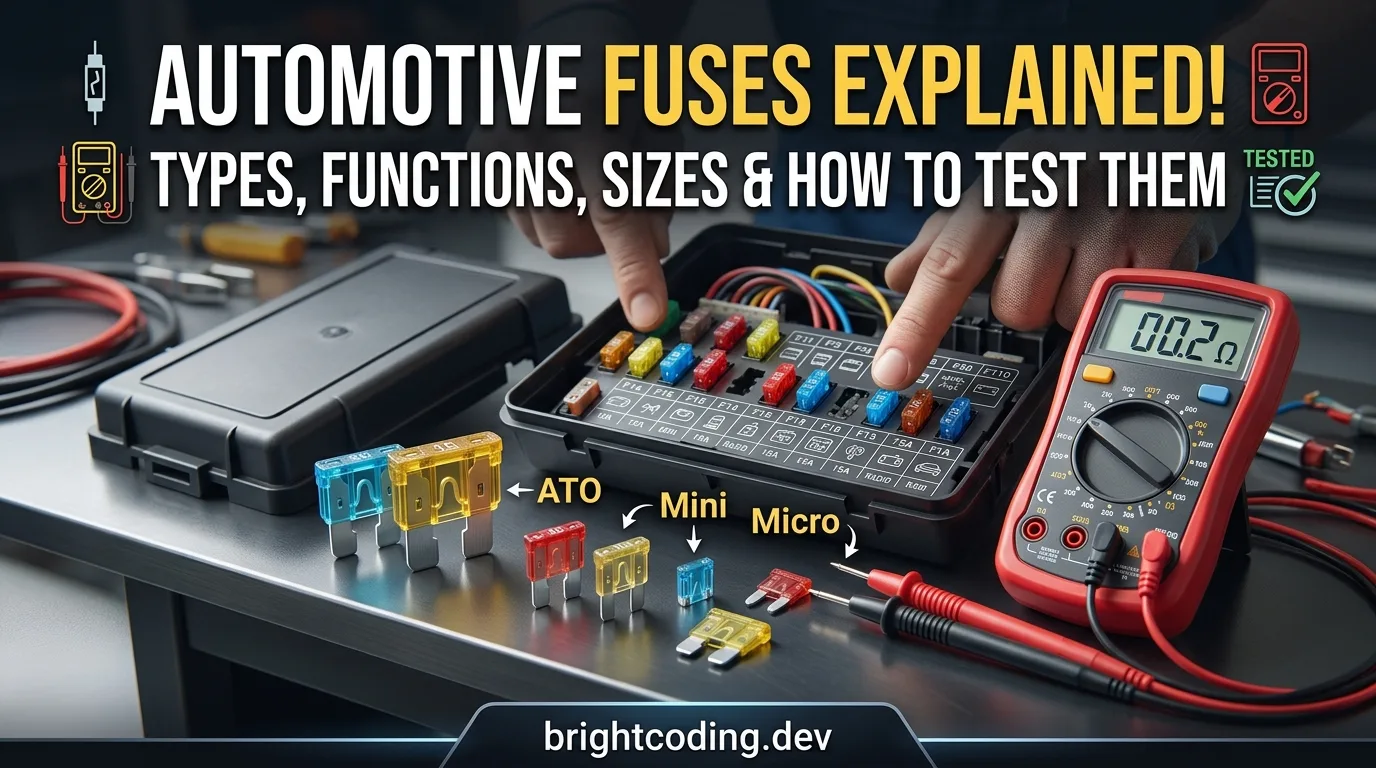
Automotive Fuses Explained: Types, Functions, Sizes, and How to Test Them
A blown fuse is one of the few car problems you can diagnose completely on your own, with a tool that costs less than a coffee. By the end of this guide you will know what fuses actually do, how to tell the different types and sizes apart, how to test one in under a minute, and how to replace it sa…
Read the article →
Stop Throwing Parts at Your Car: The 4-Step Sensor Diagnostic Method That Actually Works
A fault code points to a circuit or behavior—not automatically a failed sensor. This practical guide covers the 8 engine sensors every DIYer and technician should understand, plus the 4-step test process that prevents expensive parts-swapping and misdiagnosis.
Read the article →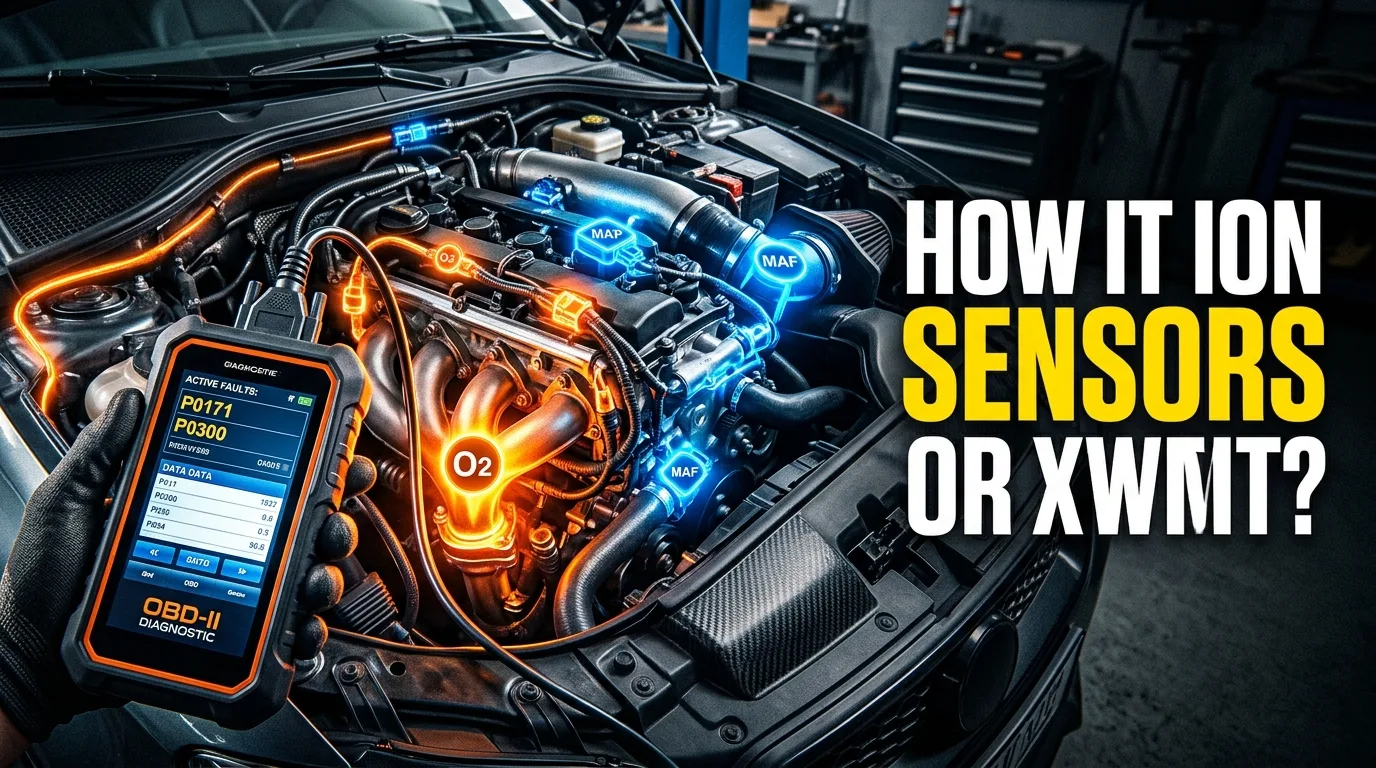
The Ultimate Guide to Engine Sensors: 40+ Types, Functions, and Failure Symptoms (Gasoline & Diesel)
Engine sensors control performance, fuel economy & emissions. Learn 40+ sensor types, failure symptoms, testing methods, and OBD-II codes for gas & diesel engines.
Read the article →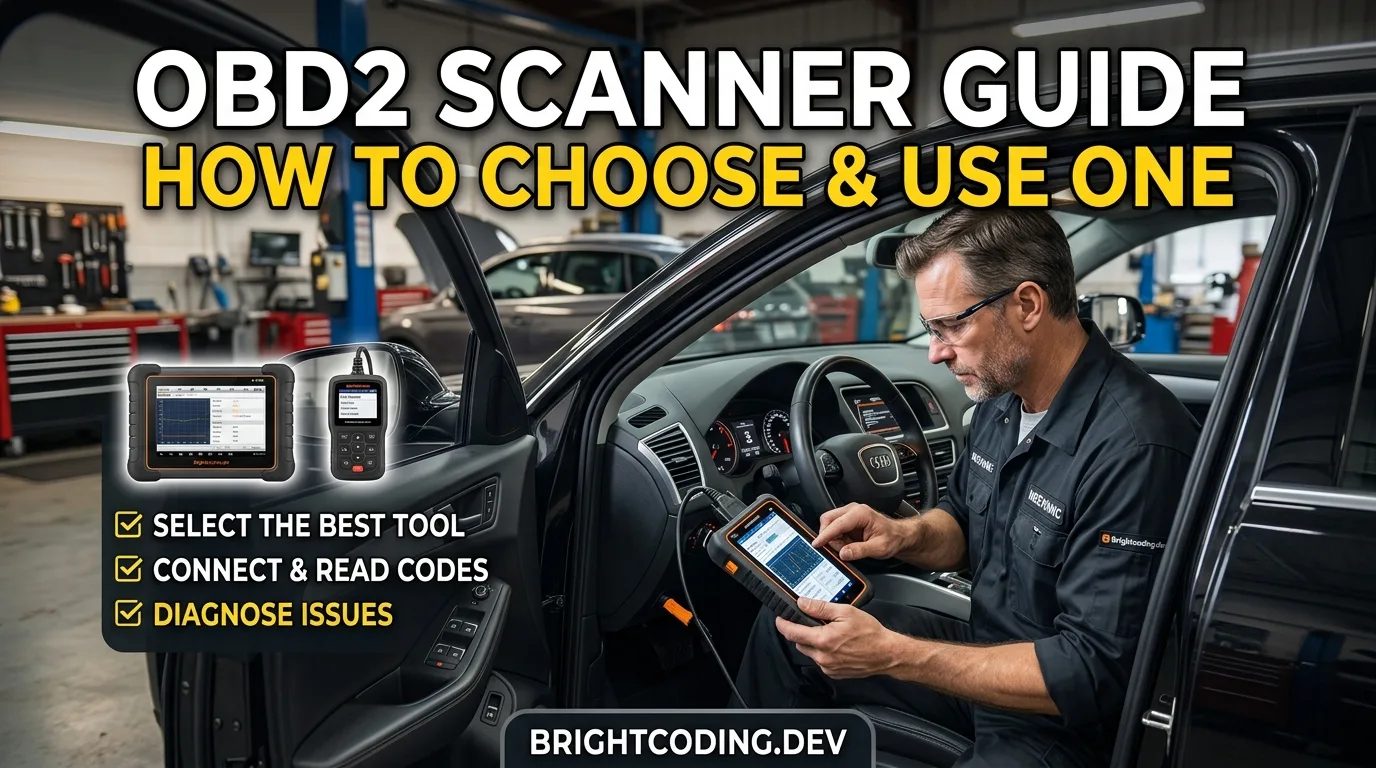
OBD2 Scanner Guide: How to Choose and Use One
A check engine light comes on and your stomach drops a little. It shouldn't. With a cheap OBD2 scanner and about twenty minutes, you can read the code, understand what it means, and decide whether to fix it yourself or hand it to a shop with a clear description of the problem. This guide walks you…
Read the article →
10 Hidden Car Settings You Can Activate Today
Most modern cars ship with features the previous owner never turned on, and the manual buries them three sections deep. This article answers the questions car owners actually search for: which settings are hiding in plain sight, how to find them, and what to do when the option seems missing. No too…
Read the article →