Automotive Fuses Explained: Types, Functions, Sizes, and How to Test Them
A blown fuse is one of the few car problems you can diagnose completely on your own, with a tool that costs less than a coffee. By the end of this guide you will know what fuses actually do, how to tell the different types and sizes apart, how to test one in under a minute, and how to replace it sa…

A blown fuse is one of the few car problems you can diagnose completely on your own, with a tool that costs less than a coffee. By the end of this guide you will know what fuses actually do, how to tell the different types and sizes apart, how to test one in under a minute, and how to replace it safely. Realistically, the whole job takes 10 to 20 minutes once you have located the right fuse box.
The catch is that "the fuse is blown" is not the same as "the problem is solved." Fuses blow for a reason. This guide shows you how to swap one and then check whether something deeper is going on.
What you need before you start
You do not need much. Gather these first so you are not crawling back out from under the dash:
- Your owner's manual. This is the single most important item. It lists your fuse box locations and the exact function of every fuse.
- A fuse puller or a pair of needle-nose pliers. Many cars have a plastic puller clipped inside the fuse box lid.
- A test light or a cheap digital multimeter. Either works. A multimeter is more versatile.
- A spare fuse of the correct amperage. Your car may include a small assortment in the fuse box.
- A flashlight or your phone light. Fuse boxes are often in dark footwells.
- Gloves if you want to keep your hands clean. Optional but nice.
Do not buy a random box of fuses until you know your car's fuse type. Sizes vary between vehicles and even between boxes on the same car.
Step 1: Understand what a fuse actually does
A fuse is a deliberate weak point in a circuit. Inside is a thin strip of metal that melts when current climbs past its rating. That sacrifice protects the wiring, the switch, and the expensive component on the other end.
Think of it as a cheap bodyguard for your electrical system. A 15 amp fuse in a circuit designed for 15 amps will pop before the wire overheats and starts a fire. This is why you never replace a blown fuse with a higher-rated one "just to make it work." You have just removed the bodyguard.
Every circuit in your car, from the cigarette lighter to the fuel pump, has a fuse or a relay protecting it. When one device dies but everything else works, a fuse is a prime suspect.
Step 2: Know the fuse types you will actually see
There are a handful of automotive fuse types, and you only need to recognize the common ones.
Blade fuses are the plastic, colored rectangles you picture when you hear "car fuse." They come in several physical sizes, from the larger standard blade down to mini and micro variants. The color usually tells you the amperage, but always read the number stamped on the plastic rather than trusting color alone.
Cartridge fuses are blockier and often used for high-current circuits. Glass tube fuses show up in older cars and some aftermarket accessories. Maxi and mega fuses handle heavy loads like the main feed to your fuse box.
For a deeper breakdown of how each style fits into the broader electrical system, the mechanical encyclopedia is a solid reference to keep open while you work.
Step 3: Find your fuse boxes
Most cars have at least two. The common locations are under the hood in a black plastic box, and inside the cabin under the dash, behind a kick panel, or in the glovebox area.
Your owner's manual has a diagram showing both locations and a chart mapping each fuse to its function. If the manual is missing, a quick search for your year, make, and model plus "fuse box diagram" usually turns up the layout. Verify any diagram you find online against the physical labels printed on the fuse box lid. Those printed labels are the ground truth.
Before you touch anything electrical, turn the ignition off and remove the key. If you are working near the battery, disconnect the negative terminal first. Electricity you cannot see is the one hazard on this job that bites without warning.
Step 4: Test the fuse the right way
You have two reliable methods. Pick whichever tool you have.
With a test light or multimeter: Turn the ignition to the position where the dead circuit should have power, but do not start the engine unless the manual says the circuit needs it. Touch one probe to a small exposed metal tab on top of the fuse and the other to a good ground. You should see voltage on both tabs of a good fuse. If one tab has power and the other does not, the fuse is blown.
With a visual check: Pull the fuse and hold it up to the light. A good blade fuse has a continuous metal strip. A blown one has a visible gap or a blackened, melted strip. This method is fast but not foolproof, because a fuse can fail in a way that is hard to see.
If the fuse looks fine but the circuit is dead, the problem is elsewhere: a relay, a ground, a switch, or the component itself. This is where a scan tool and a fault code help. If a warning light is on, run the code through a free OBD code lookup before you start replacing parts.
Step 5: Replace it correctly
Pull the blown fuse with the puller or pliers. Push the new one in firmly and squarely, matching the amperage stamped on the old one. It should seat with a small click or a solid push, not a wobble.
Here is the part most people skip: turn the circuit back on and confirm the accessory works. If the new fuse blows immediately, stop. Do not keep feeding it fuses. That is a short circuit or a failing component, and each replacement fuse is money you are burning. At that point, you need a wiring diagram and a methodical approach, which is exactly what the step-by-step car guides are built for.
A pack of assorted blade fuses typically runs a few dollars, so keeping spares in the glovebox is cheap insurance. Exact prices vary by brand and quantity, so check your local auto parts store.
Step 6: Decide if you can fix it or should stop
A fuse that blows once and stays good after replacement is usually just age or a momentary spike. A fuse that blows again within seconds is telling you something. Common culprits are a chafed wire rubbing against metal, a failing motor drawing too much current, or water in a connector.
If you are not comfortable tracing wiring, this is a reasonable place to hand it off. Electrical gremlins can eat a weekend. A shop with a wiring diagram and a power probe will often find it in an hour.
Pro tips
- Photograph the fuse box before you pull anything. Reassembly is much easier with a picture.
- Test fuses in place with a meter before pulling them. It saves time and avoids dropped fuses in dark footwells.
- Keep a small labeled bag of spare fuses in the car, sorted by amperage.
- If a fuse keeps blowing, disconnect the battery negative terminal before probing wires. Arcing near a fuel or brake line is not worth the risk.
- Check the relay when a fuse is fine but the circuit is dead. Relays fail too, and they are often in the same box.
- Clean corrosion off fuse box contacts with contact cleaner if you see green or white buildup. Corrosion causes resistance, and resistance causes heat.
Common pitfalls
Installing a higher-amperage fuse. This defeats the entire purpose of the fuse and can melt wiring. Always match the rating.
Trusting color alone. Colors vary between manufacturers and fuse types. Read the stamped number.
Ignoring the second fuse box. Many people check the under-hood box, give up, and miss the cabin box that actually holds the problem fuse.
Not testing the circuit after replacement. You need to confirm the fix worked. If it blows again, you have real information now.
Pulling fuses with the ignition on. You can trigger fault codes or damage sensitive electronics. Key off, always.
Useful resources
Keep your owner's manual within reach. It is the most accurate source for your specific fuse layout and ratings. For general electrical theory and component explanations, the mechanical encyclopedia covers the systems behind the fuses. If you want guided walkthroughs for related repairs, the step-by-step car guides break jobs into manageable pieces. And when a warning light shows up, a free OBD code lookup can point you toward the circuit that is complaining.
FAQ
Can I drive with a blown fuse? It depends on what the fuse controls. A blown fuse for the radio or a power outlet is an inconvenience. A blown fuse for the fuel pump, lights, or brakes is a safety issue. Check your manual to see what the circuit does before driving.
Why does my fuse keep blowing? A recurring blown fuse means excessive current is flowing somewhere. Common causes are a shorted wire, a failing motor or component, or moisture in a connector. Stop replacing fuses and diagnose the circuit.
Are all car fuses the same size? No. Blade fuses come in several physical sizes, and different cars use different types. Even one car can use more than one size across its fuse boxes.
Can I use a fuse with a higher amp rating temporarily? No. Never do this, not even briefly. The fuse protects the wiring, and a higher rating can let the wire overheat and start a fire.
How do I know which fuse is which? The fuse box lid or your owner's manual has a chart. Match the fuse position number to the function listed. Do not guess based on position alone.
Final word
Fuse work is one of the most beginner-friendly jobs on a car, and it teaches you to think in circuits rather than parts. Test before you replace, match the rating, and treat a repeat blowout as a clue rather than an annoyance. Do that, and you will solve a surprising number of electrical problems yourself.
Related articles

10 Diesel Engine Maintenance Tips Every Owner Should Know
Diesel engines reward owners who pay attention. Treat yours well and it can run for hundreds of thousands of miles; neglect a few basics and you will be funding a very expensive repair.
Read the article →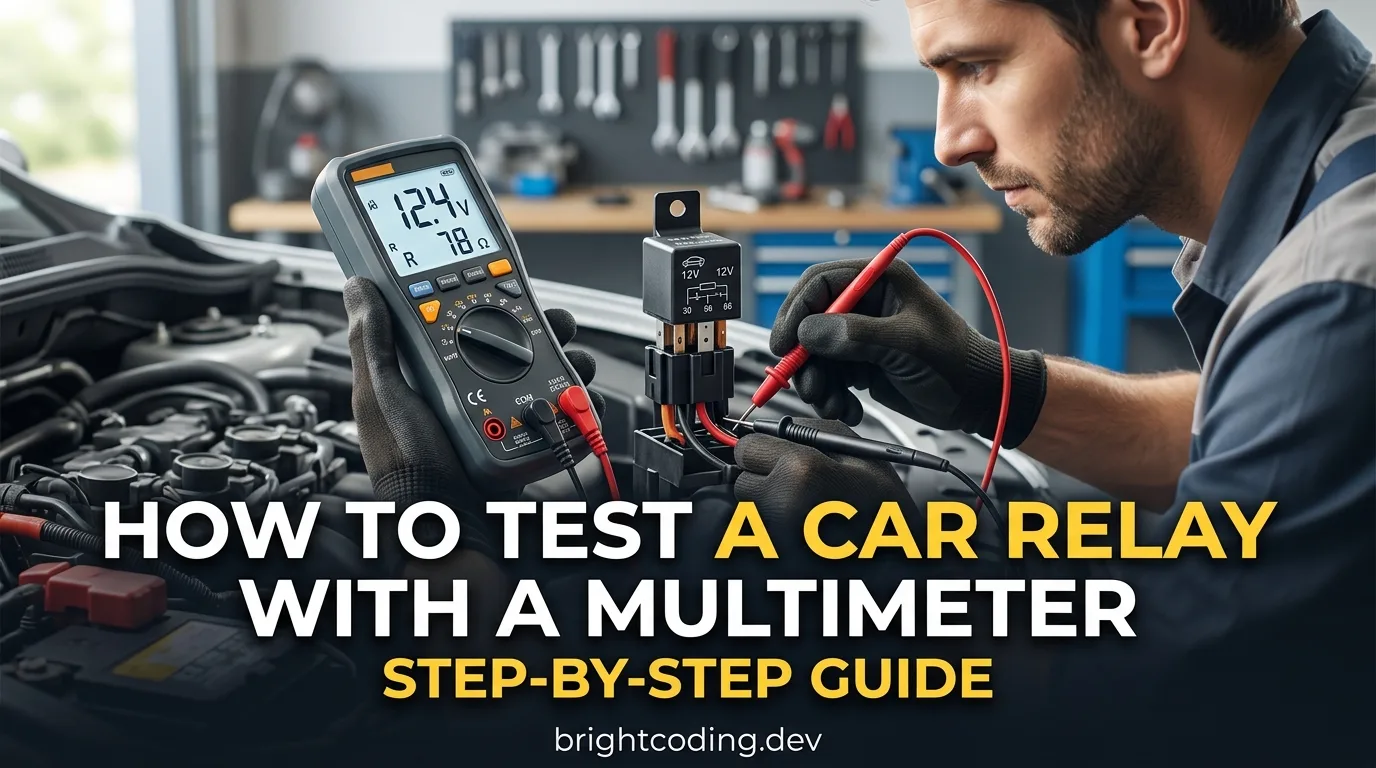
How to Test a Car Relay With a Multimeter: Step-by-Step Guide
A relay is one of the cheapest parts in your car and one of the most common reasons a fan, fuel pump, horn or headlight stops working. By the end of this guide you will be able to pull a suspect relay, test it on the bench with a multimeter, and know for certain whether it is dead or fine. Plan on…
Read the article →
10 Hidden Features in Your Car That Dealerships Rarely Explain
Most of the useful stuff in your car is buried in the owner's manual, and nobody reads the owner's manual. Not the salesperson, not the service advisor, and probably not you. That is fine. I am going to walk you through the features that actually change how you live with a car, the ones that make y…
Read the article →
Diesel Engine: 10 Mistakes Drivers Make Without Knowing It
Diesel engines are tough, and that toughness fools people. A petrol car will often complain loudly when you treat it badly. A diesel just keeps going, quietly accumulating damage until the day it doesn't. That gap between "running fine" and "facing a four-figure repair bill" is where most owners lo…
Read the article →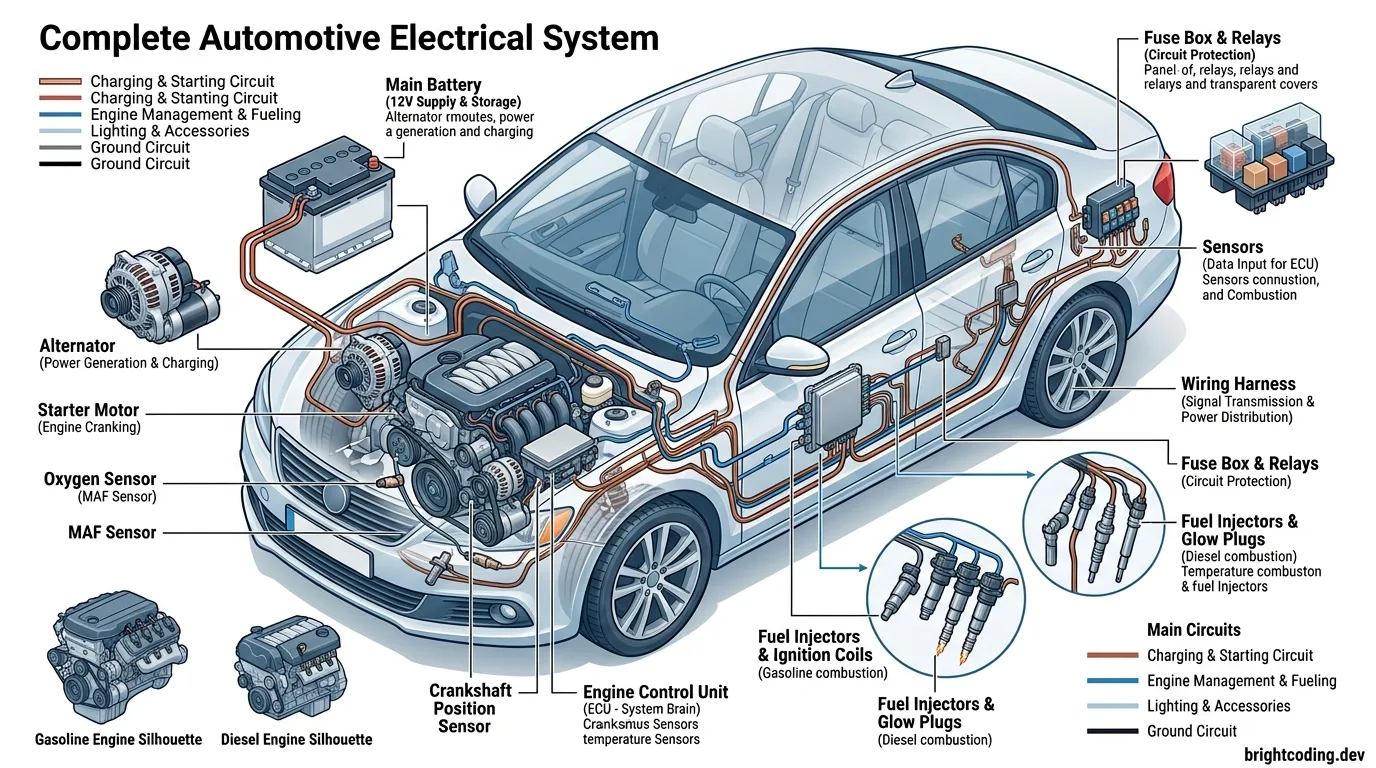
Understanding Automotive Electrical Systems: ECU, Sensors & Wiring
A complete guide to automotive electrical systems, covering batteries, alternators, starters, ECUs, sensors, actuators, wiring diagrams, diagnostics, safety, and the key differences between gasoline and diesel engine electrical systems.
Read the article →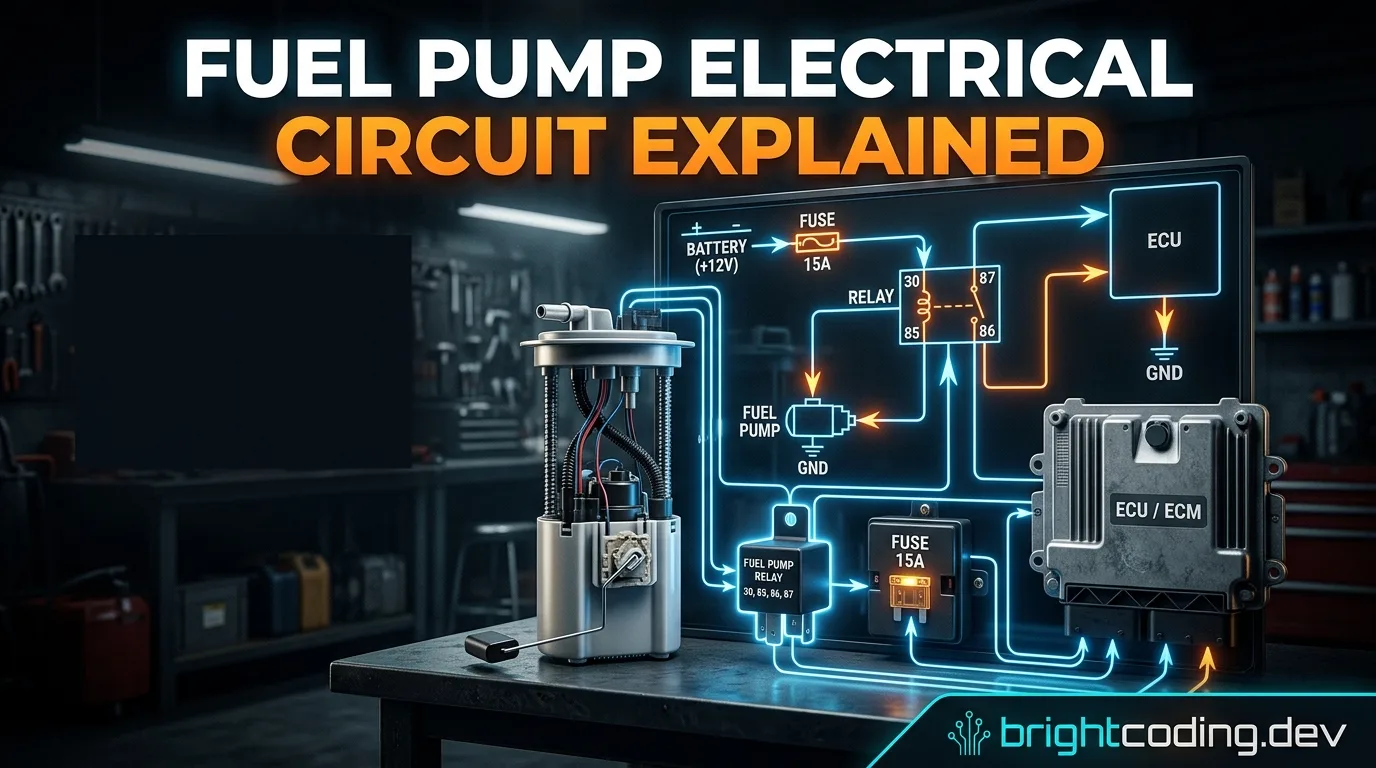
Fuel Pump Electrical Circuit Explained: Wiring Diagram, Relay, Fuse, ECU & Troubleshooting
Fuel pump electrical circuit explained: wiring diagram, relay, fuse, ECU control, priming, voltage drop, and troubleshooting. Learn how to diagnose no-power and no-start fuel pump problems before replacing parts.
Read the article →