Why Is My Car Shaking? 8 Common Causes Explained
Your coffee is sitting in the cupholder, and it looks like it's trying to escape. Maybe the steering wheel vibrates at highway speed. Maybe the whole cabin shudders when you brake. Either way, a shaking car is one of those problems you can feel in your teeth, and it never fixes itself.

Your coffee is sitting in the cupholder, and it looks like it's trying to escape. Maybe the steering wheel vibrates at highway speed. Maybe the whole cabin shudders when you brake. Either way, a shaking car is one of those problems you can feel in your teeth, and it never fixes itself.
Here's the good news: most shaking has a short list of likely causes, and you can narrow it down yourself in an afternoon without a shop visit. This guide walks through the eight reasons cars shake, what each one feels like from the driver's seat, and what it actually costs to fix.
What Does the Shaking Feel Like, Exactly?
Before you buy anything, pin down when it happens. That single detail does most of the diagnostic work.
- Shakes at idle, stops when you rev: engine or mounts
- Shakes at 50 to 70 mph, smooth below and above: wheel balance or tires
- Shakes only when braking: warped rotors or worn suspension
- Shakes when accelerating from a stop: axles, CV joints, or transmission
- Shakes all the time, gets worse with speed: tires, alignment, or bearings
If a warning light is on, pull the code first. Our free OBD code lookup at /obd turns a cryptic P0300 or P0301 into plain English in seconds, and it takes less time than reading this paragraph.
Why Does My Car Shake? The 8 Common Causes
1. Unbalanced Wheels
What it is: A tire and wheel assembly that's heavier on one side than the other.
Why it happens: Wheel weights fall off, a tire gets repaired, or you hit a pothole hard enough to shift things. The imbalance gets worse as speed climbs.
What it feels like: A steady vibration through the steering wheel, usually between 50 and 70 mph. It often fades if you speed up or slow down.
The fix: A shop rebalances the wheel on a machine. Expect roughly $15 to $30 per wheel. It's quick, usually done while you wait.
2. Bent Wheel or Damaged Tire
What it is: Physical damage to the wheel rim or the tire carcass.
Why it happens: Potholes, curbs, and road debris. Aluminum wheels bend more easily than you'd think. A tire with a separated belt or a bulge is a different animal and needs replacing, not balancing.
What it feels like: A wobble that doesn't go away with balancing, sometimes worse at low speed. Look for a visible bulge or a wheel that hops when you watch it roll.
The fix: Straightening a wheel runs roughly $100 to $150, but a cracked or badly bent wheel needs replacing. A new tire is typically $80 to $200 depending on size and brand. Use the tire size comparison tool at /tires if you're swapping sizes and want to see what fits before you buy.
3. Warped Brake Rotors
What it is: Brake rotors that have worn unevenly, so thickness varies around the disc.
Why it happens: Heat. Riding the brakes down a long hill, a stuck caliper, or cheap rotors that couldn't handle the load. The rotor surface develops high and low spots.
What it feels like: A pulsing or shuddering through the brake pedal, sometimes the steering wheel, only when you brake. If it shakes during braking and nowhere else, start here.
The fix: Rotors get machined if there's enough material left, or replaced. Replacing is usually the smarter call. Budget roughly $150 to $400 per axle for rotors and pads, more on trucks and performance cars.
4. Worn Suspension Components
What it is: Worn ball joints, tie rod ends, control arm bushings, or struts.
Why it happens: Age and mileage. Rubber bushings harden and crack. Ball joints develop play. Once there's slop in the system, the whole front end wanders and vibrates.
What it feels like: Vague steering, clunks over bumps, uneven tire wear, and shaking that gets worse on rough roads. It's rarely one clean symptom.
The fix: This is a shop job for most people because it needs an alignment afterward. Costs vary widely, roughly $200 to $800 depending on what's worn. Get a written estimate before approving anything.
5. Engine Misfire
What it is: One or more cylinders not firing properly.
Why it happens: Worn spark plugs, bad coils, failing injectors, or a vacuum leak. The engine runs rough because it's not making even power.
What it feels like: Shaking at idle that smooths out once you're moving. You may also notice a check engine light, poor fuel economy, or a flashing light under hard acceleration. A flashing check engine light means stop driving and get it looked at.
The fix: Diagnose before you throw parts at it. The OBD live-data tool at /tools/obd-live-data shows misfire counts per cylinder in real time, which tells you exactly which cylinder is misbehaving. Plugs and coils are often $100 to $400 total, depending on the engine.
6. Bad Engine or Transmission Mounts
What it is: The rubber-and-metal brackets holding the engine and transmission to the frame.
Why it happens: Rubber degrades with heat and age. When a mount collapses, the engine moves more than it should.
What it feels like: A deep shudder at idle, a clunk when you shift into drive or reverse, and vibration you feel in the seat more than the steering wheel.
The fix: Mounts typically run $200 to $600 installed, sometimes more on transverse engines where access is tight. Not urgent, but ignoring it stresses other components.
7. Worn CV Joints or Axles
What it is: The joints that let your front wheels steer and drive at the same time.
Why it happens: The protective boot tears, grease escapes, and grit gets in. The joint wears out.
What it feels like: A rhythmic vibration or clicking when you accelerate, especially while turning. If the boot is torn and grease is slung around the wheel well, that's your confirmation.
The fix: Replacing an axle assembly usually runs $200 to $500 per side. Replacing just the joint is cheaper but more labor. Most shops swap the whole axle.
8. Wheel Bearings
What it is: The bearing that lets each wheel spin freely on the hub.
Why it happens: Normal wear, or water intrusion after a bad seal.
What it feels like: A growl or hum that changes when you turn, plus vibration that gets worse with speed. Jack the car up and rock the wheel top to bottom; if there's play, the bearing is suspect.
The fix: Typically $300 to $600 per wheel installed, since the hub assembly often gets replaced as a unit.
How Do I Figure Out Which One It Is?
Here's the honest part: symptoms overlap. A bad tire can feel like a bad bearing, and a misfire can feel like a mount. The fastest way to narrow the field is to log when the shaking happens and what you did right before it started.
If you want to understand what a specific part actually does before you pay someone to replace it, the mechanical encyclopedia at /encyclopedia breaks systems down without the jargon. And if you'd rather describe the symptom and get a starting point, the car symptom finder at /symptom maps what you're feeling to the likely culprit.
For a guided walkthrough of the diagnosis itself, the step-by-step car guides at /guides take you from "something's wrong" to "here's what to check and in what order."
DIY or Shop? Matching the Fix to Your Situation
Not every cause is a weekend project. Here's a rough split:
Reasonable DIY: Spark plugs and coils on most engines, checking wheel bearings, inspecting boots and bushings, reading codes, checking tire pressure.
Shop territory: Wheel balancing and alignment (you need the machine), rotor replacement if you're not comfortable with brakes, suspension work, engine mounts on tight engine bays, axle replacement.
Emergency, stop driving: Flashing check engine light, shaking that appeared suddenly after a hard impact, a wheel that visibly wobbles, or any shaking paired with a burning smell or smoke.
If you're not sure whether it's safe to drive, it probably isn't. A tow is cheaper than a new fender.
Your Step-by-Step Action Plan
- Note the conditions. Write down the speed, the action (braking, accelerating, turning), and whether it's felt in the wheel, the seat, or the pedal.
- Check the easy stuff first. Tire pressure, visible bulges, missing wheel weights, and a quick look at the tread.
- Scan for codes. Use the free OBD code lookup at /obd if the check engine light is on. Misfires leave a paper trail.
- Do a parking lot test. At low speed, turn the wheel full lock in both directions. Clicking points to CV joints.
- Test the brakes. Find a safe, empty road and brake firmly from about 40 mph. Pulsing in the pedal means rotors.
- Jack and shake. With the car safely supported on stands, grab each tire at 12 and 6 o'clock and rock it. Play suggests a bearing or ball joint.
- Price it before you commit. Get two estimates for anything over $300. Ask what happens if you wait.
- Fix the safety items first. Brakes, tires, and bearings before mounts and cosmetic fixes.
Safety notes: never work under a car held only by a jack. Use stands. If you disconnect the battery for electrical work, note your radio code first. Let the engine cool before touching anything near the exhaust or radiator.
Mistakes That Cost You Money
- Balancing when you need an alignment. Fix: if the tires are wearing unevenly, alignment comes first or you'll be back in a month.
- Replacing parts before diagnosing. Fix: scan codes and confirm the symptom before buying anything.
- Ignoring a flashing check engine light. Fix: pull over. That light means active misfire and can cook your catalytic converter.
- Buying the cheapest rotors. Fix: cheap rotors warp faster, especially on heavier cars. Mid-range is usually the sweet spot.
- Assuming a shake is always tires. Fix: run the parking lot and braking tests before you spend money on rubber.
- Driving on a visibly wobbling wheel. Fix: park it and get it towed. That's a wheel-off waiting to happen.
- Skipping the alignment after suspension work. Fix: budget for it as part of the job, not an optional extra.
The Bottom Line
The single most useful thing you can do is describe when the shaking happens. Speed, braking, turning, idling: each one points at a different system, and getting that detail right saves you from paying for the wrong repair. Diagnose first, fix the safety items first, and don't let a small vibration turn into a big bill.
FAQ
Why does my car shake at high speed but not at low speed? That pattern points to wheel balance or a bent wheel. Imbalance gets worse as rotational speed increases, so it shows up around 50 to 70 mph and often smooths out above or below that range. Start with a balance and a look at the rims.
Why does my car shake when I brake? Usually warped or unevenly worn brake rotors. The pedal pulses because the rotor thickness varies as it spins. Occasionally it's a sticking caliper or worn suspension, so get it inspected rather than assuming rotors.
Can a bad alignment cause shaking? Alignment usually causes pulling and uneven tire wear more than vibration. But worn suspension parts that throw off alignment can also cause shaking, so the two often show up together. Fix the worn parts, then align.
Is it safe to drive a car that shakes? Depends on the cause. A slight high-speed vibration from balance is annoying but rarely dangerous short term. Shaking with a flashing check engine light, a wobbling wheel, or sudden onset after an impact is not safe. When in doubt, don't drive it.
How much does it cost to fix a shaking car? A wheel balance might run $15 to $30 per wheel. Rotors and pads per axle often land between $150 and $400. Suspension and axle work can reach $800 or more. These are rough estimates only, so get a written quote for your specific car before approving work.
Ready to act on what you just read? Decode that warning light with the free OBD code lookup, run the matching car tools to check the numbers yourself, or browse more practical car articles for ideas.
Related articles

How to Know When Your Tires Need to Be Replaced
You can check your own tires in about 15 minutes with a coin, a pressure gauge and a flashlight. By the end of this guide you will know how to read tread depth, spot the damage that means "replace now," decode the numbers on your sidewall, and judge whether that slow leak is a cheap fix or a new-ti…
Read the article →
What Does It Mean When Your Car Won't Start?
You turn the key or push the button, and nothing. Or worse, that awful click-click-click. Your stomach drops because you know this is going to cost you time, money, or both.
Read the article →
10 Car Noises You Should Never Ignore
Your car talks to you constantly. Most of the time it's mumbling, and you tune it out like a radio ad. Then one day it screams, and you're staring at a repair bill that could have been a $40 part three months ago.
Read the article →
Composants d'un moteur de voiture : guide complet des pièces, fonctions, problèmes et solutions
Le moteur thermique est le cœur de la voiture. Il transforme le carburant en énergie mécanique grâce au cycle à quatre temps : admission, compression, combustion et échappement. Il est composé de nombreuses pièces essentielles comme le bloc moteur, la culasse, les pistons, le vilebrequin, les arbres à cames, les soupapes, ainsi que les systèmes d’admission, d’allumage, de lubrification et de refroidissement.
Read the article →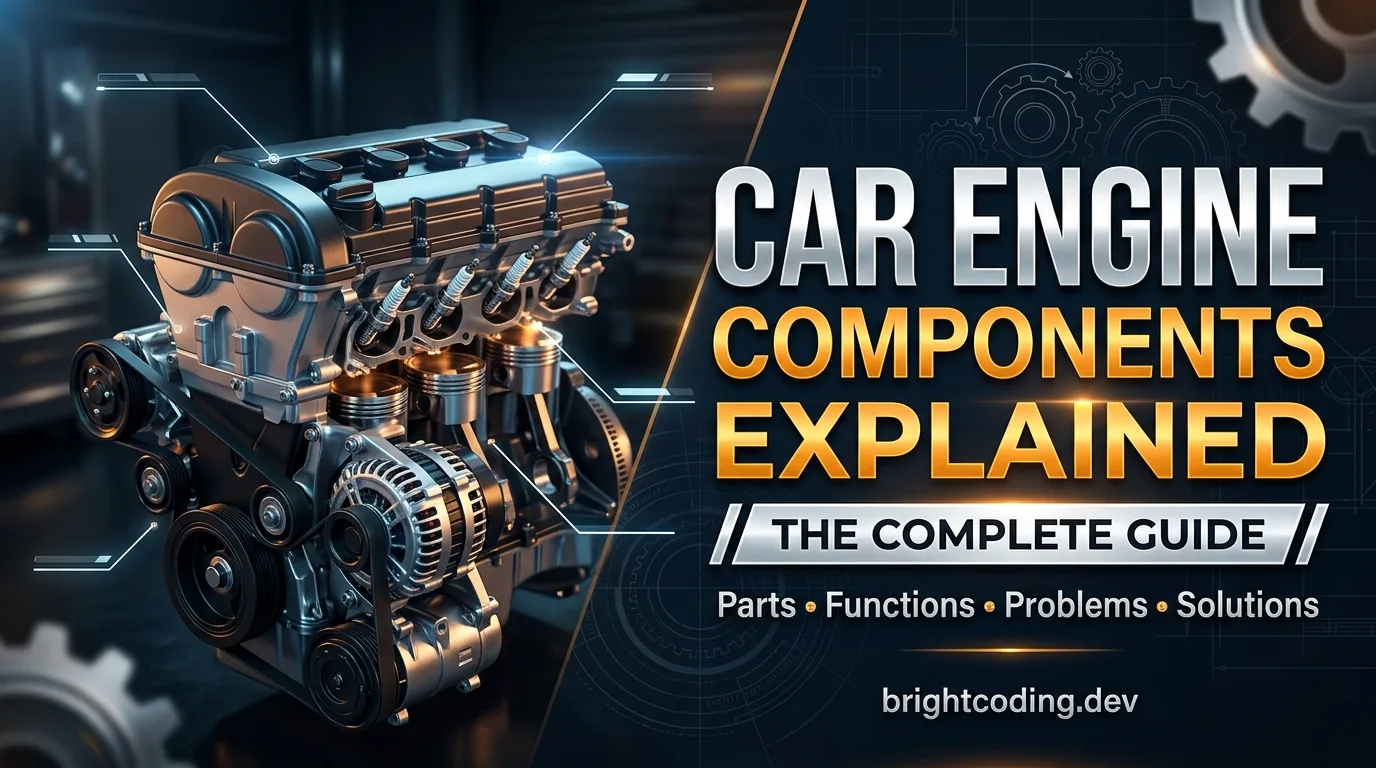
Car Engine Components Explained: The Complete Guide to Parts, Functions, Problems, and Solutions
Your car’s engine is a complex system of parts working together to turn fuel into motion. This complete guide breaks down every major car engine component from the engine block, cylinder head, and DOHC valvetrain to pistons, crankshaft, timing system, fuel delivery, ignition, exhaust, lubrication, and cooling. You’ll also learn common engine problems, warning signs you should never ignore, diagnostic steps, and maintenance tips to keep your engine running reliably
Read the article →
How Car Key Programming Works: The Complete Beginner's Guide
A car key used to be a piece of metal. Now it is a small computer that talks to your car, and when that conversation breaks, the car simply refuses to start. After reading this guide you will understand what key programming actually is, you will know when you can do it yourself with a scan tool and…
Read the article →