How to Program a Car Key in Under 10 Minutes
You can program a spare key or key fob yourself in about ten minutes, provided your car falls into the DIY-friendly group. By the end of this guide you will know how to identify whether your vehicle allows owner programming, run the on-board procedure, and deal with the cases where a dealer visit i…
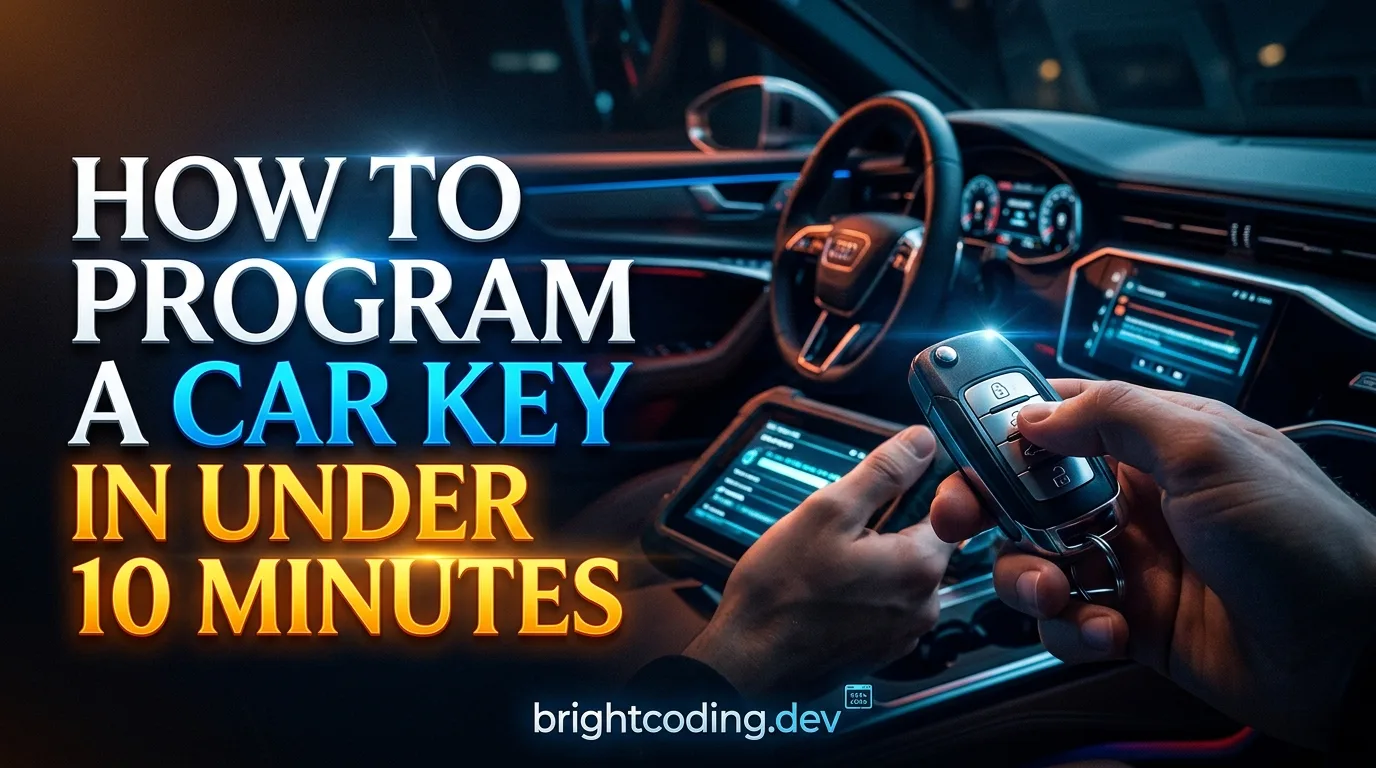
You can program a spare key or key fob yourself in about ten minutes, provided your car falls into the DIY-friendly group. By the end of this guide you will know how to identify whether your vehicle allows owner programming, run the on-board procedure, and deal with the cases where a dealer visit is genuinely unavoidable. No fluff, just the steps.
What you need before you start
- Your existing working key or fob (you almost always need one to authorize a new one)
- The new key or fob, correctly cut and matched to your car's frequency
- The vehicle itself, with a charged battery
- Your owner's manual (the exact button sequence varies by model)
- A quiet space where you can concentrate for a few minutes
- A stopwatch or phone timer, because some procedures are timing-sensitive
That last point is not a joke. Many on-board sequences require you to complete a step within a specific window, often a few seconds. If you fumble, you start over.
Step 1: Confirm your car actually allows DIY programming
Not every car lets you do this. Roughly, vehicles split into three camps.
Older cars, generally pre-2000s, often use a simple sequence of ignition turns and door cycles. Many of these you can do with no tools at all. Newer cars frequently require a scan tool or dealer software to add a key, especially if you are programming a brand-new transponder chip rather than cloning an existing one. Some makes lock the function entirely behind a subscription.
Check your owner's manual first. If it describes a "key programming" or "remote pairing" procedure, you are in luck. If it says nothing, search your exact model and year online or ask a locksmith. If you are unsure what system your car uses, a quick scan with a code reader against our free OBD code lookup can tell you whether the immobilizer is throwing related faults before you start fiddling.
Tip: If your car is a 2010 or newer push-button start model, assume dealer or professional involvement unless you have confirmed otherwise.
Step 2: Get the right key in the first place
This is where most DIY attempts die. A cheap fob from an online marketplace may look identical and still refuse to pair because the transponder chip frequency is wrong or the blade is uncut.
Two things must match: the physical key (if your car has one) and the electronic frequency your car expects. A locksmith can cut the blade and sell you a correctly matched blank for a fraction of dealer pricing. Expect to pay somewhere in the region of $40 to $150 for a cut and matched key depending on the vehicle, though this varies a lot by model and region.
Tip: Buy the key before you plan the programming session. Programming an incompatible fob wastes an afternoon.
Step 3: Read the exact procedure for your model
Do not guess. The sequence differs wildly. Some cars want the driver's door open, some closed. Some want the key turned on and off a specific number of times. Some want the hazard lights to flash as confirmation.
Pull the procedure from your owner's manual, a reputable model-specific forum, or a factory service manual. Write the steps down on paper before you go outside. Reading off a phone screen while turning an ignition key is how people miss timing windows.
Step 4: Prepare the car and clear your workspace
Park on level ground, set the parking brake, and turn off the radio, climate control, and any accessories. An automatic headlight system that fires up mid-procedure can drain voltage at the wrong moment.
Safety warning: if your procedure requires the engine running at any point (rare but possible), keep the car in park or neutral with the brake applied, and never work near a running engine with loose clothing or dangling jewelry.
Make sure the battery is healthy. A weak battery is one of the most common reasons programming fails partway through. If your car has been sitting and cranks slowly, charge it first.
Step 5: Run the programming sequence
Follow your written steps exactly, in order, without rushing. This is the core of the DIY tutorial. Typical sequences look like one of these:
- Ignition on, off, on, off, then leave on
- Press a button on the existing fob a set number of times
- Open and close the driver's door within a time window
- Press lock or unlock on the new fob when the car signals it is listening
Watch for confirmation signals: hazard light flashes, a chime, or the door locks cycling. That tells you the car has entered programming mode. If you get no signal, the sequence did not take. Turn everything off, wait a minute, and try again from the top.
Tip: Have a phone timer running if the manual mentions specific intervals. "Within five seconds" means five, not fifteen.
Step 6: Test the new key immediately
Before you put anything away, test the new fob's lock, unlock, trunk, and panic functions. Then physically start the car with it if it has an ignition blade. If the remote works but the car will not start, the transponder is not paired, only the remote buttons are. Those are two separate systems on many vehicles.
If it starts, you are done. If the remote works but starting fails, you likely need a scan tool or dealer visit to complete the immobilizer pairing.
Step 7: Know when to stop and call a professional
If you have tried the correct sequence three times with a known-good key and a healthy battery, stop. Continuing to cycle the ignition can trigger a security lockout on some vehicles, and that makes everything harder.
A mobile locksmith typically charges in the range of $75 to $200 to program a key you already own, varying by vehicle and area. A dealer can be more. Both beat the cost of a tow to a dealership after you have locked yourself out of your own immobilizer.
Pro tips
- Do one key at a time. Programming two new fobs in a single session confuses the timing on many cars.
- Keep the old working key well away from the new one during pairing if the manual says so. Some systems read the nearest chip and get the wrong one.
- If your fob has a replaceable battery, swap it before programming. A dying coin cell can mimic a failed pairing.
- Photograph the confirmation flashes with your phone. If it fails later, you have a record of what the car actually did.
- Check for a valet or hidden programming button before hunting for a scan tool. Some cars hide it in the glovebox or center console.
- If your car throws a fault code during any of this, run it through our AI mechanic assistant to get a plain-English explanation before you touch anything else.
Common pitfalls
Buying the wrong frequency key. The fob looks right, the car ignores it. Verify the frequency and chip type against your VIN before purchase, not after.
A weak car battery. Programming draws current and the sequence interrupts if voltage sags. Charge the battery first.
Rushing the timing windows. Most failures are just missed seconds. Slow down and use a timer.
Assuming remote pairing equals immobilizer pairing. Lock and unlock working does not mean the car will start. Test the start before you celebrate.
Ignoring a security lockout. If the car stops responding entirely, you may have triggered anti-theft mode. Stop and call a locksmith rather than cycling the ignition again.
Useful resources
Your owner's manual is still the best source for your exact model. Beyond that, a factory service manual or a model-specific owner forum will have the accurate sequence. For fault codes that appear during programming, use our free car tools to decode them, and check the step-by-step car guides if you want to go deeper on your vehicle's electronics. If you are chasing a warning light that showed up along the way, the car symptom finder is a good place to narrow it down. Our blog covers related maintenance topics, and if you want to test your knowledge, the mechanic quiz is a fun way to check what you actually know.
FAQ
Can I program a key without the original? Usually no. Most on-board procedures require one working key to authorize the new one. If you have lost all keys, that is a locksmith or dealer job.
Do I need a scan tool? Many older cars do not. Newer vehicles often do, and some require dealer software specifically. Check your manual before buying anything.
How long does it actually take? The sequence itself is often under two minutes. Add time for reading the procedure, checking the battery, and testing. Ten minutes total is realistic if you are prepared.
Will programming a new key erase the old ones? Not typically. Most systems add a key rather than replacing the set. A few procedures overwrite memory, so read the manual carefully.
Why does the remote work but the car will not start? The remote and the immobilizer are separate systems. The buttons paired, the transponder chip did not. That usually needs a scan tool or a professional.
One last thing
Programming your own key is one of those jobs that feels intimidating until you have done it once. Prepare properly, follow the sequence exactly, and stop if something goes wrong rather than making it worse. If it works, you just saved yourself a trip and a markup. If it does not, you have lost an afternoon, not a fortune. Either way, you learned something about your car.
Related articles
How to Know When Your Tires Need to Be Replaced
You can check your own tires in about 15 minutes with a coin, a pressure gauge and a flashlight. By the end of this guide you will know how to read tread depth, spot the damage that means "replace now," decode the numbers on your sidewall, and judge whether that slow leak is a cheap fix or a new-ti…
Read the article →
What Does It Mean When Your Car Won't Start?
You turn the key or push the button, and nothing. Or worse, that awful click-click-click. Your stomach drops because you know this is going to cost you time, money, or both.
Read the article →
Why Is My Car Shaking? 8 Common Causes Explained
Your coffee is sitting in the cupholder, and it looks like it's trying to escape. Maybe the steering wheel vibrates at highway speed. Maybe the whole cabin shudders when you brake. Either way, a shaking car is one of those problems you can feel in your teeth, and it never fixes itself.
Read the article →
10 Car Noises You Should Never Ignore
Your car talks to you constantly. Most of the time it's mumbling, and you tune it out like a radio ad. Then one day it screams, and you're staring at a repair bill that could have been a $40 part three months ago.
Read the article →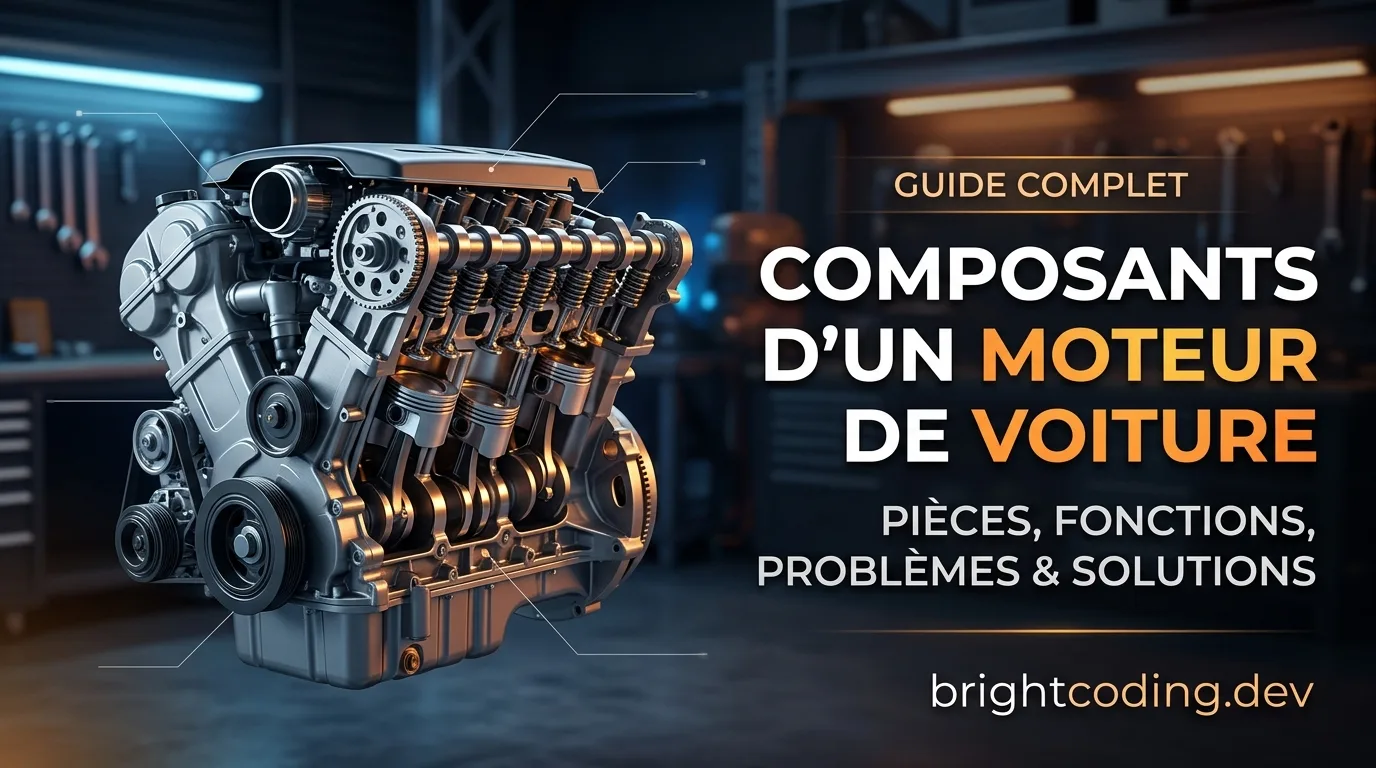
Composants d'un moteur de voiture : guide complet des pièces, fonctions, problèmes et solutions
Le moteur thermique est le cœur de la voiture. Il transforme le carburant en énergie mécanique grâce au cycle à quatre temps : admission, compression, combustion et échappement. Il est composé de nombreuses pièces essentielles comme le bloc moteur, la culasse, les pistons, le vilebrequin, les arbres à cames, les soupapes, ainsi que les systèmes d’admission, d’allumage, de lubrification et de refroidissement.
Read the article →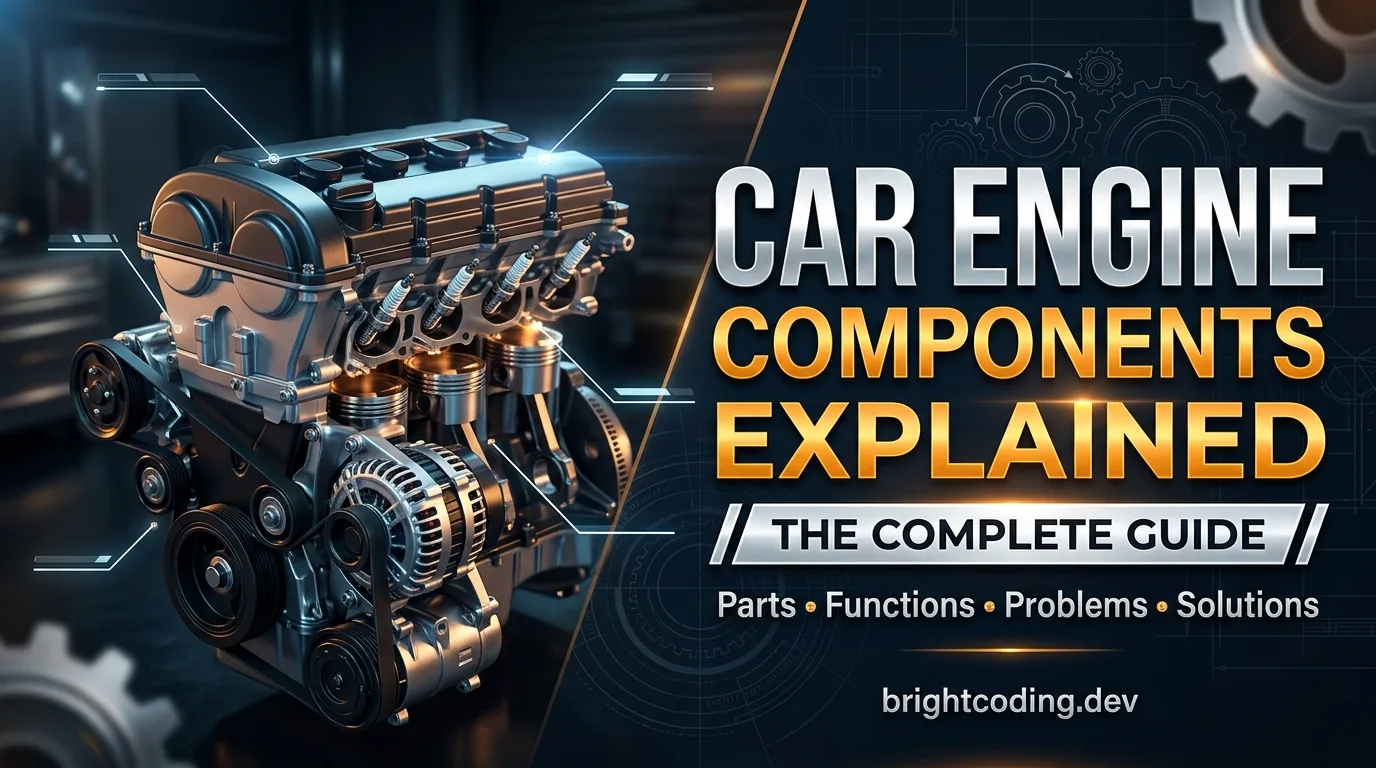
Car Engine Components Explained: The Complete Guide to Parts, Functions, Problems, and Solutions
Your car’s engine is a complex system of parts working together to turn fuel into motion. This complete guide breaks down every major car engine component from the engine block, cylinder head, and DOHC valvetrain to pistons, crankshaft, timing system, fuel delivery, ignition, exhaust, lubrication, and cooling. You’ll also learn common engine problems, warning signs you should never ignore, diagnostic steps, and maintenance tips to keep your engine running reliably
Read the article →