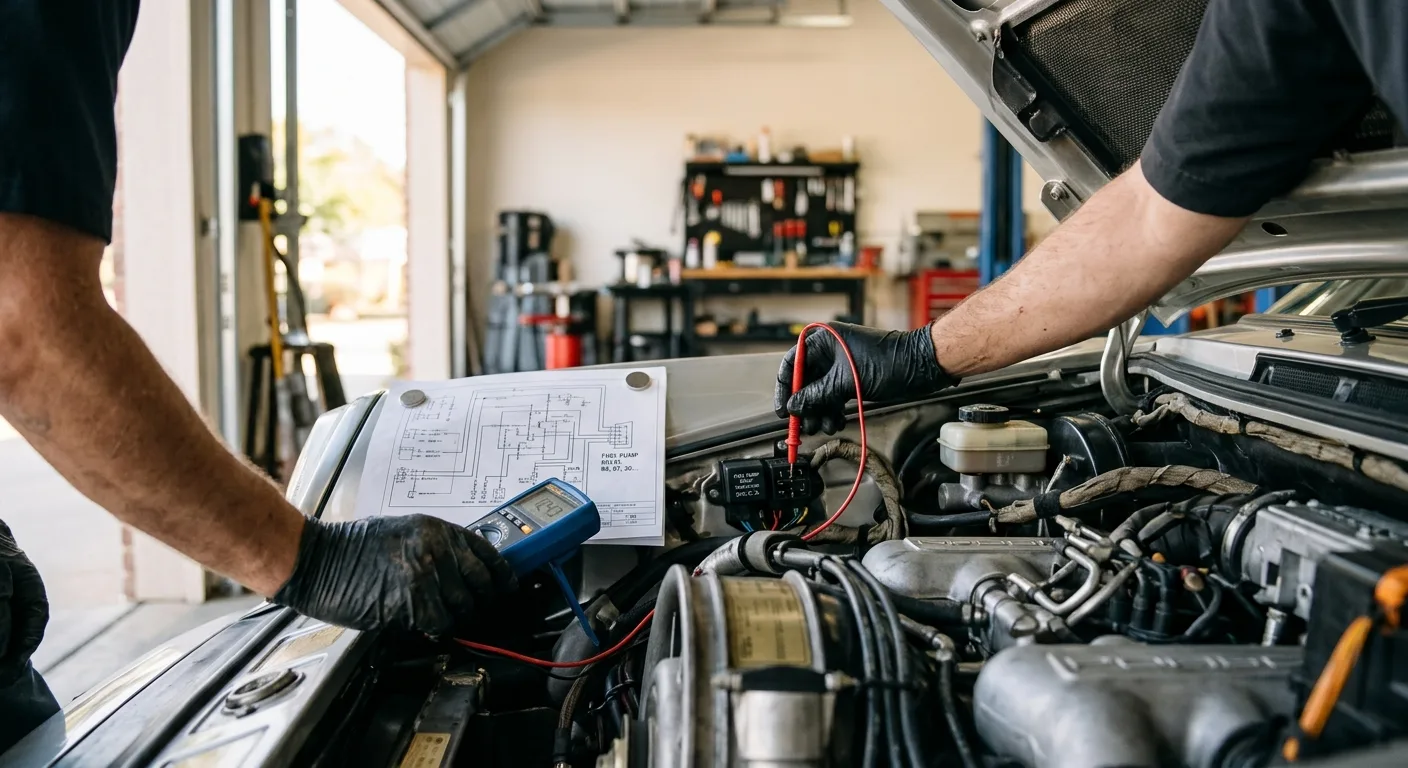
A no-start or a crank-no-fire can send you down a rabbit hole of parts. This guide walks you through the fuel pump circuit the way you should test it: from the power supply out to the pump, through the fuse, the relay, and the ECU command that ties it all together. Follow the steps in order and you will know whether the pump is dead, the relay is lazy, the fuse is blown, or the ECU simply isn't telling the pump to run.
Set aside about an hour if you have a wiring diagram and a decent multimeter. Budget two if you're chasing an intermittent fault or you have to drop a tank.
What you need before you start
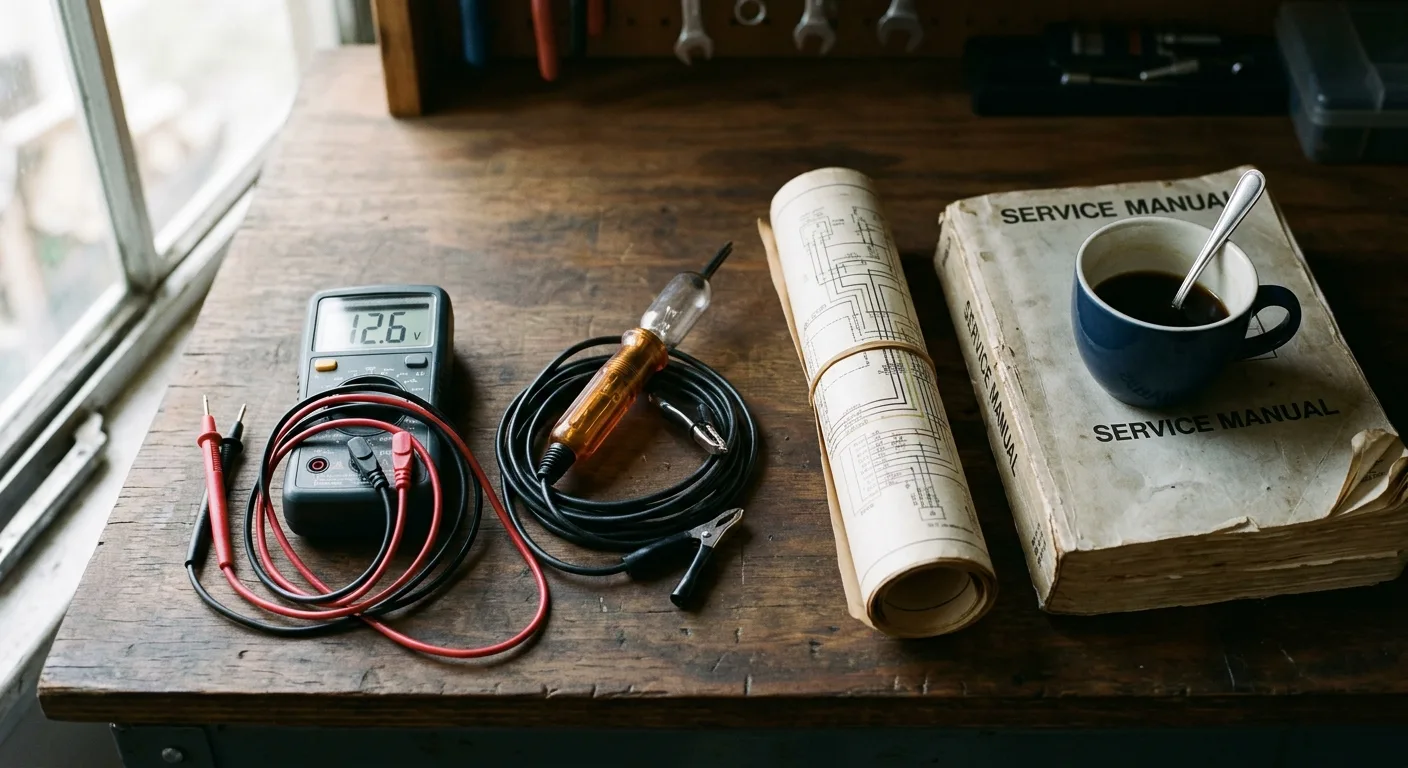
- A digital multimeter with a 10A DC current range and a min/max or peak-capture function if you have it
- A test light (incandescent, not LED, so it loads the circuit)
- A wiring diagram for your specific vehicle, from a service manual, a subscription database, or the manufacturer's information site
- Basic hand tools, plus a fuel pressure gauge if the symptom points to low pressure rather than no start
- A helper to crank the engine while you watch the meter
- Safety glasses and a fire extinguisher rated for chemical fires, kept within reach, not in the trunk
Safety first: gasoline and its vapor are the hazard here, not the voltage. Work outside or with the bay door open, never near a water heater, space heater, or anything with a pilot light. No smoking, no grinding, no welding on the same vehicle until the fuel system is closed up. If you smell raw fuel, stop and find the leak before you touch a meter.
Step 1: Confirm the symptom and pull codes

Start by writing down exactly what the car does. Cranks but won't fire? Starts then dies? Loses power uphill? Each of those points at a different part of the circuit. A crank-no-fire is the classic pump-circuit complaint, but a lean code at highway speed is a different animal.
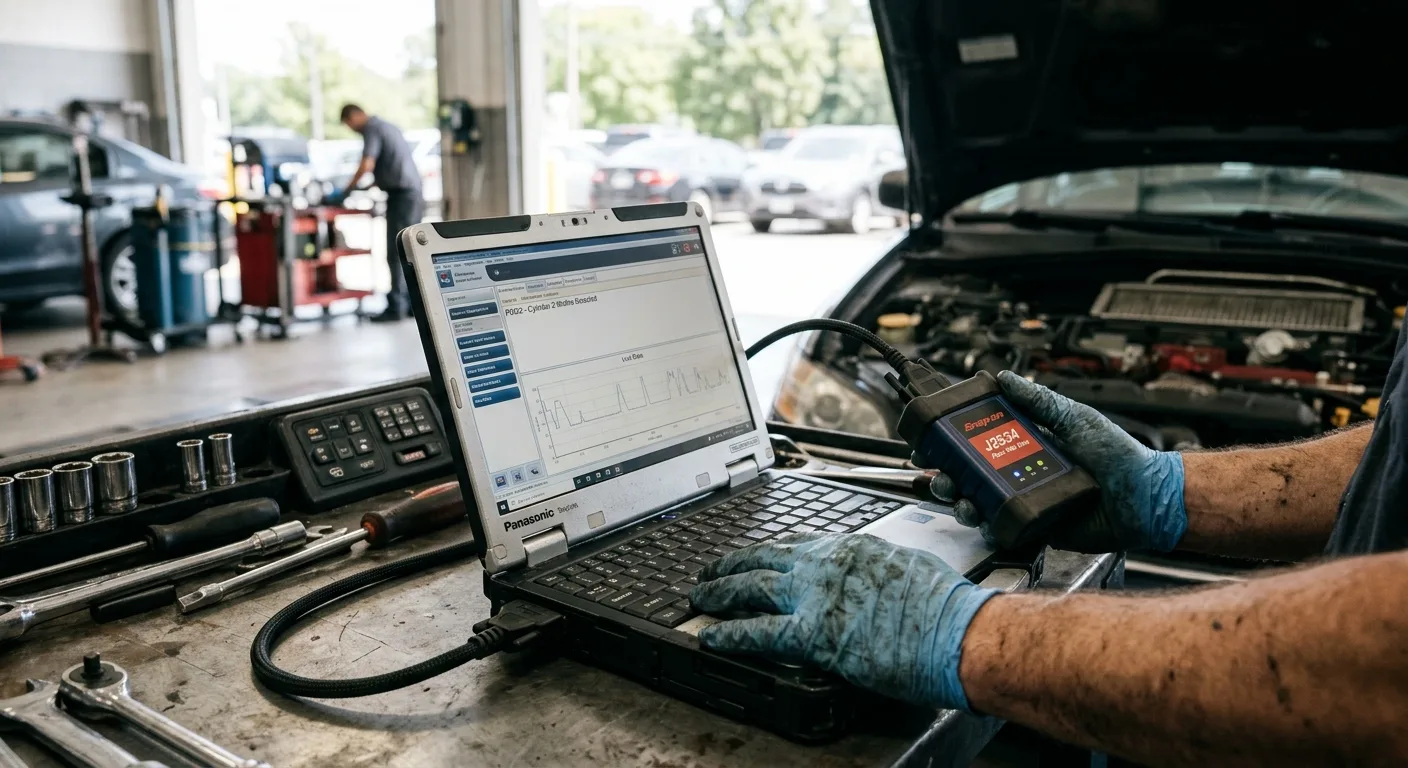
Plug in a scan tool and read stored and pending codes. Fuel pump circuit codes (they vary by manufacturer, so look yours up) point you straight at the wiring. A free OBD code lookup will translate what you pulled and tell you whether the code is circuit-related or a fuel trim problem. That distinction saves you from testing the wrong thing.
Tip: don't clear the codes yet. You want them as evidence if the fault comes back.
Step 2: Listen for the pump prime

Turn the key to run (not crank) with the door open or your head near the tank, and listen for the two-second pump prime. On most vehicles it's a soft whir from under the rear seat or at the filler neck.
If you hear it, the circuit is at least partly alive and you should lean toward a pressure or delivery problem. If you hear nothing, keep going. Silence is a clue, not a diagnosis.
Time: two minutes. Cost: zero.
Step 3: Check the fuse, properly
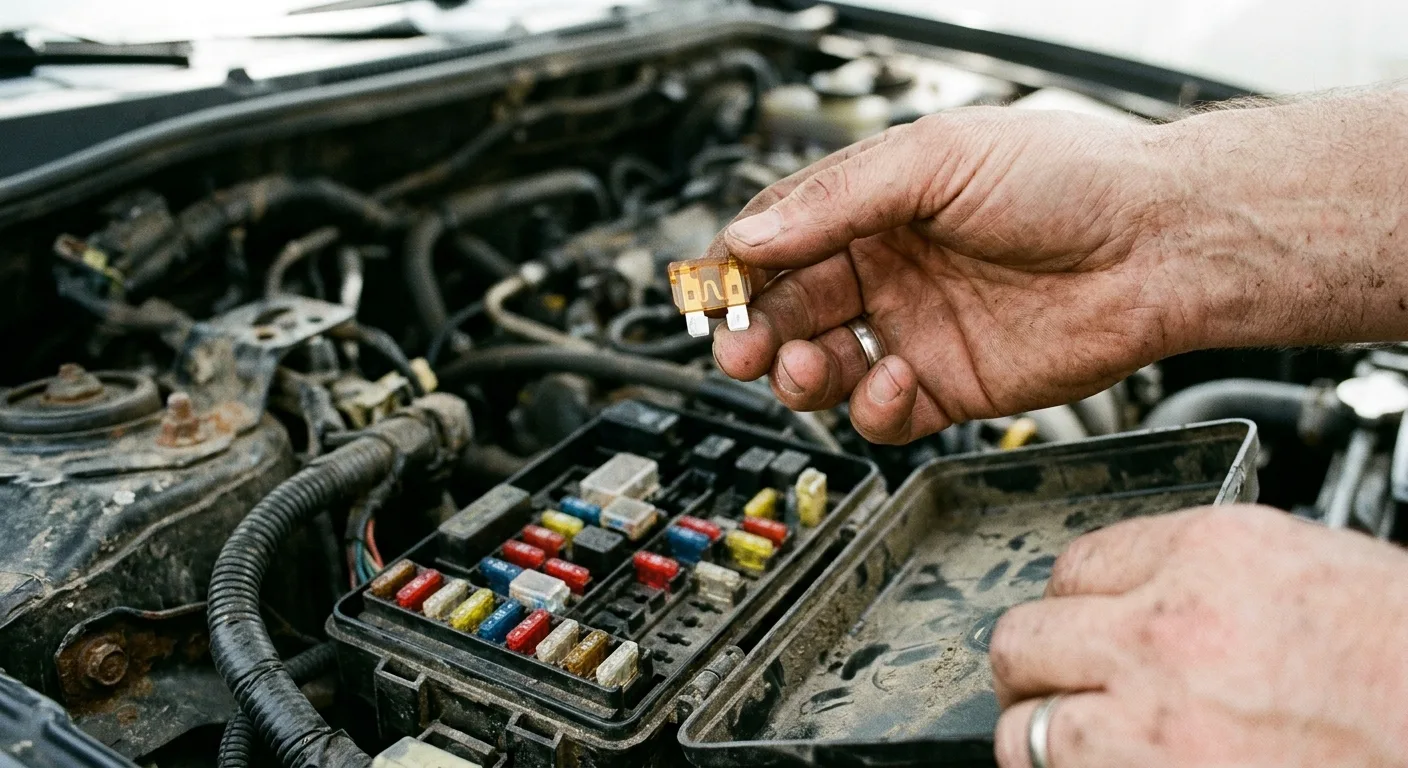
Find the fuel pump fuse in the underhood box (check the diagram on the lid, and confirm against your service manual, because the lid is sometimes wrong on older cars). Pull it and look at the element. A faint hairline crack counts as blown.
Now the part most people skip: check for power at the fuse with the key on. A good fuse in a dead socket tells you nothing. If you have power in and no power out, the fuse is open. If you have no power in, the problem is upstream: a main relay, a fusible link, or a bad ground for the box itself.
Safety: pull the fuse with the key off, then turn the key on to test. Don't arc a probe across the fuse terminals.
Step 4: Test the relay control side
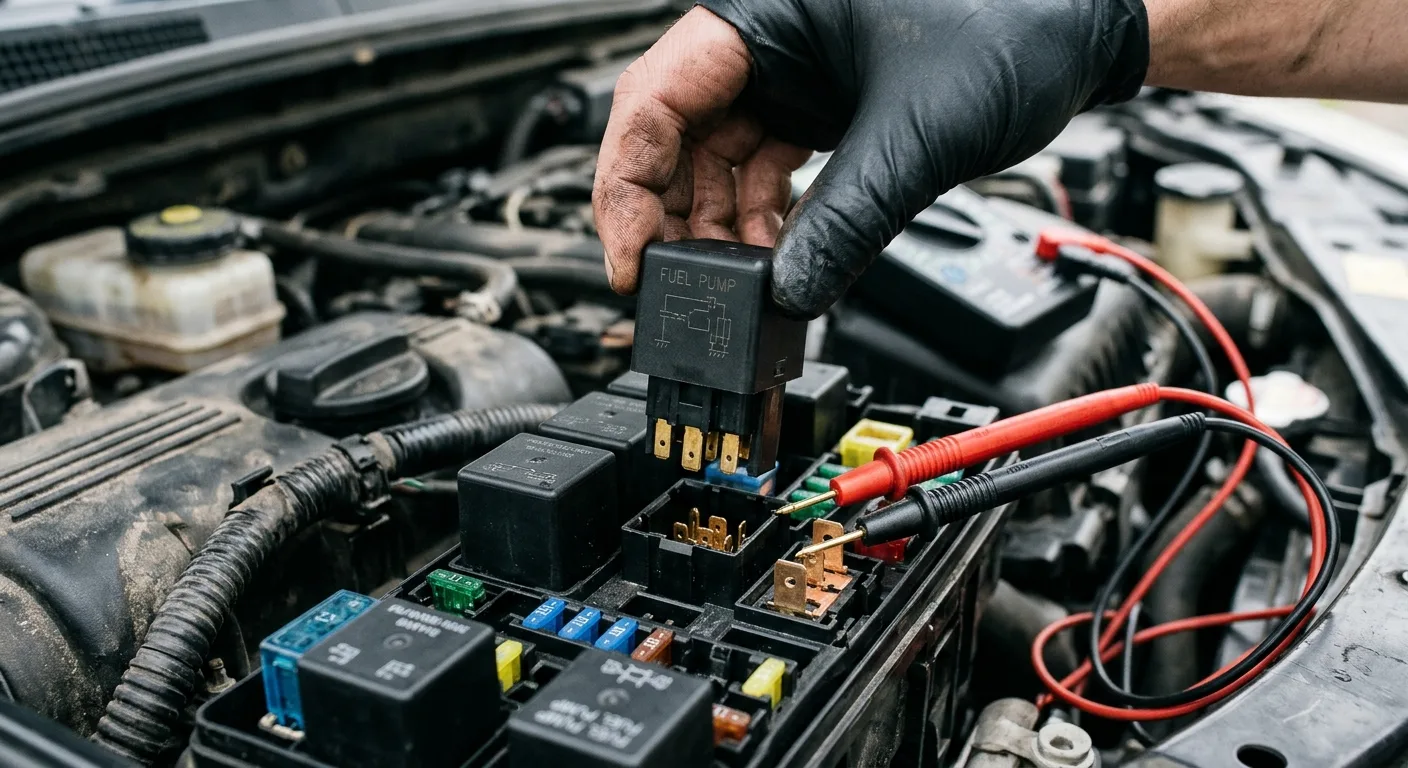
The fuel pump relay has two jobs: it takes a small control signal and switches a large current to the pump. Pull the relay and identify the coil terminals and the contact terminals from the diagram, not from pin position, since layouts differ.
With the key on and the engine cranking, you should see voltage at the coil control terminal when the ECU commands the pump. No voltage there means the ECU isn't asking the relay to close, and you need to look at the control wire, the ECU ground, or a security system that's inhibiting the pump. Voltage there but no click or no contact closure means the relay is suspect.
Tip: swap in a known-good relay of the same part number from a non-critical circuit (horn, rear defog) to confirm quickly. Don't leave a mismatched relay in place.
Cost: a replacement relay is usually inexpensive, roughly $10 to $40 depending on the vehicle. Verify the exact part for your car.
Step 5: Check the power supply at the pump connector
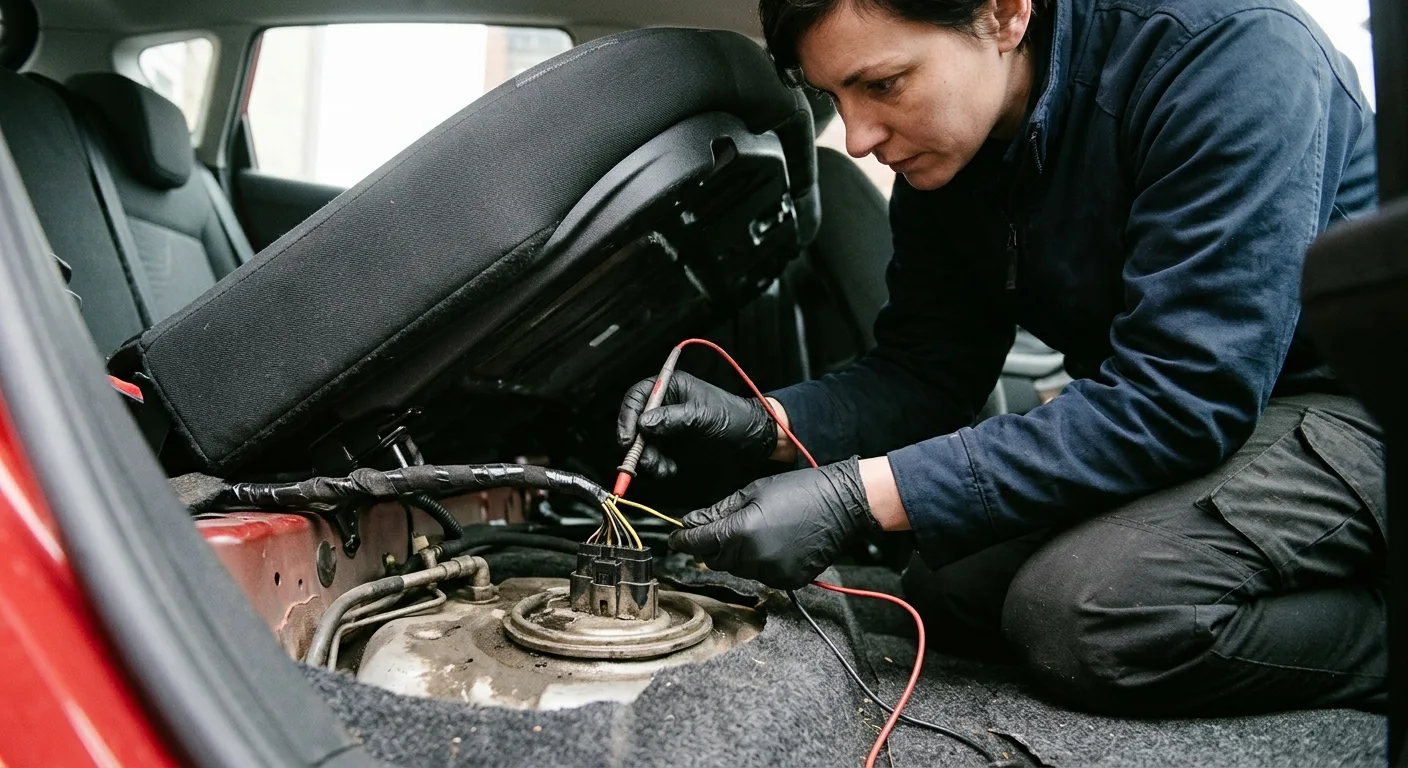
This is where the circuit meets the tank. Get to the pump connector (under the rear seat on many cars, or at the tank) and backprobe it with the key on or while cranking.
You want battery voltage at the pump power wire and a good ground on the return. If you have voltage at the relay output but not at the pump, you have a wiring fault between them: a chafed wire, a corroded connector, or a bad splice. If you have voltage and ground at the pump and it still doesn't run, the pump itself is the suspect.
Safety: never probe a fuel pump connector with the engine running and the lines open. Keep sparks and test-light clips away from fuel lines and vapor.
Step 6: Measure current draw with a meter or clamp
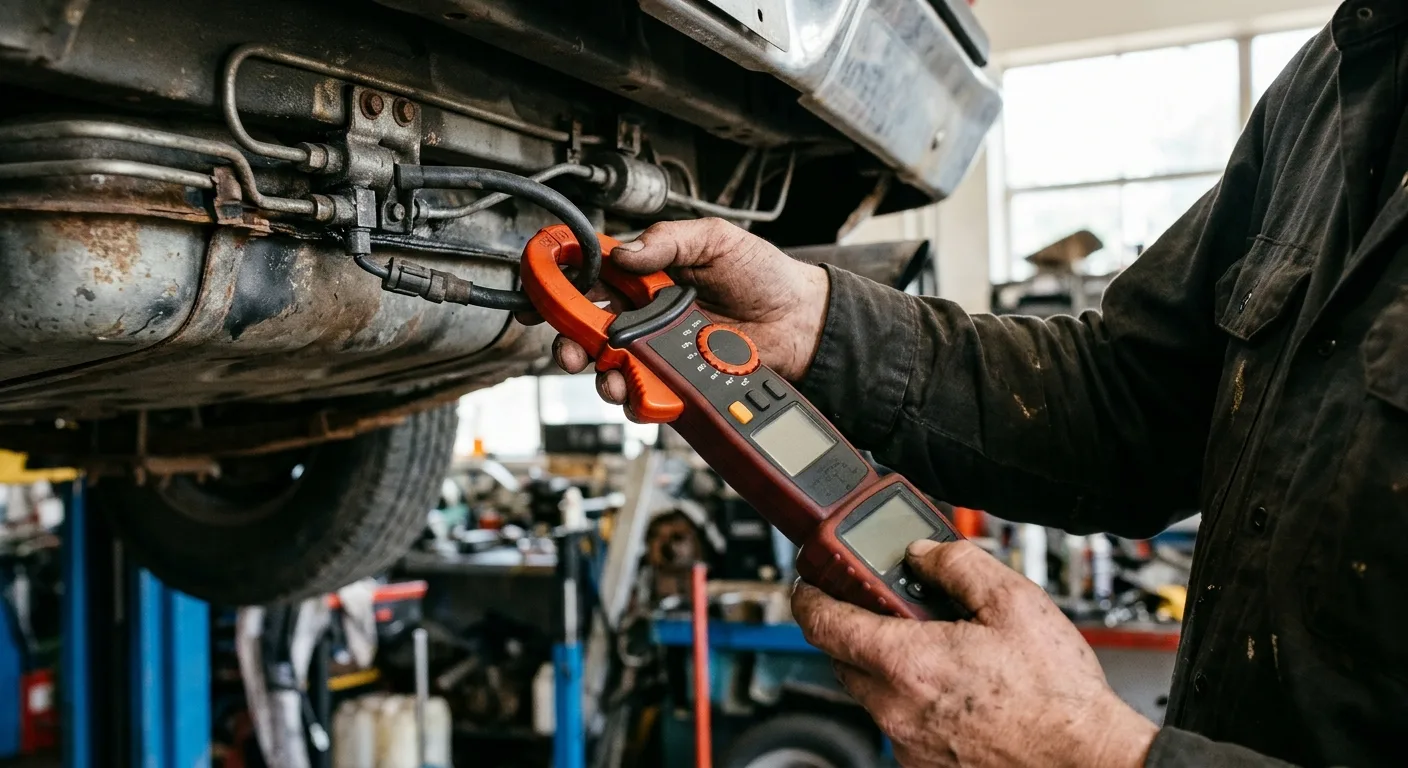
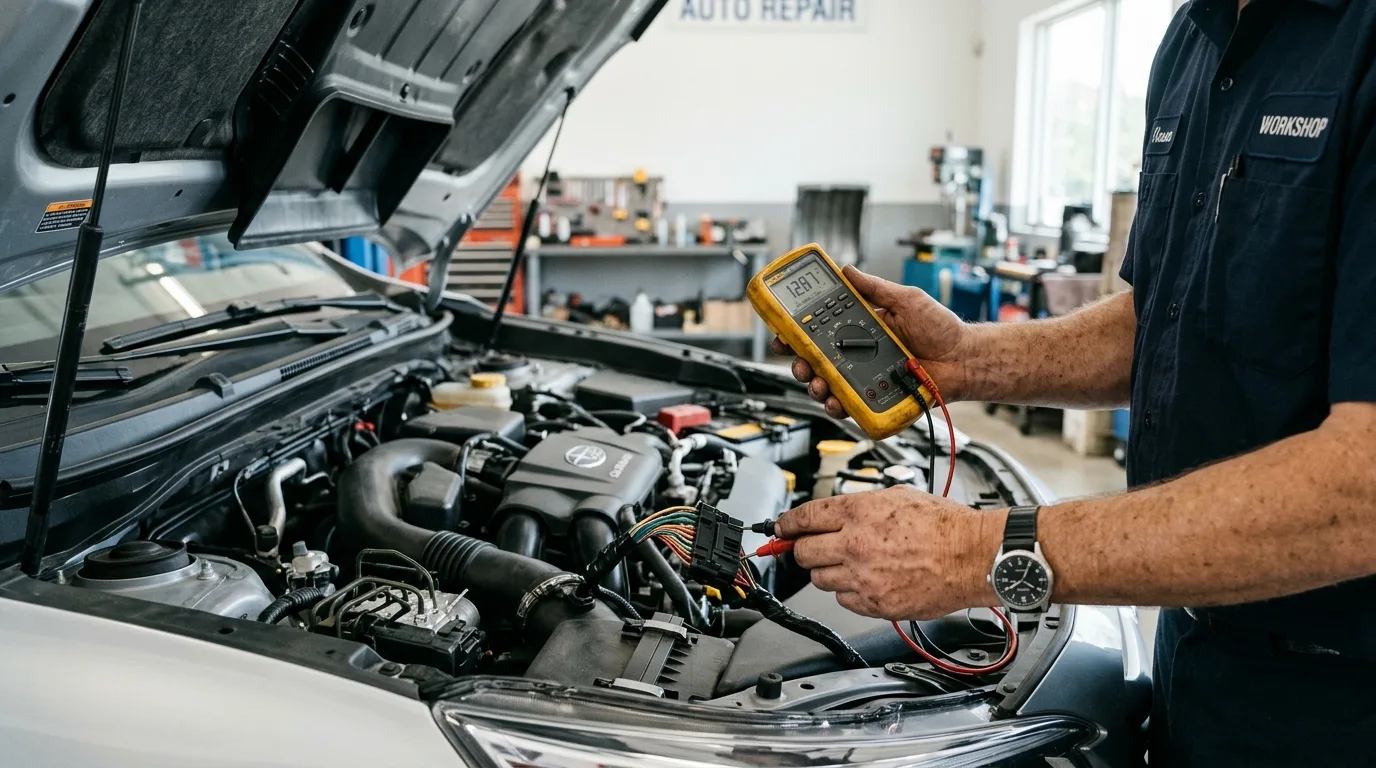
Voltage tells you the circuit is connected. Current tells you the pump is actually working. If your meter has a 10A range, you can measure in series, but a clamp meter is safer and faster.
A healthy pump draws a steady current. A pump drawing noticeably more than normal is dragging; one drawing almost nothing is open. Compare against the manufacturer's specification if you can find it, and if you can't, compare a known-good pump on the same model. Never guess at a number and condemn a pump on it.
Tip: use min/max capture while cranking. A pump that spikes and drops is often failing under load, not dead.
Step 7: Verify the ECU command at the driver
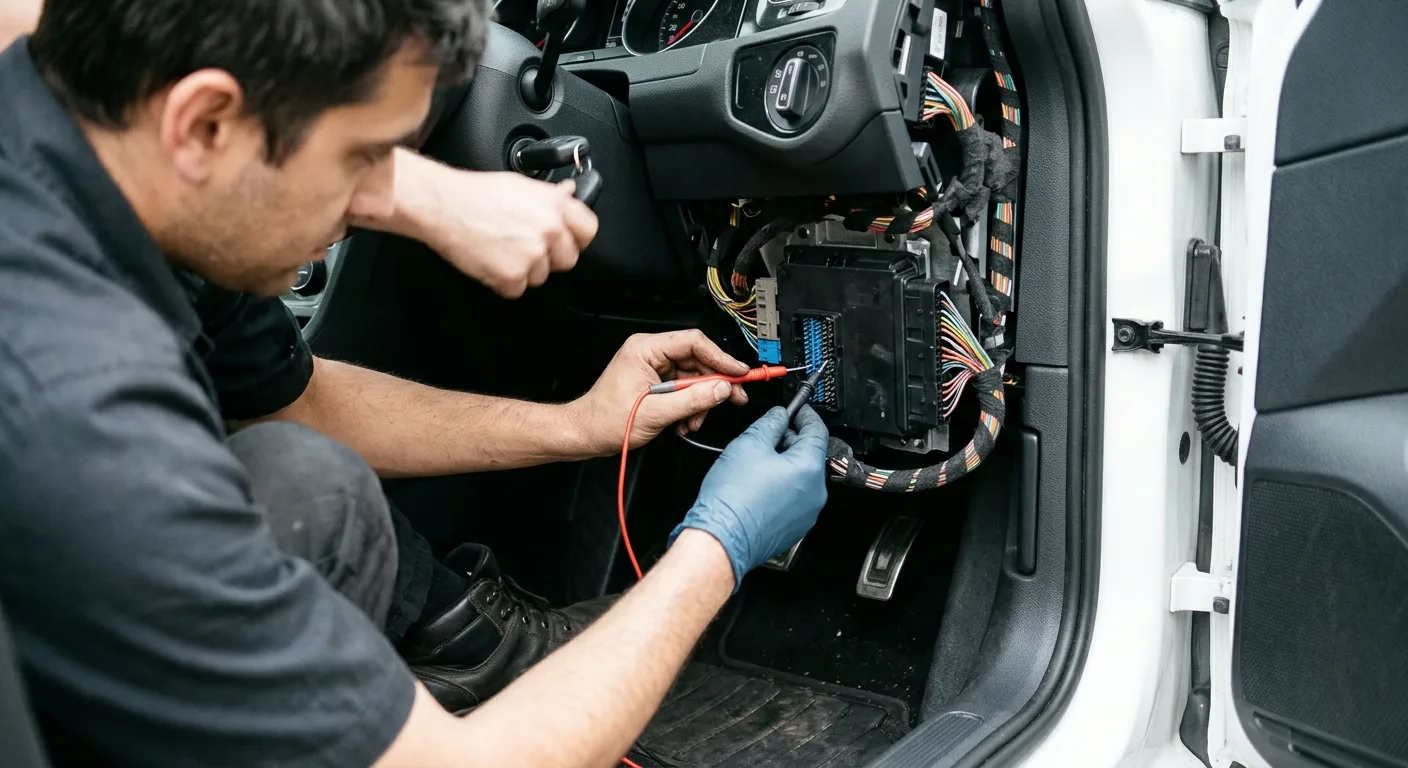
The ECU controls the pump through a driver circuit, either directly or through the relay. With a helper cranking, watch the control wire at the relay or at the ECU connector with your meter or a scope.
You should see a command appear during crank and for the prime window. No command, with good powers and grounds at the ECU, points to an ECU or immobilizer issue. A command that appears and disappears is often a security system cutting fuel, or a crank sensor the ECU doesn't trust.
Safety: if you're probing at the ECU, disconnect the battery first, then reconnect to test. Don't backprobe a sealed connector with a paper clip; use the proper terminal probe.
Step 8: Confirm fuel pressure and flow
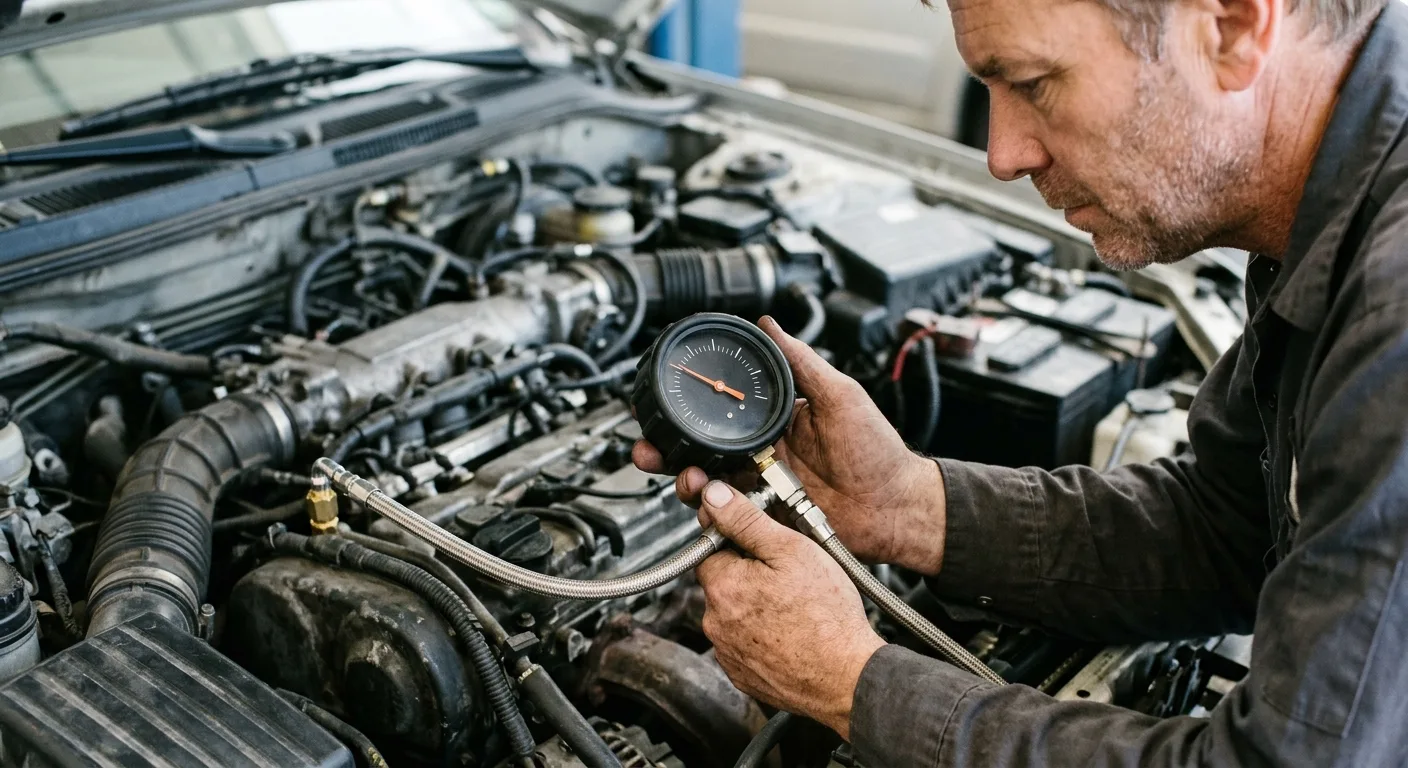
Once the electrical side checks out, put a gauge on the rail and watch the pressure during prime and crank. Pressure that builds then bleeds off points at a leaking injector or a failing check valve. Pressure that never builds points back at the pump or a blocked filter.
This step is where a lot of "bad pump" diagnoses get corrected. The pump can run, sound healthy, and still fail to deliver volume.
Time: 20 to 30 minutes if you have the adapter for your rail. Verify the pressure specification in your manual before you call it good or bad.
Step 9: Recheck after any repair

After you replace a relay, fuse, or pump, repeat the prime test and the pressure test. Then clear codes and take a short drive to confirm the fault doesn't return. A repair that "works" in the driveway but sets the same code on the road isn't done.
If the fault is intermittent, log live data on a road test. The OBD live-data tool lets you watch fuel trims and related parameters while you drive, which is often the only way to catch a pump that quits only when hot.
Pro tips
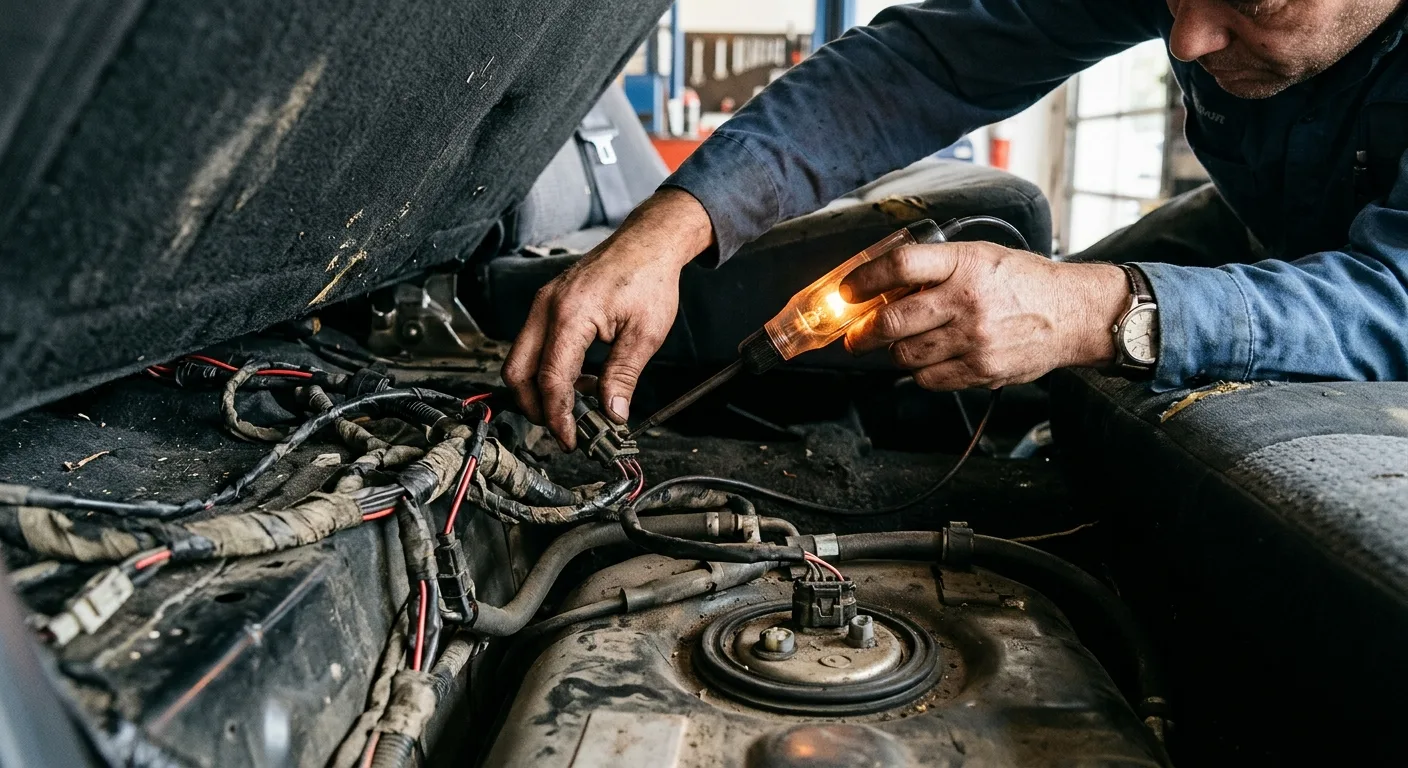
- Load the circuit, don't just look at it. A test light that draws current will reveal a corroded connection a high-impedance meter misses.
- Wiggle test every connector. Chafe and corrosion hide at the pump and at the relay box, and they love temperature changes.
- Check grounds twice. Most "dead pump" calls that turn out wrong are bad grounds at the pump or at the relay box.
- Read the diagram before you probe. Pinouts vary wildly between years and models, and guessing costs you a fuse or an ECU.
- Keep a known-good relay in your box. It's the fastest way to split a control problem from a power problem.
Common pitfalls

- Condemning the pump on silence alone. No prime doesn't mean a dead pump. Test the fuse, relay, and command first, or you'll replace a good pump and still have a no-start.
- Testing a fuse with a meter only. A fuse can read continuity and still fail under load. Test with the circuit powered.
- Ignoring the immobilizer. A security system that doesn't recognize the key will cut the pump command. If the dash shows a key or security light, sort that out first.
- Skipping the current test. Voltage at the pump with no current draw means an open circuit, not a working pump.
- Forgetting fuel pressure. Electrical checks pass and the car still won't run because the pump can't deliver volume. Always confirm pressure.
Useful resources
- Your vehicle's factory service manual or a subscription repair database for wiring diagrams and specifications
- The step-by-step car guides for related no-start, fuel, and electrical walkthroughs
- The mechanical encyclopedia for component explanations and system basics
- The car symptom finder to cross-check a no-start against other possible causes
- The AutoTools blog and expert car tips for more diagnostic shortcuts
FAQ
How long should a fuel pump prime? Most vehicles prime for about two seconds when the key is turned to run. If yours primes longer or not at all, check the manual, because the strategy varies by manufacturer.
Can a bad relay cause a no-start without a code? Yes. Relay contact failure often doesn't set a code until the ECU notices the pump circuit is open. The prime test and relay swap catch it fast.
Do I need a scope to check the ECU command? No. A meter with min/max capture will show the command pulse. A scope is nicer for intermittent faults but not mandatory.
Is it safe to test the pump with the engine running? Only if the fuel system is closed and you're not near fuel lines or vapor. Keep a fire extinguisher within reach and never probe an open fuel connection.
Why does my pump run but the car still won't start? Check fuel pressure and flow, then spark and compression. A running pump that can't build pressure points at the pump, filter, or a leaking injector.
Final word
Fuel pump circuits reward patience. Test in order, load the circuit, and confirm the ECU is actually commanding the pump before you reach for a parts cannon. Follow these steps and you'll diagnose the right component the first time, which is the whole game.