Car Key Programming Explained: The Ultimate Beginner's Guide
By the end of this guide you'll know whether your key can be programmed at home, how a transponder key actually talks to your car, and the exact order of steps to pair a new key without paying a dealer two hours of labor. For a simple job on a car that already has one working key, budget 15 to 40 m…
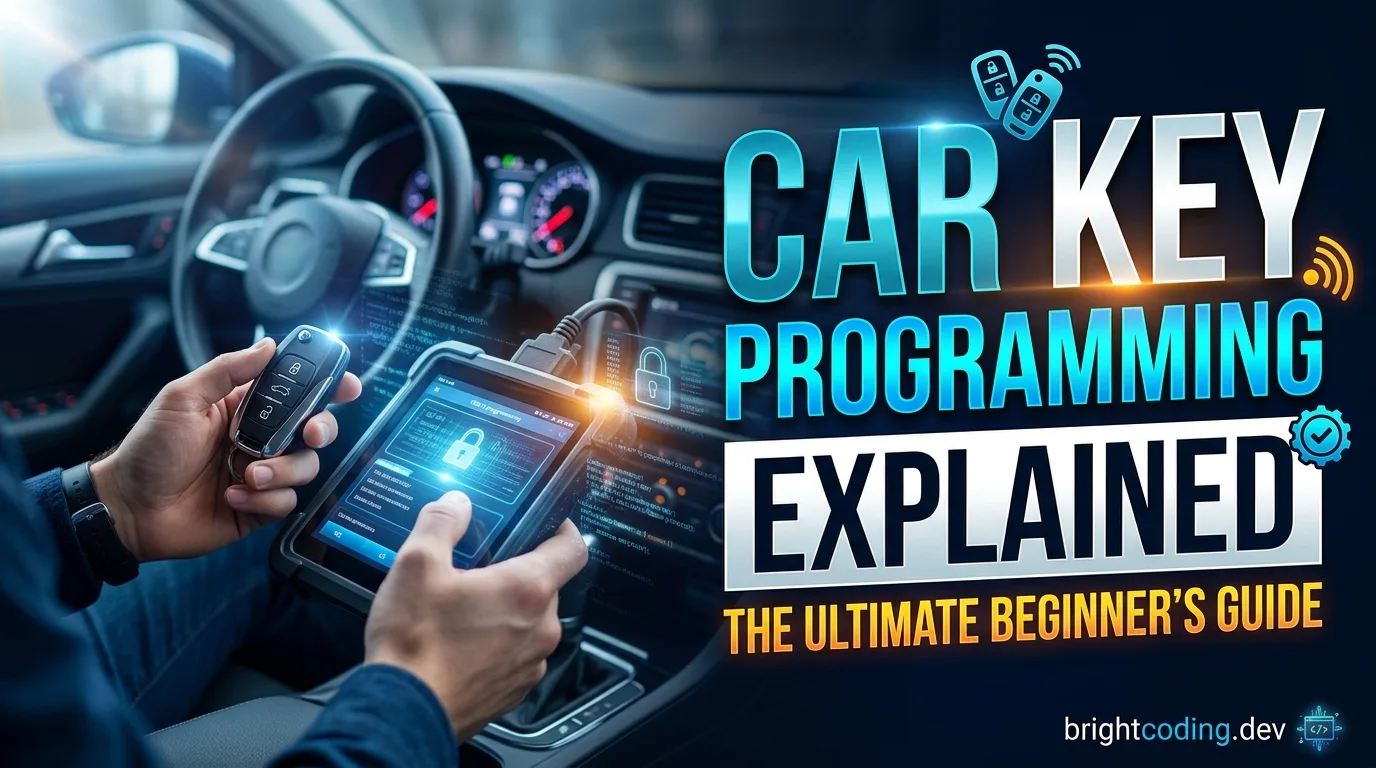
Car Key Programming Explained: The Ultimate Beginner's Guide
By the end of this guide you'll know whether your key can be programmed at home, how a transponder key actually talks to your car, and the exact order of steps to pair a new key without paying a dealer two hours of labor. For a simple job on a car that already has one working key, budget 15 to 40 minutes. If you're adding a key from scratch with no working key on hand, that's a different and much harder job, and I'll tell you why.
What you need before you start
- Your existing working key (the master, if your car has one)
- The new key or fob, already cut or already matched to your car's frequency
- The vehicle's owner's manual, specifically the section on keys and immobilizer
- A charged car battery, or a jump pack nearby
- Any PIN, security code, or original key tag your car requires (check the manual)
- Basic hand tools only if you're swapping a battery or a shell
- A scan tool or programming device that lists your exact year, make, and model as supported
That last item is where most beginners get burned. A cheap scan tool that says "key programming" on the box often only covers a narrow slice of cars. Confirm support for your specific vehicle before you buy anything.
Step 1: Find out which type of key you have
There are three broad types, and they change everything about the process.
A mechanical key is just metal. It turns the lock and that's it. Nothing to program.
A transponder key has a tiny chip in the head that broadcasts a code to an immobilizer ring around the ignition. The metal part starts the car; the chip lets it keep running. This is the most common setup on cars from the late 1990s onward.
A smart key or fob uses radio frequency to unlock and a push-button start, usually with the transponder built in.
Why it matters: you cannot program a transponder key with a mechanical procedure, and you cannot program a smart key by turning it in the ignition. Get the type right first. If you're unsure, your owner's manual will name it, and a look at the key head usually gives it away.
Tip: If your key has a small rubber or plastic head with no visible seams for a battery, it's probably a transponder. If it has buttons and a slide-out emergency blade, it's a smart key.
Step 2: Decide if this is a DIY job or a shop job
Be honest with yourself here, because it saves money and frustration.
DIY is realistic when you have at least one working key, your car is a common model, and a programming tool explicitly supports it. Many older transponder systems can be paired in the driveway in a few minutes.
A shop or dealer is the right call when you have zero working keys, when the car is a late-model European or luxury brand with online security, or when the key needs to be cut from a code rather than copied. Locksmiths who specialize in automotive keys are often cheaper than dealers and can do mobile work, roughly in the range of a fraction of dealer pricing, but call two or three for quotes because it swings widely.
Tip: Ask any shop whether they can program the key or only cut it. Those are two different skills and sometimes two different businesses.
Step 3: Gather the right programming method
There are four common ways keys get paired, and you need to know which one your car uses.
- Onboard procedure: a sequence of turns, presses, or door cycles you do yourself. Free, but only exists on some cars.
- Scan tool pairing: you plug into the OBD-II port and follow the tool's menu. This is the most common DIY route.
- Manufacturer software: dealer-level, requires a subscription and a security login.
- Bench or EEPROM programming: the immobilizer module comes out. Not a beginner job.
For methods 2 and 3, you'll often be reading live data from the car's computers to confirm the immobilizer is happy. If you want to understand what those numbers mean, our OBD live-data tool is a good place to see how the car reports status, and if a fault code shows up during the process, the free OBD code lookup will tell you what it means in plain English.
Tip: Write down your car's VIN before you start. Every tool and every shop will ask for it.
Step 4: Prepare the car and the area
Park on level ground, set the parking brake, and turn off every accessory: radio, lights, phone charger, climate fan. Programming involves the car's computers, and a voltage dip mid-procedure can leave you with a half-paired key.
Safety warning: if you're working near the battery, disconnect the negative terminal first if the procedure calls for it, and never let a wrench bridge both terminals. A shorted battery can vent hydrogen and burn you. Also never program keys while the car is running or while anyone is inside who might bump the shifter.
Open the driver's window before you start. Some procedures lock the doors as part of the sequence, and you do not want to be on the wrong side of that.
Tip: Put your phone on do-not-disturb. A call in the middle of a timed sequence is the most common way beginners fail.
Step 5: Insert the working key and start the pairing mode
This step looks different per car, so treat the following as the shape of the process, not the exact recipe.
Typically you insert your working key, turn the ignition to ON without cranking the engine, and either wait for a security light to behave a certain way or press a button on the fob within a set window. Some cars want the door opened and closed a set number of times. Some want the lock button pressed while the key is in.
Why it matters: the car is listening for a specific signal at a specific moment. Miss the window and it simply ignores you, with no error message.
Tip: If the car has a security or immobilizer light, watch it. Fast blink, slow blink, and solid all mean different things, and the manual tells you which is which. Timing windows are often only a few seconds, so read the whole sequence before you touch anything.
Step 6: Introduce the new key
With the car in pairing mode, you add the new key, usually by inserting it, turning it to ON, and waiting for a confirmation, or by holding a button on the new fob.
The car is writing the new key's chip code into its memory. This is why you can't just clone a key by copying the metal: the car has to agree to trust the new chip.
Safety warning: do not remove the key or cut power in the middle of this write. Interrupting it can wipe the pairing on some systems and, in the worst case, leave you with no working key at all. If you only have one working key, treat this moment with respect.
Tip: Some systems expect you to add all keys in one session. If you have three keys and only pair two, the third may stop working. Check the manual.
Step 7: Confirm the pairing actually worked
Don't assume. Test it properly.
Turn the car off, remove all keys, wait about 30 seconds, then start the car with the new key alone. Let it run for a minute. Then lock and unlock with the fob from a few feet away, and again from across the parking lot.
Why it matters: a key can start the car but fail to lock it, or vice versa, if only part of the pairing took. Testing both functions catches that now instead of in a parking garage at night.
Tip: If the car cranks but dies immediately, the immobilizer didn't accept the chip. If it won't crank at all, that's often a different problem. Check for stored codes with the OBD code lookup before you blame the key.
Step 8: Deal with the old key
If you replaced a lost key, that lost key may still be able to start your car. Ask your shop or tool whether it can delete old keys from memory. Many can, and it's worth doing.
If you're just adding a spare, keep the old one. Two working keys is the sweet spot: it makes future DIY programming possible on many cars, because some systems require two known keys to add a third.
Tip: Label your spare keys with a paint dot or a tag that doesn't include your address. Stolen keys plus a registration in the glovebox is a bad combination.
Pro tips
- Two keys get the easy path. On many cars, having two working keys lets you program a third yourself. Buy that second key now, not after you lose one.
- Buy the key for your exact frequency. Fobs look identical but transmit on different bands. Match the part number off your old key, not a photo of a similar one.
- Fresh battery in the new fob. A weak fob battery can make a successful pairing look like a failure. Swap it first.
- Keep the car on a charger. A maintainer on the battery during long programming sessions prevents the voltage dip that ruins the write.
- Do it in shade, not heat. Electronics and impatience both suffer in a hot parking lot.
- Save your PIN. If your car uses a security code, store it somewhere other than the glovebox.
Common pitfalls
Buying a key before checking tool support. The most expensive mistake. Confirm your exact model is listed before you spend a cent. If you're not sure, our step-by-step car guides walk through vehicle-specific procedures.
Assuming all keys program the same way. A 2005 sedan and a 2020 crossover can share a brand name and nothing else. Year, trim, and market all matter.
Skipping the voltage check. A battery at 11.8 volts may still crank the car but fail to hold the computers awake long enough to finish programming.
Interrupting the sequence. If you're not sure it worked, complete the sequence and test, don't stop halfway and start over. Repeated aborted writes are how modules get confused.
Forgetting the physical cut. Programming the chip doesn't cut the metal. A programmed key that won't turn is just a chip in your pocket. Get it cut by a locksmith or dealer.
Useful resources
Your owner's manual is still the best source for your specific car, and it's free. For general background on how immobilizers and transponders work, a mechanical encyclopedia is handy for the theory. If you want to understand fault codes that appear during programming, our free car tools collection includes readers and lookups. And when a problem doesn't announce itself clearly, the car symptom finder can help you narrow down what the car is actually complaining about.
FAQ
Can I program a car key myself? Often yes, if you have at least one working key and a tool that supports your exact vehicle. With no working key, it's usually a locksmith or dealer job because the security system needs to be reset first.
How much does key programming cost? DIY tools vary widely, and dealer or locksmith pricing varies even more by region and brand. Get two or three quotes and ask specifically whether cutting is included.
Why did my new key start the car but not lock it? That usually means the transponder paired but the radio frequency didn't, or the fob battery is weak. Try a fresh battery and repeat the fob pairing step.
Can I program a key with a dead car battery? No. Put a charger or jump pack on first. Programming needs stable voltage, and a dying battery can leave the key half-written.
Will programming a new key erase my old one? Not usually, but some systems require all keys in one session. Read your manual or ask your shop before you start.
One last thing
Key programming has a reputation for being dealer-only magic. For a lot of cars it isn't. Do your homework on the type and the tool, keep the battery healthy, and follow the sequence exactly. If you hit a wall, that's not failure, it's the signal that your car is one of the ones that genuinely needs a specialist. Now go check your manual and see which camp you're in.
Related articles

How to Know When Your Tires Need to Be Replaced
You can check your own tires in about 15 minutes with a coin, a pressure gauge and a flashlight. By the end of this guide you will know how to read tread depth, spot the damage that means "replace now," decode the numbers on your sidewall, and judge whether that slow leak is a cheap fix or a new-ti…
Read the article →
What Does It Mean When Your Car Won't Start?
You turn the key or push the button, and nothing. Or worse, that awful click-click-click. Your stomach drops because you know this is going to cost you time, money, or both.
Read the article →
Why Is My Car Shaking? 8 Common Causes Explained
Your coffee is sitting in the cupholder, and it looks like it's trying to escape. Maybe the steering wheel vibrates at highway speed. Maybe the whole cabin shudders when you brake. Either way, a shaking car is one of those problems you can feel in your teeth, and it never fixes itself.
Read the article →
10 Car Noises You Should Never Ignore
Your car talks to you constantly. Most of the time it's mumbling, and you tune it out like a radio ad. Then one day it screams, and you're staring at a repair bill that could have been a $40 part three months ago.
Read the article →
Composants d'un moteur de voiture : guide complet des pièces, fonctions, problèmes et solutions
Le moteur thermique est le cœur de la voiture. Il transforme le carburant en énergie mécanique grâce au cycle à quatre temps : admission, compression, combustion et échappement. Il est composé de nombreuses pièces essentielles comme le bloc moteur, la culasse, les pistons, le vilebrequin, les arbres à cames, les soupapes, ainsi que les systèmes d’admission, d’allumage, de lubrification et de refroidissement.
Read the article →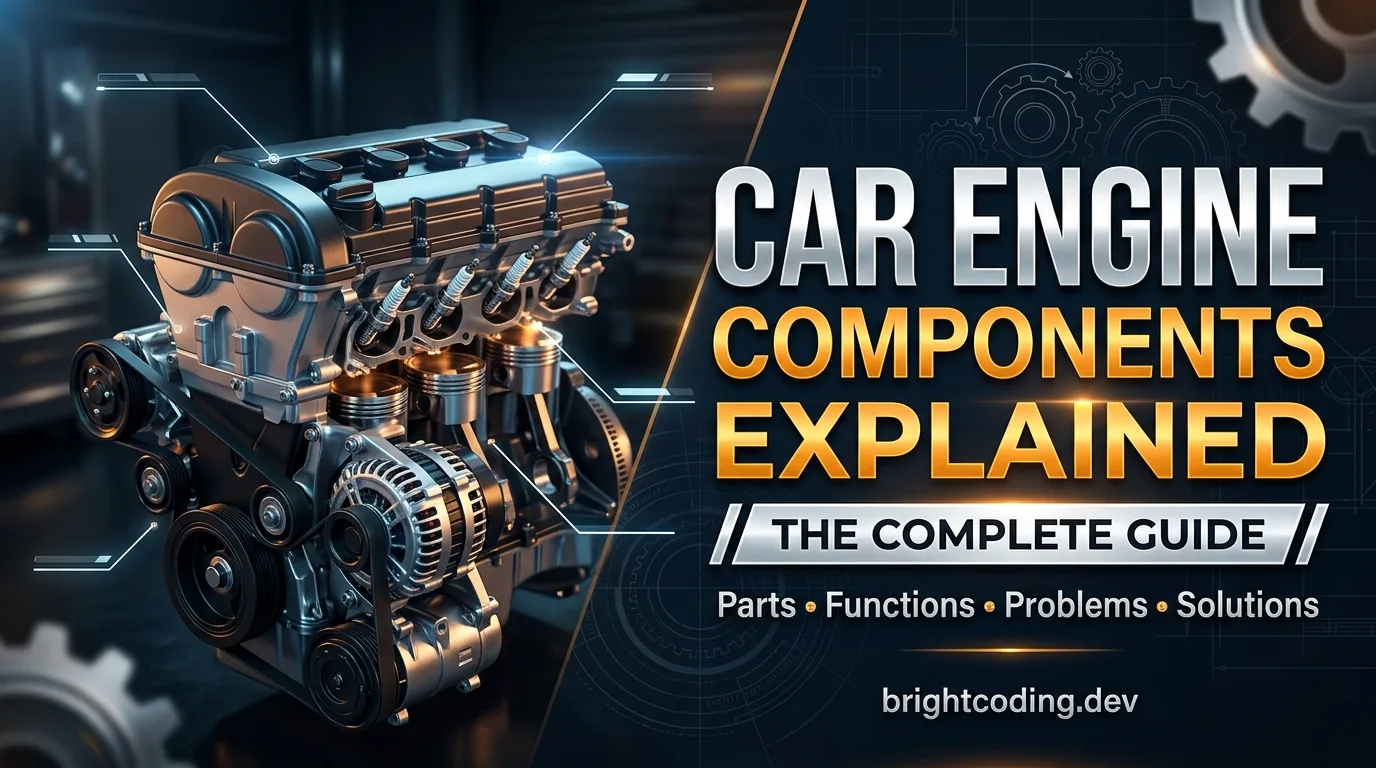
Car Engine Components Explained: The Complete Guide to Parts, Functions, Problems, and Solutions
Your car’s engine is a complex system of parts working together to turn fuel into motion. This complete guide breaks down every major car engine component from the engine block, cylinder head, and DOHC valvetrain to pistons, crankshaft, timing system, fuel delivery, ignition, exhaust, lubrication, and cooling. You’ll also learn common engine problems, warning signs you should never ignore, diagnostic steps, and maintenance tips to keep your engine running reliably
Read the article →