10 Things You Should Never Do to Your Car
Most expensive car repairs don't start with a crash or a bad part. They start with a small habit: skipping an oil change, ignoring a noise, or "just topping off" the wrong fluid. By the end of this guide you'll know the ten most common owner mistakes, why each one costs money, and exactly what to d…
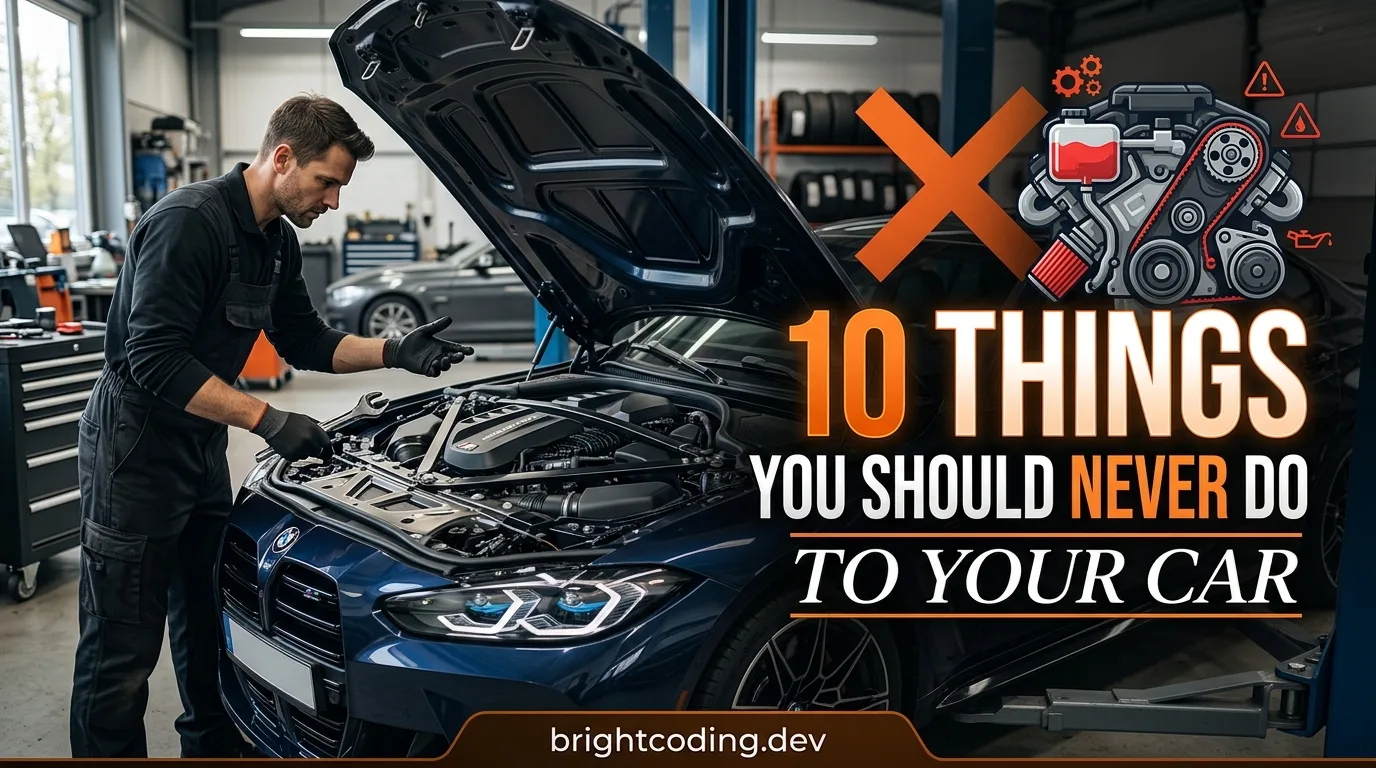
Most expensive car repairs don't start with a crash or a bad part. They start with a small habit: skipping an oil change, ignoring a noise, or "just topping off" the wrong fluid. By the end of this guide you'll know the ten most common owner mistakes, why each one costs money, and exactly what to do instead. Read it in about 10 minutes; the habits stick for years.
What you need before you start
You don't need a lift or a full shop to avoid these mistakes. Grab:
- Your owner's manual (the glovebox one, not a forum post)
- A tire pressure gauge
- A cheap OBD2 scanner or a phone app with a Bluetooth dongle
- Gloves, a flashlight, and a couple of clean rags
- A notebook or notes app for tracking service dates and mileage
That's it. Everything below is about behavior, not buying stuff.
1. Never ignore the oil light or stretch oil changes
That red oil-can light isn't a suggestion. It means oil pressure has dropped, and the engine is being lubricated poorly or not at all. If it comes on while driving, pull over safely and shut the engine off. Continuing even a few miles can turn a $200 problem into a $4,000 one.
For routine changes, follow the severe-service interval in your manual if you do mostly short trips, city driving, or towing. Short trips are brutal because the engine never fully warms up and moisture stays in the oil. Check the level monthly with the engine off and cool, on level ground.
Practical tip: If you're unsure whether a noise or warning points to something bigger, look up the code first — the free OBD code lookup tells you what a stored fault actually means before you start guessing.
2. Never run low on coolant, and never open a hot radiator cap
Coolant keeps the engine at operating temperature. Low coolant means hot spots, warped heads, and blown gaskets. Check the overflow reservoir when the engine is cold — the level should sit between the MIN and MAX marks.
Safety first: Never remove a radiator cap or coolant reservoir cap while the engine is hot. Pressurized coolant can be well above boiling and will spray. Let the car sit for at least an hour, then squeeze the upper hose with a rag — if it's still firm and hot, wait longer.
If you keep losing coolant with no visible puddle, that's a leak or a head gasket issue. Don't just keep adding fluid.
3. Never top off fluids with the wrong stuff
Windshield washer fluid, coolant, brake fluid, and power steering fluid are not interchangeable. Mixing the wrong fluid can gel, corrode seals, or destroy a pump. Brake fluid in particular is not something to guess at — the wrong type can ruin the entire brake system.
Read the cap. Most caps are labeled with the fluid type. If you're not sure, stop and check the manual rather than pouring something in "just to be safe."
Practical tip: Keep a photo of your fluid caps on your phone. It saves you a trip to the store and a lot of second-guessing.
4. Never drive on a tire that's visibly damaged or badly worn
A bulge in the sidewall, a cut, or cords showing through the tread means the tire is done — no repair, no "just around town." A blowout at highway speed is one of the most dangerous things that can happen to you.
Check tread depth with a penny or a tread gauge. Check pressure monthly and before long trips, when tires are cold. Underinflation wears edges and overheats the sidewall; overinflation wears the center and reduces grip.
Practical tip: If you're changing wheel or tire sizes, use the tire size comparison tool first. It shows how diameter and speedometer readings change before you buy.
5. Never let brakes grind, and never work on them without a plan
Brakes are the one system where "I'll get to it" is not an option. Grinding means metal-on-metal — you're past pads and into rotors. A soft or spongy pedal, pulling to one side, or a pulsing pedal all deserve immediate attention.
Safety first: If you're doing your own brake work, support the car on jack stands on a hard, level surface. Never work under a car held up only by a jack. Never let brake fluid touch painted surfaces, and never compress a caliper without opening the bleeder if the system calls for it — check your manual or a repair guide for your specific car.
If you're not confident, pay a shop. Brake labor is not where you want to learn.
6. Never jack a car up by the wrong point
Jacking in the wrong spot bends floor pans, crushes fuel or brake lines, and can drop the car on you. Every car has specific jacking and stand points, usually shown in the manual or on a diagram under the trunk floor.
Safety first: Chock the wheels opposite the corner you're lifting, set the parking brake, and use jack stands rated for at least your car's weight. Lower the car onto the stands slowly and give it a firm shove before you get under it. If it moves, reset it.
Practical tip: A $30 pair of stands is cheaper than a hospital visit. Don't skip them.
7. Never ignore warning lights or a check-engine light that keeps coming back
A steady check-engine light can be something small — a loose gas cap, an oxygen sensor. A flashing check-engine light means active misfire and possible catalytic converter damage. Stop driving and get it checked.
Don't just clear the code and hope. Read it, understand it, and fix the cause. For live sensor data — fuel trims, O2 readings, coolant temp — the OBD live-data tool shows what's actually happening while the engine runs, which is often more useful than a single stored code.
If you want a plain-English explanation of what a symptom points to, the car symptom finder narrows it down by what you're hearing, feeling, or smelling.
8. Never skip the timing belt or chain service interval
This one is quiet and expensive. A timing belt that snaps can send valves into pistons, which usually means a new engine or a very large repair bill. Chains last longer but still stretch and wear guides.
Check your manual for the interval — some are mileage-based, some are time-based, and some engines are interference designs where the failure is catastrophic. If you bought a used car with unknown history and it's near the interval, budget for it.
Practical tip: If you don't know when it was last done, assume it's due. Verify with a mechanic or a dealer before trusting a seller's word.
9. Never "warm up" a modern car by idling for ten minutes
Idling doesn't warm an engine efficiently and it dilutes oil with fuel over time, especially in cold weather. Modern fuel-injected engines are designed to be driven gently right after start — keep the revs low and load light for the first few minutes, then drive normally.
The exception is extreme cold, where a short idle (30–60 seconds) to let oil circulate is reasonable. Check your manual for your specific car's cold-start guidance.
Practical tip: If you remote-start your car to "warm it up," you're mostly warming the cabin. That's fine as a comfort choice, just don't confuse it with engine care.
10. Never put off a small noise until it becomes a big one
Squeaks, clunks, whines, and rattles are the car telling you something. A wheel bearing whine, a suspension clunk over bumps, a belt squeal — each has a cause, and most get worse and more expensive if ignored.
The catch is that "just a noise" is hard to diagnose by ear. Use a systematic approach: note when it happens (cold start, turning, braking, over bumps), then match it against known patterns. The mechanical encyclopedia breaks down how common systems work, which helps you describe the problem accurately to a mechanic.
Practical tip: Record the noise on your phone. A 10-second clip often saves a diagnostic fee.
Pro tips
- Keep a service log. Date, mileage, what was done, who did it. It makes resale easier and catches missed intervals.
- Read the manual once, cover to cover. It's boring and it will save you money. Every car is different.
- Learn your car's "normal." Know how it sounds, how the pedal feels, how it shifts. Changes are easier to spot when you know the baseline.
- Don't chase the cheapest part. Aftermarket parts vary wildly in quality. For safety-critical items, stick with OEM or a known-good brand.
- When in doubt, get a second opinion. A good shop will explain the "why" behind a repair. If they won't, walk.
- Test yourself once in a while. The mechanic quiz is a fun way to check whether you actually know your fluids, warning lights, and intervals.
Common pitfalls
- Clearing codes without reading them. You lose the history that helps diagnosis. Read first, then clear.
- Using the wrong jack point "just this once." There's no safe version of this. Use the manual's points.
- Topping off coolant with water in freezing weather. It can dilute the mix and crack the block. Use the correct premix or mix per the manual.
- Ignoring a slow tire leak. It's usually a nail or a failing valve stem, and it becomes a blowout at the worst time.
- Assuming a check-engine light is "just the gas cap." It might be. It might not. Look it up — the free car tools page has a scanner guide if you don't own one yet.
Useful resources
- Your owner's manual and the maintenance schedule inside it
- A basic OBD2 scanner or Bluetooth dongle plus a phone app
- Manufacturer service bulletins (your dealer can pull these by VIN)
- Reputable repair guides and forums specific to your make and model
- The AutoTools blog for ongoing car care and maintenance write-ups
- The step-by-step car guides when you're ready to tackle a job yourself
FAQ
How often should I really change my oil? Follow your manual's interval, but use the severe-service schedule if you do lots of short trips or city driving. Check the level monthly regardless.
Can I drive with a check-engine light on? If it's steady, you can usually drive carefully to a shop or scan it soon. If it's flashing, stop driving — that indicates an active misfire that can damage the catalytic converter.
Is it safe to add coolant when the engine is hot? No. Wait until the engine is fully cool. Opening a pressurized system when hot can cause severe burns.
Do I need jack stands if I'm just changing a tire? Yes, if any part of your body goes under the car. For a roadside tire change with the car on the jack, never put your hands or legs under the vehicle.
My car makes a noise only when turning. What should I do? Note the conditions — speed, direction, whether it's a click, whine, or grind — and have it inspected. CV joints, wheel bearings, and power steering can all cause turn-related noises.
A final word
None of this requires a garage full of tools. It requires attention, a manual, and the willingness to stop and check instead of guessing. Do those three things and you'll dodge the majority of expensive car repairs before they start.
Related articles

How to Know When Your Tires Need to Be Replaced
You can check your own tires in about 15 minutes with a coin, a pressure gauge and a flashlight. By the end of this guide you will know how to read tread depth, spot the damage that means "replace now," decode the numbers on your sidewall, and judge whether that slow leak is a cheap fix or a new-ti…
Read the article →
What Does It Mean When Your Car Won't Start?
You turn the key or push the button, and nothing. Or worse, that awful click-click-click. Your stomach drops because you know this is going to cost you time, money, or both.
Read the article →
Why Is My Car Shaking? 8 Common Causes Explained
Your coffee is sitting in the cupholder, and it looks like it's trying to escape. Maybe the steering wheel vibrates at highway speed. Maybe the whole cabin shudders when you brake. Either way, a shaking car is one of those problems you can feel in your teeth, and it never fixes itself.
Read the article →
10 Car Noises You Should Never Ignore
Your car talks to you constantly. Most of the time it's mumbling, and you tune it out like a radio ad. Then one day it screams, and you're staring at a repair bill that could have been a $40 part three months ago.
Read the article →
Composants d'un moteur de voiture : guide complet des pièces, fonctions, problèmes et solutions
Le moteur thermique est le cœur de la voiture. Il transforme le carburant en énergie mécanique grâce au cycle à quatre temps : admission, compression, combustion et échappement. Il est composé de nombreuses pièces essentielles comme le bloc moteur, la culasse, les pistons, le vilebrequin, les arbres à cames, les soupapes, ainsi que les systèmes d’admission, d’allumage, de lubrification et de refroidissement.
Read the article →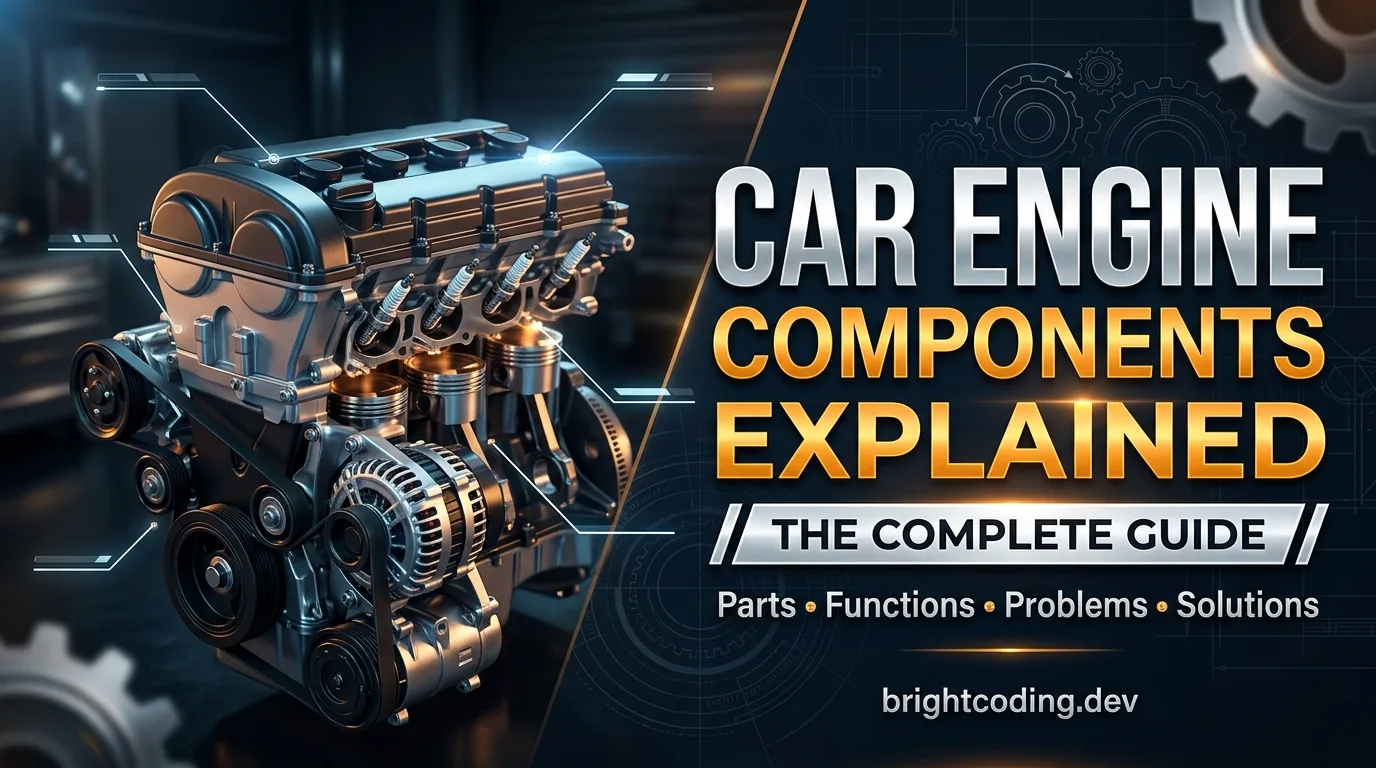
Car Engine Components Explained: The Complete Guide to Parts, Functions, Problems, and Solutions
Your car’s engine is a complex system of parts working together to turn fuel into motion. This complete guide breaks down every major car engine component from the engine block, cylinder head, and DOHC valvetrain to pistons, crankshaft, timing system, fuel delivery, ignition, exhaust, lubrication, and cooling. You’ll also learn common engine problems, warning signs you should never ignore, diagnostic steps, and maintenance tips to keep your engine running reliably
Read the article →