The Ultimate Emergency Car Kit Checklist
Most emergency car kits are a flashlight with dead batteries and a blanket that smells like a wet dog. That is not a kit, that is a decoration. A real kit is the difference between sitting on the shoulder for twenty minutes and sitting there for three hours waiting for a tow you did not want to pay…
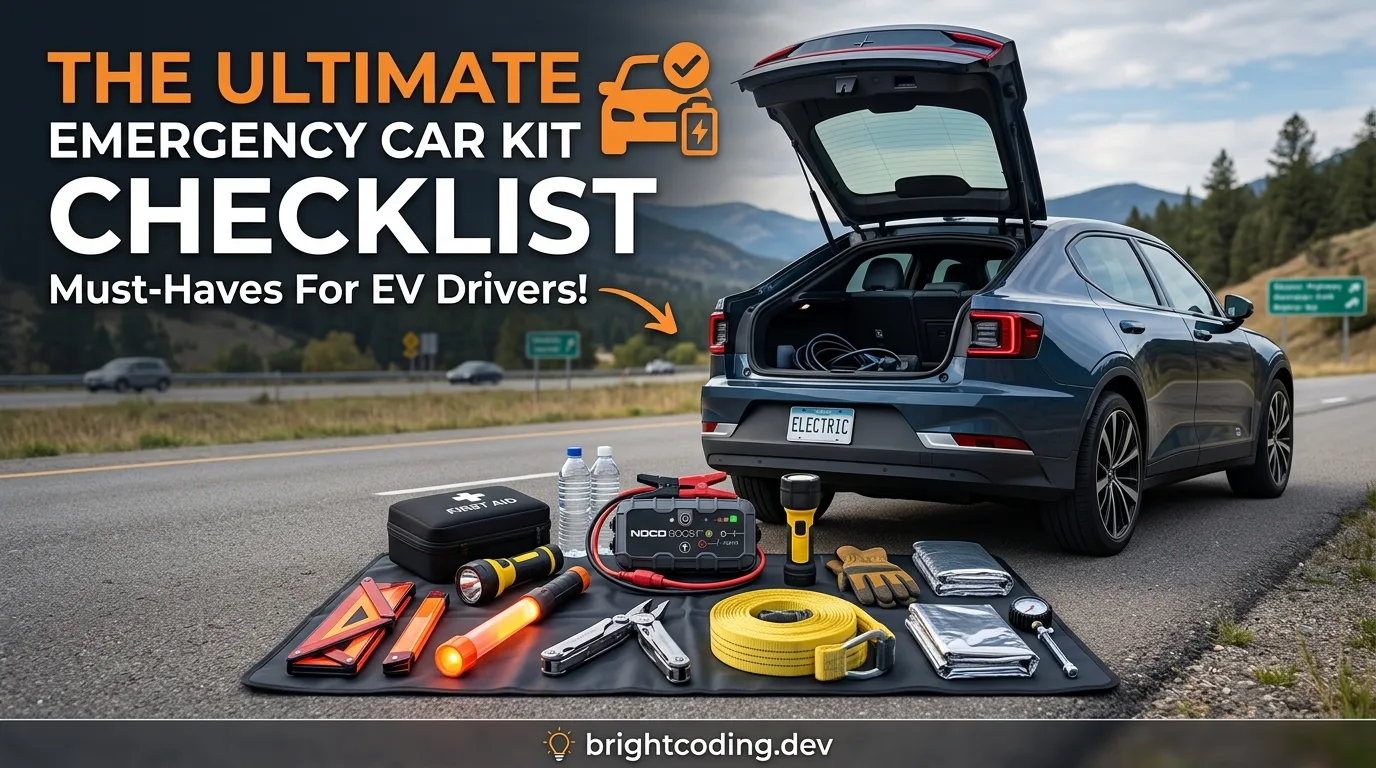
Most emergency car kits are a flashlight with dead batteries and a blanket that smells like a wet dog. That is not a kit, that is a decoration. A real kit is the difference between sitting on the shoulder for twenty minutes and sitting there for three hours waiting for a tow you did not want to pay for.
You do not need to spend a fortune. You need to stop making the mistakes below. Each one is common, each one is avoidable, and each one has probably cost someone a cold night or a fat repair bill.
Why most people get this wrong
People build a kit once, usually after a scare, and then never touch it again. The jumper cables go in the trunk, the kit gets buried under groceries, and two years later the batteries are corroded and the cables are tangled into a knot you cannot untie with gloves on.
The other problem is buying for the disaster you imagine instead of the one that actually happens. You are far more likely to deal with a dead battery, a flat tire, or a scrape on your kid's knee than a full wilderness survival scenario. Kits built for the wrong emergency end up useless for the right one.
And here is the quiet one: most people never test their kit. They assume the tire inflator works, assume the flashlight turns on, assume the first aid supplies are still in date. Assumptions do not jump-start a car.
1 - Buying a pre-made kit and calling it done
The example: you grab a $30 "roadside emergency kit" from a big box store. It comes in a nice nylon bag with a reflective stripe. Inside, the cables are 8-gauge and four feet long.
Why people do it: it feels efficient. One purchase, problem solved.
The consequence: cheap cables that short or overheat on a cold morning, a flashlight that takes batteries you do not have, and a first aid kit with a single bandage and a foil blanket. You paid for the bag.
How to avoid it: build the kit yourself around the items that actually matter, then use the pretty bag to hold it. Start with a real jump starter or 6-gauge cables at least 12 feet long. Everything else is secondary.
2 - Skipping the tire stuff because "I have a spare"
The example: you get a flat on the highway. You open the trunk, find the spare, and realize the jack is missing, the lug wrench does not fit your aftermarket wheels, and the spare has 12 PSI in it.
Why people do it: the spare feels like the whole solution. Nobody checks the supporting cast.
The consequence: you are standing on the shoulder with a tire you cannot change, calling for help you could have avoided needing. Also, if you are running a donut, check its size against your regular tires with a tire size comparison tool before you assume it is safe to drive on.
How to avoid it: verify the jack, wrench, and spare fit your actual car. Check spare pressure every six months. Add a can of tire sealant as a backup, but know it will not fix a sidewall tear.
3 - Forgetting that your phone is not a plan
The example: your battery dies in a parking garage with no signal. Or your phone is at 4%, and you are using it as a flashlight while you try to figure out what is wrong.
Why people do it: we all assume coverage is universal and batteries last forever.
The consequence: no call for help, no way to look up what that warning light means, no light. You are stuck and uninformed at the same time.
How to avoid it: keep a charged power bank in the kit and rotate it. Carry a paper list of your insurance roadside number and a couple of local tow companies. If your check engine light is on and you have signal, the free OBD code lookup can tell you whether you are safe to keep driving or should stop now.
4 - Packing tools you do not know how to use
The example: someone gives you a fancy multi-tool with 18 functions. You have never opened it. In the dark, on the shoulder, you cannot find the pliers.
Why people do it: more tools feels like more prepared.
The consequence: fumbling, lost time, and sometimes damage. A tool you cannot deploy under stress is just weight.
How to avoid it: pick a few tools you have actually used, like a good adjustable wrench, a screwdriver with interchangeable bits, and work gloves. Practice opening and using them once at home. If you want to sharpen your diagnostic instincts, the mechanic quiz is a low-stakes way to learn what questions to ask.
5 - Ignoring the seasons and the climate
The example: you live where it hits -10°F, but your kit has a mylar blanket and no gloves. Or you live in the desert and pack a wool blanket but no water.
Why people do it: generic checklists ignore where you actually drive.
The consequence: the kit works great in a magazine and fails where you live.
How to avoid it: build two layers. A year-round core (jump starter, tire gear, first aid, light, water) plus a seasonal layer. Winter means gloves, a real blanket, a small shovel, and kitty litter or traction mats. Summer means extra water, sun protection, and a hat.
6 - Letting the kit rot in the trunk
The example: you open the kit to grab a bandage and find the batteries leaked, the sealant expired, and the granola bar is now a brick.
Why people do it: out of sight, out of mind.
The consequence: the one time you need it, half of it is dead.
How to avoid it: set a calendar reminder twice a year. Swap batteries, check expiry dates, refill water, test the jump starter, and confirm the flashlight works. Ten minutes, twice a year.
7 - Not knowing what your car is telling you
The example: a warning light comes on. You ignore it because the car still drives. Twenty miles later you are on the shoulder with steam pouring out.
Why people do it: warning lights are annoying and often vague.
The consequence: small problems become expensive ones, and sometimes dangerous ones.
How to avoid it: learn the handful of lights that mean stop now versus the ones that mean get it checked soon. If you have a code reader or an app, use the OBD live-data tool to see what the sensors are actually reporting. And if you want a plain-English explanation of a part or system, the mechanical encyclopedia is a good place to start.
8 - Forgetting the human stuff
The example: you are fine, the car is fine, but your passenger is panicking, or your kid is crying, or you are standing in the rain with no way to stay dry.
Why people do it: we focus on the machine and forget the people in it.
The consequence: a manageable situation turns into a bad memory.
How to avoid it: pack a poncho or emergency blanket, a small first aid kit with actual supplies, a couple of bottles of water, and something to keep kids calm. A deck of cards costs nothing and buys you patience.
Do this instead
Build a core kit you actually understand, then layer it for your climate. Test everything twice a year. Keep your phone charged and your roadside number on paper. Learn the warning lights that matter.
If you want to go deeper on any of this, the step-by-step car guides walk through real jobs, and the expert car tips are worth a read before your next long drive. The free car tools page has calculators and checklists that make the whole process less guessy.
FAQ
How often should I check my emergency kit? Twice a year is a good rhythm. Pick two dates you will remember, like when you change your clocks, and go through the whole kit.
Do I need a jump starter or jumper cables? A quality portable jump starter is easier and safer to use alone. Cables work fine if another car is around, but get 6-gauge or thicker and at least 12 feet long.
Is a pre-made kit ever worth buying? As a starting point, maybe. As a finished kit, no. You will almost always need to upgrade the cables, add real first aid supplies, and swap the batteries.
What is the single most important item? A way to start a dead battery. That is the most common reason people get stranded, and it is the easiest one to solve on your own.
How do I know if a warning light means stop? Red usually means stop now. Amber usually means get it checked soon. When in doubt, pull over and look it up. The OBD code lookup can help you decide.
The best emergency kit is the one you built, checked, and actually know how to use.
Ready to act on what you just read? Decode that warning light with the free OBD code lookup, run the matching car tools to check the numbers yourself, or browse more practical car articles for ideas.
Related articles

How to Reverse Park Perfectly Every Time
Reverse parking is the one driving skill almost nobody practises after they pass their test. That is why it feels hard. The good news: it is a geometry problem, not a talent contest. Once you know where to put your car and when to turn the wheel, the manoeuvre repeats itself the same way every time.
Read the article →
10 Things You Should Check Before a Long Road Trip
The smell hit me somewhere west of the last exit with a gas station. Sweet, a little sharp, like syrup left on a hot stove. I had the windows down at 70 mph and still caught it, which meant it was coming from me, not the truck in front.
Read the article →
15 Common Driving Mistakes That Increase Accident Risk
Most crashes do not start with a dramatic event. They start with a decision you have made a hundred times without thinking: rolling a stop sign, tailgating the guy who cut you off, fiddling with the radio on the highway. Nothing happens 999 times, so the habit feels safe. That is exactly what makes…
Read the article →
How to Protect Your Engine During Short Trips
Short trips are brutal on an engine, and most people never realize it. If your daily routine is a five-minute drive to the store, the school run, or a commute under ten minutes, your oil never gets hot enough to do its job properly. After reading this, you'll know exactly how to reduce that damage:…
Read the article →
10 Parking Mistakes That Can Damage Your Car
You park a dozen times a day. That's exactly why it goes wrong. Nobody thinks about parking until a mirror is hanging by a wire or a wheel bearing starts humming at highway speed.
Read the article →
How to Drive Safely on Snow and Ice
Snow driving is mostly a set of small decisions made before you ever touch the gas. Get those right and the road stops being scary.
Read the article →