The Best Way to Memorize Racing Tracks Faster
I was three corners from the end of a lap I'd driven maybe forty times that month, and I still braked for the wrong apex. The rear stepped out, I caught it, and I sat there in the seat with my hands shaking, thinking: I know this track. I know this track. So why did my body just guess?
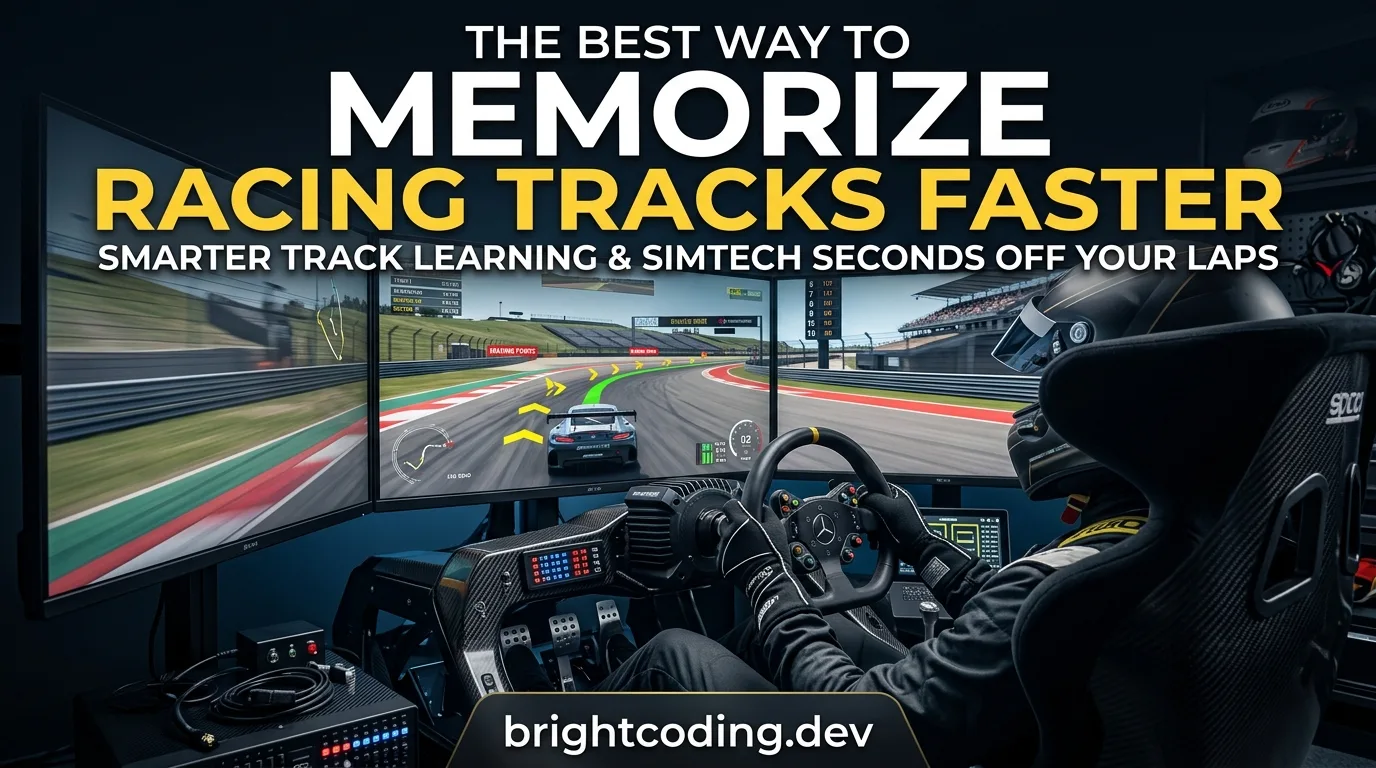
I was three corners from the end of a lap I'd driven maybe forty times that month, and I still braked for the wrong apex. The rear stepped out, I caught it, and I sat there in the seat with my hands shaking, thinking: I know this track. I know this track. So why did my body just guess?
That was the moment I stopped treating track memory as something you absorb by doing more laps. More laps had failed me. What fixed it was slower, dumber, and honestly a bit boring.
The backstory
I'm not a pro. I do track days and a little time attack in a lightly modified car, and I've spent more money on tires than I'd like to admit. For two seasons I believed the answer was seat time. Show up, run your sessions, let the track "come to you." That works up to a point, and then it plateaus hard. I could do the first half of a lap from memory and the second half was fog.
The fog was always in the same places: blind crests, linked corners, and the one complex where three turns flow together. I'd nail it once, mess it up twice, and never build a stable picture.
What actually worked: stop driving, start drawing
The fix started at my kitchen table, not in the car.
I printed a blank outline of the track, just the shape, no detail, and drew it from memory. It took four attempts before the general shape was even right, which was humbling. Then I started writing on it. Braking reference. Turn-in point. Where the track falls away. Which curb you can use and which one will spit you sideways.
The drawing forced me to notice where I had no idea what I was doing. You can't fake a blind crest on paper. I marked every spot where my notes said "???" and those became the corners I focused on next session.
Cost: a few sheets of paper and a printer I already had. Expect around zero to five dollars if you print at a shop.
The three-pass method I landed on
Here's the routine that stuck. It's a loop, not a one-time thing.
Pass one, video at slow speed. I watch a clean onboard of the track, on my phone, at half speed. Half speed is the whole trick. At full speed your eye can't separate the reference points. At half speed you can see the brake lights, the turn-in, the exact moment the car rotates. I watch one corner at a time and pause a lot.
Pass two, write it in words. For each corner I write one sentence. Not "brake later." Something like: "Brake just past the end of the armco, turn in when the second patch appears, stay off the curb on exit." Words are stickier than feelings because you can reread them.
Pass three, walk it. If the track allows it, walk the corner. You see camber and surface changes you never notice at 80 mph. I've stood at a corner for ten minutes and come away with more than a full session gave me.
Then I run the actual session and immediately afterward, in the paddock, I correct my notes while it's fresh. That correction step is the one everyone skips, including me for a whole season.
The mistake that cost me a weekend
I got lazy and tried to memorize the whole track in one go, all corners, one giant mental map. It fell apart the moment I made a small error, because one small error unspooled the entire picture.
Chunk it. Learn three corners properly before you touch the next three. The linked sections especially, you have to learn them as a unit, because the entry to the second corner is decided by how you exit the first. I stopped chasing a full-lap mental movie and started building it in blocks. Lap times came down faster after that.
Where the car itself got in the way
Some of my "I forgot the corner" moments weren't memory at all. They were the car doing something inconsistent, and my brain correctly deciding it couldn't trust the previous lap.
One example: a soft, wandering brake pedal at the end of a long straight. I'd been blaming my braking points. Turns out a tired fluid and a slightly glazed pad were making every stop a little different. I bled the brakes and swapped pads, and suddenly my reference points held. If your car isn't repeatable, you can't build repeatable memory on top of it.
That's also when I started logging data from the ECU, partly out of curiosity. If you want to see what your car is actually doing under load, the free OBD live-data tool at /tools/obd-live-data is genuinely useful, and if a check engine light ever pops up mid-weekend, the free OBD code lookup at /obd tells you what you're dealing with before you panic. Neither one makes you faster. They just stop you from chasing ghosts.
Honest pros & cons
The method works. That's the short version.
Pros: You build a picture you can actually recall under pressure. You waste less of an expensive track day. The notes carry over to next season, so you're not starting from zero every spring.
Cons: It's slow and it feels like homework. Drawing outlines at a kitchen table is not the glamorous part of this hobby. It also takes discipline to correct your notes right after a session when you're hot, tired, and want a cold drink.
What it actually cost
| Item | Rough cost |
|---|---|
| Printed track outlines | $0 to $5 |
| Notebook and pens | $5 to $15 |
| Onboard video (phone mount, used camera) | $20 to $150 |
| One track day entry | $150 to $400 (varies a lot by track) |
| Brake fluid and pads (the consistency fix) | $80 to $300 |
| OBD data logging | Free with the tools above |
The real cost is time. I spend maybe two hours of prep per new track before I even drive it.
What I would do differently
Start with one corner, not the whole lap. My first season was one long attempt to memorize everything at once, and it never stuck. Three corners at a time would have saved me months.
Fix the car's consistency before blaming my memory. A wandering brake pedal or a heat-soaked tire makes every lap a slightly different car. You can't memorize a moving target.
Take notes the same day. Notes written three days later are half-fiction. The details that matter, like the exact surface change at the crest, evaporate overnight.
Walk the track earlier. I resisted this for ages because it felt like a waste of a track day. It's the opposite. Ten minutes on foot beats a session of guessing.
Keep the notes, don't restart them. I now have a ring binder per track. New season, I reread the old notes and add to them instead of beginning again.
Quick practical tips
Watch onboard video at half speed, one corner at a time.
Write each corner as a single sentence with a concrete reference point.
Walk blind crests and linked corners if the track lets you.
Correct your notes in the paddock, not at home.
Chunk the track into groups of three corners and master those before moving on.
If you want a wider set of free calculators and reference pages to keep in your bookmarks, the free car tools at /tools are worth a look, and there's more track and maintenance writing over on the AutoTools blog at /blog.
FAQ
Do simulators help with real track memory?
They help with the shape and the sequence, and they're great for repetition. They don't teach you camber, surface, or how your actual car feels. Use them for the map, not the muscle memory.
How long before a new track feels familiar?
For me, roughly two full track days plus the prep work in between. The prep is what makes the second day click.
What if I don't have onboard video?
Walk the track, use the printed outline, and write your notes from memory after each session. It's slower but it still works.
Should I worry about the car before chasing lap times?
Yes. A car that behaves the same way every lap is the foundation for everything else. Sort the basics first.
I still brake too early at that one corner. But now I know exactly why, and I know what to fix.
Ready to act on what you just read? Decode that warning light with the free OBD code lookup, run the matching car tools to check the numbers yourself, or browse more practical car articles for ideas.
Related articles
How to Reverse Park Perfectly Every Time
Reverse parking is the one driving skill almost nobody practises after they pass their test. That is why it feels hard. The good news: it is a geometry problem, not a talent contest. Once you know where to put your car and when to turn the wheel, the manoeuvre repeats itself the same way every time.
Read the article →
10 Things You Should Check Before a Long Road Trip
The smell hit me somewhere west of the last exit with a gas station. Sweet, a little sharp, like syrup left on a hot stove. I had the windows down at 70 mph and still caught it, which meant it was coming from me, not the truck in front.
Read the article →
15 Common Driving Mistakes That Increase Accident Risk
Most crashes do not start with a dramatic event. They start with a decision you have made a hundred times without thinking: rolling a stop sign, tailgating the guy who cut you off, fiddling with the radio on the highway. Nothing happens 999 times, so the habit feels safe. That is exactly what makes…
Read the article →
How to Protect Your Engine During Short Trips
Short trips are brutal on an engine, and most people never realize it. If your daily routine is a five-minute drive to the store, the school run, or a commute under ten minutes, your oil never gets hot enough to do its job properly. After reading this, you'll know exactly how to reduce that damage:…
Read the article →
10 Parking Mistakes That Can Damage Your Car
You park a dozen times a day. That's exactly why it goes wrong. Nobody thinks about parking until a mirror is hanging by a wire or a wheel bearing starts humming at highway speed.
Read the article →
How to Drive Safely on Snow and Ice
Snow driving is mostly a set of small decisions made before you ever touch the gas. Get those right and the road stops being scary.
Read the article →