How to Drive Safely on Snow and Ice
Snow driving is mostly a set of small decisions made before you ever touch the gas. Get those right and the road stops being scary.
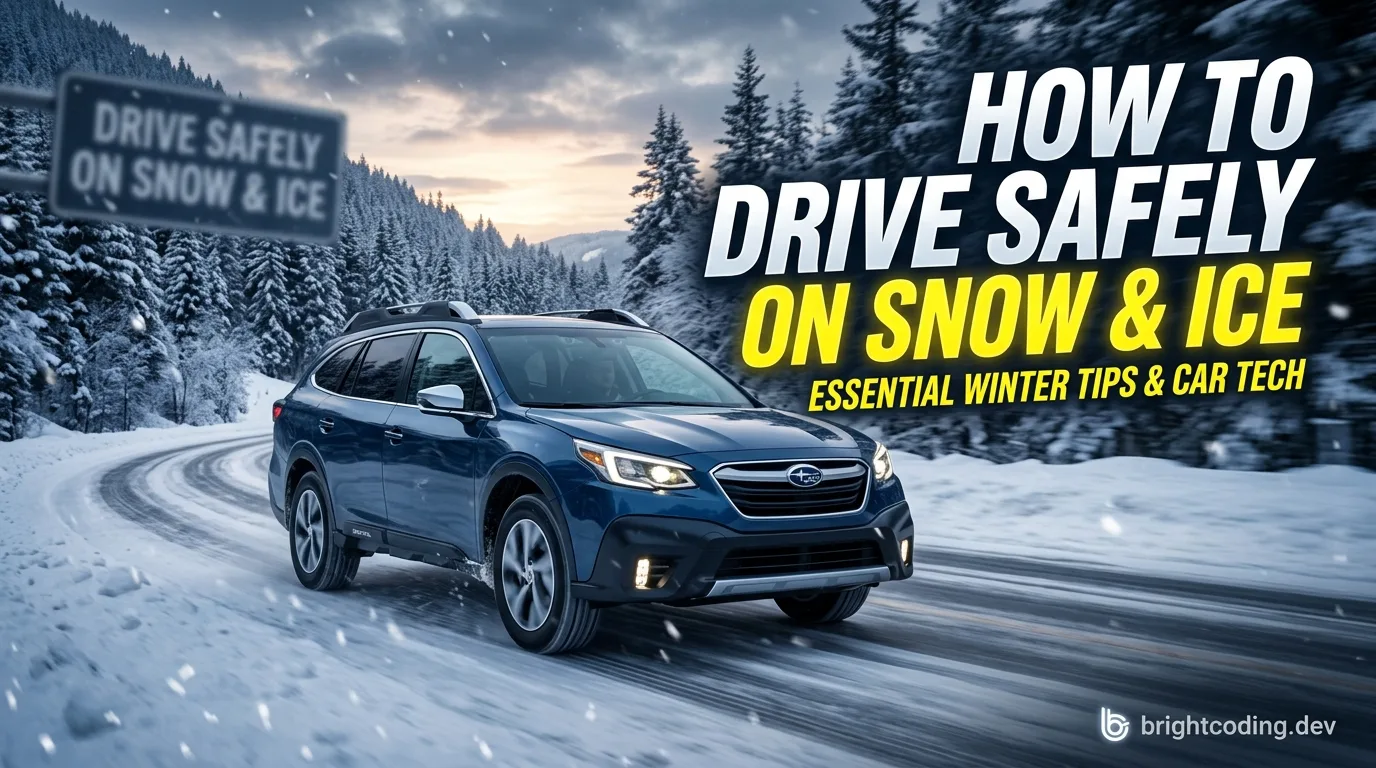
Snow driving is mostly a set of small decisions made before you ever touch the gas. Get those right and the road stops being scary.
By the end of this guide you will know how to prep your car for winter, how to read grip in real time, how to brake and steer when the surface is slick, and what to do when you actually start sliding. Most of the prep takes an afternoon. The driving habits take one or two deliberate trips to become automatic.
What you need before you start
You do not need much, but you do need the right things in the car before the first storm, not during it.
- Winter or all-season tires with decent tread. Check the wear bars; if you are at them, you are driving on ice skates.
- A tire pressure gauge. Cold weather drops pressure, and it drops unevenly.
- An ice scraper and a snow brush with a long handle.
- Jumper cables or a jump pack.
- A small shovel, a bag of sand or kitty litter, and a warm blanket.
- A phone charger that works with the car off.
- Your owner's manual. Tire pressures, fluid types and jack points live there, and guessing is how people break things.
Step 1: Check your tires before the weather turns
Tread depth and pressure are your two biggest winter variables. Measure tread with a gauge or a coin at several points across each tire, not just one spot. Anything near the wear bars means you have almost no ability to clear water and slush, which is exactly how you hydroplane on a cold wet road.
Set pressures when the tires are cold, using the number on the driver's door jamb or in the owner's manual, not the maximum on the sidewall. That sidewall number is a limit, not a recommendation. If you have swapped to a different size wheel and tire package and want to see how far off your speedometer and clearances will be, the tire size comparison tool is a quick way to check before you commit.
One more thing: winter tires are not a marketing trick. Below roughly 45°F (about 7°C), the rubber in summer and many all-season tires hardens and loses grip. If you live somewhere with real winters, this is the single biggest safety upgrade you can buy.
Step 2: Clear the whole car, not just the windshield
Clear the roof, the hood, the trunk lid, the mirrors and every window. Snow left on the roof will slide forward onto your windshield the first time you brake hard, and it can fly off and hit the car behind you.
A practical tip: start the car, turn on the defroster and rear defogger, then scrape while it warms. Do not pour hot water on a frozen windshield. Thermal shock cracks glass, and it refreezes into a sheet of ice within minutes.
Budget about 10 minutes on a bad morning. Rushing this step is how people end up driving with a peephole instead of a windshield.
Step 3: Warm up briefly and check your fluids
Let the engine idle for 30 seconds to a minute, then drive gently. Modern engines do not need long idles, and idling in a closed garage is a carbon monoxide hazard. Never warm up in an enclosed space.
While you are out there, check washer fluid. You want a winter-rated mix, not water and not a summer blend, because a dirty salty windshield plus a frozen washer nozzle is a genuinely dangerous combination. Check your coolant level and condition too if you have not looked in a while. If you are unsure what a fluid is supposed to look or smell like, the mechanical encyclopedia breaks down what each one does and what a healthy version looks like.
If a warning light comes on in the cold, do not panic and do not ignore it. A cheap code reader or the free OBD code lookup can tell you what the car is actually complaining about before you decide whether it is safe to drive.
Step 4: Understand what your car is doing underneath you
Traction is a fixed budget. Every bit you spend accelerating, braking or turning comes out of the same account. Spend it on two things at once and you overspend.
That is the whole theory of winter driving. It is why you brake in a straight line before a corner, why you ease onto the throttle instead of stabbing it, and why smoothness beats caution every time. A driver who does everything slowly and smoothly will out-drive a nervous driver who makes sudden corrections.
Test your grip somewhere safe on the first snowy day: an empty parking lot, well away from curbs and light poles. Accelerate gently, brake gently, and feel where the tires let go. Ten minutes of this teaches you more than any article.
Step 5: Drive slower and leave a much bigger gap
The old rule of following distance does not survive winter. Normal dry-road spacing is roughly three seconds. On snow, double it. On ice, triple it or more. Pick a fixed object ahead, count the seconds between the car in front passing it and you passing it.
Slow down before the hazard, not at it. If you see a bridge, an intersection, a shadowed patch or a hill ahead, lift off the throttle early. Bridges freeze first because cold air moves under them. Shaded spots stay icy long after the sun has cleared everything else.
Speed limits are set for ideal conditions. In a storm, the safe speed is whatever lets you stop within the distance you can see. That number is often painfully slow, and that is fine.
Step 6: Brake and steer like there is an egg under the pedal
On a car with ABS, press the brake firmly and steadily and let the system work. You will feel a pulsing through the pedal. That is normal; do not release. On a car without ABS, you brake in short, progressive squeezes to avoid locking the wheels.
Steer with smooth, deliberate inputs and look where you want to go, not at the thing you are afraid of hitting. Your hands follow your eyes. If the car starts to slide, ease off the brake or throttle and steer toward the direction you want the front of the car to point.
A practical tip: if you have never felt ABS engage, do it deliberately in that empty lot. The first time you feel it should not be in traffic.
Step 7: Handle a skid without making it worse
Two things cause most winter crashes: braking when you should be steering, and overcorrecting.
If the front tires lose grip and the car will not turn (understeer), ease off the throttle, keep the wheel pointed where you want to go, and wait for the tires to bite. Do not add more steering angle; it just scrubs off what little grip you have left.
If the rear steps out (oversteer), look and steer where you want to go, and ease off the throttle. If you have a rear-wheel-drive car, gentle counter-steer helps. If you have front-wheel-drive, staying on light throttle can pull the nose straight. Same principle either way: small inputs, eyes up the road.
Step 8: Climb and descend hills carefully
Momentum is your friend going up. Build a little speed before the hill and keep steady throttle. Stopping halfway up means you may not get moving again, and spinning your tires just polishes the ice for everyone behind you.
Going down is the opposite. Slow down at the top, use a lower gear so the engine helps hold you back, and brake gently. If you have an automatic with a manual mode or a low range, use it. Riding the brakes down a long hill heats them, and hot brakes fade exactly when you need them most.
Step 9: Know when to stop driving
There is a point where skill stops mattering. Freezing rain, whiteout conditions, or a road you cannot see past your own headlights: pull over somewhere safe and wait it out. A parking lot or a gas station beats the shoulder.
If you must stop on the shoulder, get as far right as you can, turn on your hazards, and stay in the car with your seatbelt on. Do not stand behind or beside the vehicle. If you are stranded and running the engine for heat, crack a window and make sure the tailpipe is not buried in snow. A blocked exhaust pushes carbon monoxide straight into the cabin.
Pro tips
- Carry a small bag of sand or non-clumping kitty litter. A handful under a spinning drive wheel often gets you moving when nothing else will.
- Practice in an empty lot on the first snow of the year. Fifteen minutes of deliberate sliding resets your instincts for the season.
- Look further ahead than feels natural. Scanning 15 to 20 seconds up the road gives you time to react without sudden inputs.
- Keep your tank at least half full in winter. It adds weight over the rear wheels in some cars, prevents fuel line freeze issues, and means you can idle for heat if you get stuck.
- Clean your wiper blades and consider winter blades. Regular blades pack up with ice and stop clearing the glass.
- If your car has a "snow" or "winter" drive mode, use it. It softens throttle response so you are less likely to spin the tires from a stop.
Common pitfalls
Braking and steering at the same time. This is the number one winter mistake. Brake in a straight line before the corner, then steer. If you must do both, do them gently and separately.
Following too close because you feel confident. Confidence and grip are not the same thing. The gap that felt fine on dry pavement is a fraction of what you need on ice. Double it and then add a bit.
Overcorrecting a small slide. Yanking the wheel turns a minor slip into a spin. Small, smooth inputs and eyes on where you want to go.
Driving on worn all-seasons and calling it good enough. Tread depth is the difference between clearing slush and surfing on it. Check it honestly.
Ignoring new noises or warning lights because it is cold. Cold weather exposes weak batteries, tired starters and fading brakes. If something changed, look into it. A free tool like the car symptom finder can help you narrow down what a noise or a warning light usually points to, and the AI mechanic assistant is useful when you want a plain-language second opinion before you pay a shop.
Useful resources
- Your owner's manual for tire pressures, jack points and fluid specs.
- Your local department of transportation website or 511 service for road conditions and closures.
- The National Weather Service or your regional equivalent for forecasts and winter advisories.
- AutoTools step-by-step car guides for maintenance jobs you want to do yourself.
- The AutoTools blog and expert car tips for seasonal maintenance advice.
- The free car tools section for diagnostics and calculators.
- The OBD live-data tool if you want to watch sensor readings in real time while troubleshooting.
- A quick mechanic quiz if you want to test what you actually know before winter hits.
FAQ
Do I really need winter tires, or are all-seasons fine? All-seasons work in mild winters and light snow. In sustained cold, regular snow, or ice, winter tires are a real safety difference, not a gimmick. If you can only afford one upgrade this year, this is the one.
How much slower should I drive in snow? Slow enough that you can stop within the distance you can see. On a snow-covered road that is often well below the posted limit. There is no single number; it depends on the surface, your tires and your visibility.
What should I do if my car starts to slide? Ease off the brake or throttle, look where you want to go, and steer smoothly toward it. Do not slam the brakes and do not yank the wheel. Small corrections recover the car; big ones spin it.
Is it safe to use cruise control in winter? No. On a slick patch, cruise control will keep feeding throttle when the wheels lose grip, which can send you into a spin before you react. Turn it off in any cold, wet or snowy conditions.
My car will not start in the cold. What now? Cold weather is hardest on batteries and starters. Try a jump, and if it starts, get the battery and charging system tested. If it will not turn over at all, that is usually a battery or starter issue, and a shop can confirm it quickly.
Final word
Winter driving rewards patience more than bravery. Prep the car once, then drive like the road owes you nothing: slower, smoother, and further back than you think you need to be. Do that and most winter days are just cold, not dangerous.
Related articles
15 Common Driving Mistakes That Increase Accident Risk
Most crashes do not start with a dramatic event. They start with a decision you have made a hundred times without thinking: rolling a stop sign, tailgating the guy who cut you off, fiddling with the radio on the highway. Nothing happens 999 times, so the habit feels safe. That is exactly what makes…
Read the article →
How to Protect Your Engine During Short Trips
Short trips are brutal on an engine, and most people never realize it. If your daily routine is a five-minute drive to the store, the school run, or a commute under ten minutes, your oil never gets hot enough to do its job properly. After reading this, you'll know exactly how to reduce that damage:…
Read the article →
10 Parking Mistakes That Can Damage Your Car
You park a dozen times a day. That's exactly why it goes wrong. Nobody thinks about parking until a mirror is hanging by a wire or a wheel bearing starts humming at highway speed.
Read the article →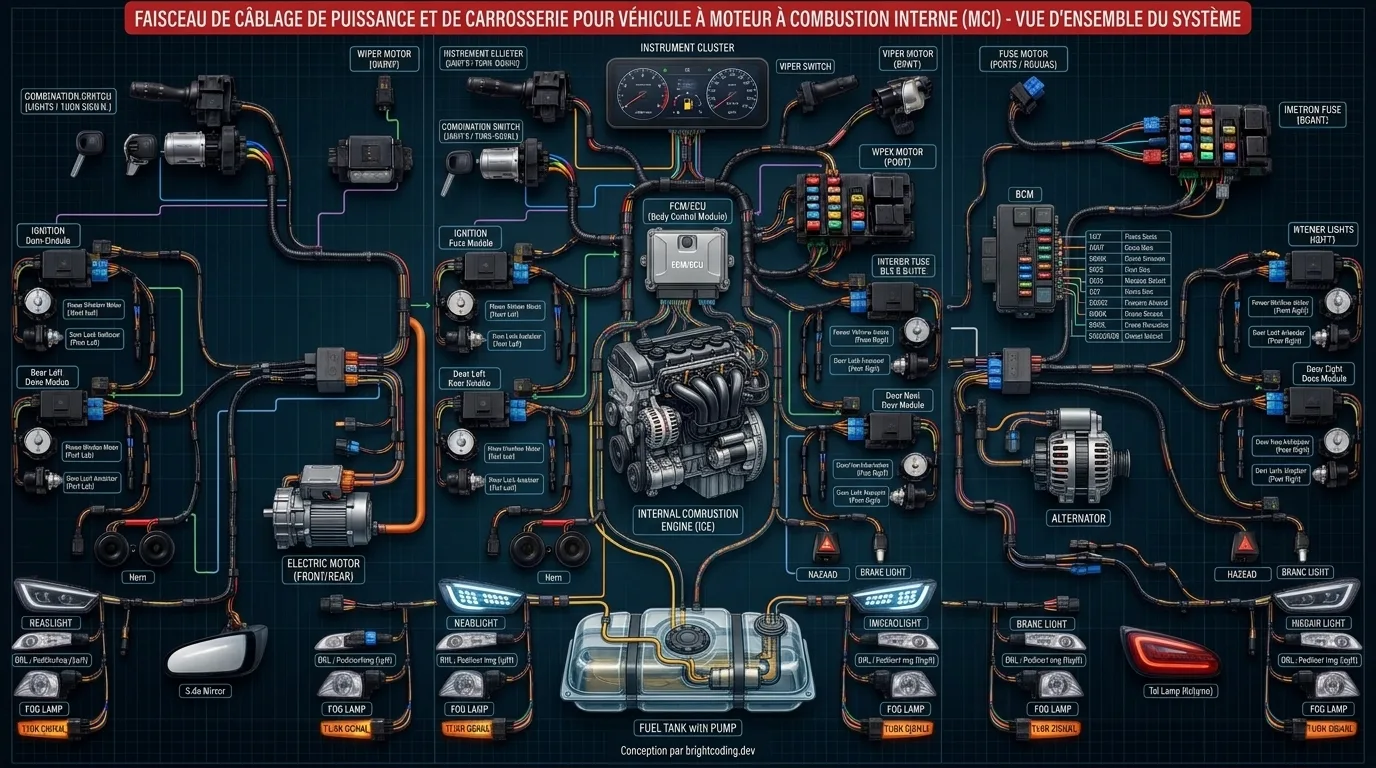
Comprendre le faisceau électrique d’une voiture à moteur thermique : alimentation, ECU, fusibles, BCM et équipements électriques
Une voiture moderne ne dépend pas uniquement du moteur, de la batterie et de l’alternateur. Elle utilise un réseau complexe de fils, de connecteurs, de fusibles, de relais et de calculateurs pour faire fonctionner le moteur et les nombreux équipements électriques. Ce guide permet de comprendre simplement les principaux éléments représentés sur le schéma et la manière dont l’énergie électrique et les signaux circulent dans le véhicule.
Read the article →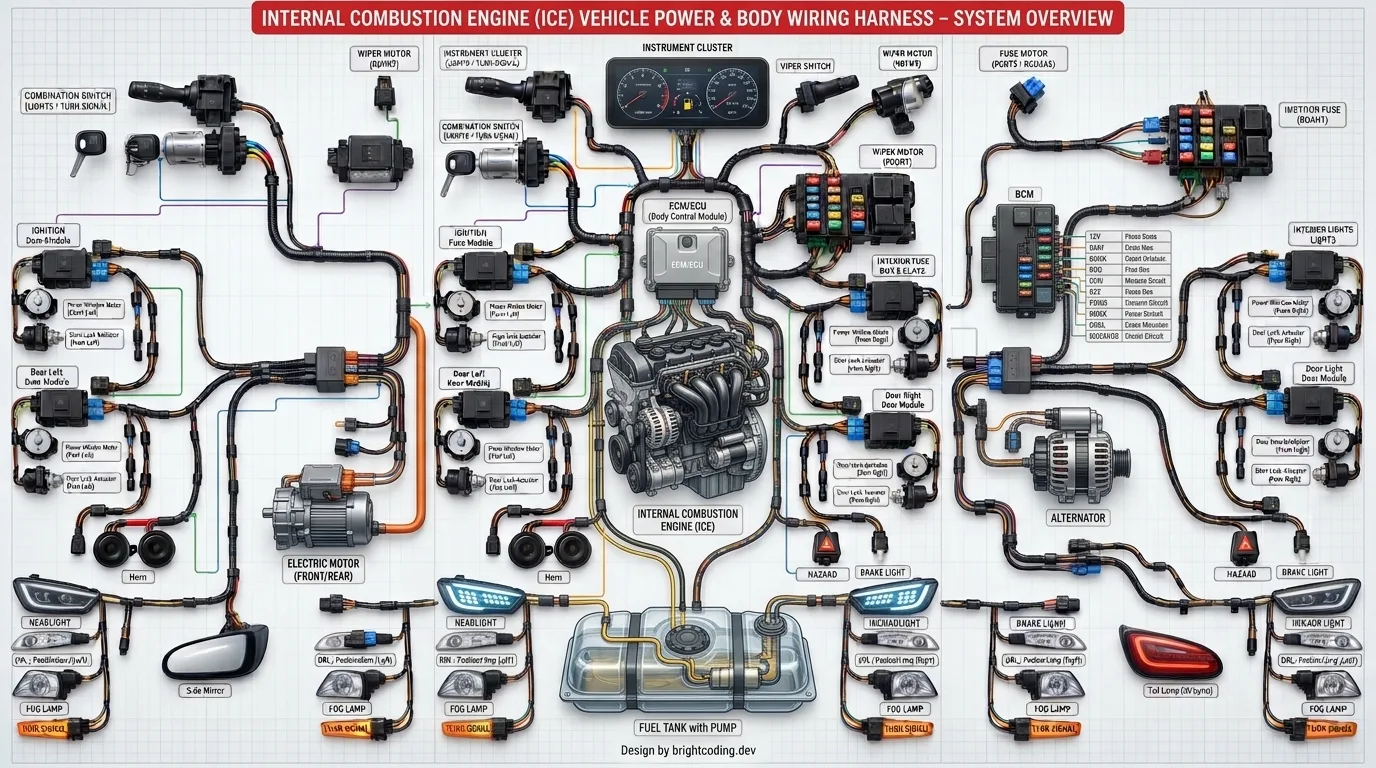
Internal Combustion Engine Vehicle Wiring Harness Explained: A Complete Guide to Power, Control Modules, Fuses and Body Electronics
A modern vehicle depends on much more than an engine and a battery. Behind the dashboard and throughout the engine bay is a complex network of wires, connectors, fuses, relays, control modules and electrical components working together. This guide explains the main parts shown in a vehicle wiring harness overview and how electrical power and control signals travel through the car.
Read the article →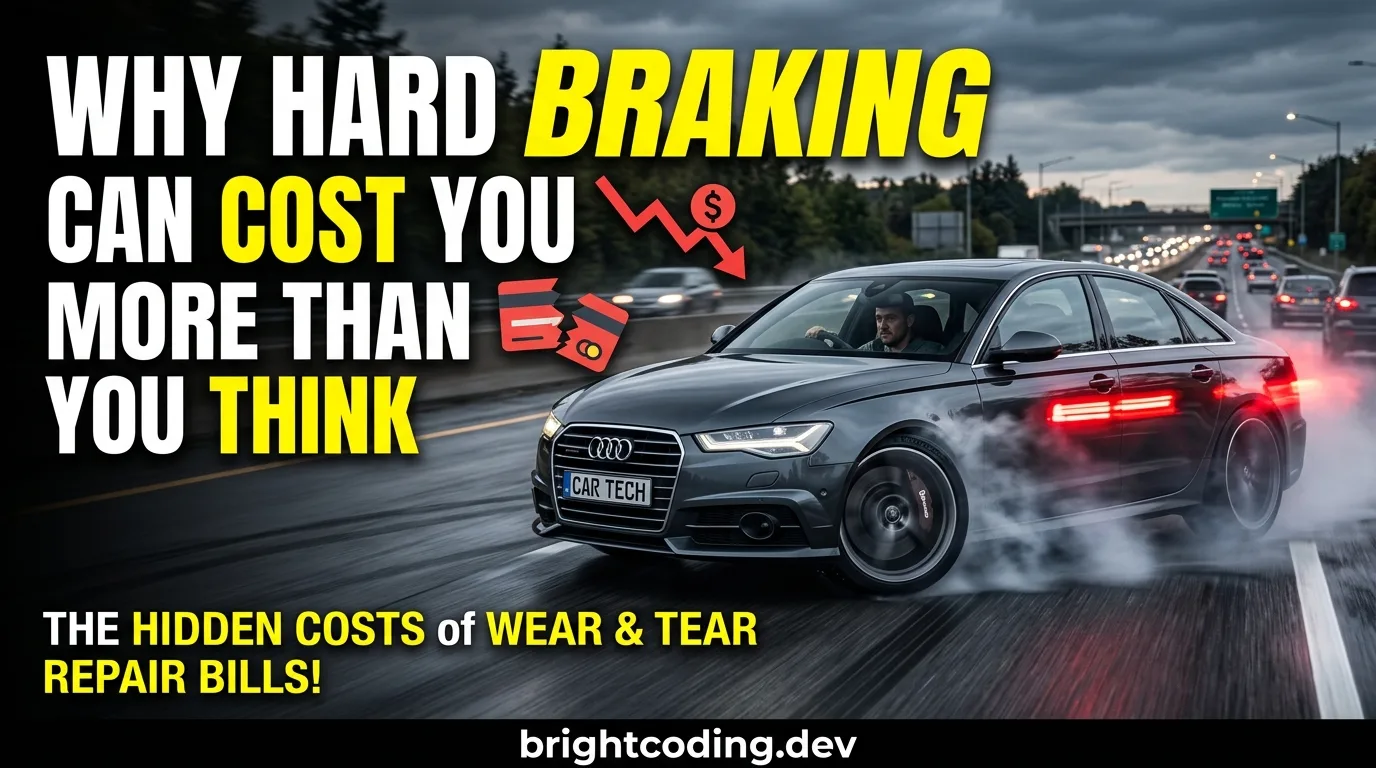
Why Hard Braking Can Cost You More Than You Think
You stab the pedal, the nose dives, and you stop just in time. Feels like good driving, right? That single moment of panic braking sends a bill to a dozen parts you never think about, and it keeps charging interest long after you've driven away.
Read the article →