How to Drive More Safely at Night
Night driving kills more people per mile than daytime driving, and it is not because the roads are harder. It is because most drivers never adjust anything. They run the same speed, the same following distance, and the same dirty headlights they use at noon.
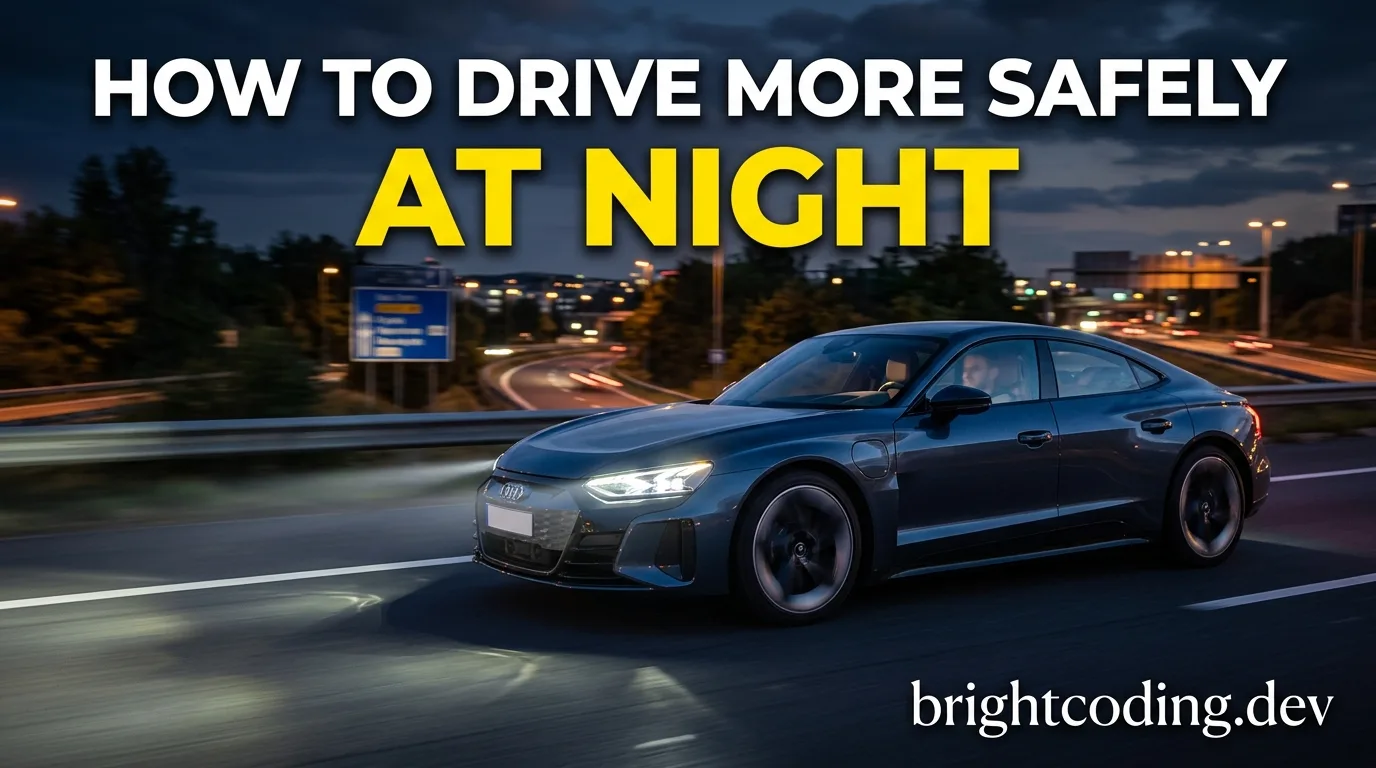
Night driving kills more people per mile than daytime driving, and it is not because the roads are harder. It is because most drivers never adjust anything. They run the same speed, the same following distance, and the same dirty headlights they use at noon.
Read this and you will be able to set your car up for darkness, drive a night route without straining your eyes, and spot the situations where you should slow down before they turn into an incident. The inspection part takes about 30 minutes. The driving habits take a week of paying attention to stick.
What you need before you start
- A clean microfiber cloth and glass cleaner (for the inside of the windshield, which is the one people forget)
- A second person, or a wall and about 25 feet of space, for aiming headlights
- A tire pressure gauge
- A small flashlight or your phone light
- Replacement bulbs if you know one is out (check your owner's manual for the exact type, do not guess at the parts counter)
- A bottle of water and a 15 minute buffer on your first long night drive
Nothing here needs a lift or special tools. If you find a real fault while checking, that is what the step-by-step car guides are for.
Step 1: Clean the glass properly, inside and out
Before you touch a single bulb, clean the windshield inside and out. A film of plasticizer and dust builds up on the interior glass, and at night it turns every oncoming headlight into a smear of glare you cannot blink away.
Use two cloths: one wet with cleaner, one dry for the final pass. Do the side windows and mirrors too. The rear window matters more than you think when a truck is behind you.
Tip: Do this in daylight, not in your dark driveway. You will see the streaks you missed.
Step 2: Check every exterior light, then check them again
Turn on the parking lights, then low beams, then high beams. Walk around the car. Then hit the brakes while watching the rear, and put it in reverse with someone watching the back.
You are looking for one dim bulb, not just a dead one. A bulb that is half-lit usually means a corroded socket, and it will fail completely within weeks.
Warning: If a brake light or turn signal is out, fix it before you drive at night. A rear-end collision at a stoplight is the most common night crash there is, and a dead brake light is one of the reasons it happens.
Step 3: Aim your headlights, or get them aimed
Headlights drift out of aim after a front-end bump, a suspension job, or just years of worn bushings. Aimed too high, they blind everyone coming at you. Aimed too low, you out-drive your own light and never see the deer.
Park about 25 feet from a flat wall on level ground. Note where the low beam cutoff sits on the wall. Both sides should be roughly level with each other and slightly below the height of the lamps.
If one side is pointing at the sky, adjust it. Most cars have aiming screws behind the housing, and the owner's manual will tell you where. If you are not sure, pay a shop to aim them. It is usually a small charge and takes minutes with the right equipment.
Step 4: Set your mirrors to cut glare, not to widen your view
At night, your side mirrors are glare machines. The standard "see a sliver of your own car" setting throws headlights straight into your eyes.
Tilt the driver's mirror out until you just barely lose sight of your own door handle. Do the same on the passenger side. You widen your blind spot coverage and push the glare off-axis.
If your car has a manual day/night mirror tab, flip it after dark. If it has auto-dimming, make sure the sensor on the mirror is not covered by a sticker or a dash cam mount.
Step 5: Slow down and add following distance
Here is the honest rule: drive at a speed where you can stop inside the distance you can actually see. At 60 mph on low beams you can easily out-run your headlights. That is not a figure to memorize, it is a reason to lift off the throttle.
Add at least a second or two to your normal following gap. At night the car ahead of you is your early warning system for potholes, animals, and stalled traffic. Give it room to do that job.
Tip: On a dark two-lane road, watch the far edge of the road, not the middle. Your peripheral vision picks up movement, and that is how you spot a deer before it is in your lane.
Step 6: Handle oncoming high beams without going blind
When a car approaches with high beams on, do not stare at the lights and do not flash back in anger. Look down and to the right, at the white line or the road edge, and let your peripheral vision keep you in your lane.
If they do not dim, slow down. You are effectively driving blind for a few seconds, and the shoulder is your friend.
Warning: Never wear yellow "night driving" glasses with a tint that reduces light reaching your eyes. Tinted lenses cut the light you need. If you want glare help, get an anti-reflective coating on clear prescription lenses.
Step 7: Recognize when you are too tired, and stop
Fatigue is the quiet killer of night driving. Yawning, drifting to the edge line, missing your exit, or not remembering the last few miles are all signals.
Pull over somewhere safe and legal. A 15 to 20 minute nap, a walk, or a coffee all help, but none of them replace sleep. If you are still fighting it, stop for the night. A cheap motel costs less than a tow and a new front end.
Step 8: Know your car's warning signs
If your dash lights up at night, do not just drive on and hope. A warning lamp at speed in the dark is a chance to pull over safely and read the code before something worse happens. The free OBD code lookup tells you what the code means in plain language, and you can pair it with the OBD live-data tool to watch things like coolant temperature or battery voltage as you drive.
Warning: If the battery or charging light comes on, your headlights are running on borrowed time. Get off the road before the car dies in the dark. If the brake or ABS light comes on, treat the brakes as suspect and slow down gently. If the temperature gauge climbs, stop safely and let it cool before touching anything. Never open a hot radiator cap.
Step 9: Deal with rain, fog, and wet roads at night
Wet asphalt eats light. Lane markings get harder to see, and glare spreads across the whole windshield instead of staying in one spot. Slow down more than you think you need to.
In fog, use low beams, not high beams. High beams bounce off the fog and make it worse. If your car has fog lights, use them with low beams, not instead of them.
If you must stop in fog or heavy rain, get well off the road, turn on your hazards, and stay buckled. Do not stand behind the car.
Step 10: When something does go wrong, diagnose it properly
A vibration, a pull to one side, or a new noise at night is easy to ignore until it becomes a breakdown. Before you guess, run the symptom past the car symptom finder. If you want a second opinion on what a noise or a warning light could mean, the AI mechanic assistant can help you sort real problems from harmless quirks.
And if you are unsure whether a noise is a wheel bearing, a brake pad, or a stone in the tread, the free car tools are a fast way to check before you start buying parts.
Pro tips
- Clean your headlight lenses with a plastic polish once a year. Yellowed lenses can cut a surprising amount of usable light, and polishing is cheaper than new housings.
- Keep an old pair of clear safety glasses in the glovebox. They cut glare from oncoming lights without tinting your view.
- On long night drives, stop every two hours whether you feel tired or not. The stop is the point.
- Dim your dash brightness to the lowest setting you can still read. A bright dash kills your night vision and makes the road look darker than it is.
- Learn the route before you drive it in the dark. Knowing where the hard turns are is worth more than any gadget.
- If you are being tailgated with high beams, do not speed up. Let them pass. It ends the glare and the danger in one move.
Common pitfalls
Running high beams in traffic. It blinds oncoming drivers and gets you flashed back. Dim them as soon as you see headlights, and dim them behind another car too, not just in front of one.
Trusting old wiper blades. A streaky windshield at night scatters light into a mess. Replace blades when they chatter or leave lines, roughly once a year in most climates.
Ignoring tire pressure. Underinflated tires change how the car tracks and how it stops, and it is worse in the dark when you cannot see the road surface well. Check pressure monthly, with tires cold.
Overdriving your lights because you know the road. Familiar roads put you to sleep and hide new hazards. Drive a familiar road at night the way you would drive a strange one.
Drinking coffee instead of sleeping. Caffeine buys you time, not rest. It will not save you at 3 a.m. If your body is done.
Useful resources
- Your owner's manual: headlight type, aiming procedure, fuse locations, and tire pressure
- The AutoTools blog for maintenance walkthroughs
- The mechanical encyclopedia when you want to understand how a system actually works
- The expert car tips section for short, practical fixes
- The mechanic quiz if you want to test your own knowledge before you work on the car
FAQ
Are yellow night driving glasses worth it? Mostly no. Any tint reduces the light reaching your eyes, which is the opposite of what you want at night. Anti-reflective clear lenses help more.
How often should I replace headlight bulbs? Replace them in pairs when one fails. Halogen bulbs dim over time, so a new pair restores light you did not realize you had lost.
Is it safer to drive with high beams on all the time? Only when there is no one ahead or approaching. High beams in traffic blind other drivers and cause crashes, including ones that involve you.
Can I aim my headlights myself? Yes, with a flat wall, level ground, and a bit of patience. If you cannot get both sides level and low, have a shop do it.
What if I start falling asleep at the wheel? Pull over somewhere safe immediately. A short nap helps, but if you are still drowsy, stop for the night. No destination is worth the risk.
One last thing
None of this is complicated, and most of it costs nothing but attention. Spend half an hour on your car in daylight and you will drive better for years of nights. Start with the glass and the lights. Everything else follows.
Related articles
How to Reverse Park Perfectly Every Time
Reverse parking is the one driving skill almost nobody practises after they pass their test. That is why it feels hard. The good news: it is a geometry problem, not a talent contest. Once you know where to put your car and when to turn the wheel, the manoeuvre repeats itself the same way every time.
Read the article →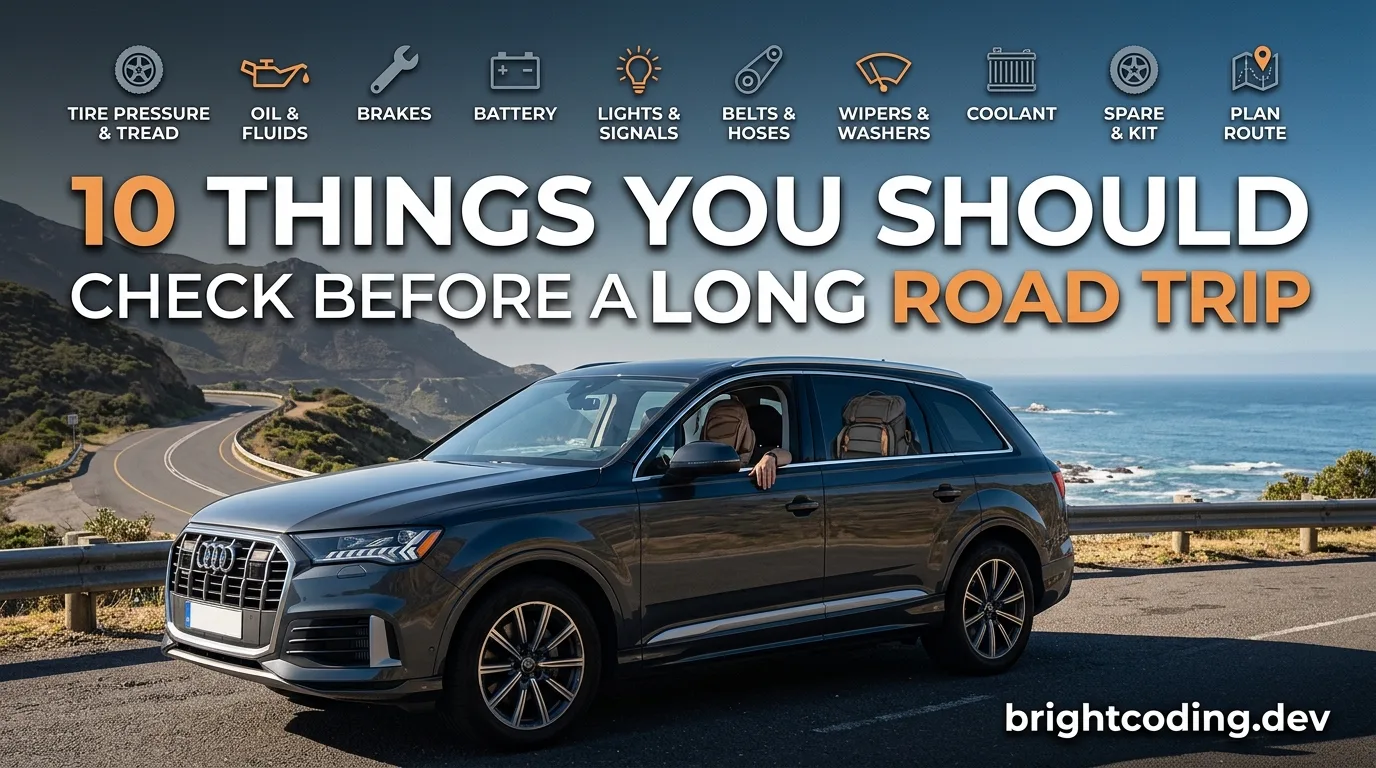
10 Things You Should Check Before a Long Road Trip
The smell hit me somewhere west of the last exit with a gas station. Sweet, a little sharp, like syrup left on a hot stove. I had the windows down at 70 mph and still caught it, which meant it was coming from me, not the truck in front.
Read the article →
15 Common Driving Mistakes That Increase Accident Risk
Most crashes do not start with a dramatic event. They start with a decision you have made a hundred times without thinking: rolling a stop sign, tailgating the guy who cut you off, fiddling with the radio on the highway. Nothing happens 999 times, so the habit feels safe. That is exactly what makes…
Read the article →
How to Protect Your Engine During Short Trips
Short trips are brutal on an engine, and most people never realize it. If your daily routine is a five-minute drive to the store, the school run, or a commute under ten minutes, your oil never gets hot enough to do its job properly. After reading this, you'll know exactly how to reduce that damage:…
Read the article →
10 Parking Mistakes That Can Damage Your Car
You park a dozen times a day. That's exactly why it goes wrong. Nobody thinks about parking until a mirror is hanging by a wire or a wheel bearing starts humming at highway speed.
Read the article →
How to Drive Safely on Snow and Ice
Snow driving is mostly a set of small decisions made before you ever touch the gas. Get those right and the road stops being scary.
Read the article →