Car DTC Codes Explained: Understand What's Wrong With Your Car
Learn what car DTC codes mean, why your check engine light turns on, and how to diagnose problems yourself using free tools and affordable scanners before visiting a mechanic.
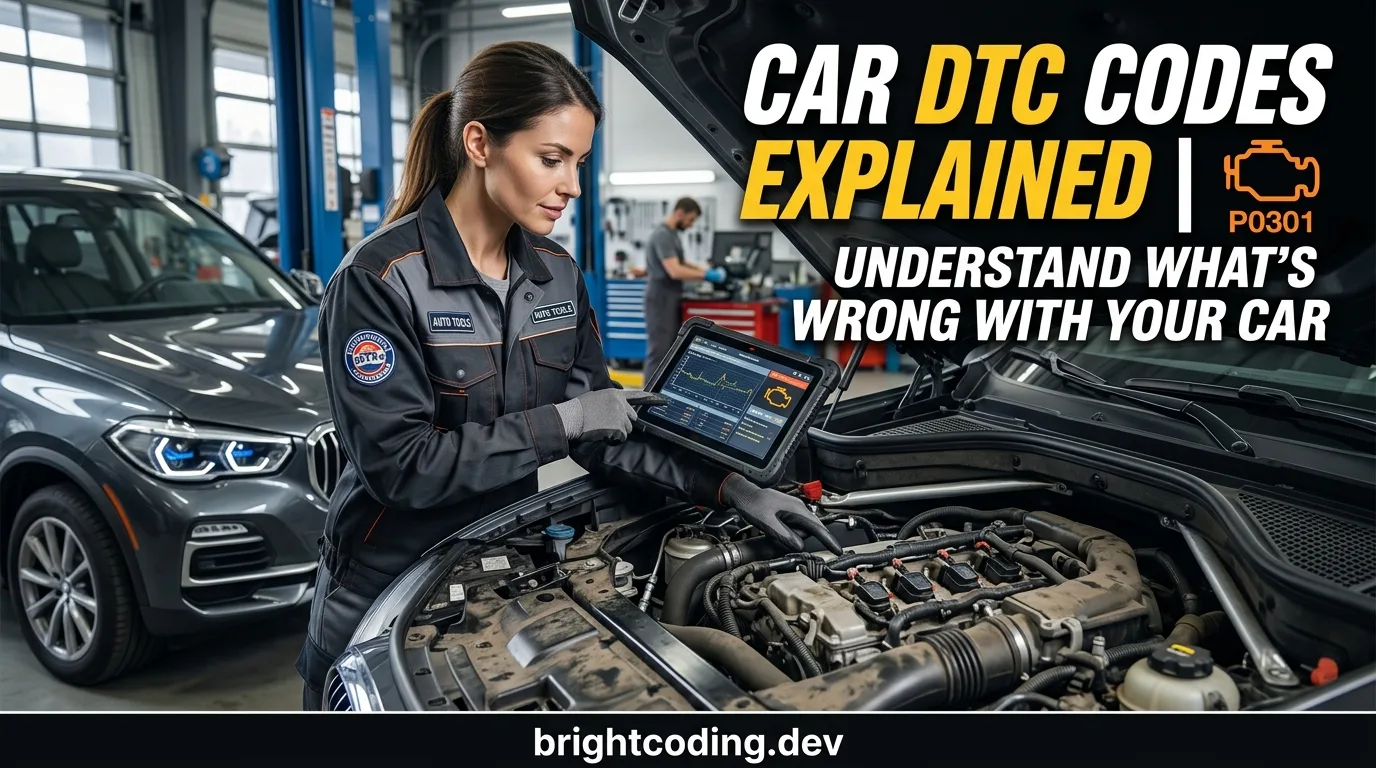
That little amber light on your dashboard just flickered on, and your stomach sank. You do not know what it means, how serious it is, or whether your car is about to leave you stranded on the highway. You are not alone. Millions of drivers see a check engine light every year, and most have no idea what their car is trying to tell them. The good news? Those cryptic codes are not as mysterious as they seem. Once you understand how diagnostic trouble codes work, you can turn panic into a clear action plan, save money at the repair shop, and even catch small problems before they become expensive ones.
What Are Car DTC Codes, Really?
Diagnostic Trouble Codes, or DTC codes, are the standardized language your car uses to report internal problems. Every modern vehicle built after 1996 in the United States, and most globally since the early 2000s, uses the OBD-II (On-Board Diagnostics) system. When a sensor detects something outside normal parameters, the engine control module stores a code and often triggers the check engine light.
These codes are not random. A code like P0301 always means the same thing across brands: a misfire in cylinder one. A P0420 points to catalytic converter efficiency issues. This standardization exists so that any mechanic, anywhere, can plug in a scanner and understand what your car is reporting.
Why DTC Codes Matter More Than You Think
Ignoring a DTC code is like ignoring a fever. The symptom itself might be minor, but it signals something happening under the surface. A single misfire code can escalate into damaged catalytic converters, ruined spark plugs, or engine damage if left unaddressed. On the flip side, some codes indicate loose gas caps or temporary sensor glitches that cost nothing to fix. The difference between a $0 fix and a $2,000 repair often comes down to how quickly you read and respond to the code.
Who Gets Affected?
Every car owner with a vehicle made after 1996. Whether you drive a 2005 Honda Civic or a 2024 Ford F-150, your car speaks the same diagnostic language. Electric vehicles use a related but expanded set of codes for battery management, motor controllers, and charging systems. If you are curious about how diagnostics differ for EVs, EV Hub covers the latest tools and comparisons for electric vehicle troubleshooting.
Why Your Car Throws DTC Codes
Your vehicle is essentially a network of computers and sensors. The engine control module monitors dozens of parameters in real time: oxygen levels in exhaust, coolant temperature, throttle position, camshaft timing, and more. When a sensor reading drifts outside the expected range for a set period, the system logs a code.
Common Triggers
Sensor failures are the most frequent cause. Oxygen sensors, mass airflow sensors, and coolant temperature sensors wear out over time. They do not always fail completely; sometimes they drift, sending inaccurate data that confuses the engine computer.
Mechanical issues also generate codes. A vacuum leak, worn spark plugs, or a failing fuel injector changes the air-fuel ratio enough to trigger a code. Even something as simple as a loose fuel cap can set an evaporative emissions code like P0456.
Electrical problems include corroded connectors, frayed wiring, or weak batteries. Voltage drops and poor grounds cause intermittent codes that frustrate even experienced mechanics.
Software glitches happen too. Modern cars receive over-the-air updates, and sometimes a calibration issue causes false codes until the manufacturer releases a patch.
How to Read and Interpret DTC Codes
You have three realistic paths to uncover what your car is saying. Each has its place depending on your budget, technical comfort, and how quickly you need answers.
Option 1: Free Auto-Parts Store Scan
Most major auto parts retailers offer free OBD-II scanning. A staff member plugs a basic reader into your car's port, usually located under the dashboard, and prints out the codes.
Advantages: Completely free. No tools to buy. Takes under five minutes.
Disadvantages: You get raw codes without context. A P0300 code just says "random misfire." It does not tell you whether it is a bad coil, fouled plug, or lean fuel condition. The staff cannot legally diagnose your car, so you leave with a number and a guess.
Best for: Drivers who want a quick sanity check before deciding whether to visit a mechanic.
Option 2: Buy Your Own OBD-II Scanner
A basic Bluetooth OBD-II adapter costs between $20 and $40. Pair it with a smartphone app, and you can read codes, clear them, and view live data like engine RPM, coolant temperature, and fuel trim percentages.
Advantages: You own the tool forever. You can check codes immediately, even in your driveway at midnight. Many apps explain what each code means in plain English. Some even suggest common fixes based on the code and your vehicle model.
Disadvantages: Cheap adapters sometimes have connectivity issues. Interpreting live data requires some learning. You still need mechanical knowledge to separate serious problems from minor ones.
Best for: DIY enthusiasts and anyone who wants ongoing visibility into their car's health. If you are shopping for a scanner, EV Hub's guide to the best OBD2 scanners breaks down which models deliver real value in 2026 without overspending.
Option 3: Professional Diagnostic Scan
A repair shop or dealership uses advanced scan tools that cost thousands of dollars. These devices access manufacturer-specific codes beyond generic OBD-II, run bi-directional tests, and view data streams that consumer tools cannot reach.
Advantages: Deep, accurate diagnosis. A skilled technician can pinpoint whether a P0420 code means a dead catalytic converter or just a lazy oxygen sensor. Manufacturer-specific codes reveal issues that generic scanners miss entirely.
Disadvantages: Costs range from $100 to $200 for a diagnostic fee, sometimes more at dealerships. You are paying for expertise, not just the tool.
Best for: Complex issues, recurring codes, or when you need a repair estimate backed by data.
Option 4: Use Free Online Diagnostic Tools
Several web-based platforms let you look up codes, run guided diagnostics, and even access live data without installing software. AutoTools offers a free OBD-II code lookup with causes and fixes, an interactive car diagnostic that walks you through symptoms step by step, and even a live OBD scanner if you have a Bluetooth ELM327 adapter. There is no account required, and it works on your phone.
Advantages: Free, instant, and comprehensive. The interactive diagnostic narrows down problems better than a raw code alone. The code lookup explains what each code actually means for your specific situation.
Disadvantages: Requires an internet connection. You still need to interpret the results or decide when a mechanic is necessary.
Best for: Anyone who wants a middle ground between a basic parts-store scan and a paid professional diagnosis.
Which Approach Should You Choose?
The right path depends on your situation. If your check engine light just appeared and the car drives normally, start with a free online lookup or a parts store scan. If the light is flashing, that indicates an active misfire that can damage your catalytic converter, so skip the DIY phase and get professional help immediately.
For recurring issues or when you want to monitor your car's health over time, owning a scanner or using a free diagnostic platform saves money and builds confidence. For mysterious symptoms where the code does not match the behavior, a professional scan is worth the diagnostic fee.
Your Step-by-Step Action Plan
When that light appears, follow this sequence instead of panicking:
-
Note the light's behavior. Is it steady or flashing? A flashing light means pull over and stop driving. A steady light means you have time to investigate.
-
Check the obvious. Tighten your gas cap. Check your oil and coolant levels. Look under the car for leaks. Sometimes the simplest fix resolves the issue.
-
Retrieve the code. Use a free online OBD-II code lookup, a parts store scanner, or your own Bluetooth adapter. Write down the exact code and any related codes.
-
Research the meaning. Do not stop at the code name. Understand what systems it affects and what the common causes are. The AutoTools OBD-II Code Lookup explains causes and typical fixes for each code.
-
Assess severity. Codes related to misfires, overheating, or transmission problems need urgent attention. Emissions-related codes can often wait a few days.
-
Decide on a fix. If it is a loose gas cap or a simple sensor, handle it yourself. If it involves internal engine work, brakes, or safety systems, book a professional.
-
Clear and monitor. After fixing the issue, clear the code and drive for a few days. If the light returns, the root cause is still present.
-
Keep records. Log codes, dates, and repairs. This history helps mechanics spot patterns and protects your wallet from repeat fixes.
Common Mistakes to Avoid
1. Ignoring the light because the car "feels fine." Many serious problems start silently. A failing oxygen sensor often causes no drivability issues until it damages the catalytic converter.
2. Clearing codes without fixing the problem. Erasing a code turns off the light temporarily, but the underlying fault remains. Worse, it resets your emissions readiness monitors, which can cause you to fail an inspection.
3. Replacing parts based solely on the code. A P0135 (oxygen sensor heater circuit) does not always mean a bad sensor. It could be a blown fuse or corroded wiring. Diagnose first, replace second.
4. Buying the cheapest scanner available. A $10 Bluetooth adapter from an unknown brand often drops connections or misreads data. Spend a little more for reliability.
5. Assuming all scanners are equal. Basic readers show codes. Advanced tools show live data, freeze frames, and manufacturer-specific information. Match the tool to your needs.
6. Panicking over a single code. One code does not mean your engine is destroyed. Take a breath, research, and make an informed decision.
7. Skipping maintenance until a code appears. Regular maintenance prevents the conditions that trigger codes. Following a structured maintenance checklist keeps sensors clean, fluids fresh, and components within spec.
Expert Takeaway
The most important lesson about DTC codes is this: they are starting points, not endings. A code tells you where to look, not what to replace. The drivers who save the most money are the ones who treat codes as clues in a puzzle, not as final verdicts. With free lookup tools, affordable scanners, and a little patience, you can separate real emergencies from minor hiccups and walk into any repair shop with confidence instead of confusion.
Frequently Asked Questions
What does a DTC code look like?
A standard OBD-II code starts with a letter followed by four numbers. P codes cover powertrain issues (engine and transmission), B codes cover body systems (airbags, seats), C codes cover chassis (ABS, suspension), and U codes cover network communication problems.
Can I drive with a check engine light on?
If the light is steady and the car drives normally, you can usually drive short distances while you investigate. If the light is flashing, stop driving immediately to avoid catalytic converter damage. If you are unsure what to do in an emergency breakdown situation, WhatToDoInCaseOf has clear guides for roadside emergencies.
Do DTC codes automatically clear?
Some temporary codes clear themselves after several successful driving cycles if the fault does not reappear. Permanent codes and hard faults remain until they are repaired and manually cleared, or until the system detects enough clean driving cycles.
Are DTC codes the same for all cars?
Generic P0 codes are standardized across all OBD-II vehicles. However, manufacturers also use enhanced codes (like P1xxx) that are brand-specific. A generic scanner might miss these, which is why professional tools sometimes reveal issues that consumer scanners cannot see.
How much does it cost to diagnose a DTC code?
A parts store scan is free. A professional diagnostic at a repair shop typically runs between $100 and $200. Owning your own scanner costs $20 to $100 for a good consumer model, while professional-grade tools run into the thousands.
Related articles

The Best Way to Keep Your Car Cool During Extreme Summer Heat
Your steering wheel is hot enough to brand cattle, the air conditioning is blowing lukewarm air, and the temperature gauge is creeping past where it usually sits. If that sounds like your July commute, you are not imagining things. Extreme heat is genuinely hard on cars, and the ways to keep yours…
Read the article →
How to Save Money on Car Repairs Without Taking Risks
Here's the honest version up front: most common repairs land somewhere between $150 and $1,200 when you pay a shop, and a few big-ticket jobs (timing belts, clutches, head gaskets) can run past $2,000. That range is wide on purpose. Your make and model, where you live, and whether you walk into a d…
Read the article →
15 Easy Ways to Improve Your Car's Fuel Efficiency
The needle on my fuel gauge dropped a full eighth of a tank between my driveway and the grocery store six miles away. That's not right. I stood in the parking lot with my hand still on the pump handle from the day before, doing math in my head, and the math was bad. My aging sedan had been drinking…
Read the article →
What Happens If You Ignore Your Check Engine Light?
That amber engine icon is the most ignored warning in motoring. It comes on, nothing explodes, so you keep driving. A week later it's still there. A month later you've stopped seeing it.
Read the article →
10 Dashboard Warning Lights You Should Never Ignore
Your dashboard isn't trying to annoy you. It's the only part of the car that talks to you in plain language — and it's often the cheapest warning you'll ever get. Ignore the wrong one and a $150 repair becomes a $2,000 repair, or a breakdown on the shoulder of a highway at 11 p.m.
Read the article →
20 Hidden Features in Your Car You Probably Never Use
Most cars built in the last fifteen years are quietly packing a couple dozen conveniences the owner's manual buries on page 147. This article answers the questions people actually type into Google about those features — what they are, how to turn them on, and which ones are worth the trouble — so y…
Read the article →