15 Common Driving Mistakes That Increase Accident Risk
Most crashes do not start with a dramatic event. They start with a decision you have made a hundred times without thinking: rolling a stop sign, tailgating the guy who cut you off, fiddling with the radio on the highway. Nothing happens 999 times, so the habit feels safe. That is exactly what makes…
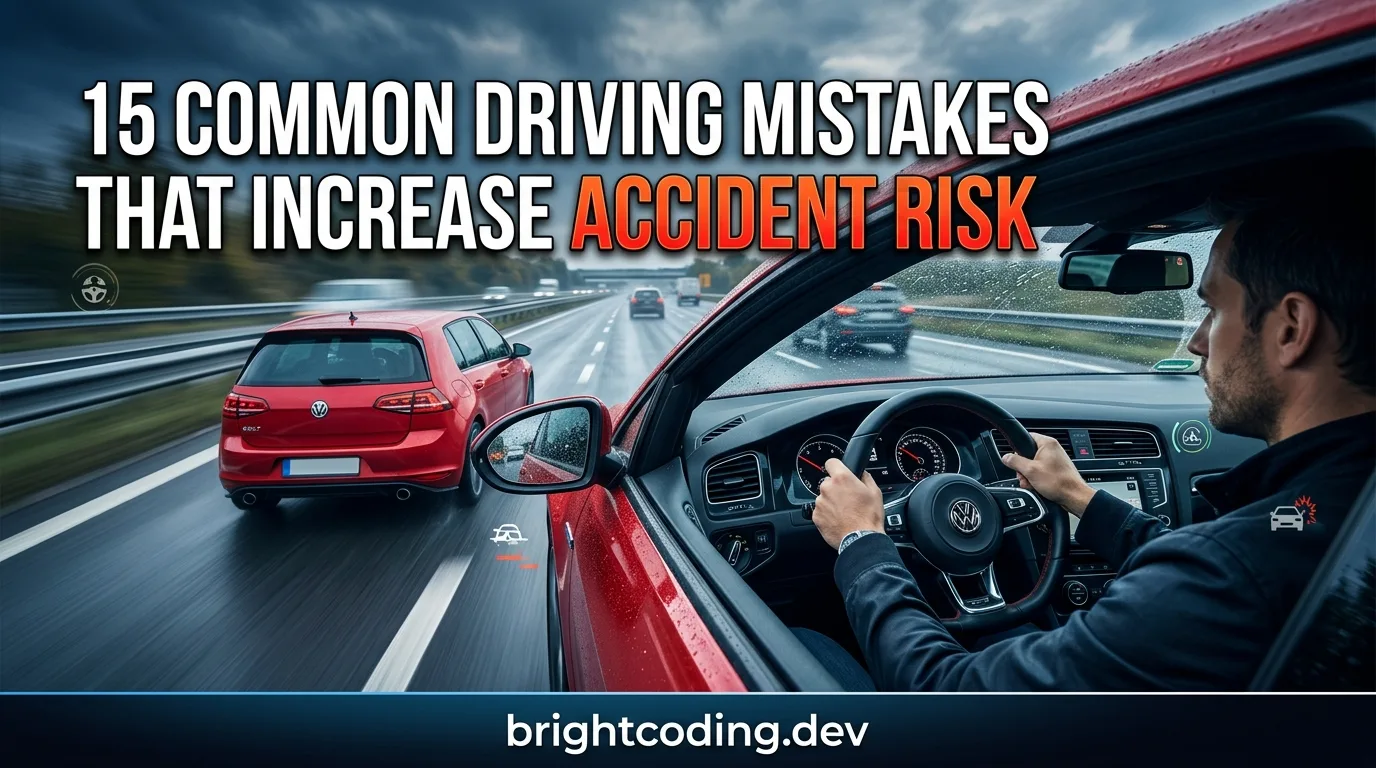
Most crashes do not start with a dramatic event. They start with a decision you have made a hundred times without thinking: rolling a stop sign, tailgating the guy who cut you off, fiddling with the radio on the highway. Nothing happens 999 times, so the habit feels safe. That is exactly what makes it dangerous.
This article is not about scaring you into driving at 20 mph. It is about the handful of habits that quietly stack the odds against you, and what to swap them for. Read it once, pick the two or three that sound like you, and fix those. That is how you actually lower your risk.
Why most people get this wrong
Driving is the one dangerous thing most of us do every day, and we treat it like brushing our teeth. Familiarity kills attention. Your brain files the daily commute under "automatic" and stops actively watching the road.
The second problem is feedback. Bad driving rarely punishes you immediately. You run a red light, nothing happens, so the behavior gets reinforced. Nobody corrects you, because nobody is in the passenger seat with a clipboard.
The third is that we judge risk by feeling, not by data. Following close feels fine at 40 mph in traffic. It is not fine, it just has not bitten you yet. The mistakes below are the ones that bite hardest.
1 - Following too close
You are doing 65 on the highway and the car ahead is maybe two car lengths up. That feels normal. It is not a safe gap at any speed.
People tailgate because it feels productive. You think you are keeping pace, staying aggressive, not letting anyone cut in. The physics do not care about your intentions. At highway speed you cover roughly the length of a football field every few seconds, and your brakes need time and space to shed that energy.
Back off to a gap of at least three seconds in good conditions. Pick a fixed object on the roadside, count "one-thousand-one, one-thousand-two, one-thousand-three" as the car ahead passes it. If you reach it before three, you are too close.
2 - Rolling through stop signs
The "California stop" is everywhere. You slow to a crawl, glance both ways, and keep moving.
It happens because stopping feels like a waste when the road looks clear. But a rolling stop means you are still processing the intersection while you are moving into it, and your eyes are doing two jobs at once. A cyclist or a car you half-registered is now a collision.
Come to a full stop. Both feet, both directions, then go. It costs two seconds and it is the cheapest insurance you will ever buy.
3 - Driving distracted by your phone
You know this one. Everyone knows this one. That is why it made the list anyway.
A glance at a text takes your eyes off the road for several seconds. At 50 mph that is a lot of blind driving, and you are not just looking away, you are mentally checked out of the road entirely. Hands-free helps a little, but a hard conversation is still a distraction.
Put the phone out of reach, not just face down. Use do-not-disturb while driving if your phone has it. If you genuinely cannot resist checking it, use a mount and treat it like a passenger: glance, never stare.
4 - Ignoring warning lights
Your check engine light has been on for three weeks. You will get to it. Probably.
The trap here is that a steady amber light often means something minor, so people learn to ignore all of them. Then the one that matters shows up and gets ignored too. A flashing check engine light is different: it usually signals a misfire that can wreck your catalytic converter fast.
Pull the code instead of guessing. The free OBD code lookup at /obd tells you what the number actually means, and our guide to reading live sensor data helps you separate a real problem from a loose gas cap. Five minutes now beats a tow truck later.
5 - Not checking blind spots
Mirrors leave gaps. Every car has them, and they sit exactly where a motorcycle or a small car likes to hide.
People skip the shoulder check because it feels like a lot of head-turning for a lane change. The consequence is the classic sideswipe, and the other driver never had a chance to react.
Before every lane change: mirror, signal, shoulder check, then move. Set your side mirrors so you barely see the edge of your own car, which widens your coverage and shrinks the blind spot.
6 - Driving on worn or underinflated tires
Your tires are the only thing connecting you to the road, and most drivers check them roughly never.
Underinflation is sneaky. A tire low on air flexes more, heats up, wears unevenly, and lengthens your stopping distance. Worn tread does the same, only worse in rain, where it turns into aquaplaning at speed. People ignore it because the car still drives.
Check pressure monthly with a gauge, using the number on the door jamb sticker, not the max on the sidewall. And if you are swapping to a different size, the tire size comparison tool at /tires shows you how much your speedometer and gearing will drift before you buy.
7 - Speeding for conditions, not the limit
The sign says 55. The road is wet, foggy, or full of deer at dusk. 55 is now too fast.
Speed limits are set for good conditions. Drivers treat them as a target in any weather, which is how a manageable situation becomes a slide into oncoming traffic. The fix is simple and unglamorous: match your speed to what you can actually see and stop within, and that number is often well under the limit.
8 - Skipping the turn signal
You know where you are going. Nobody else does.
People stop signaling because they assume other drivers will figure it out, or because the turn is "obvious." It is not obvious to the cyclist in your blind spot or the car waiting to pull out. Unsignaled turns and lane changes are a top cause of low-speed collisions that ruin your afternoon and your insurance premium.
Signal early, every time, even in an empty parking lot. Habits are built in the easy moments.
9 - Driving tired
Drowsy driving gets a fraction of the attention that drunk driving does, and it deserves more.
You have done it: the long drive home, the late shift, the "I'll be fine" at 11 p.m. Fatigue slows your reactions and, worse, causes micro-sleeps, brief blackouts where your eyes are open but your brain is offline. You will not notice them happening.
If you are fighting to keep your eyes open, pull over. A 20-minute nap or a switch of drivers beats a coffee that only buys you half an hour. No destination is worth the gamble.
Do this instead
- Leave a three-second gap, more in rain or fog.
- Come to a full stop, look both ways, then go.
- Phone out of reach, not just face down.
- Read the code when a light comes on, do not wait for it to get worse.
- Mirror, signal, shoulder check, move. Every time.
- Check tire pressure monthly and watch your tread depth.
- Match speed to conditions, not to the sign.
- Signal early, even when it feels pointless.
- If you are drowsy, stop. The nap is part of the trip.
If you want to go further, the step-by-step car guides at /guides walk you through maintenance checks that keep your car predictable, and the free car tools at /tools cover everything from diagnostics to quick sanity checks before a road trip.
FAQ
Is following distance really that important? Yes. It is the single easiest crash to avoid and the one most drivers get wrong. Three seconds in good weather, more when the road is wet or visibility is poor.
My check engine light is on but the car drives fine. Can I ignore it? A steady light usually means something minor, but ignoring it can turn a cheap fix into an expensive one. Pull the code and find out what it is before you decide. A flashing light is urgent, stop driving and get it checked.
Do hands-free calls count as distracted driving? Less than texting, but still a distraction. The conversation competes for the same attention the road needs. Keep calls short and save the tricky ones for when you are parked.
How do I know if my tires are too worn? Check tread depth with a gauge or the penny test, and check pressure monthly. If tread is near the wear bars or the tire looks shiny and smooth, replace it before the next rainstorm.
Can I really fix bad driving habits as an adult? Yes, but not all at once. Pick one habit, do it deliberately for a couple of weeks, and let it become automatic. Then move to the next one.
The fastest way to cut your accident risk is not a new car or a driving course. It is picking the two or three habits on this list that sound like you and changing them this week.
Ready to act on what you just read? Decode that warning light with the free OBD code lookup, run the matching car tools to check the numbers yourself, or browse more practical car articles for ideas.
Related articles
How to Protect Your Engine During Short Trips
Short trips are brutal on an engine, and most people never realize it. If your daily routine is a five-minute drive to the store, the school run, or a commute under ten minutes, your oil never gets hot enough to do its job properly. After reading this, you'll know exactly how to reduce that damage:…
Read the article →
10 Parking Mistakes That Can Damage Your Car
You park a dozen times a day. That's exactly why it goes wrong. Nobody thinks about parking until a mirror is hanging by a wire or a wheel bearing starts humming at highway speed.
Read the article →
How to Drive Safely on Snow and Ice
Snow driving is mostly a set of small decisions made before you ever touch the gas. Get those right and the road stops being scary.
Read the article →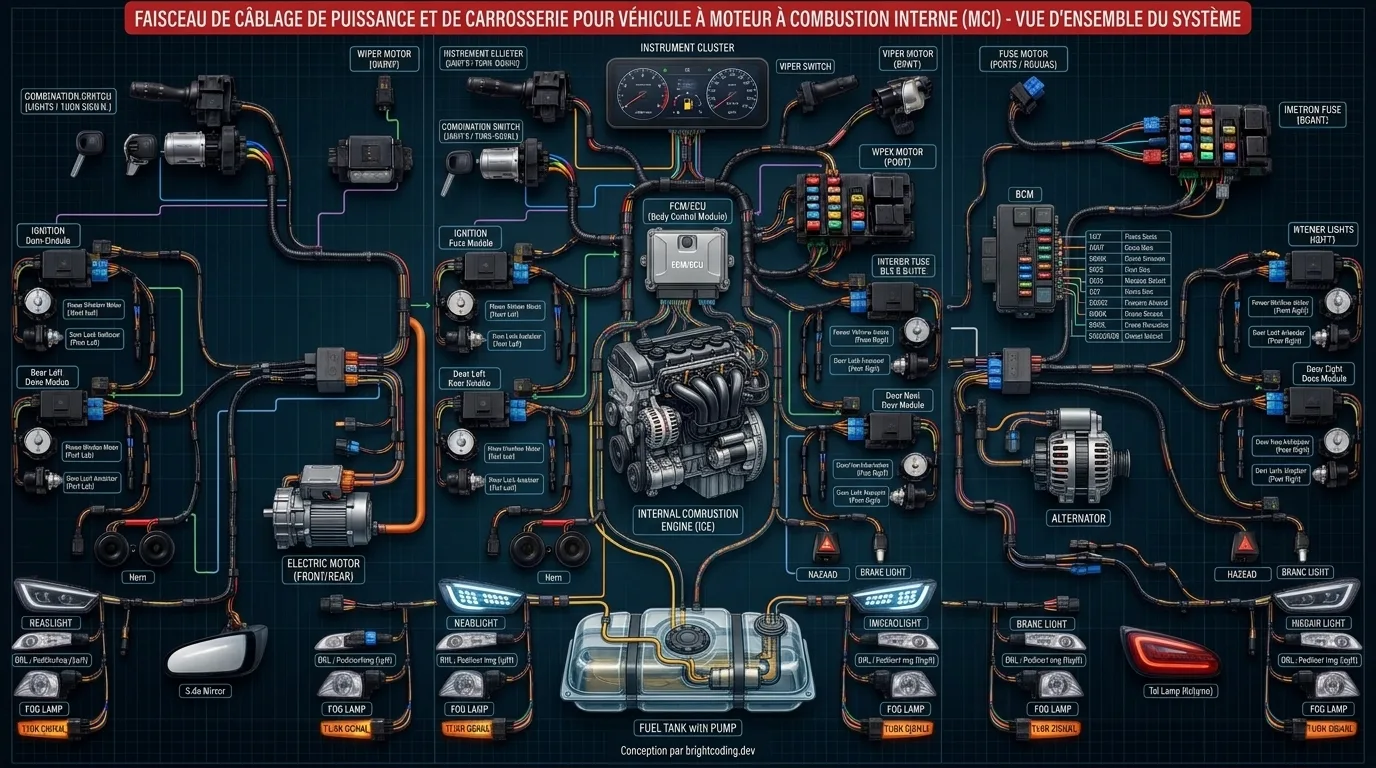
Comprendre le faisceau électrique d’une voiture à moteur thermique : alimentation, ECU, fusibles, BCM et équipements électriques
Une voiture moderne ne dépend pas uniquement du moteur, de la batterie et de l’alternateur. Elle utilise un réseau complexe de fils, de connecteurs, de fusibles, de relais et de calculateurs pour faire fonctionner le moteur et les nombreux équipements électriques. Ce guide permet de comprendre simplement les principaux éléments représentés sur le schéma et la manière dont l’énergie électrique et les signaux circulent dans le véhicule.
Read the article →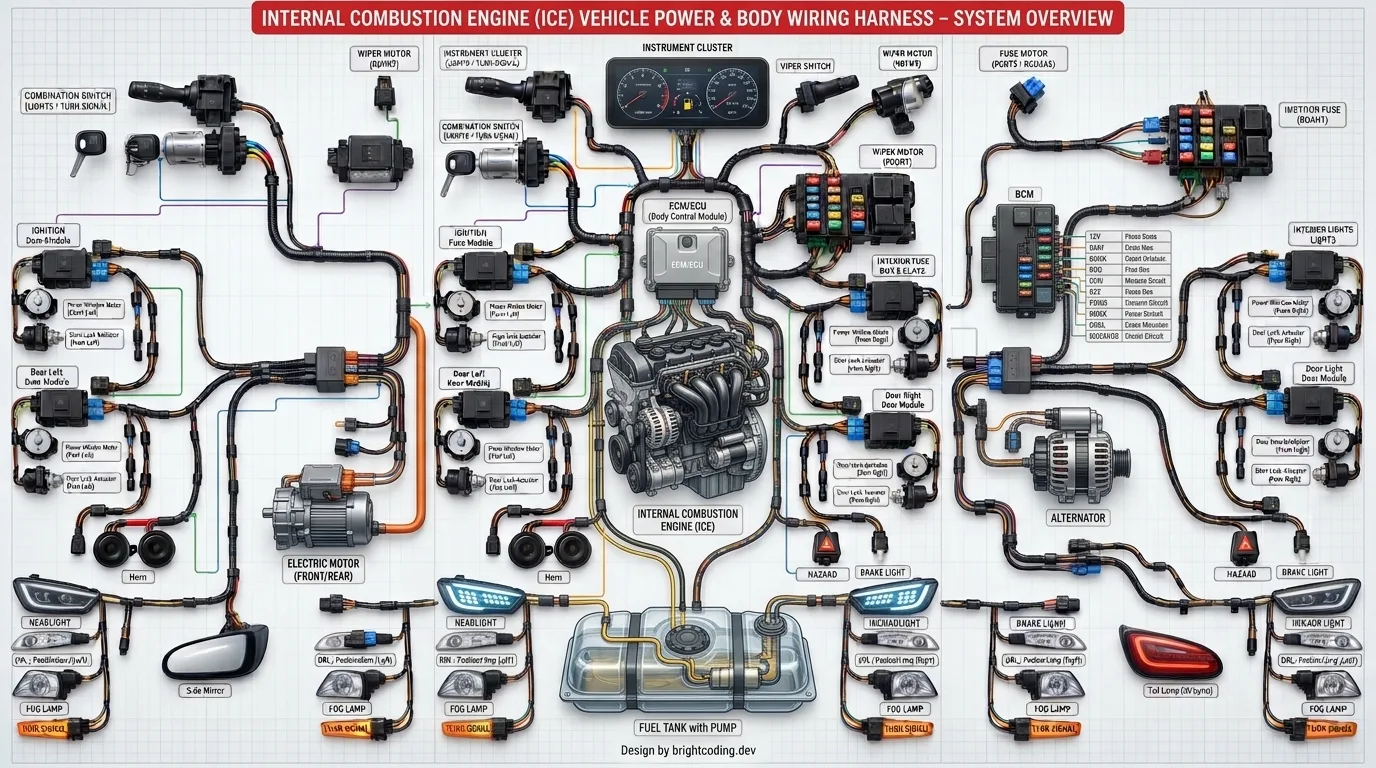
Internal Combustion Engine Vehicle Wiring Harness Explained: A Complete Guide to Power, Control Modules, Fuses and Body Electronics
A modern vehicle depends on much more than an engine and a battery. Behind the dashboard and throughout the engine bay is a complex network of wires, connectors, fuses, relays, control modules and electrical components working together. This guide explains the main parts shown in a vehicle wiring harness overview and how electrical power and control signals travel through the car.
Read the article →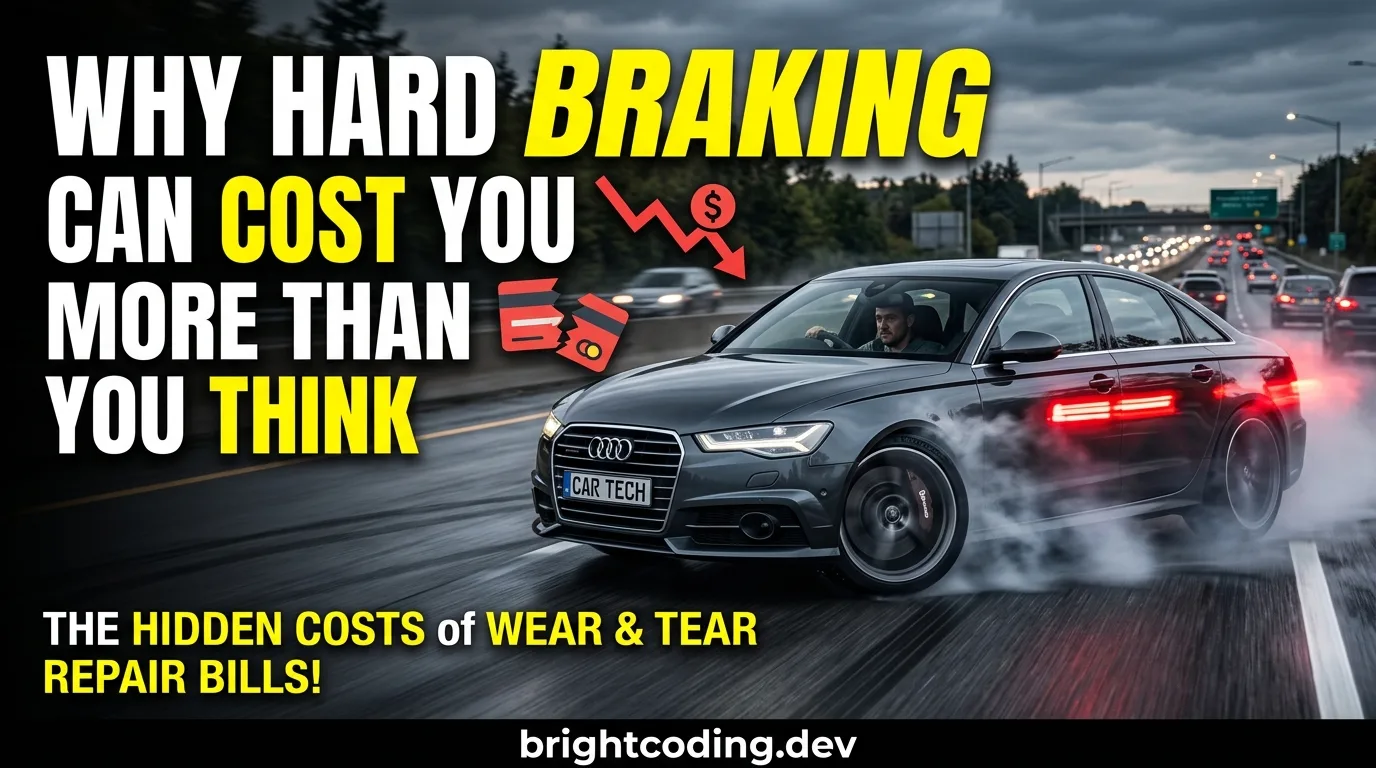
Why Hard Braking Can Cost You More Than You Think
You stab the pedal, the nose dives, and you stop just in time. Feels like good driving, right? That single moment of panic braking sends a bill to a dozen parts you never think about, and it keeps charging interest long after you've driven away.
Read the article →