10 Things You Should Check Before a Long Road Trip
The smell hit me somewhere west of the last exit with a gas station. Sweet, a little sharp, like syrup left on a hot stove. I had the windows down at 70 mph and still caught it, which meant it was coming from me, not the truck in front.
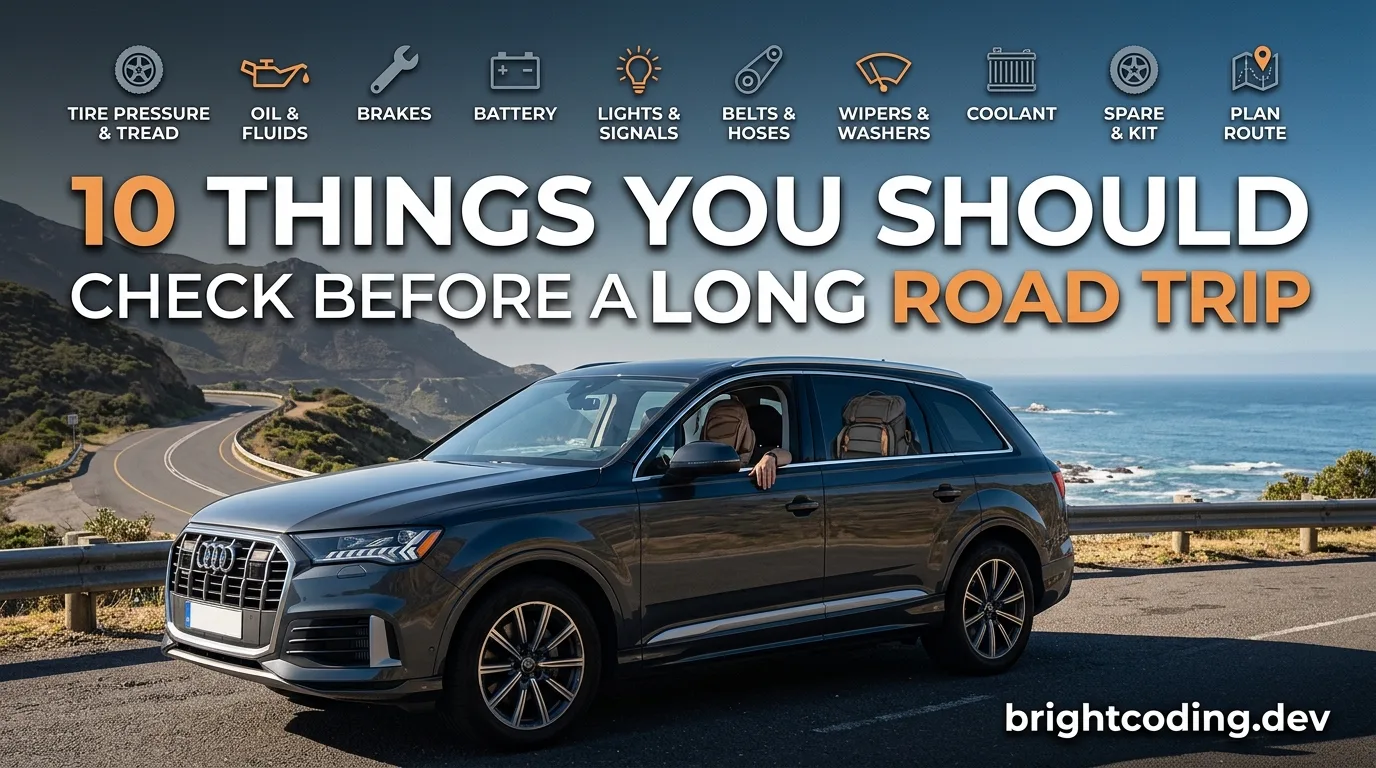
The smell hit me somewhere west of the last exit with a gas station. Sweet, a little sharp, like syrup left on a hot stove. I had the windows down at 70 mph and still caught it, which meant it was coming from me, not the truck in front.
I pulled over on the shoulder, popped the hood with the engine still ticking, and stared at a small green puddle spreading across the top of the radiator. Coolant. I had checked the oil two nights before, felt proud of myself, and completely ignored the one fluid that ends a road trip faster than anything else. My kids were in the back asking why we stopped. My wife was asking it with her eyes. I had a gallon of water in the trunk that I'd packed for the beach, and that gallon got us to the next town, where a mechanic charged me for a hose and a lesson.
That was six summers ago. I have not left the driveway for a long trip since without doing the same walkaround, and it takes about forty minutes.
The backstory
I am not a mechanic. I am a guy who changes his own oil, has a cheap scan tool in the glovebox, and has learned most of what I know by breaking things first. Every check below is something that either failed on me or failed on someone I was driving with. None of it is exotic. All of it is boring, which is exactly why it works.
Check the fluids, all of them, not just the oil
Oil is the one everybody remembers, so let's start with the ones nobody does.
Coolant level should be between the min and max marks on the overflow tank, checked with the engine cold. If you have to top it off, use the right color or type from your owner's manual, because mixing the wrong stuff can turn the coolant into sludge. If the level keeps dropping, you have a leak somewhere and a long trip is the worst place to find out.
Brake fluid lives in a small reservoir near the firewall. It should be between the lines and it should look nearly clear, not dark like iced tea. Low brake fluid usually means worn pads or a leak, not just "needs a top-up."
Windshield washer fluid is cheap and takes ten seconds. You will not believe how much you miss it when a truck throws a fine mist of road grime at you in the rain.
Transmission fluid, power steering fluid if your car has a separate reservoir, and differential fluid on older trucks, all worth a glance. I keep a roll of paper towels in the garage specifically for this, because you cannot check fluid levels with clean hands.
Tires: the thing that actually touches the road
I used to think tire pressure was a gas-station thing. It is not. Check it cold, before you drive, with a real gauge, not the one on the air machine that's been kicked around since 1998. The number is on the sticker inside your driver's door, not on the tire sidewall. The sidewall number is the maximum, and inflating to it is a mistake people make constantly.
While you are down there, look at the tread. A quarter held upside down in the groove is a rough test, and most states use 2/32 of an inch as the legal minimum. If you are heading into rain or mountains, you want more than the legal minimum. Look for uneven wear too, because a tire worn on one edge is telling you about alignment or suspension, and a long highway drive will chew it further.
If you are changing tire sizes or just curious whether a different size would fit, there are calculators that compare the two and show the speedometer error. Useful before you buy, less useful on the shoulder.
And check the spare. Mine was flat for two years and I had no idea. Check the jack and the lug wrench while you are in there, because a spare with no working jack is just a heavy circle.
The battery, the belt, and the stuff that strands you
Batteries do not usually die in your driveway on a Tuesday. They die in a parking lot in a town you have never heard of, after the car sat for three days in the cold. If your battery is more than three or four years old, have it load-tested at a parts store. Most do it free in about five minutes.
Look at the belt, or belts, running the accessories. You are looking for cracks, glazing that looks shiny, or fraying at the edges. A serpentine belt failing on the highway takes the water pump and alternator with it, and you are done for the day.
Hoses deserve a squeeze. They should feel firm, not crunchy or mushy. If a hose feels like a sponge, replace it before you leave. It is a cheap part and an expensive tow.
Lights, wipers, and the small stuff nobody checks
Walk around the car with the headlights on. High beams, low beams, turn signals, brake lights, reverse lights. Brake lights are the sneaky one, because you cannot see them from the driver's seat. Back up to a storefront window at night, or have someone stand behind the car.
Wiper blades are a five-minute swap and cost roughly $15 to $30 for a pair depending on size and brand. If they streak or chatter, replace them. You are going to drive through weather on a long trip, that is basically guaranteed.
Check your registration and insurance card are in the glovebox. Check your license is not expiring mid-trip. This sounds stupid until it happens.
The scan tool and the codes you have been ignoring
That check engine light you have been meaning to look at? Deal with it before you leave, not 400 miles from home. Even a cheap Bluetooth scanner and a phone app will pull the codes, and if you do not have a scanner, you can look up what a code means with a free OBD code lookup before you panic. Some codes are harmless, some are telling you a catalytic converter or a misfire is about to become a real problem.
If the light is on and the car runs fine, that does not mean it stays fine. A misfire under load, going up a mountain pass with the AC on, is a different animal than a misfire idling in your driveway. If you want to see what is actually happening, live data is more useful than a single code, because you can watch fuel trims, coolant temperature, and O2 sensor behavior while the engine runs.
I have also used an AI mechanic assistant to sanity-check a weird noise description before a trip. It is not a replacement for a real diagnosis, but it stopped me from ignoring a wheel bearing that I had convinced myself was just tire noise.
Honest pros and cons of doing this yourself
The pros: It is cheap. You learn your own car. You catch small things before they become big ones. And you sleep better the night before you leave, which is worth something.
The cons: You will spend forty minutes to two hours on this, depending on how deep you go. You might find a problem you cannot fix yourself, and now you have to decide whether to pay a shop on short notice. And if you are not honest with yourself about your skill level, you can make something worse. I have cross-threaded a drain plug. It happens.
What it actually cost
These are rough ranges from my own receipts and local shops. Your numbers will vary by region, car, and how much you do yourself.
| Item | DIY cost (roughly) | Shop cost (roughly) |
|---|---|---|
| Coolant top-up | $10 to $25 | $20 to $50 |
| Oil and filter change | $30 to $60 | $60 to $120 |
| Wiper blades (pair) | $15 to $30 | $30 to $60 installed |
| Battery load test | Free at most parts stores | $20 to $40 |
| New battery | $100 to $200 | $150 to $280 installed |
| Serpentine belt | $20 to $50 | $80 to $200 installed |
| Radiator hose | $15 to $40 | $80 to $180 installed |
| Tire pressure and tread check | Free | Free to $20 |
| Scan tool (basic Bluetooth) | $20 to $60 | N/A |
| Pre-trip inspection at a shop | N/A | $50 to $150 |
None of that includes the tow, the hotel, or the emergency repair in a strange town, which is where the real money goes.
What I would do differently
-
Start a week early, not the night before. Finding a bad hose at 9 p.m. Before a 6 a.m. Departure is a special kind of stress. Give yourself time to order a part or book a shop.
-
Keep a real emergency kit in the trunk. Jumper cables or a jump pack, a tire pressure gauge, a quart of oil, a gallon of distilled water, a basic tool set, a flashlight, and a phone charger. Not the sad little kit that came with the car.
-
Write down the symptoms before you leave. Any noise, any smell, any hesitation. If something gets worse on the road, you will want to describe it accurately, and memory fades fast when you are tired.
-
Check the spare and the jack every single time. I am not exaggerating when I say this is the check I skipped that cost me the most.
-
Do not ignore the warning light "just until we get there." That logic works right up until it doesn't, and it usually doesn't on a mountain pass.
Quick practical tips
- Check tire pressure cold, first thing in the morning, before the sun hits the tires.
- Keep your owner's manual in the car. It has the fluid specs and the fuse diagram, and you will need one of them eventually.
- Take a photo of your dashboard before you leave, so you have a baseline for any new lights.
- Pack more water than you think you need, for the car, not just for you.
- If you are not sure about something, ask. A ten-minute phone call to a shop beats a four-hour wait on the shoulder.
FAQ
How far ahead should I check my car before a road trip? A week is comfortable. Two days is workable. The night before is how you end up at a 24-hour AutoZone at midnight.
Is a pre-trip inspection at a shop worth it? If you are not comfortable under the hood, yes. A shop will put it on a lift and see things you cannot see from the driveway, like suspension wear and undercarriage leaks. Expect roughly $50 to $150.
What if my check engine light comes on during the trip? If it is flashing, stop driving as soon as it is safe. A flashing light usually means an active misfire that can destroy your catalytic converter. If it is steady, you can often keep going, but get the code read at the next town.
Do I really need to check the spare? Yes. It takes two minutes and it is the difference between changing a tire and waiting three hours for a tow truck.
I still think about that green puddle every time I pack the car. Now I check the coolant first, before the oil, before anything. It is a small habit, but it is the one that got me home that summer, and it is the one I am not going to forget.
Ready to act on what you just read? Decode that warning light with the free OBD code lookup, run the matching car tools to check the numbers yourself, or browse more practical car articles for ideas.
Related articles

How to Reverse Park Perfectly Every Time
Reverse parking is the one driving skill almost nobody practises after they pass their test. That is why it feels hard. The good news: it is a geometry problem, not a talent contest. Once you know where to put your car and when to turn the wheel, the manoeuvre repeats itself the same way every time.
Read the article →
15 Common Driving Mistakes That Increase Accident Risk
Most crashes do not start with a dramatic event. They start with a decision you have made a hundred times without thinking: rolling a stop sign, tailgating the guy who cut you off, fiddling with the radio on the highway. Nothing happens 999 times, so the habit feels safe. That is exactly what makes…
Read the article →
How to Protect Your Engine During Short Trips
Short trips are brutal on an engine, and most people never realize it. If your daily routine is a five-minute drive to the store, the school run, or a commute under ten minutes, your oil never gets hot enough to do its job properly. After reading this, you'll know exactly how to reduce that damage:…
Read the article →
10 Parking Mistakes That Can Damage Your Car
You park a dozen times a day. That's exactly why it goes wrong. Nobody thinks about parking until a mirror is hanging by a wire or a wheel bearing starts humming at highway speed.
Read the article →
How to Drive Safely on Snow and Ice
Snow driving is mostly a set of small decisions made before you ever touch the gas. Get those right and the road stops being scary.
Read the article →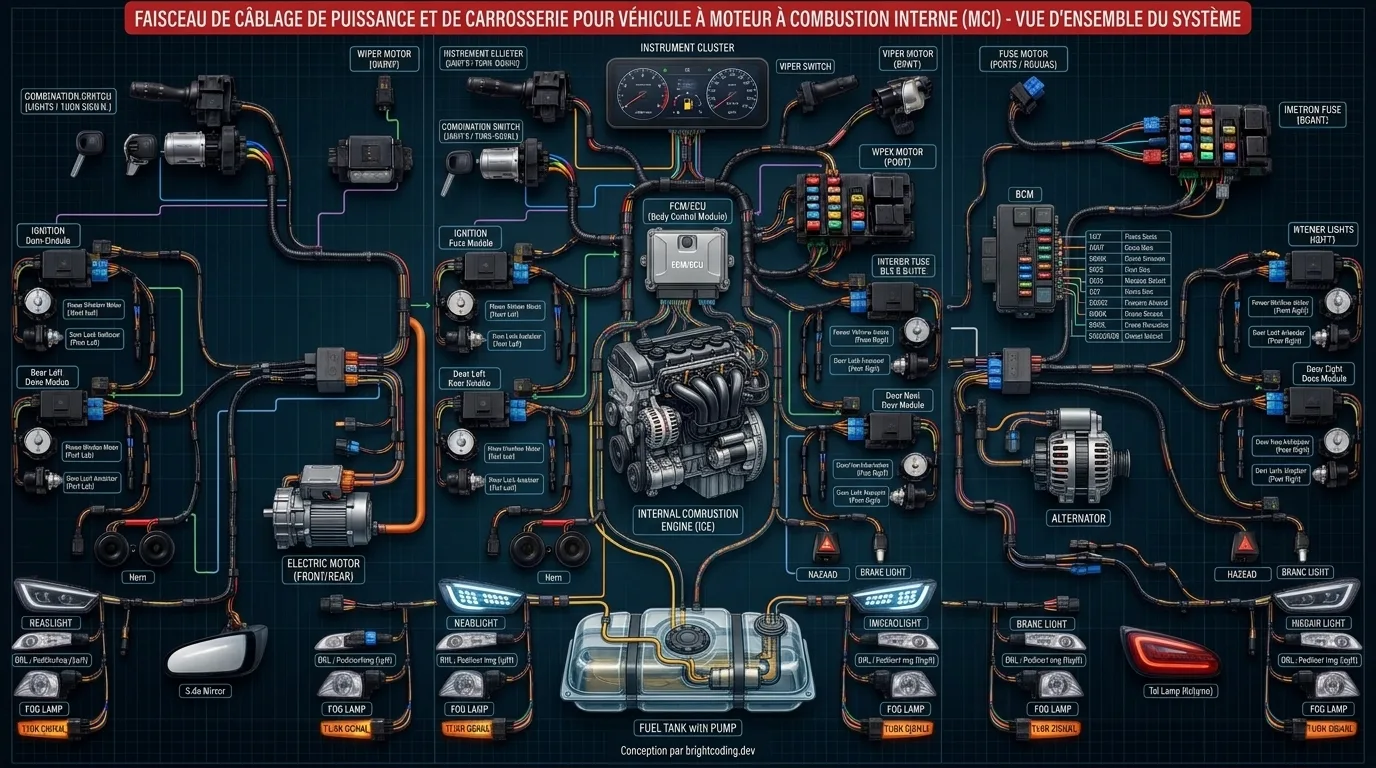
Comprendre le faisceau électrique d’une voiture à moteur thermique : alimentation, ECU, fusibles, BCM et équipements électriques
Une voiture moderne ne dépend pas uniquement du moteur, de la batterie et de l’alternateur. Elle utilise un réseau complexe de fils, de connecteurs, de fusibles, de relais et de calculateurs pour faire fonctionner le moteur et les nombreux équipements électriques. Ce guide permet de comprendre simplement les principaux éléments représentés sur le schéma et la manière dont l’énergie électrique et les signaux circulent dans le véhicule.
Read the article →