10 Parking Mistakes That Can Damage Your Car
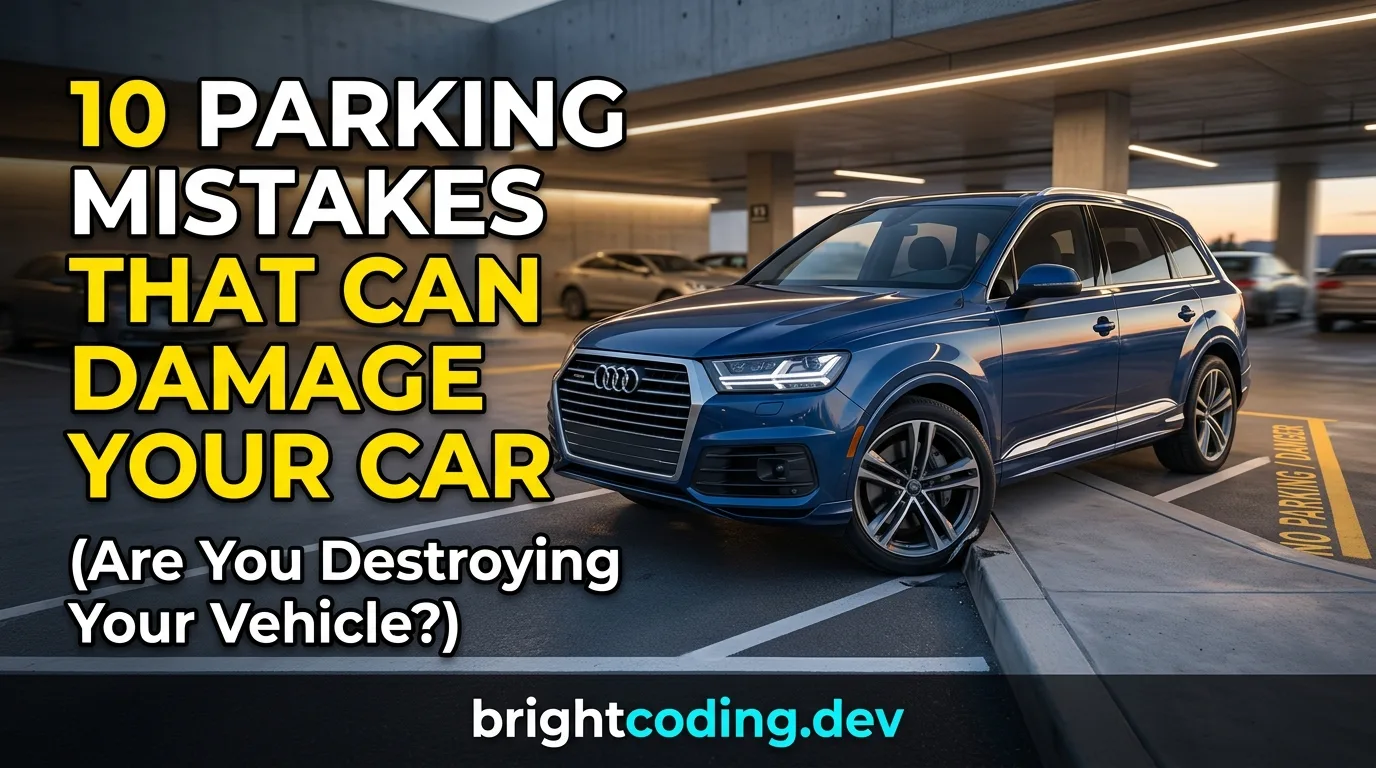
You park a dozen times a day. That's exactly why it goes wrong. Nobody thinks about parking until a mirror is hanging by a wire or a wheel bearing starts humming at highway speed.
You park a dozen times a day. That's exactly why it goes wrong. Nobody thinks about parking until a mirror is hanging by a wire or a wheel bearing starts humming at highway speed.
This is about the small habits that quietly cost you money. A few of them cost real money. One can cost you a tire, a rim, and your afternoon.
Why most people get this wrong
Parking is muscle memory. You learned it once, passed a test, and stopped paying attention. That's fine until you change vehicles. A car with a longer hood, a wider turning circle, or bigger wheels changes every gap you used to eyeball on instinct.
The other problem is that damage doesn't announce itself. Curbing a wheel sounds like nothing. Scraping an alloy feels like nothing. Six months later you're wondering why the car pulls to one side or why a tire keeps losing air.
Most of this is preventable with a change in routine, not a change in skill. You don't need to be a better driver. You need to stop doing four or five specific things.
1 - Curbing your wheels while parking
You swing into a spot, hear that gritty crunch, and think, "that was close." It wasn't close. It happened.
People do this because they judge the gap by the mirror and forget the rear wheel tracks tighter than the front. The consequence shows up later: a chunk out of the sidewall, a gouged rim lip, or a slow leak that never quite seals. Sidewall damage is the one that matters, because a cut sidewall can't be patched and a compromised one can fail at speed.
Slow down in the last two feet and use your mirror angled down at the rear wheel, or set the mirror to tilt when you shift into reverse if your car does that. If you're unsure, get out and look. It takes eight seconds.
2 - Parking against a curb with your tire sidewall
This is the sneakier version of the first one. You pull in nose-first, feel the tire touch the curb, and stop. Feels fine. But now the weight of the car is resting on the sidewall instead of the tread.
Do it every day in the same spot and you get a flat spot, a bulge, or a bead that slowly weeps air. A bulge in a sidewall means the tire is done, no debate. If you want to understand how a small change in tire dimensions shifts all of this, the tire size comparison tool is a quick way to see what you're actually working with.
Leave a hand's width between the tire and the curb. You lose nothing.
3 - Parking on a steep hill with the transmission holding the car
Automatic drivers put it in Park and walk away. Manual drivers leave it in gear and trust the clutch. On a steep grade, that's a lot of load on a parking pawl or a gearbox that was never meant to hold a two-ton car indefinitely.
The fix is boring and it works: set the parking brake first, let the car settle, then shift into Park or leave it in gear. That way the brake takes the weight and the transmission takes nothing. If you drive a manual, point the wheels toward the curb when facing downhill and away from it when facing uphill, so the curb catches a roll.
4 - Parking under trees, sap, and bird traffic
The shady spot looks like a gift in July. Then you come back to a windshield that looks like frosted glass and a roof dotted with sap you can feel through a microfiber towel.
Tree sap etches clear coat if it bakes on, and bird droppings are acidic enough to stain paint in a day or two in the sun. People park there because it's cool and free, then spend a Saturday with a clay bar.
If you have to, wash or at least rinse the sap and droppings off the same day. A quick detailer spray and a soft towel beats a polishing job. Check your paint the same way you'd check for common car symptoms elsewhere: early, before it becomes a repair.
5 - Using the parking brake only on hills
Plenty of drivers never touch the parking brake on flat ground. Then the cable seizes from disuse, and the day you actually need it on a hill, it does nothing.
Cables rust and stretch when they sit. Using the brake regularly keeps the mechanism free. Get in the habit of setting it every time you park, even in your own driveway.
One caveat: if you've just come off a hard brake session, like a long mountain descent, don't set a hot parking brake on a rear disc setup. Let it cool. Otherwise you can warp or glaze the rotor where the pad sits.
6 - Ignoring the parking brake light on the dash
That red circle with the exclamation point isn't decoration. If it stays on after you release the brake, the brake isn't fully released, the fluid is low, or a switch is stuck.
Driving with a dragging parking brake cooks the rear brakes and tanks your fuel economy. Low fluid usually means a leak somewhere, which is not a wait-and-see situation.
If a warning light comes on and you want to know what the car is actually complaining about, a quick scan is worth it. The free OBD code lookup explains what the codes mean in plain language, and if you want to watch what's happening live, the OBD live-data tool shows you the sensors reporting in real time.
7 - Letting the door hit the car next to you
Tight lot, windy day, kid in the back seat. The door swings out and taps the car beside you. No dent, so you drive off.
Except you're the one on the other end of this too, and every door ding you've ever found came from someone who didn't care. It's not just courtesy. Paint chips rust, and a chip on a door edge is a rust starter.
Hold the door for anyone getting out, especially kids, and park a little further from the entrance where the spaces are wider and emptier. The walk is good for you.
8 - Blocking yourself in with bad positioning
You park in a tight garage, nose in, and realize the next morning you can't open the driver's door enough to get in comfortably. Or you park so close to a wall that you can't check your oil.
People do this because they optimize for "am I inside the lines" instead of "can I actually use this car tomorrow." The consequence ranges from annoying to expensive, like scraping a mirror on a pillar every single morning.
Before you shut off the engine, ask two questions: can I open both front doors, and can I reach the hood? If not, reposition.
9 - Leaving the car in gear on a slope (manual) with no brake
Manual drivers, this one's for you. Leaving it in first or reverse on a hill with no parking brake feels secure. It isn't, especially if the engine has low compression or you're on a grade steep enough that gravity wins.
The gearbox isn't a brake. It's a backup. Use both, and turn the wheels toward the curb as described above. If you've ever wondered whether the car is running right before you trust it on a hill, the AI mechanic assistant can walk you through what to check.
Do this instead
Set the parking brake every single time, flat ground included. Let the brake hold the car, then let Park or the gearbox rest.
Leave a gap between your tires and any curb. Judge it with the mirror, or get out and look.
Park away from trees and away from the busiest spaces. The extra twenty steps are cheaper than a paint correction.
Before you shut the engine off, check that you can open your doors and reach the hood.
Turn your wheels toward the curb on a hill, and keep the parking brake cable exercised.
Wash sap and droppings off the same day, not the same week.
FAQ
Does curbing a wheel really damage anything? Sometimes nothing, sometimes a lot. A light scuff on a steel wheel is cosmetic. A gouge in a sidewall or a bent alloy lip is a real problem. If you see a bulge or a cut deep enough to show cords, replace the tire.
Is it bad to park on a hill every day? Not inherently. It's bad to let the transmission hold the car instead of the brake. Use the parking brake first and the hill stops being an issue.
Can parking damage my suspension? Not from parking itself, but hitting a curb hard can bend a control arm or knock alignment out. If the car pulls or the steering wheel sits off-center afterward, get it checked.
Should I use the parking brake in winter? Yes, but be careful about setting it after driving through slush if it might freeze. On a steep incline in freezing conditions, some drivers prefer to chock a wheel or park on flatter ground. Use judgment.
How close is too close to a curb? If the sidewall is touching, you're too close. Aim for a hand's width of daylight between tire and curb.
The cheapest parking upgrade you'll ever make is a two-second habit: brake first, look second, and leave yourself an exit.
Related articles

15 Common Driving Mistakes That Increase Accident Risk
Most crashes do not start with a dramatic event. They start with a decision you have made a hundred times without thinking: rolling a stop sign, tailgating the guy who cut you off, fiddling with the radio on the highway. Nothing happens 999 times, so the habit feels safe. That is exactly what makes…
Read the article →
How to Protect Your Engine During Short Trips
Short trips are brutal on an engine, and most people never realize it. If your daily routine is a five-minute drive to the store, the school run, or a commute under ten minutes, your oil never gets hot enough to do its job properly. After reading this, you'll know exactly how to reduce that damage:…
Read the article →
How to Drive Safely on Snow and Ice
Snow driving is mostly a set of small decisions made before you ever touch the gas. Get those right and the road stops being scary.
Read the article →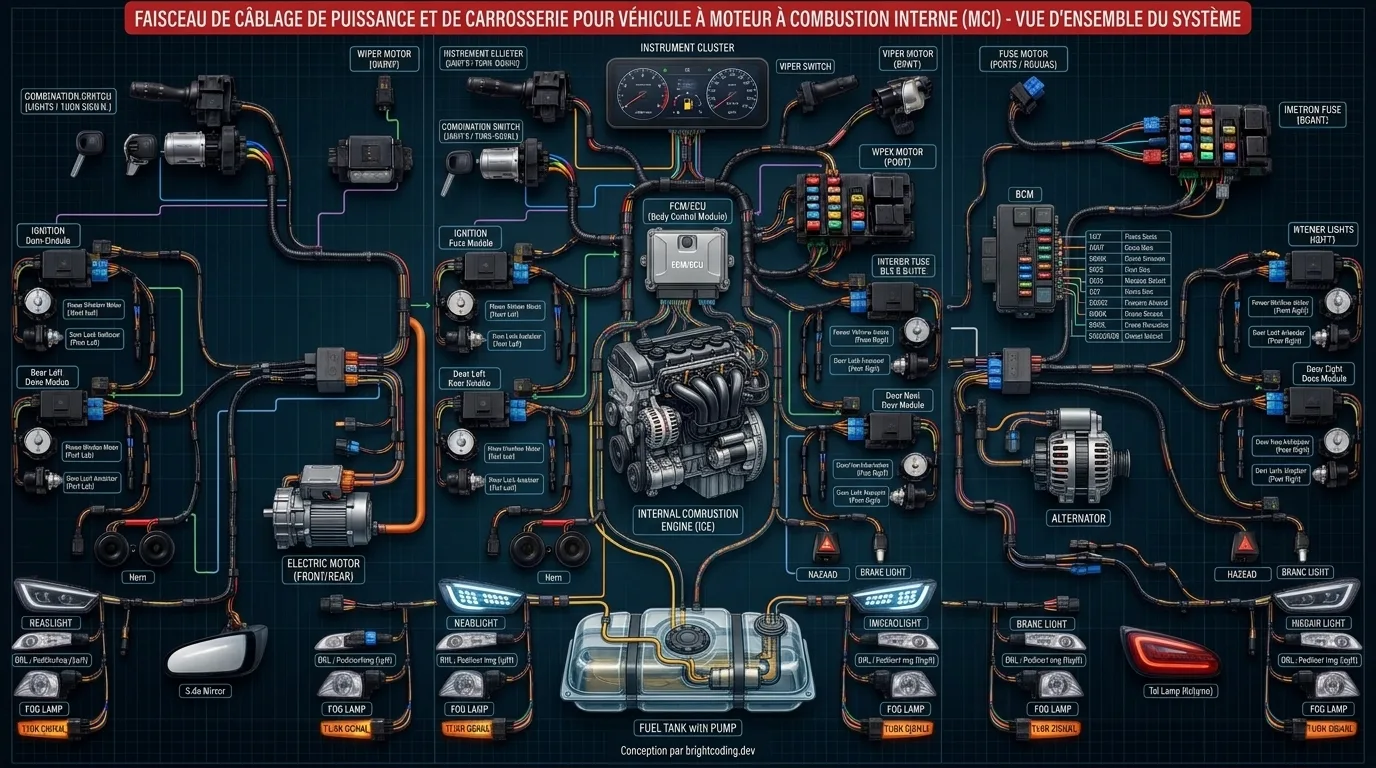
Comprendre le faisceau électrique d’une voiture à moteur thermique : alimentation, ECU, fusibles, BCM et équipements électriques
Une voiture moderne ne dépend pas uniquement du moteur, de la batterie et de l’alternateur. Elle utilise un réseau complexe de fils, de connecteurs, de fusibles, de relais et de calculateurs pour faire fonctionner le moteur et les nombreux équipements électriques. Ce guide permet de comprendre simplement les principaux éléments représentés sur le schéma et la manière dont l’énergie électrique et les signaux circulent dans le véhicule.
Read the article →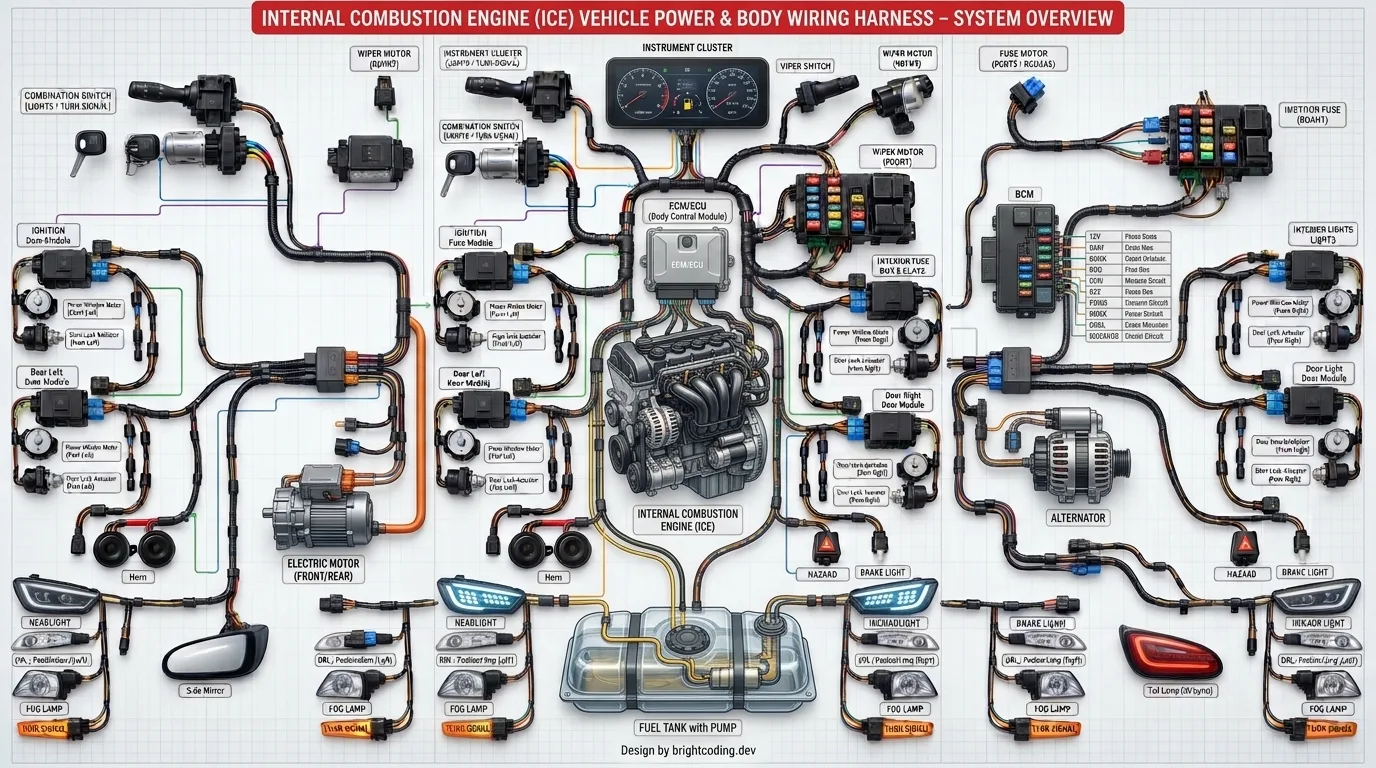
Internal Combustion Engine Vehicle Wiring Harness Explained: A Complete Guide to Power, Control Modules, Fuses and Body Electronics
A modern vehicle depends on much more than an engine and a battery. Behind the dashboard and throughout the engine bay is a complex network of wires, connectors, fuses, relays, control modules and electrical components working together. This guide explains the main parts shown in a vehicle wiring harness overview and how electrical power and control signals travel through the car.
Read the article →
Why Hard Braking Can Cost You More Than You Think
You stab the pedal, the nose dives, and you stop just in time. Feels like good driving, right? That single moment of panic braking sends a bill to a dozen parts you never think about, and it keeps charging interest long after you've driven away.
Read the article →