The smell hit me before the noise did. Hot, sweet, faintly metallic, like burnt syrup on a stove. I was halfway up a ramp in a parking garage, clutch half out, creeping forward at walking pace because the car ahead of me kept stopping. When I finally parked, there was a thin line of something dark on the concrete under the front of the car. I told myself it was water from the AC. It was not water from the AC.
That was the day I stopped pretending my driving was neutral. I had always thought of wear as something that happened to a car, like weather. It turns out a lot of it happens because of a car, and I was the one holding the wheel.
The backstory
I bought a used hatchback with about 90,000 miles on it, thinking I'd be smart and keep it running to 200,000. I did all the obvious things: oil changes on time, new tires when the tread got scary, brakes when they squealed. What I did not do was look at how I drove. I rode the clutch in traffic. I rolled through stop signs because braking felt wasteful. I treated speed bumps as a suggestion. The car was fine for a while, and then it was not fine, and the repair bill explained why in a language I did not want to hear.
What follows is the list I wish someone had handed me. Some of these cost me money. A couple cost me a weekend on my back in a cold garage. One almost cost me a transmission.
The habits, in the order they bit me
Habit 1: riding the clutch in slow traffic
This was the parking garage. When you hold the clutch pedal partway down to creep forward, the disc is slipping against the flywheel the whole time, grinding itself down a little with every inch. In stop-and-go traffic I was basically sanding my clutch for twenty minutes a day.
The fix is boring: either let the clutch fully out and idle forward, or press it fully down and wait. There is no useful in-between. A clutch job on a typical compact is roughly $800 to $1,500 at an independent shop, more if the flywheel needs replacing too. Mine came in near the top of that range.
Habit 2: braking late and hard
I used to think late braking was efficient. It is efficient at wearing through pads and rotors. Pads are cheap, roughly $40 to $90 a set for a common car. Rotors are not, and if you let the pads go metal-to-metal you turn a $150 job into a $400 one.
I learned this the day my steering wheel started shivering under braking. That shimmy is usually a warped or unevenly worn rotor. The step-by-step car guides walked me through measuring rotor thickness with a cheap caliper, which told me whether I could get away with pads only or needed rotors too.
Habit 3: ignoring the check engine light because the car "feels fine"
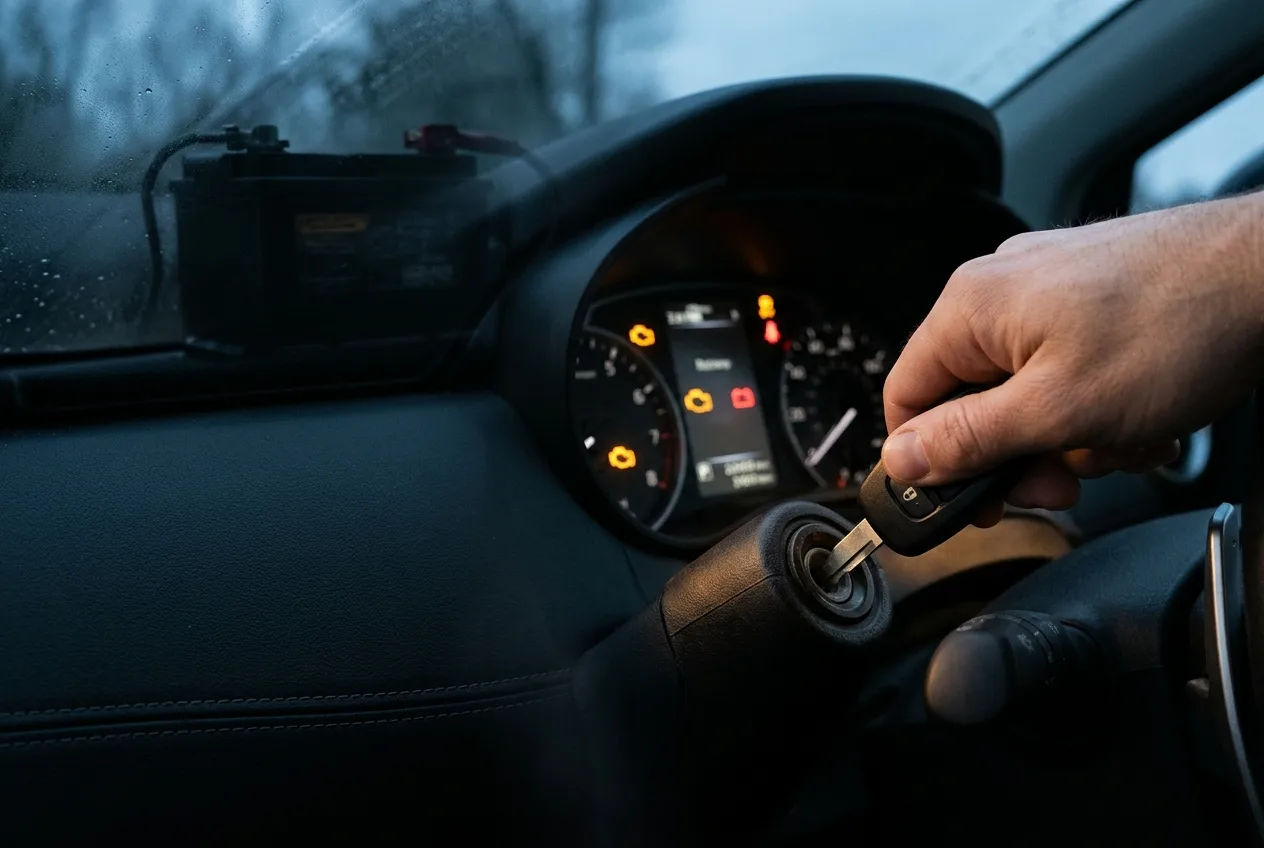
Mine came on during a long drive. The car felt normal, so I put a piece of tape over it. Two weeks later it started idling rough and my fuel economy dropped. The code turned out to be a misfire, and a misfire dumps unburnt fuel into your catalytic converter, which is a part you really do not want to cook.
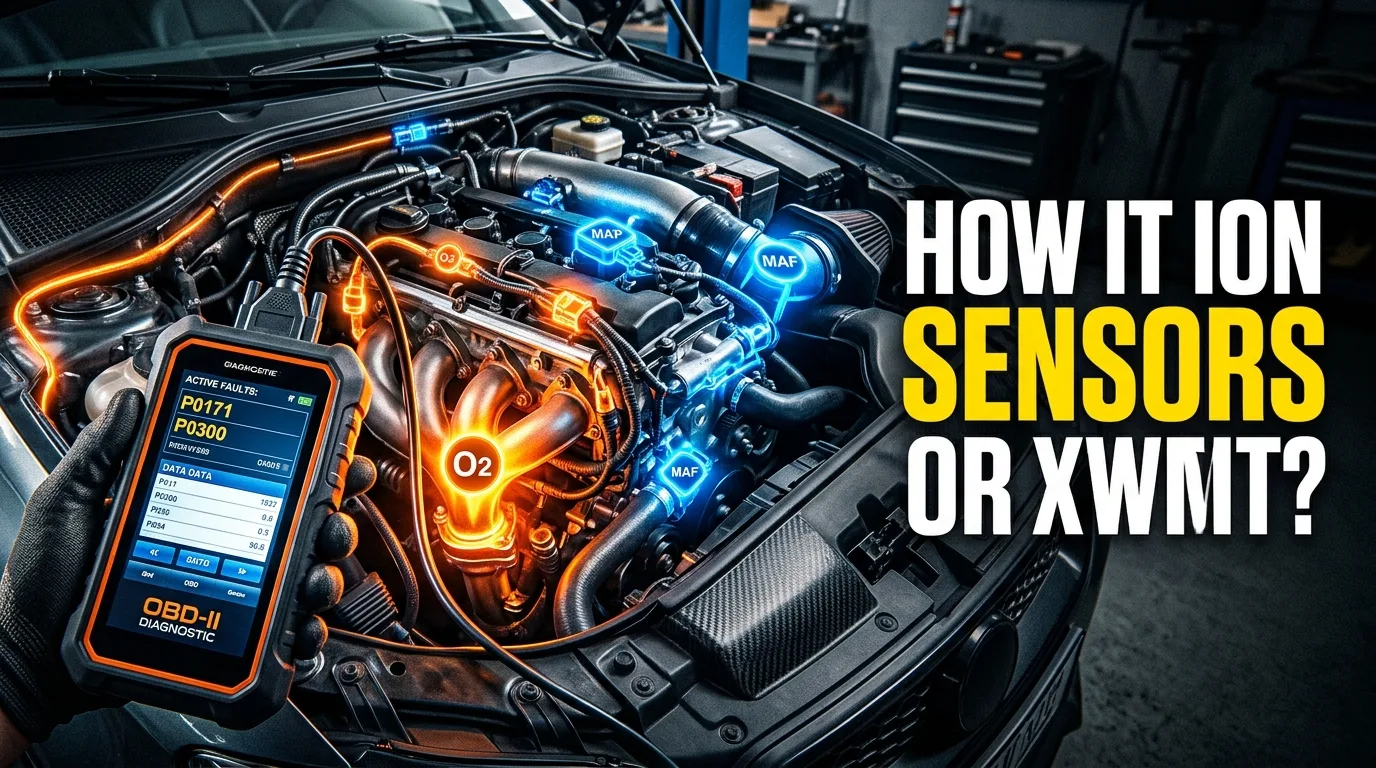
Before you assume the worst, pull the code. I used the free OBD code lookup to figure out what mine actually meant instead of guessing. A basic code reader is roughly $20 to $60, and it pays for itself the first time it saves you a diagnostic fee.
Habit 4: treating the gas pedal like an on/off switch
Hard launches feel great and cost you in quiet ways. They shock the motor mounts, the CV joints, and the transmission. They also murder your fuel economy. I do not have a dramatic failure story here, just a slow realization that my "spirited" driving was why my front tires wore out unevenly and my mileage was worse than the window sticker promised.
Smooth inputs are not slow. They are just cheap.
Habit 5: never checking tire pressure until something looks flat
Tires lose pressure gradually, and you will not see it by looking. Under-inflated tires wear on the edges, run hot, and hurt fuel economy. Over-inflated ones wear in the middle and grip worse.
I check mine monthly now, in the morning before the car has been driven, because heat raises pressure and gives you a false reading. If you have swapped wheels or you are wondering whether a different size will even fit, the tire size comparison tool is worth a look before you buy.
Habit 6: resting your hand on the shifter
If you drive a manual, this is the sneaky one. Resting your hand on the gear lever pushes the shift fork against the synchronizers, and over time that wears them. You will not notice until a gear starts crunching. A rebuild is expensive, easily into four figures on many cars. It cost me nothing to stop doing it, which is the best kind of repair.
Habit 7: idling to "warm up" the engine
I used to let my car idle for ten minutes on cold mornings. That is a waste of fuel and it does not warm the engine efficiently, because an idling engine heats up slowly. The better move is to start it, let it settle for maybe 30 seconds to a minute, and drive gently until the temperature gauge comes up. Just avoid hard acceleration while it is cold.
Habit 8: ignoring weird noises and smells
That sweet burnt smell in the garage was the clutch. A squeal when you turn is often a belt. A rhythmic click from a wheel that speeds up with the car is often a CV joint. Your car is talking to you constantly, and the car symptom finder is a good place to start translating. Catching things early is almost always cheaper than catching them late.
Habit 9: driving with a heavy load all the time
I treated my trunk like a storage unit. Those extra pounds cost fuel and they stress your suspension and brakes. If your car is sagging at the back or bottoming out over speed bumps, you might be looking at worn springs or shocks, and a set of shocks can run roughly $300 to $800 installed depending on the car.
Habit 10: short trips that never let the engine warm up
This one is hard to avoid if you live close to work. A string of two-mile trips never lets the oil get hot enough to burn off moisture and fuel that gets past the rings. Over time that is sludge and diluted oil. When I could not avoid short trips, I started taking the long way home once a week and changing my oil on the shorter side of the interval rather than the longer one.
Honest pros & cons
What got better when I fixed my habits
- My repair bills got smaller and less frequent.
- Fuel economy came back up, maybe a couple of miles per gallon.
- I stopped being surprised by weird noises, because I was actually listening.
What got worse or just annoyed me
- Driving gently is genuinely less fun.
- Checking tire pressure and reading codes takes time I did not want to give up.
- Some of these fixes came too late, so I paid for damage that better habits would have prevented.
What it actually cost
| Item | Approximate cost | Notes |
|---|---|---|
| Clutch replacement | $800 to $1,500 | More with flywheel |
| Brake pads (per axle) | $40 to $90 | Parts only |
| Rotors (per axle) | $150 to $400 | Depends on car |
| Code reader | $20 to $60 | One time |
| Tire pressure gauge | $5 to $20 | One time |
| Shocks (installed) | $300 to $800 | Varies a lot |
These are rough ranges for a common car at an independent shop. Your numbers will differ, so get a quote.
What I would do differently
- I would pull the check engine code the same day it appears, not tape over it. The AI mechanic assistant is a decent way to get a plain-English read on a code before you call anyone.
- I would stop riding the clutch and stop resting my hand on the shifter. Both are free and both save real money.
- I would check tire pressure every month without fail, cold, with a proper gauge.
- I would learn to listen. Noises and smells are early warnings, and early is cheap.
- I would keep a simple log of what I did and when, so I stop guessing whether it is time for an oil change.
Quick practical tips
- Pull codes before you panic, then use the free OBD code lookup to understand them.
- Check tire pressure monthly, in the morning, before driving.
- Let the engine warm up by driving gently, not by idling for ten minutes.
- Do not rest your hand on the shifter or your foot on the clutch pedal.
- Keep a cheap notebook in the glovebox for services and noises.
FAQ
Is idling really that bad for my engine? It is not catastrophic, but it is wasteful and it warms the engine slowly. Driving gently warms it faster and burns less fuel. Some places even have anti-idling laws, so check locally.
Can I just clear the check engine light and keep driving? You can clear it, but if the underlying problem is still there, the light comes back and the damage keeps happening. A flashing light usually means stop driving and get it looked at.
Do short trips really hurt a car? They are harder on it than long ones because the oil never gets hot enough to burn off moisture and fuel. If most of your driving is short, change your oil on the shorter side of the interval.
I still drive the same car. I just drive it like I plan to keep it, because now I know the difference between weather and my own two feet.