What Does It Mean When Your Car Won't Start?
You turn the key or push the button, and nothing. Or worse, that awful click-click-click. Your stomach drops because you know this is going to cost you time, money, or both.
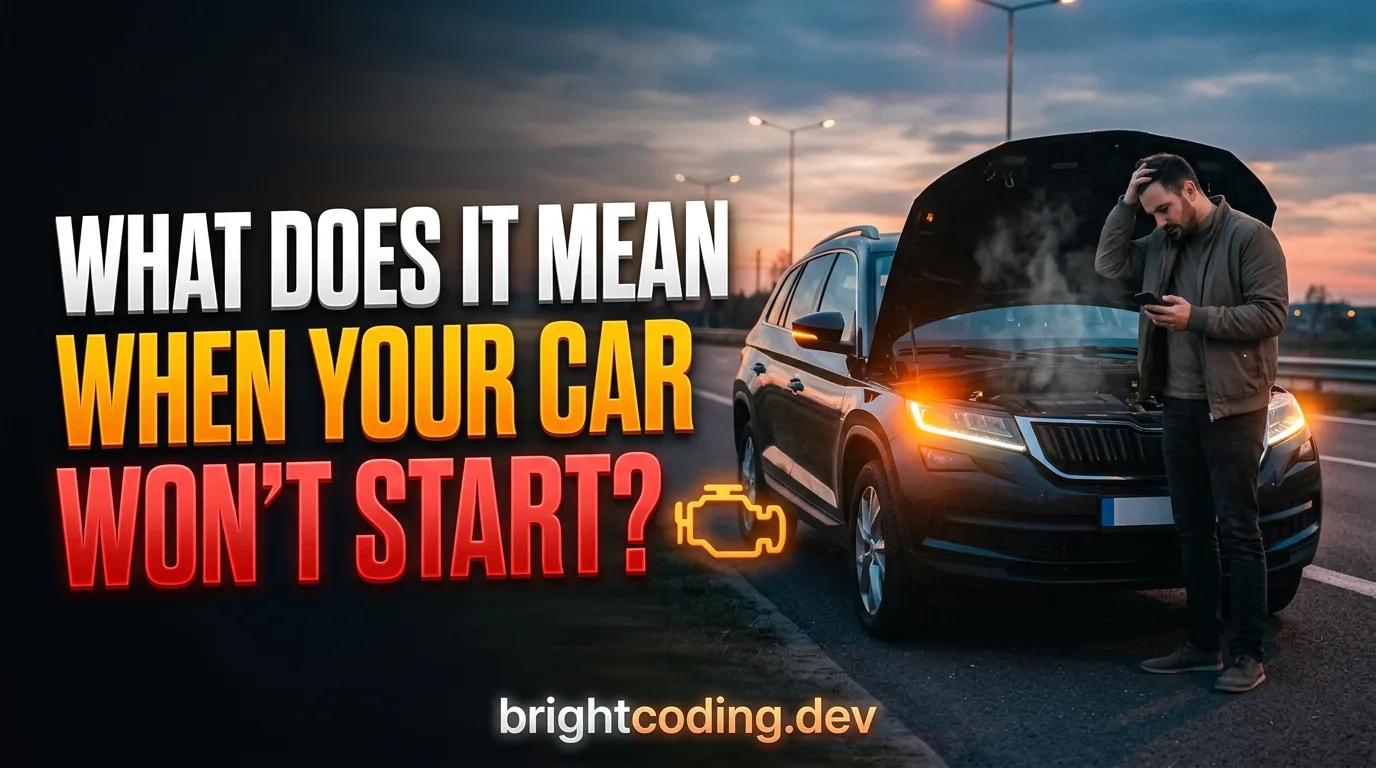
You turn the key or push the button, and nothing. Or worse, that awful click-click-click. Your stomach drops because you know this is going to cost you time, money, or both.
Here's the good news: a no-start is one of the most diagnosable problems a car can have. It usually comes down to a short list of culprits, and the symptom itself tells you a lot about which one you're dealing with. This guide walks you through what your car won't start actually means, how to narrow it down in your driveway, and what to do next.
First, Listen: The Symptom Is Talking to You
Before you pop the hood, replay what just happened.
Did you hear a slow, labored crank, like the engine is trying to turn through molasses? That points hard at the battery. Did you hear one loud click and then silence? That's often a starter or a connection problem. Did the engine crank normally but refuse to fire? That's usually fuel or spark. Did you hear absolutely nothing at all?
Each of those is a different conversation. The mistake most people make is jumping straight to "it's the battery" and buying a new one, when the real issue was a loose cable or a dead alternator draining it. That gets expensive fast.
Why Your Car Won't Start: The Usual Suspects
A gasoline engine needs three things: spark, fuel, and compression, all timed correctly and powered by a working electrical system. If any one of those disappears, the engine won't run.
The battery (the number one cause)
Batteries die for boring reasons. You left a dome light on. The terminals corroded. It's simply old, usually past the three to five year mark. Cold weather makes a weak battery much weaker, which is why so many cars quit on the first freezing morning.
A slow crank is the classic sign. So is a dashboard that dims or flickers when you try to start.
The starter and the connections
The starter is the electric motor that spins your engine. When it fails, you often get a single loud click or a grinding noise. Loose or corroded battery cables cause the same symptoms as a dead battery, which is why you always check the cheap stuff first.
Fuel and spark
If the engine cranks at normal speed but never catches, you're likely missing fuel or spark. A failing fuel pump, a clogged filter, bad spark plugs, or a faulty ignition component can all do it. These are less common than battery issues but trickier to diagnose without tools.
The security system and the key
Some cars won't start because the immobilizer doesn't recognize your key. You might see a small key or padlock light on the dash. Try your spare key. It sounds silly until it saves you a tow.
How to Figure Out What's Actually Wrong
You don't need to be a mechanic to narrow this down. Start with the free, obvious checks before you spend a dime. If a warning light is on, a quick trip through a free OBD code lookup can point you toward the system that's complaining, though a no-start often happens without any stored code at all.
For a deeper look at what your engine is doing, the OBD live-data tool can show you things like battery voltage and cranking RPM, which tells you whether the starter is even turning the engine.
If you'd rather not guess, the AI mechanic assistant can walk you through your specific symptom step by step. And if you like the idea of learning to read your own car, the step-by-step car guides are a good place to start.
Your Options, From Cheapest to Most Involved
Jump-start it
What it is: Borrowing power from another running car or a jump pack. How it works: You connect cables to give your dead battery enough juice to crank. Advantages: Free or nearly free, and it gets you moving fast. Disadvantages: It doesn't fix the underlying problem. If your battery is truly dead or your alternator is failing, you'll be stranded again soon. When it makes sense: When you're stuck and need to get home or to a shop.
Replace the battery
What it is: Swapping in a new battery. Advantages: Often the real fix if yours is old. Disadvantages: Wasted money if the battery was fine and something else drained it. Rough cost: A basic battery typically runs somewhere around $150 to $250 installed, more for certain vehicles or premium batteries. Verify pricing locally.
Clean and tighten the connections
What it is: Removing corrosion from the terminals and snugging the cables. Advantages: Free, and it fixes a surprising number of no-starts. Disadvantages: Only works if connections are the problem. When it makes sense: Always check this before buying anything.
Call a mobile mechanic or tow
What it is: Paying someone to come to you or haul the car to a shop. Advantages: Removes the guesswork and the heavy lifting. Disadvantages: Costs more, and you wait. Rough cost: A tow is often $75 to $150 for a short distance; diagnostics at a shop commonly run $100 to $150, sometimes credited toward the repair.
Which Option Fits You?
If you're a confident DIY owner with a multimeter and some patience, start with the battery and connections yourself. You'll save money and learn your car.
If you're a busy commuter who just needs to get to work, a jump pack in the trunk plus a quick battery test at an auto parts store (most do it free) is the fastest path. That test tells you in minutes whether the battery is the problem.
If the engine cranks fine but won't fire, or you see a security light, stop guessing and get a proper diagnosis. That's when a mechanic earns their money.
A Step-by-Step Action Plan
- Stay safe. If you're on a road, get to the shoulder, turn on hazards, and stay clear of traffic.
- Check the obvious. Is the car in Park or Neutral? Is your foot on the brake? Is the fuel gauge actually above empty? (Yes, this happens to everyone once.)
- Look at the dash. Do the lights come on bright and steady, or dim and flicker? Dim lights point to the battery.
- Listen to the crank. Slow crank equals battery or connections. Single click equals starter or cables. Normal crank but no start equals fuel or spark.
- Inspect the battery terminals. Look for white or green crust. If you see it, that's your lead.
- Try a jump. If it starts and stays running, suspect the battery or alternator. If it dies again quickly, the alternator is a strong candidate.
- Test the battery. Most auto parts stores test for free.
- Try the spare key. Rule out the immobilizer before spending money.
- Know when to stop. If basics don't solve it, call a pro rather than throwing parts at it.
Safety notes: Never lean over a battery while jumping it, and connect the negative cable to a bare metal ground on the dead car, not the battery itself, to reduce spark risk near hydrogen gas. Battery acid burns, so wear eye protection. If you're lifting the car or working under the hood while it's running, use jack stands, never just a jack.
Common Mistakes to Avoid
- Buying a battery without testing it. Fix: Get the free test first. You might just need a cable tightened.
- Ignoring corroded terminals. Fix: Clean them with a wire brush and baking soda solution before anything else.
- Assuming it's the battery when the engine cranks fine. Fix: A normal crank with no start means fuel or spark, not the battery.
- Jumping a frozen or damaged battery. Fix: If the battery looks swollen or cracked, don't jump it. Replace it.
- Leaving the car in Drive or forgetting the clutch. Fix: Confirm Park or Neutral, and press the clutch on a manual.
- Skipping the spare key when a security light is on. Fix: Try the other key before calling a tow.
- Throwing parts at it. Fix: Diagnose the symptom first; guessing gets expensive.
The Expert Takeaway
The single most important lesson: let the symptom guide you before you spend a cent. A slow crank, a single click, and a normal crank with no fire are three completely different problems, and treating them the same is how people waste money. Check the cheap, free things first, and you'll solve a surprising share of no-starts in your own driveway.
FAQ
Why won't my car start but the lights come on? Bright lights mean the battery has some charge, so the problem is likely the starter, the connections, or fuel and spark. A single click with bright lights often points to the starter.
How do I know if it's the battery or the alternator? If a jump gets it running and it stays running, the battery was likely the issue. If it dies again shortly after, the alternator probably isn't charging it. A free battery test and a voltage check settle it.
Can a bad key fob stop my car from starting? Yes. Many cars have an immobilizer that won't let the engine start without a recognized key. If you see a key or padlock light, try your spare.
Should I keep jumping my car or just replace the battery? If it needs a jump more than once in a short period, stop jumping and get it tested. Repeated jumps mask a failing battery or alternator.
Is it worth calling a mobile mechanic? If the basics don't fix it, yes. Mobile mechanics often charge less than a tow plus a shop visit, and they diagnose on the spot. Ask about the diagnostic fee upfront.
Ready to act on what you just read? Decode that warning light with the free OBD code lookup, run the matching car tools to check the numbers yourself, or browse more practical car articles for ideas.
Related articles
How to Know When Your Tires Need to Be Replaced
You can check your own tires in about 15 minutes with a coin, a pressure gauge and a flashlight. By the end of this guide you will know how to read tread depth, spot the damage that means "replace now," decode the numbers on your sidewall, and judge whether that slow leak is a cheap fix or a new-ti…
Read the article →
Why Is My Car Shaking? 8 Common Causes Explained
Your coffee is sitting in the cupholder, and it looks like it's trying to escape. Maybe the steering wheel vibrates at highway speed. Maybe the whole cabin shudders when you brake. Either way, a shaking car is one of those problems you can feel in your teeth, and it never fixes itself.
Read the article →
10 Car Noises You Should Never Ignore
Your car talks to you constantly. Most of the time it's mumbling, and you tune it out like a radio ad. Then one day it screams, and you're staring at a repair bill that could have been a $40 part three months ago.
Read the article →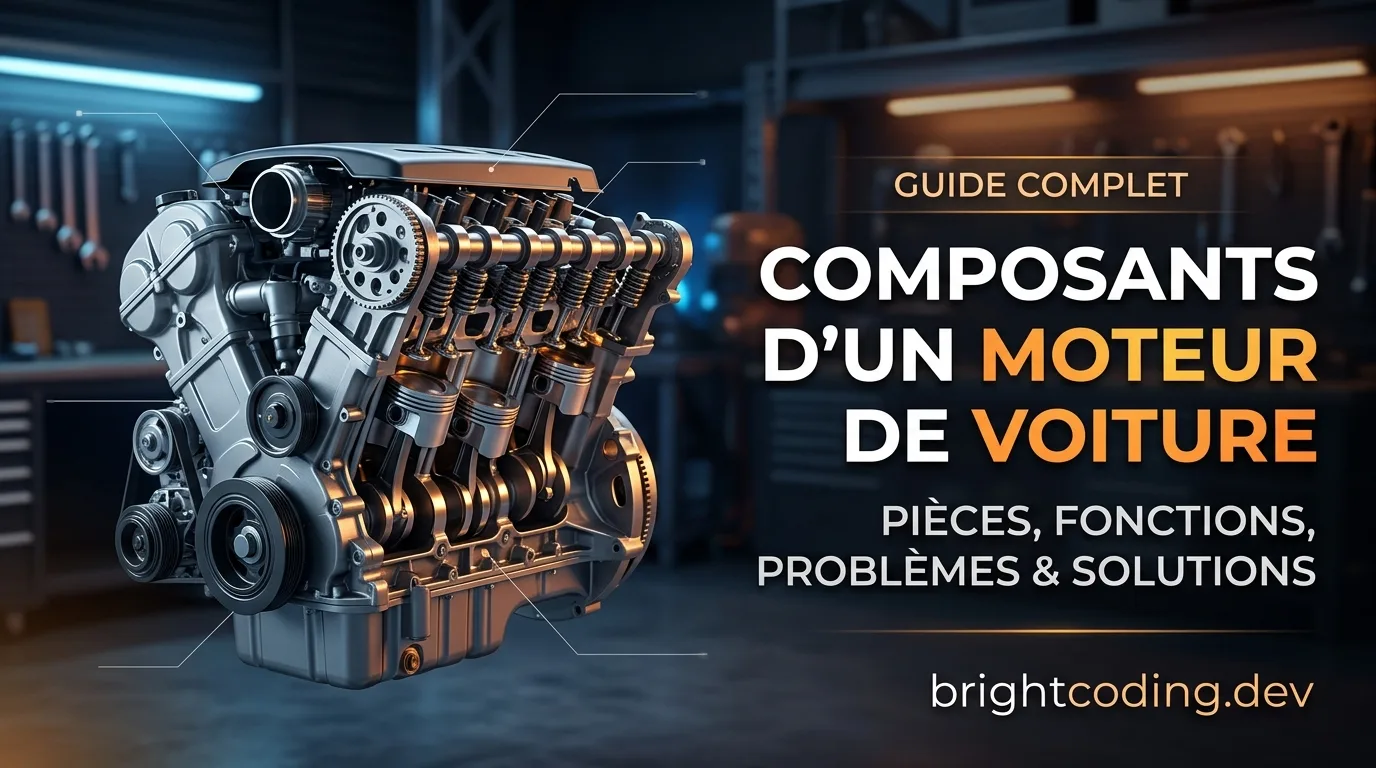
Composants d'un moteur de voiture : guide complet des pièces, fonctions, problèmes et solutions
Le moteur thermique est le cœur de la voiture. Il transforme le carburant en énergie mécanique grâce au cycle à quatre temps : admission, compression, combustion et échappement. Il est composé de nombreuses pièces essentielles comme le bloc moteur, la culasse, les pistons, le vilebrequin, les arbres à cames, les soupapes, ainsi que les systèmes d’admission, d’allumage, de lubrification et de refroidissement.
Read the article →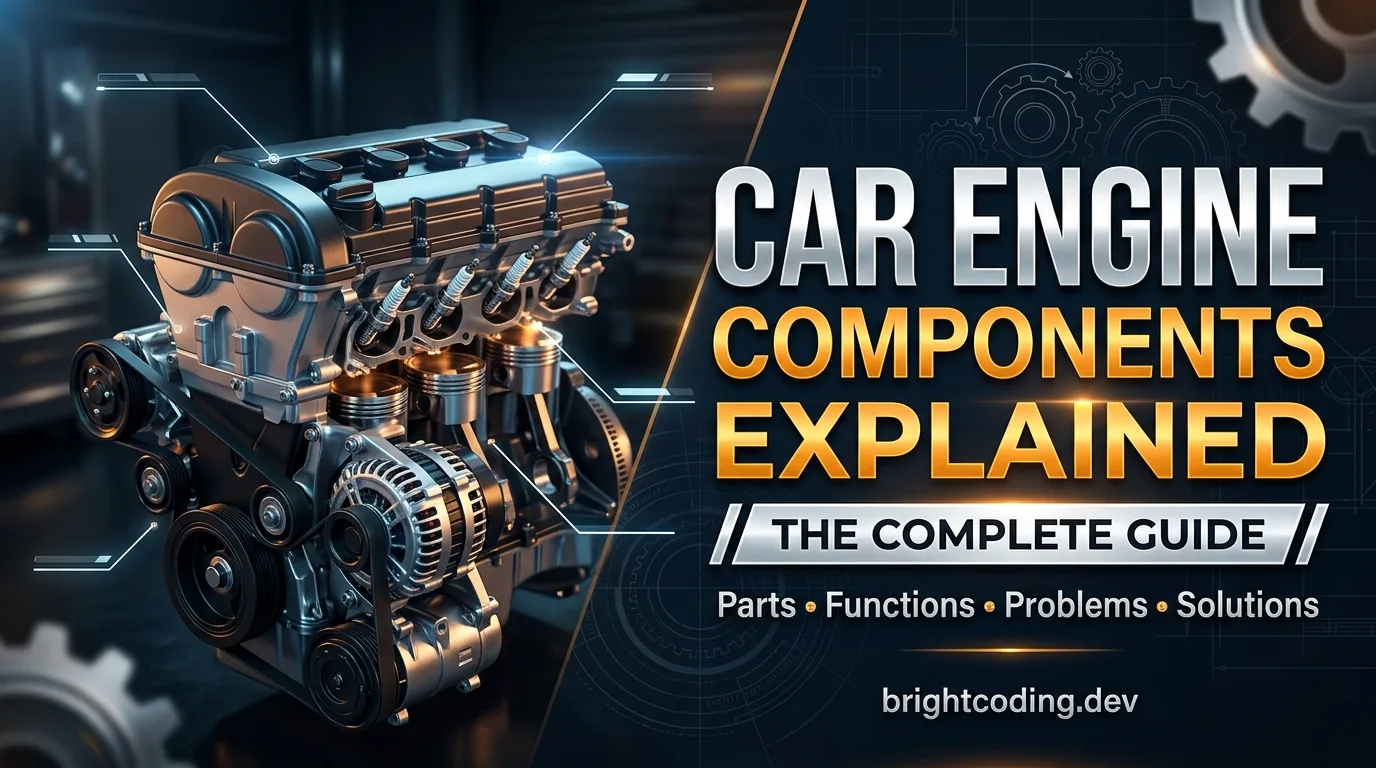
Car Engine Components Explained: The Complete Guide to Parts, Functions, Problems, and Solutions
Your car’s engine is a complex system of parts working together to turn fuel into motion. This complete guide breaks down every major car engine component from the engine block, cylinder head, and DOHC valvetrain to pistons, crankshaft, timing system, fuel delivery, ignition, exhaust, lubrication, and cooling. You’ll also learn common engine problems, warning signs you should never ignore, diagnostic steps, and maintenance tips to keep your engine running reliably
Read the article →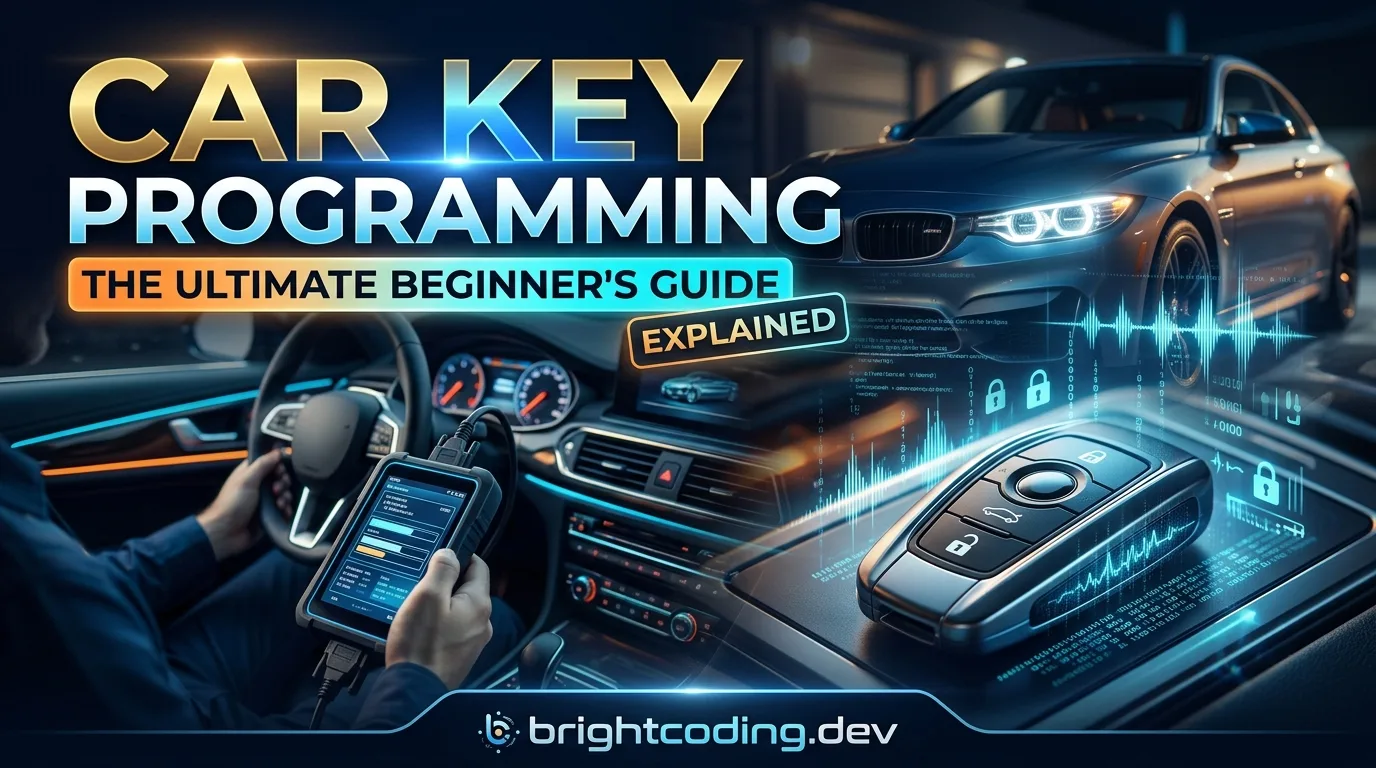
How Car Key Programming Works: The Complete Beginner's Guide
A car key used to be a piece of metal. Now it is a small computer that talks to your car, and when that conversation breaks, the car simply refuses to start. After reading this guide you will understand what key programming actually is, you will know when you can do it yourself with a scan tool and…
Read the article →