The Ultimate Guide to Engine Sensors: 40+ Types, Functions, and Failure Symptoms (Gasoline & Diesel)
Engine sensors control performance, fuel economy & emissions. Learn 40+ sensor types, failure symptoms, testing methods, and OBD-II codes for gas & diesel engines.
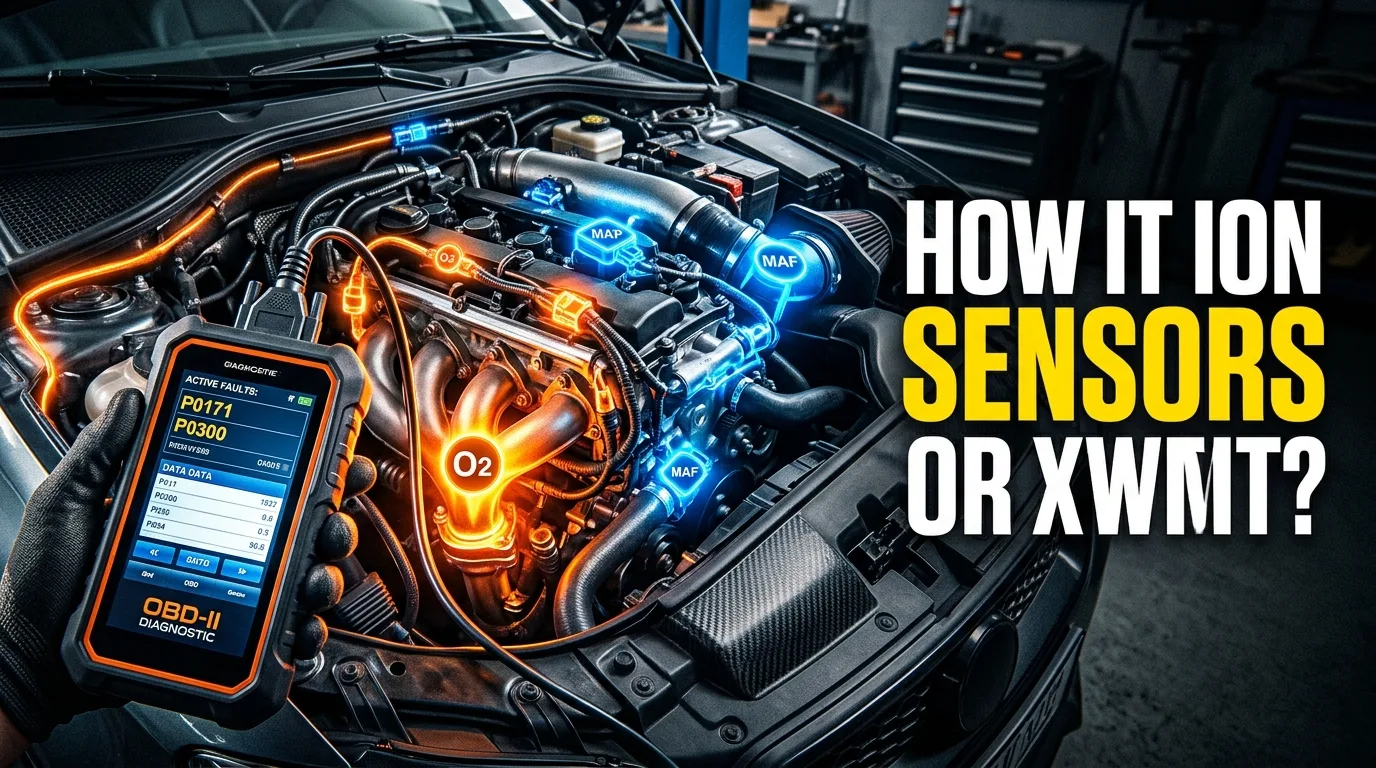
By Mohamed IDBRAHIM | Last Updated: 25/10/2026
Your car’s engine is a complex symphony of mechanical and electronic components. But who is the conductor? The Engine Control Unit (ECU) is the brain, but it's blind and deaf without its senses: the engine sensors.
These tiny, often overlooked components are the frontline soldiers in the battle for performance, fuel efficiency, and reliability. A single faulty sensor can turn a perfectly running engine into a stumbling, inefficient mess. This comprehensive guide will demystify the world of engine sensors, covering everything from the crankshaft position sensor to the latest NOx sensors in modern diesels.
Whether you're a seasoned mechanic, an automotive student, or a DIY enthusiast, this is your definitive resource for understanding, diagnosing, and troubleshooting the sensors that keep your car alive.
Table of Contents
- Introduction: The Nervous System of Your Engine
- How Do Engine Sensors Actually Work?
- The Critical Duo: Crankshaft & Camshaft Position Sensors
- Breathing Easy: Air Intake & Engine Load Sensors
- Keeping It Cool: Engine Temperature Sensors
- Feeling the Pressure: Engine Pressure Sensors
- Gasoline Engine Sensors: Sparking Performance
- Diesel Engine Sensors: Mastering the Torque
- Cleaning Up the Act: Exhaust & Emissions Sensors
- The Supporting Cast: Other Sensors Your ECU Relies On
- The Master Comparison Table: Sensor Cheat Sheet
- Common Symptoms of a Bad Engine Sensor
- DIY Diagnostics: How to Test Engine Sensors Like a Pro
- Decoding the Check Engine Light: Common OBD-II Codes
- Prevention & Maintenance: Keeping Your Sensors Healthy
- Frequently Asked Questions (FAQs)
- Conclusion: Diagnose, Don't Guess
1. Introduction: The Nervous System of Your Engine
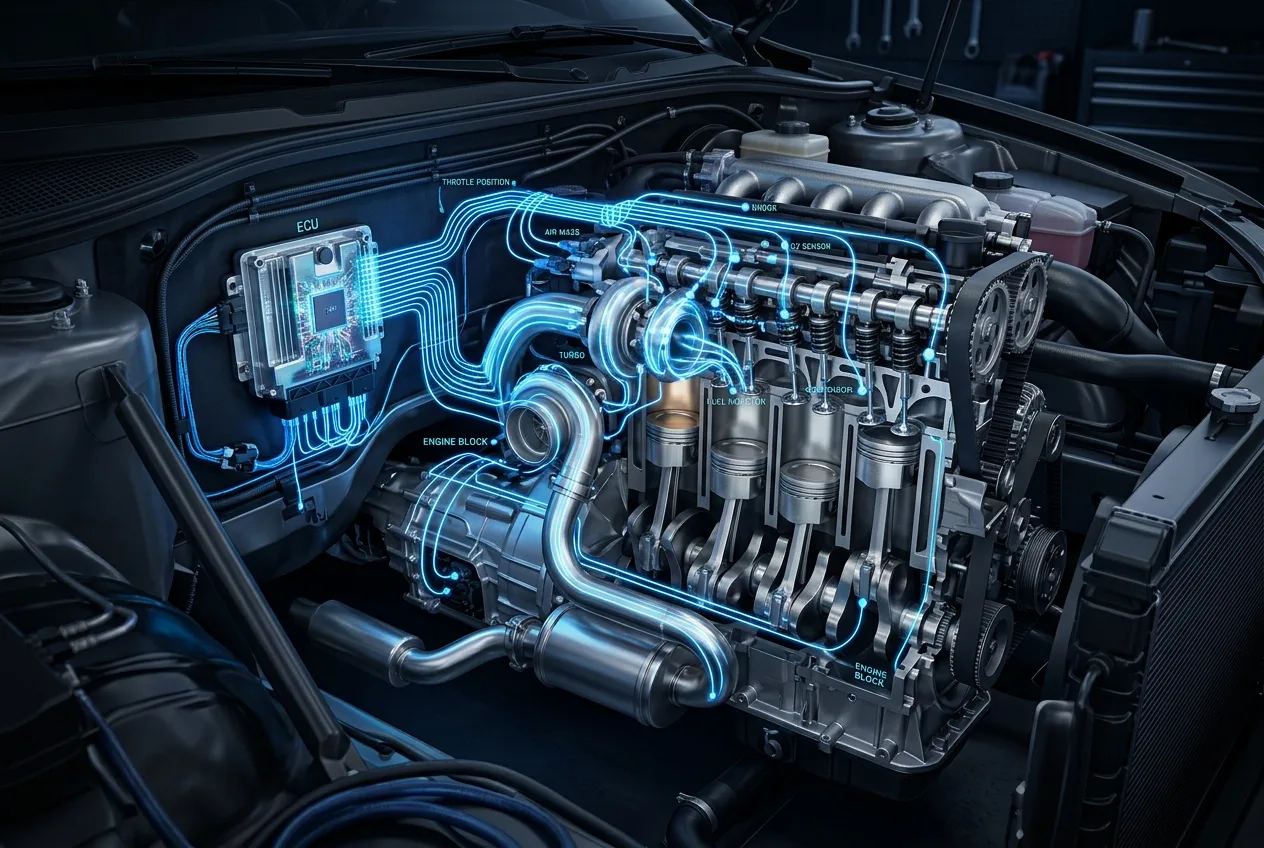
Engine sensors are the unsung heroes of modern automotive engineering. They are the sensory organs that constantly monitor everything from engine speed and air intake to exhaust gas composition and fuel pressure. This data is transmitted to the Engine Control Unit (ECU), which processes millions of calculations per second to manage fuel injection, ignition timing, and emissions control.
The difference between a smooth-running gasoline engine and a torque-heavy diesel engine lies in their unique sensor suites. While they share many core sensors, their specific management strategies demand specialized components. This guide will explore the main sensor categories for both, giving you a complete overview.
2. How Do Engine Sensors Actually Work?
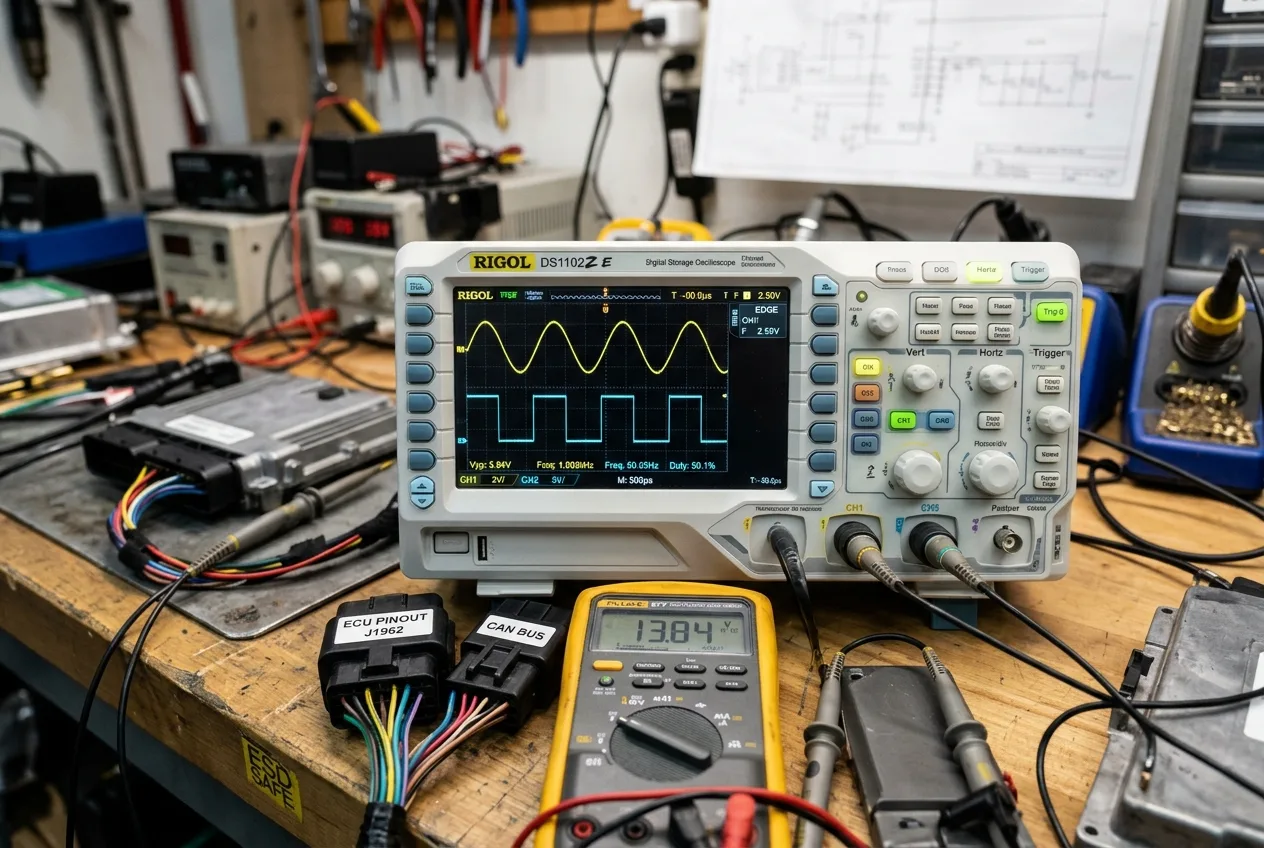
To diagnose a sensor, you must first understand its language. The ECU communicates with sensors using various signal types:
- Analog Signals: A continuous voltage that varies within a range (e.g., 0.5V to 4.5V). This is common for sensors like the Throttle Position Sensor (TPS) or a Mass Airflow Sensor (MAF).
- Digital Signals: A simple on/off (high/low) voltage signal.
- Frequency-Based Signals: A pulsing signal where the frequency (pulses per second) changes with the measured value. Hall-effect and inductive sensors, like the Crankshaft Position Sensor, use this.
- SENT (Single Edge Nibble Transmission): A modern, fast, digital protocol used for high-resolution sensors like those for pedal position or pressure.
Sensors can also be active (requiring a power supply, like a Hall-effect sensor) or passive (generating their own signal, like an inductive sensor). They use technologies like:
- Hall-Effect: Detects magnetic fields (used for position and speed).
- Inductive: Generates a voltage from a moving magnetic field (used for speed).
- Thermistor: Changes resistance with temperature.
- Piezoelectric: Generates a voltage when subjected to pressure or vibration (used for knock sensors).
3. The Critical Duo: Crankshaft & Camshaft Position Sensors
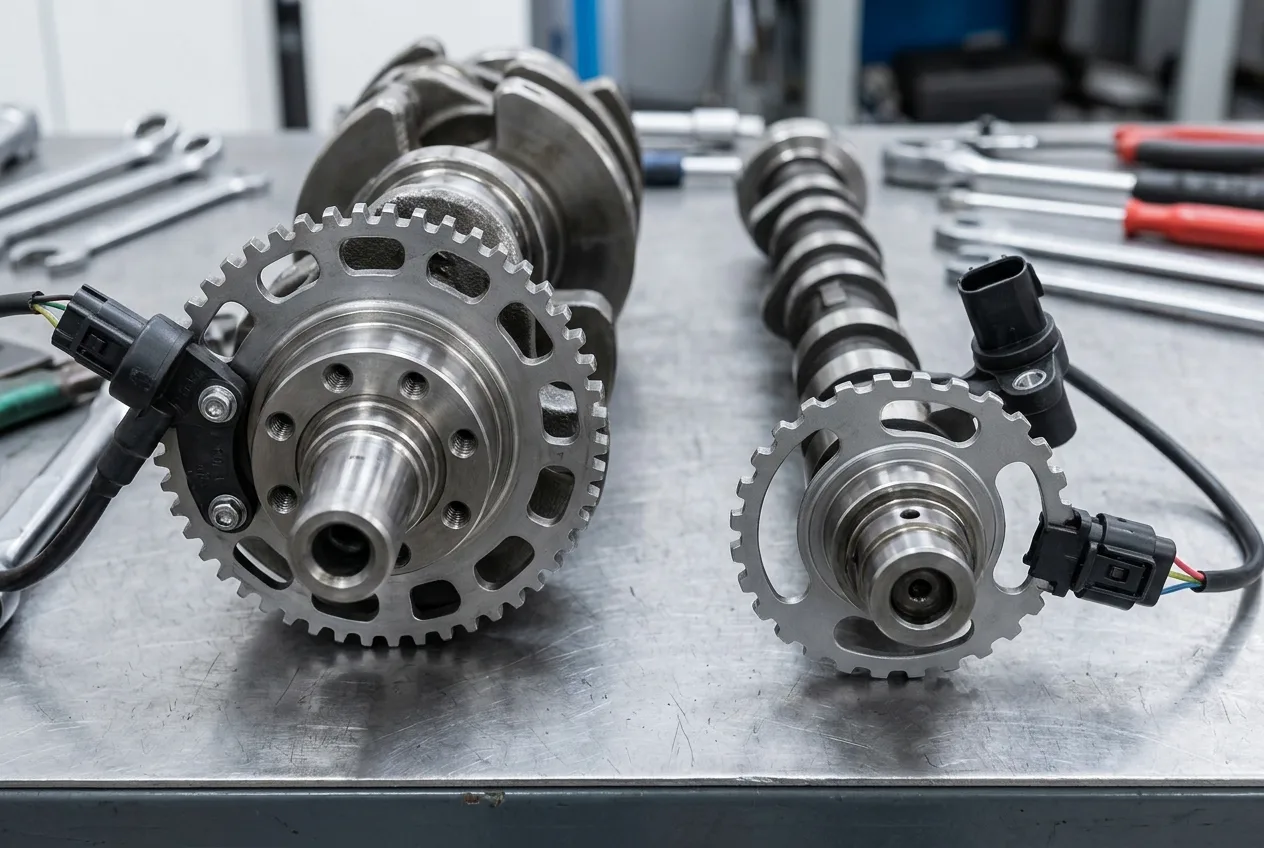
These are the most critical sensors for engine timing. If they fail, the engine will not start.
3.1 Crankshaft Position Sensor (CKP)
The CKP is the engine's heartbeat monitor. It measures the speed and position of the crankshaft, telling the ECU exactly when to fire the ignition and inject fuel.
- Location: Usually near the main pulley (harmonic balancer) or on the side of the engine block, reading a toothed reluctor wheel.
- Symptoms of Failure: No-start condition (most common), engine stalling, rough running, misfires.
- Testing: Check for AC voltage output while cranking (inductive type) or a DC voltage square wave (Hall-effect type). Look for physical damage on the sensor tip or a dirty reluctor wheel.
3.2 Camshaft Position Sensor (CMP)
The CMP verifies the position of the camshaft(s), ensuring the ECU knows which cylinder is on its compression stroke for sequential fuel injection and variable valve timing.
- Symptoms of Failure: Long cranking times before start, misfires, poor fuel economy, and P0340/P0345 codes. Often, the car will still start, but the ECU may revert to a "batch-fire" injection mode.
4. Breathing Easy: Air Intake & Engine Load Sensors
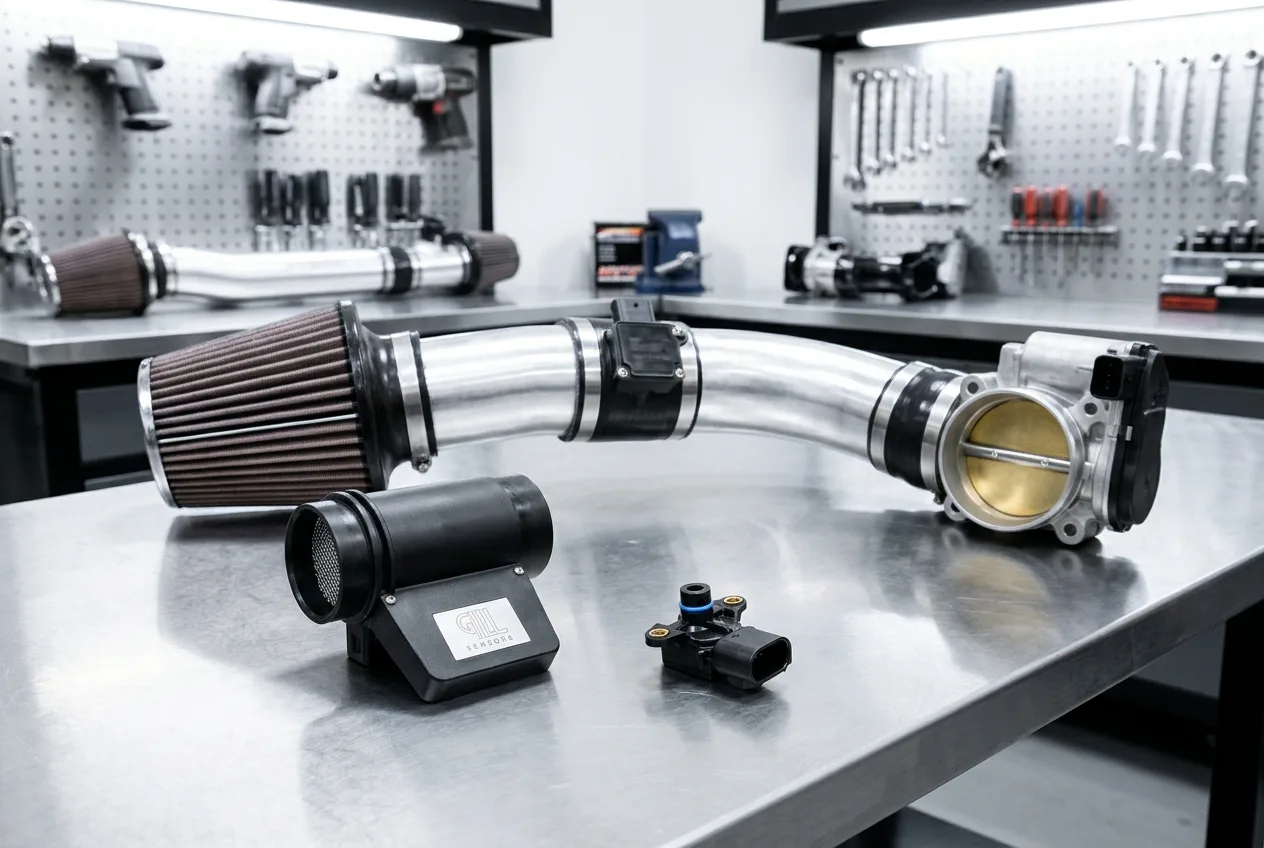
The ECU needs to know exactly how much air is entering the engine to calculate the correct amount of fuel.
- Mass Airflow Sensor (MAF): Measures the mass of air entering the engine. A dirty or faulty MAF is a leading cause of poor performance and P0171 (Lean) or P0172 (Rich) codes. Symptoms: Hesitation, rough idle, black smoke (if running rich).
- Manifold Absolute Pressure Sensor (MAP): Measures the pressure in the intake manifold. It's a key load sensor, especially on cars without a MAF. MAF vs MAP? A MAF directly measures airflow, while a MAP infers it from pressure and temperature. Many modern cars use both.
- Intake Air Temperature Sensor (IAT): Often built into the MAF. It measures the temperature of the incoming air, which affects its density.
- Throttle Position Sensor (TPS): Tells the ECU how far the throttle plate is open. A faulty TPS can cause erratic idle, hesitation, and a P0120-series code.
5. Keeping It Cool: Engine Temperature Sensors
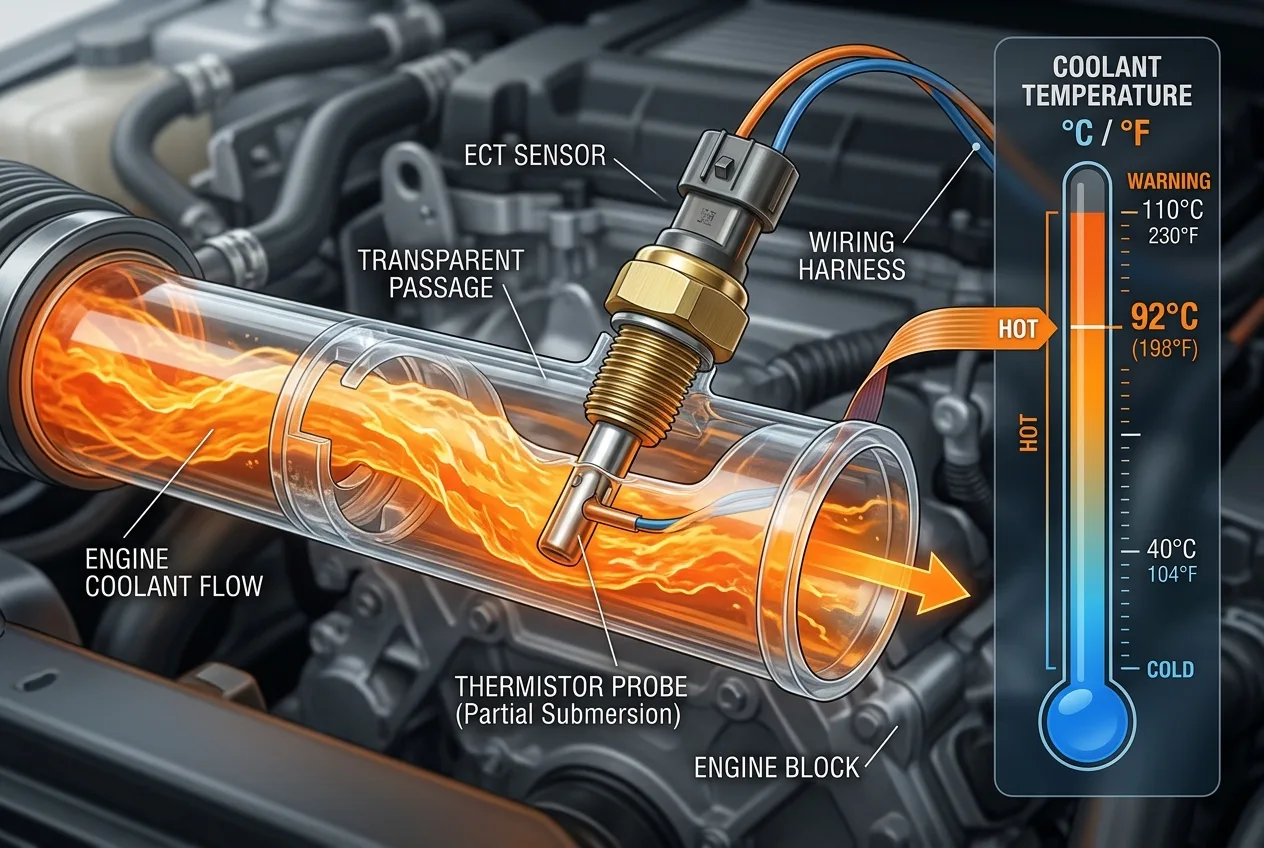
Overheating is an engine killer, and these sensors are the first line of defense.
- Engine Coolant Temperature Sensor (ECT): The most important temperature sensor. It tells the ECU the engine's operating temperature to adjust fuel enrichment and control the cooling fan. Symptoms of failure: Hard starting when cold, poor fuel economy, inaccurate temperature gauge, and P0115-P0118 codes.
- Cylinder Head Temperature Sensor (CHT): Used on some engines (often Fords) instead of an ECT. It provides a more direct and faster reading of cylinder head temperature.
- Exhaust Gas Temperature Sensor (EGT): Crucial for diesel engines to protect the turbocharger and manage DPF regenerations.
6. Feeling the Pressure: Engine Pressure Sensors
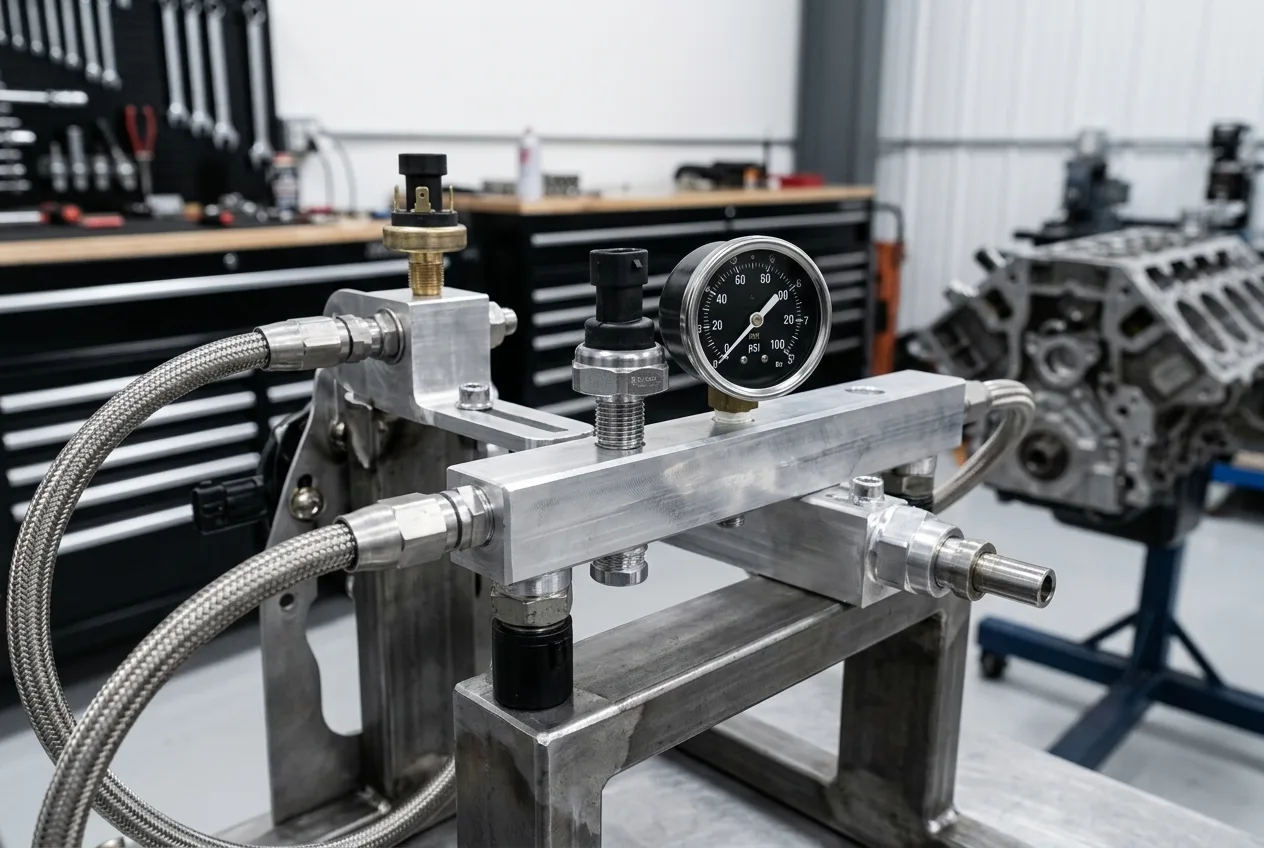
These sensors monitor vital fluid and gas pressures.
- Engine Oil Pressure Sensor: Warns of low oil pressure, a catastrophic engine failure risk. Don't confuse it with an oil pressure switch, which is just an on/off warning light.
- Fuel Rail Pressure Sensor: Highly important on both GDI and Common Rail diesel engines. It provides closed-loop feedback to the fuel pump to maintain precise injection pressure.
- Diesel Particulate Filter (DPF) Differential Pressure Sensor: Measures the pressure difference before and after the DPF to determine if it's clogged and needs regeneration.
7. Gasoline Engine-Specific Sensors
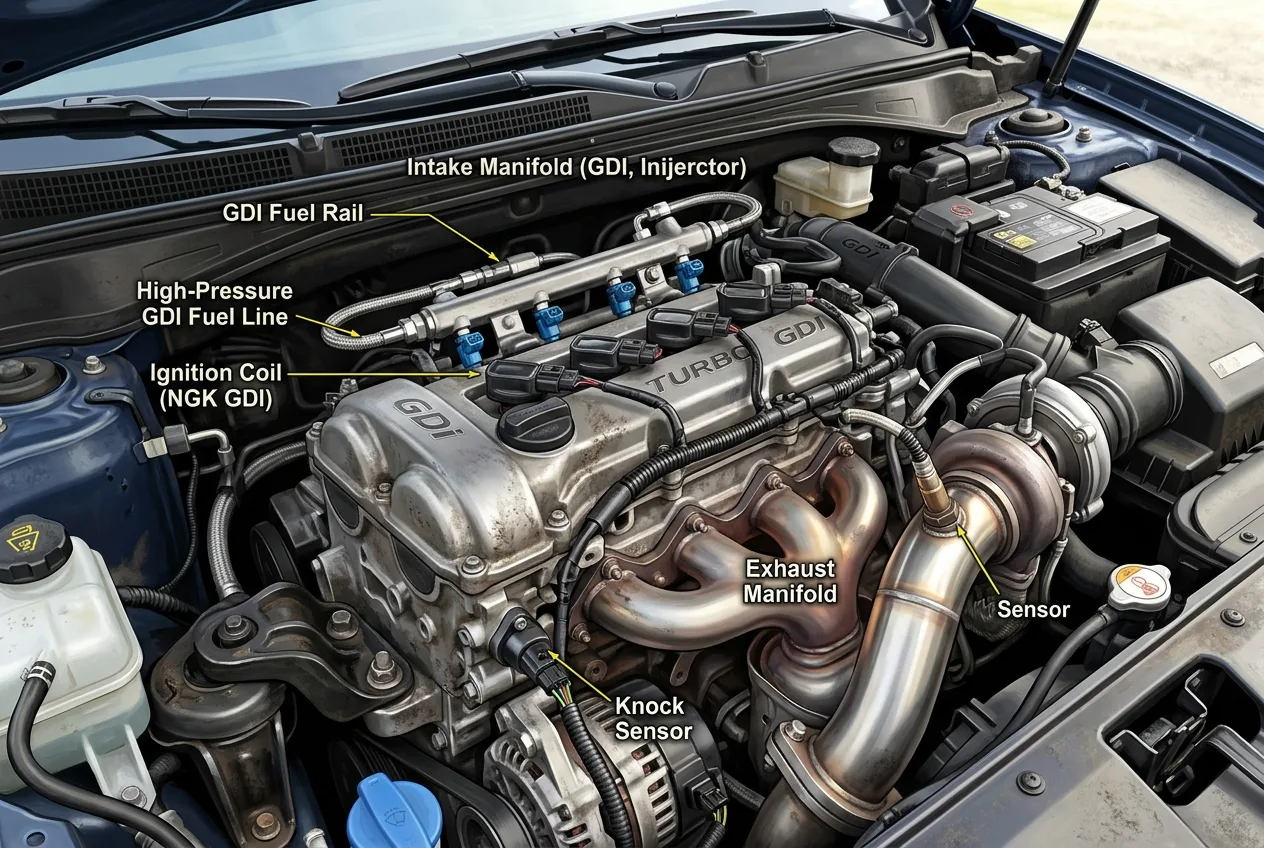
- Knock Sensor: A piezoelectric sensor that "listens" for engine knock (detonation). The ECU then retards ignition timing to protect the engine. Symptoms: Reduced power, poor fuel economy, and a P0325 code.
- Oxygen Sensor (O2) / Air-Fuel Ratio (AFR) Sensor: Measures oxygen in the exhaust. The pre-cat sensor is crucial for fuel trim (adjusting the air-fuel mixture), while the post-cat sensor monitors catalytic converter efficiency. A bad O2 sensor is a primary cause of P0420 (Catalyst Efficiency) codes and poor fuel economy.
- Evaporative Emissions (EVAP) System Pressure Sensor: Detects leaks in the fuel system to prevent fuel vapors from escaping into the atmosphere.
8. Diesel Engine-Specific Sensors
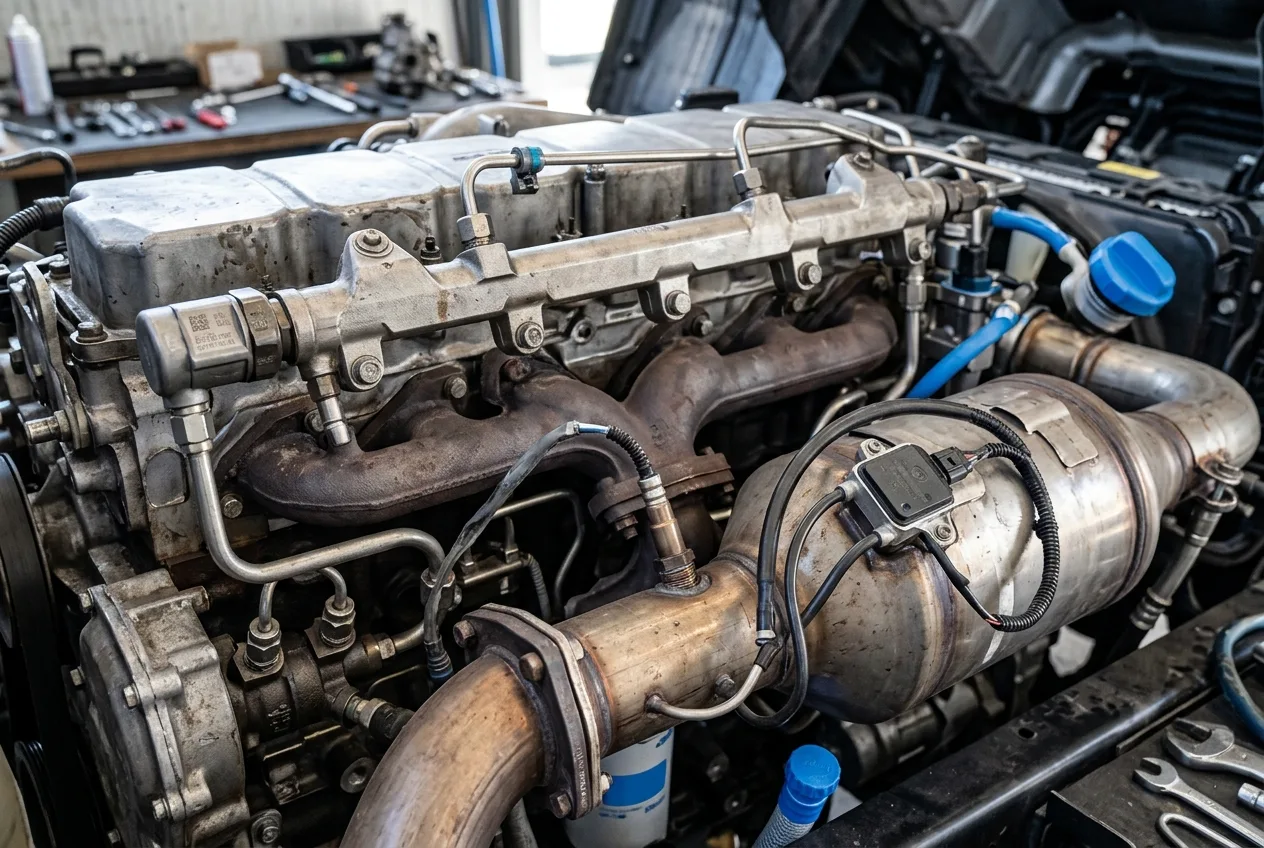
Diesel engines rely on an even more complex sensor network to manage immense pressure and stringent emissions.
- Common Rail Fuel Pressure Sensor: The heart of the diesel injection system. It provides real-time pressure data (up to 2,500+ bar) to the ECU.
- Water-in-Fuel Sensor: Detects water in the fuel filter, protecting the high-pressure fuel pump and injectors from catastrophic damage.
- NOx (Nitrogen Oxide) Sensors: Located before and after the SCR (Selective Catalytic Reduction) system. They are essential for monitoring and controlling AdBlue/DEF injection to reduce smog-forming NOx emissions. A faulty NOx sensor can trigger limp mode.
- Particulate Matter (PM) Sensor: A newer sensor that directly measures soot levels in the exhaust, providing more precise DPF monitoring.
9. Cleaning Up the Act: Exhaust & Emissions Sensors
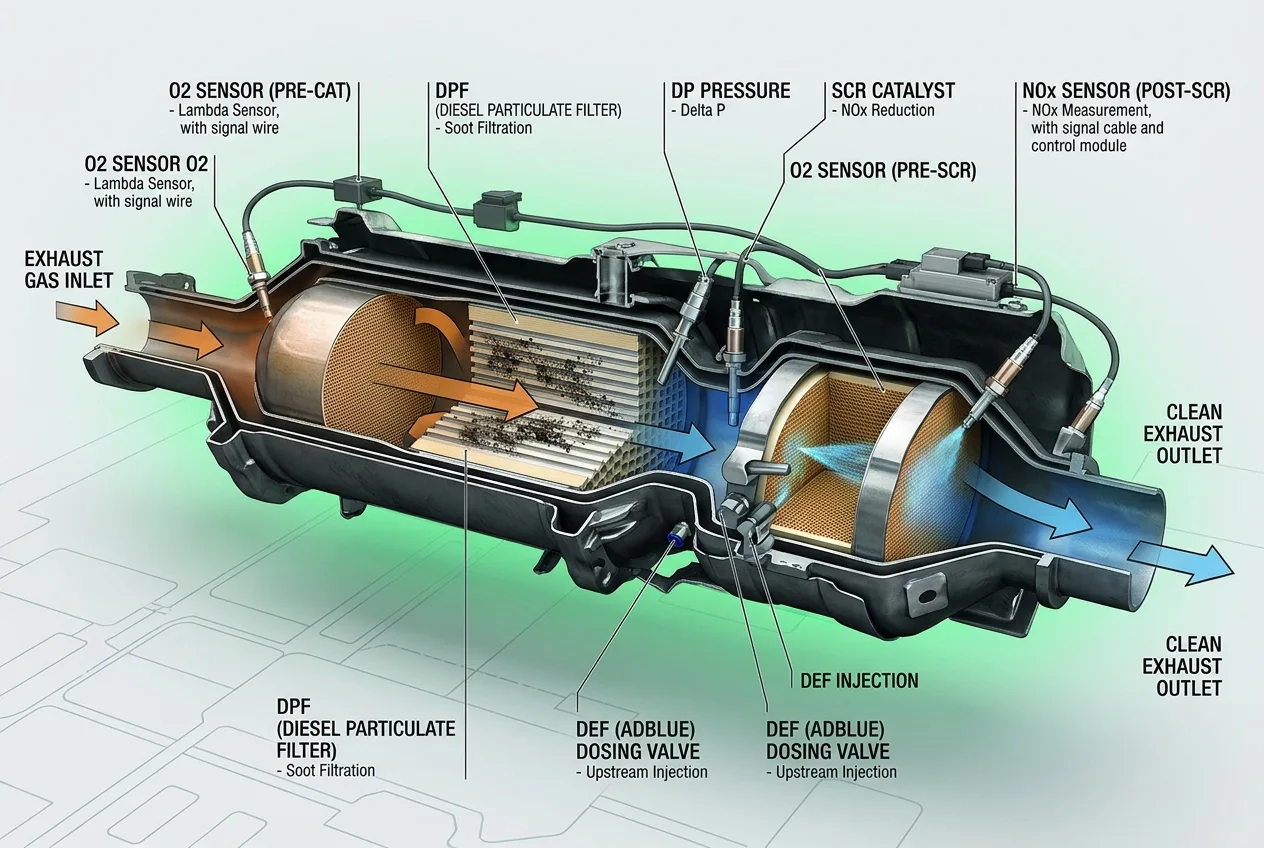
This category is the engine's environmental conscience. It includes the O2, NOx, EGT, and DPF pressure sensors mentioned above, all working in concert to ensure the vehicle meets emissions standards. The EGR (Exhaust Gas Recirculation) Position Sensor is also key here, monitoring the EGR valve to reduce NOx formation.
10. The Supporting Cast: Other Sensors Your ECU Relies On
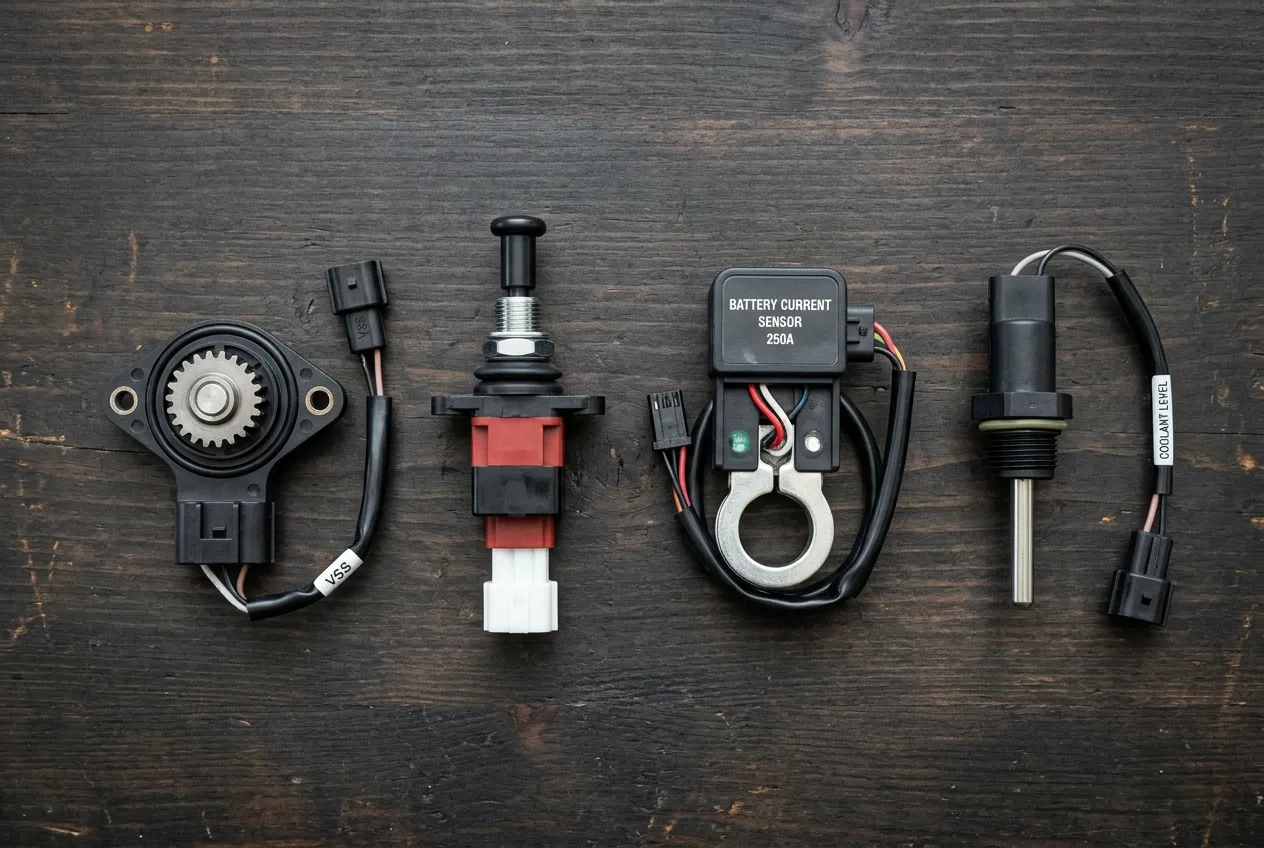
While not directly part of the combustion process, these sensors provide vital data:
- Vehicle Speed Sensor (VSS): Used for the speedometer, transmission shifting, and cruise control.
- Battery Voltage/Current Sensor: Monitors the charging system and enables smart alternator control for fuel savings.
- Brake/Clutch Pedal Switches: Tell the ECU when to disengage cruise control or enable push-button start.
11. The Master Comparison Table: Sensor Cheat Sheet
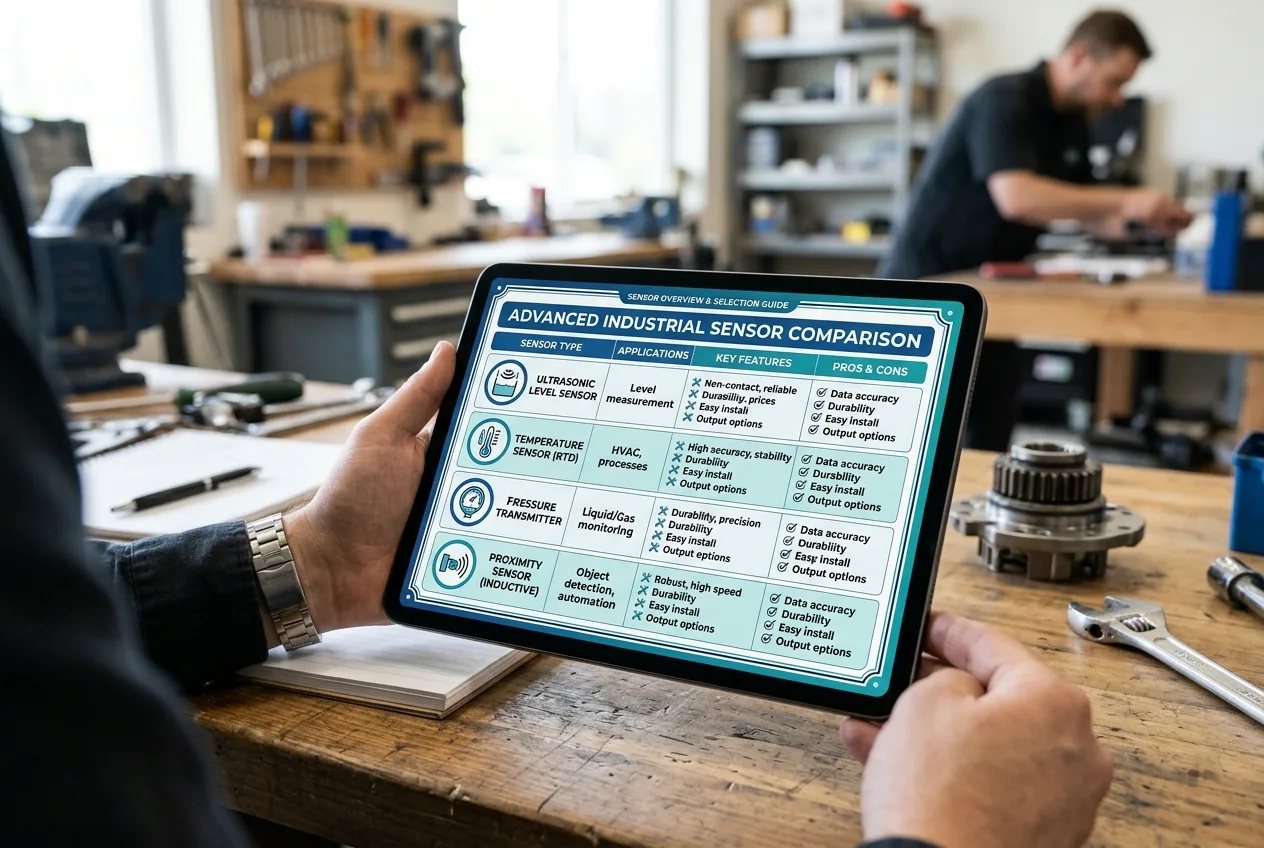
| Sensor Name & Abbreviation | Main Function | Gasoline/Diesel/Both | Typical Location | Common Failure Symptoms | Relevant OBD-II Codes |
|---|---|---|---|---|---|
| Crankshaft Position (CKP) | Measures engine speed & position | Both | Near crank pulley or block | No-start, stalling, misfire | P0335, P0336 |
| Camshaft Position (CMP) | Identifies cylinder 1 for timing | Both | Near camshaft(s) | Long crank, misfire, poor MPG | P0340, P0345 |
| Mass Air Flow (MAF) | Measures mass of air entering engine | Both | Intake tube after air filter | Hesitation, rich/lean codes | P0100-P0104 |
| Manifold Abs. Pressure (MAP) | Measures intake manifold pressure | Both | On intake manifold | Rough idle, poor MPG, boost issues | P0105-P0109 |
| Engine Coolant Temp (ECT) | Measures engine coolant temperature | Both | Coolant passage near thermostat | Hard cold start, fan always on | P0115-P0118 |
| Oxygen (O2) / AFR | Measures oxygen in exhaust | Gasoline | Before and after catalytic converter | Poor MPG, failed emissions, P0420 | P0130-P0167 |
| Knock Sensor | Detects engine detonation (knock) | Gasoline | Engine block | Reduced power, poor MPG | P0325 |
| Fuel Rail Pressure | Measures fuel pressure in the rail | Both (GDI/Common Rail) | On the fuel rail | No-start, limp mode, power loss | P0190-P0194 |
| DPF Differential Pressure | Measures DPF clogging level | Diesel | Pipes before/after DPF | Frequent regens, limp mode | P2002, P2452 |
| NOx Sensor | Measures nitrogen oxide levels | Diesel | Exhaust, before/after SCR | Limp mode, failed emissions, poor DEF usage | P2200-series |
12. Common Symptoms of a Faulty Engine Sensor
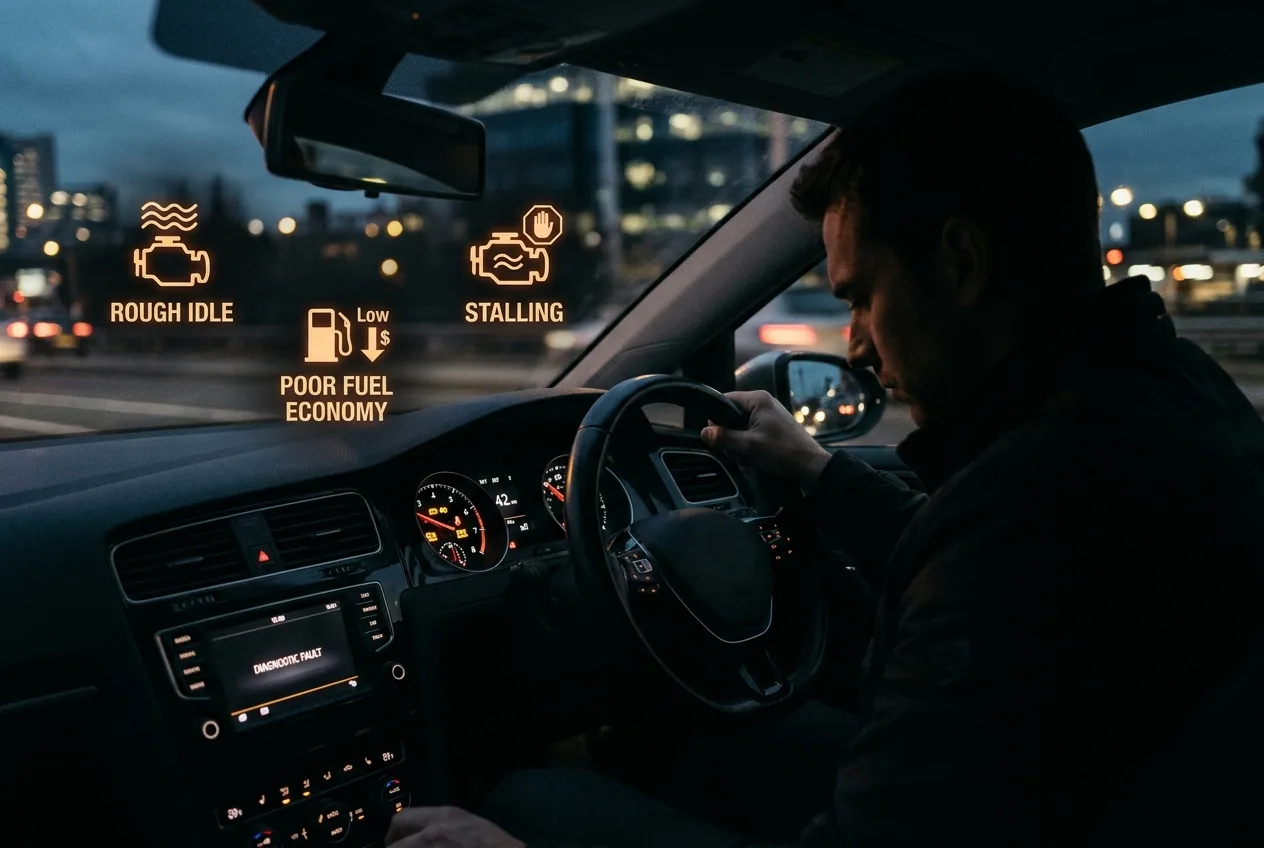
A bad sensor can manifest in many ways. Here’s what to look for:
- Check Engine Light (CEL): The most obvious sign. Always scan for codes first.
- Hard Starting or No-Start: Often points to a faulty CKP or fuel pressure sensor.
- Engine Stalling: A classic symptom of a failing CKP or MAF sensor.
- Rough Idle and Misfires: Can be caused by faulty O2, MAF, MAP, or CMP sensors.
- Loss of Power & Limp Mode: A protective state triggered by critical faults like underboost (P0299) or a faulty NOx sensor.
- Poor Fuel Economy: A faulty O2 sensor is a primary culprit, as it throws off fuel trims.
13. DIY Diagnostics: How to Test Engine Sensors Like a Pro
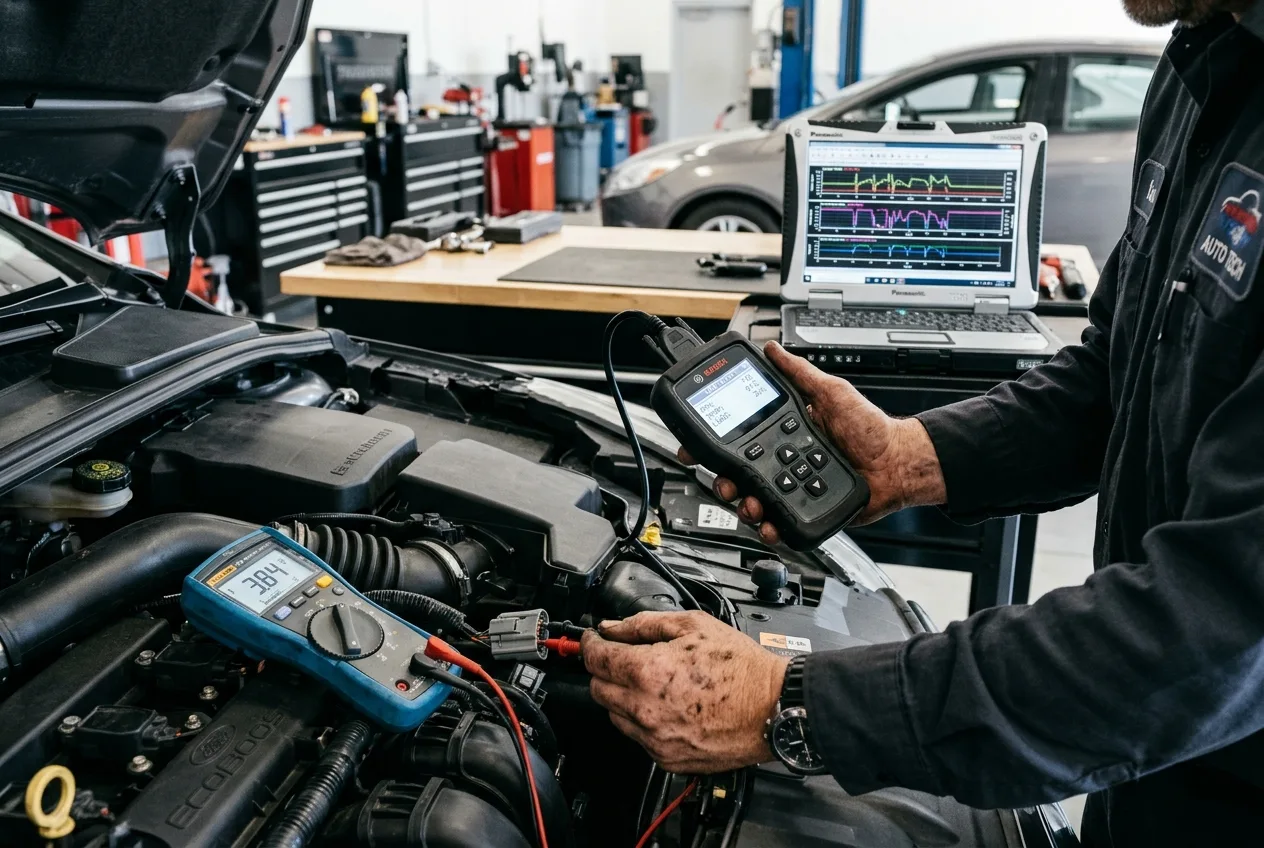
Don't just throw parts at a problem. Diagnose it.
- OBD-II Scanner: Your first tool. Read Diagnostic Trouble Codes (DTCs) , view live data (e.g., is the ECT reading a realistic temperature?), and check freeze-frame data to see conditions when the fault occurred.
- Digital Multimeter (DMM): Use it to check for a 5V reference voltage, a good ground, and signal voltage. You can also measure the resistance of thermistors (ECT, IAT) and compare it to a temperature-resistance chart.
- Oscilloscope: The professional's choice for signal analysis. It's invaluable for viewing the waveform of a CKP or CMP sensor to check for a missing tooth or an erratic signal.
- Visual Inspection: Check for chafed wires, corroded connectors, and oil-contaminated sensors.
14. Decoding the Check Engine Light: Common OBD-II Codes
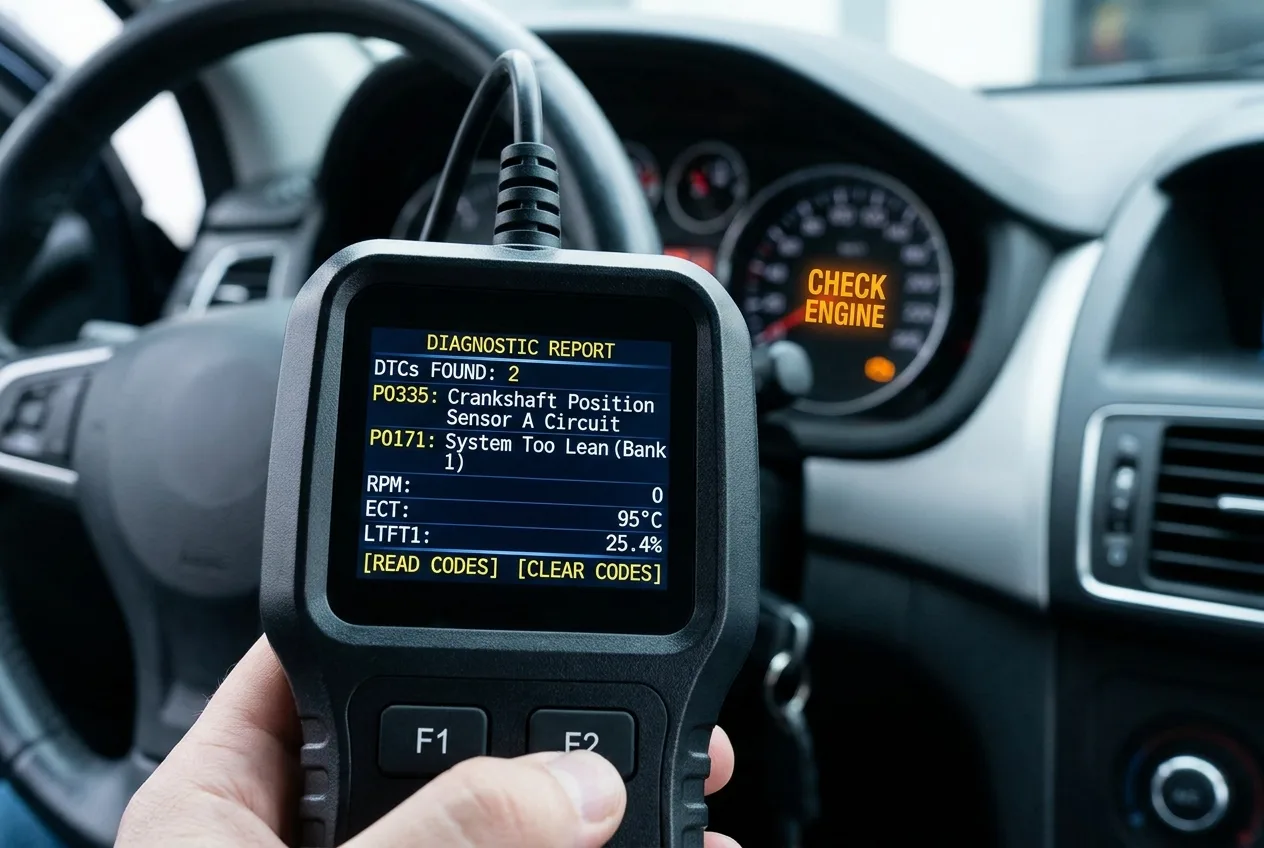
| Code Range | System |
|---|---|
| P0100–P0104 | MAF Circuit Malfunction |
| P0115–P0119 | Engine Coolant Temperature Circuit |
| P0130–P0167 | Oxygen Sensor & Heater Circuits |
| P0171–P0175 | Fuel System Too Lean or Too Rich |
| P0335–P0349 | Crankshaft/Camshaft Position Sensor Circuits |
| P0400–P0409 | Exhaust Gas Recirculation (EGR) Flow |
| P2002 / P2452 | Diesel Particulate Filter (DPF) Efficiency/Clogging |
| P2200-series | NOx Sensor Circuit Faults |
Disclaimer: Codes and interpretations vary by manufacturer. Always consult the factory service manual for your specific vehicle.
15. Prevention & Maintenance: Keeping Your Sensors Healthy
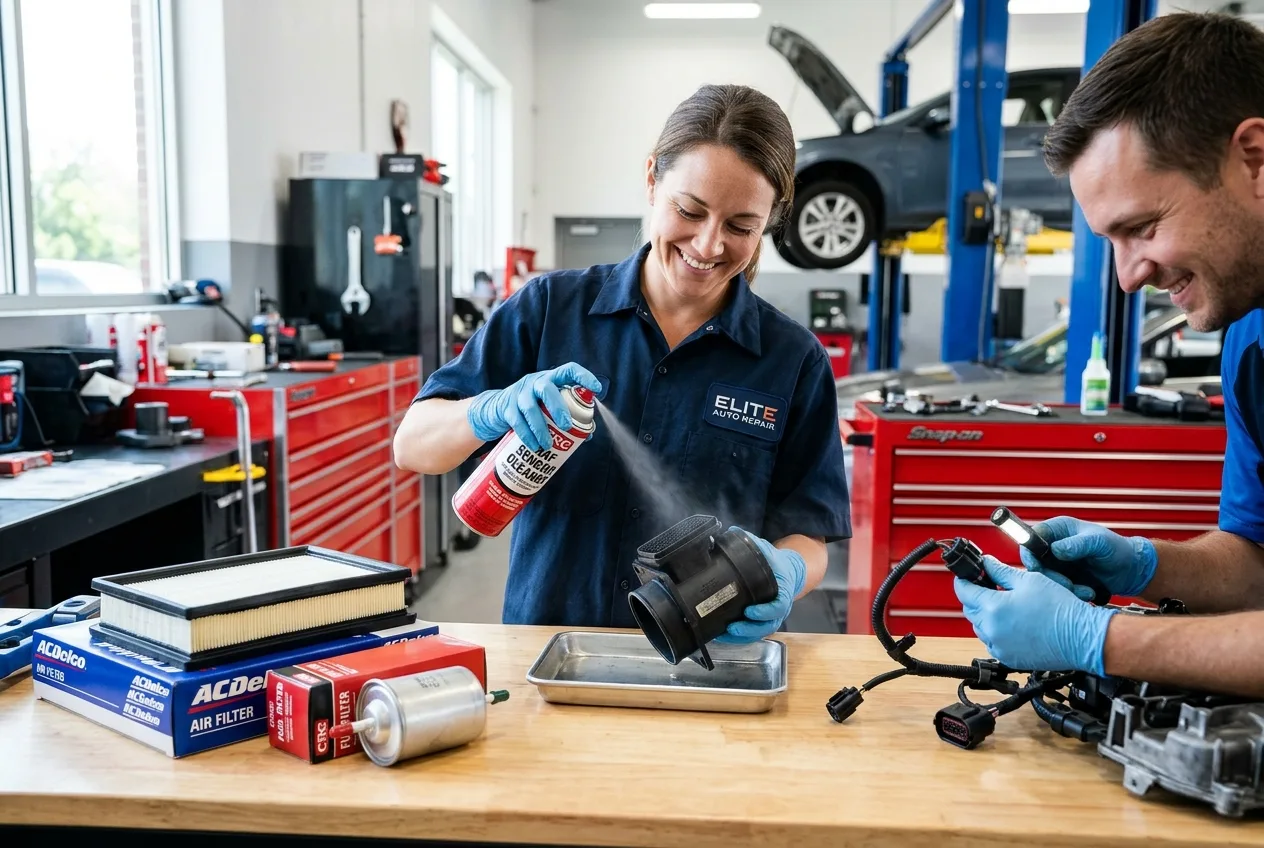
- Keep it Clean: Regularly replace air and fuel filters. A clean MAF is a happy MAF.
- Inspect Connectors: Look for cracked plastic, corrosion, or pushed-out pins.
- Avoid Harsh Chemicals: Don't spray electrical cleaner into a MAF sensor; use a dedicated MAF cleaner.
- Use Quality Parts: A cheap, aftermarket sensor can cause more problems than it solves. Stick with OEM or reputable brands.
16. Frequently Asked Questions (FAQs)
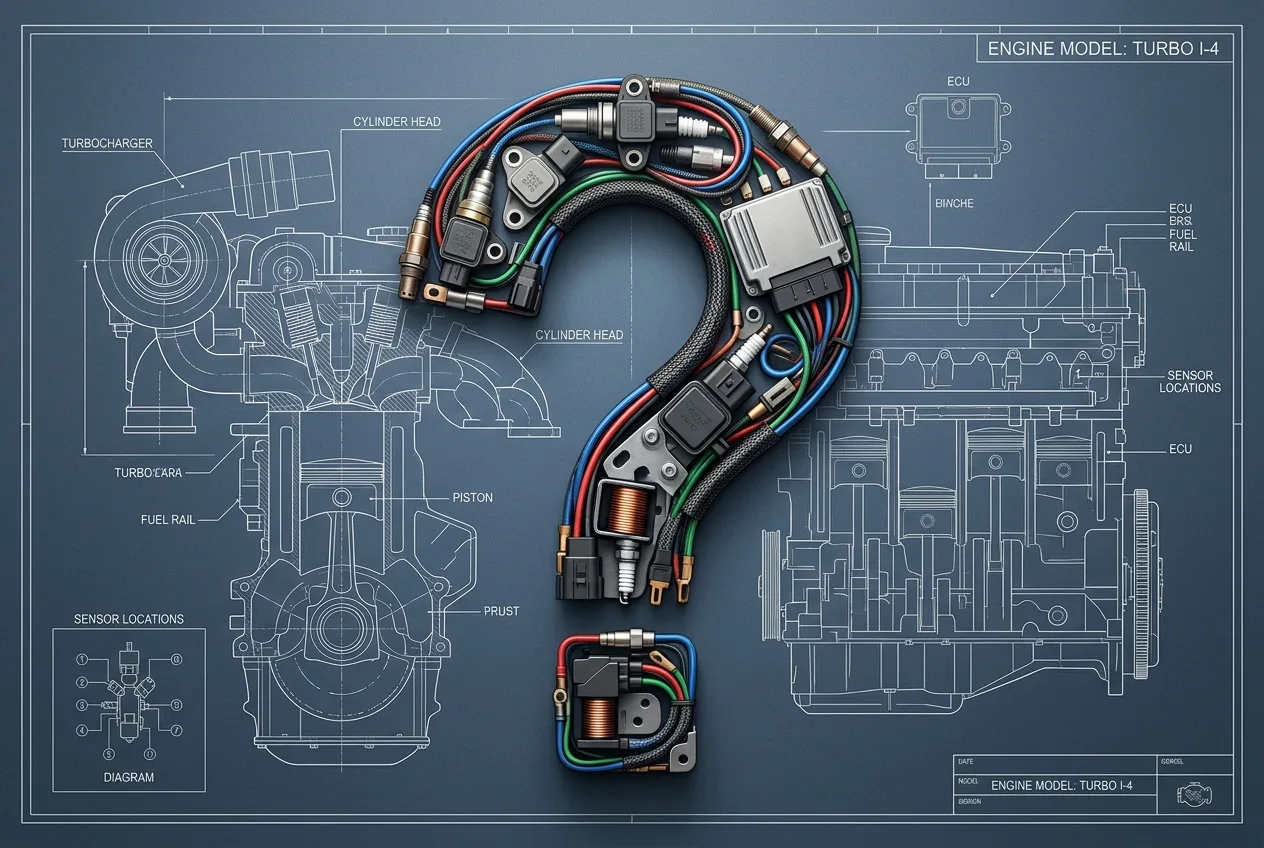
Q: How many sensors does a modern car engine have? A: A modern gasoline engine can have 40-60+ sensors, while a complex diesel engine can easily have over 70.
Q: Can a faulty sensor prevent an engine from starting? A: Absolutely. A faulty Crankshaft Position Sensor (CKP) is the most common cause of a no-start condition, as the ECU has no idea when to fire the spark plugs or injectors.
Q: What's the difference between a MAF and a MAP sensor? A: A MAF sensor directly measures the mass of air entering the engine. A MAP sensor measures the pressure in the intake manifold, which the ECU uses to calculate the air mass. Many modern engines use both for optimal accuracy.
Q: Can I drive with a faulty engine sensor? A: It depends on the sensor. A faulty O2 sensor might just cause poor fuel economy, but a faulty CKP sensor will leave you stranded. If the Check Engine Light is flashing, it indicates a severe misfire that can damage the catalytic converter—pull over immediately.
17. Conclusion: Diagnose, Don't Guess
Engine sensors are the key to understanding your vehicle's health. They provide the crucial data the ECU needs to run the engine efficiently and reliably. By understanding what these sensors do, recognizing the symptoms of failure, and using the right diagnostic tools, you can save time, money, and frustration. Remember, a systematic diagnostic approach is always better than replacing parts based on a guess. Always consult a wiring diagram, use a reliable scan tool, and verify your repair.
Related articles
Stop Throwing Parts at Your Car: The 4-Step Sensor Diagnostic Method That Actually Works
A fault code points to a circuit or behavior—not automatically a failed sensor. This practical guide covers the 8 engine sensors every DIYer and technician should understand, plus the 4-step test process that prevents expensive parts-swapping and misdiagnosis.
Read the article →
8 Warning Signs Your Gasoline Engine Is About to Fail
Most engine failures don't happen out of nowhere. They send postcards first. A rattle here, a puff of smoke there, a check engine light you decide to ignore until inspection time.
Read the article →
How to Reduce Diesel Fuel Consumption: 10 Practical Tips
Diesel isn't cheap, and if you run a van, a pickup or a small fleet, fuel is probably your single biggest running cost. The good news: most diesel vehicles are burning more than they need to, and a lot of that waste is fixable in an afternoon.
Read the article →
10 Hidden Features in Your Car That Dealerships Rarely Explain
Most of the useful stuff in your car is buried in the owner's manual, and nobody reads the owner's manual. Not the salesperson, not the service advisor, and probably not you. That is fine. I am going to walk you through the features that actually change how you live with a car, the ones that make y…
Read the article →
Diesel Engine: 10 Mistakes Drivers Make Without Knowing It
Diesel engines are tough, and that toughness fools people. A petrol car will often complain loudly when you treat it badly. A diesel just keeps going, quietly accumulating damage until the day it doesn't. That gap between "running fine" and "facing a four-figure repair bill" is where most owners lo…
Read the article →
10 Signs Your Petrol or Diesel Engine Is Starting to Fail
Your engine rarely dies without warning. It whispers first, then talks, then screams. Most drivers only start listening at the screaming stage, which is when the repair bill has already tripled.
Read the article →