How Car Key Programming Works: The Complete Beginner's Guide
A car key used to be a piece of metal. Now it is a small computer that talks to your car, and when that conversation breaks, the car simply refuses to start. After reading this guide you will understand what key programming actually is, you will know when you can do it yourself with a scan tool and…
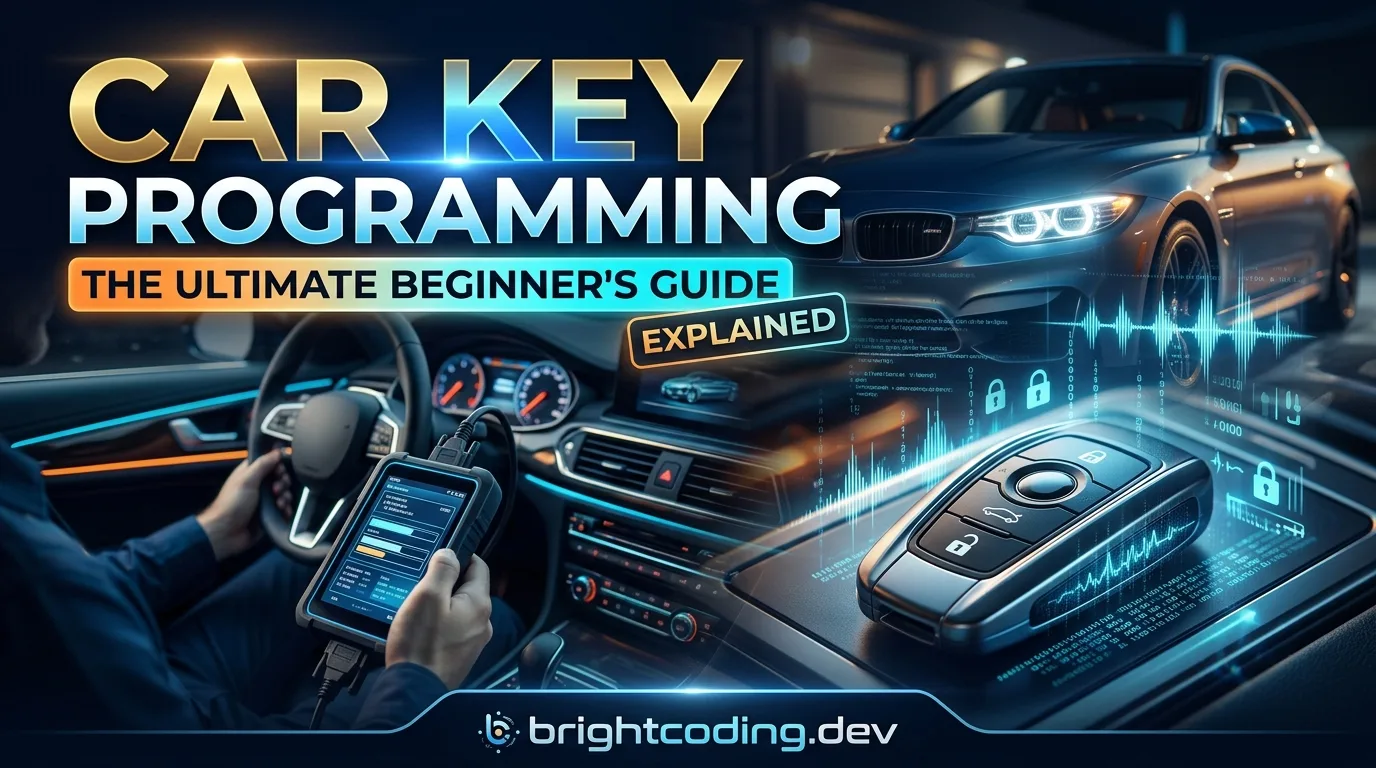
A car key used to be a piece of metal. Now it is a small computer that talks to your car, and when that conversation breaks, the car simply refuses to start. After reading this guide you will understand what key programming actually is, you will know when you can do it yourself with a scan tool and when you genuinely need a locksmith or dealer, and you will be able to walk through the process step by step. Set aside an hour for the reading and the prep. The actual programming, if you go the DIY route, usually takes 15 to 45 minutes once you have the right tools and a charged battery.
What you need before you start
- Your vehicle's owner's manual. This is your source of truth for anything specific to your car, including whether DIY programming is even possible.
- A working, already-programmed key for the car. If you have zero functioning keys, the situation is different and usually needs a locksmith.
- A replacement key or fob that matches your car's frequency and chip type. Buy the correct one, not a "universal" that claims to fit everything.
- A scan tool or programming device that explicitly supports your make, model and year. Check the supported vehicle list before you buy anything.
- Two people, ideally. One to operate the tool, one to sit in the car and watch the dash.
- A battery charger or jumper pack. Programming with a weak battery is the number one cause of a bricked key.
- The vehicle's PIN or security code, if your car requires one. Your dealer can supply this, sometimes for a fee.
Step 1: Confirm what kind of key system you actually have
This matters because the method changes completely depending on the answer.
There are three broad types. A plain metal key with no chip, found on older cars, needs no programming at all, you just cut it. A transponder key has a chip in the head that the immobilizer reads, so it needs programming. A smart key or push-to-start fob adds remote functions and proximity, and it needs programming plus often a pairing step for the buttons.
Tip: sit in the car and look at the ignition. A physical slot with a plain key usually means transponder. A start button means smart key. If you are unsure, the owner's manual will say "immobilizer" or "passive entry" somewhere in the security section.
Step 2: Decide whether this is a DIY job or a professional job
Most people skip this and regret it.
As a rough guide, many older domestic and Japanese vehicles from the 2000s and early 2010s allow DIY programming with an affordable scan tool. Many European brands, most newer vehicles, and nearly all push-to-start smart keys require dealer or locksmith software. Some cars also cap how many keys can be programmed, so a shop visit may be the only option once you hit the limit.
Tip: before spending money on a tool, search your exact year, make, model and trim with the word "key programming" and read what other owners actually did. If everyone says "dealer only," believe them.
Step 3: Prepare the car so nothing goes wrong mid-program
Programming writes data to the immobilizer. If power drops while it is writing, you can end up with a car that will not start at all.
Park on level ground, apply the parking brake, and put the transmission in Park or Neutral as your manual directs. Close all doors and turn off every accessory, including the radio, interior lights and phone charger. Connect a battery charger or maintainer so the voltage stays steady.
Safety warning: never work on a running engine or a hot exhaust. If you have been driving, let the car cool before you start poking around under the dash or in the engine bay.
Tip: if your battery is more than four or five years old, consider replacing it before you program anything. A tired battery will not hold voltage through the process, and that is exactly when things go wrong.
Step 4: Gather your security information
Many vehicles need a PIN, an immobilizer code, or a security access step before the tool will talk to the key module.
Find this before you start, not halfway through. Dealers can provide it, some independent shops can pull it, and on a few older cars it is printed on a card that came with the vehicle. Do not guess at it. Wrong codes can lock the module for a period of time, sometimes with a countdown.
Tip: take a photo of the code and keep it on your phone. You will need it again if you add a second key later.
Step 5: Connect your scan tool and read the vehicle
Plug the tool into the OBD-II port, usually under the dash on the driver's side. Turn the ignition to the "on" position without starting the engine, or press the start button without your foot on the brake.
Let the tool read the vehicle and confirm it has identified the correct model and year. If the tool cannot identify the car, stop here. A wrong profile can send commands to the wrong module.
Tip: if you see a check engine light or stored faults, it is worth reading them first with a free OBD code lookup at /obd. Sorting out an existing fault before you program a key saves you from chasing two problems at once.
Step 6: Enter the key programming menu and follow the prompts exactly
This is where impatience costs money. The tool will typically ask you to:
- Select the key programming or immobilizer function.
- Enter your security code or PIN.
- Confirm how many keys you are programming.
- Follow a timed sequence, which might include cycling the ignition, pressing a button on the fob, or holding the new key near a specific spot in the cabin.
- Wait while the tool writes the data.
Why it matters: the immobilizer is storing a list of approved keys. If you interrupt the write, the list can end up incomplete, and the car may not recognize any key.
Safety warning: do not start the engine, do not remove the tool, and do not open a door while the tool says "programming." Wait for the confirmation message.
Tip: have the second person watch the dash and the security light. Some cars flash the immobilizer light in a pattern that confirms success or failure before the tool even reports back.
Step 7: Test every key, including the old one
Once the tool confirms success, turn the ignition off and remove the tool. Then test each key in turn: start the car, let it run for a few seconds, shut it off, and move to the next key.
Why it matters: it is common for a new key to work while the original stops working, because some procedures overwrite rather than add. Catching that now is far better than discovering it in a parking lot at night.
Tip: test the remote buttons too, lock, unlock and trunk. If they do not respond, the key may need a separate pairing step, which is usually in the tool menu or the owner's manual.
Step 8: Store your spare properly
A programmed spare is only useful if it still works when you need it. Keep it somewhere you will remember, and check it every few months.
Tip: if the spare has a coin cell battery, replace it on a schedule rather than waiting for it to die. A dead battery in a smart key can leave you stranded even though the key itself is fine. If your car is throwing odd electrical faults after all this, the free car tools at /tools can help you narrow down what is actually failing.
Pro tips
- Program a spare before you lose your last working key. Adding a key when you already have one is cheap and easy. Replacing your only key is expensive and often needs a tow.
- Keep the battery charger connected for the whole procedure, not just the start.
- Use the OBD live-data tool at /tools/obd-live-data to watch battery voltage during programming. If it dips below roughly 12 volts, stop and charge up.
- Buy your replacement key from a seller who lists your exact model and year and offers returns. Cheap keys with the wrong chip are the most common DIY failure.
- If the tool offers a "read keys" function first, use it. Knowing how many keys are already stored tells you whether you have room for another.
- Write down the security code and the date you programmed the key. Future you will thank present you.
Common pitfalls
Programming with a weak battery. This is the big one. A voltage dip mid-write can leave the immobilizer in a bad state. Charge or replace the battery first, every time.
Buying the wrong key. Frequency and chip type must match your car exactly. A key that looks identical on the outside can be completely incompatible inside. Verify before you pay.
Interrupting the timed sequence. Some steps have a countdown, and if you miss it you have to start over. Read the prompt fully before you touch anything.
Assuming the old key still works. Always test every key after programming. Some procedures replace the stored list rather than adding to it.
Skipping the security code. If your car needs a PIN and you do not have it, the tool will not proceed. Sort the code out first.
If you get stuck and the tool is throwing codes you do not recognize, the AI mechanic assistant at /tools/ai-assistant can help you interpret what the car is telling you, and the step-by-step car guides at /guides cover related jobs in the same plain language.
Useful resources
- Your owner's manual, always the first stop for anything model-specific.
- The scan tool manufacturer's supported vehicle list, before you buy.
- Your dealer's parts or service department, for security codes and confirmation of what is possible on your car.
- Owner forums for your specific model, where people post what actually worked.
- The AutoTools blog at /blog for broader maintenance guides, and the mechanical encyclopedia at /encyclopedia when you want to understand how a system works before you touch it.
FAQ
Can I program a car key myself? Sometimes. Older vehicles with transponder keys often allow DIY programming with an affordable scan tool. Newer cars, most European brands, and push-to-start smart keys frequently require dealer or locksmith equipment.
How much does it cost? A DIY scan tool plus a key can run anywhere from roughly $50 to a few hundred dollars depending on your car. A locksmith or dealer visit typically costs more, often a few hundred dollars, and prices vary widely by region and vehicle. Treat these as rough ranges and get a quote.
Why did my old key stop working after I programmed a new one? Some procedures overwrite the stored key list instead of adding to it. Re-run the process and program both keys together if your tool allows it.
Do I need a PIN? Many vehicles do. Ask your dealer. If your car needs one and you do not have it, programming will not proceed.
What happens if programming fails halfway? The immobilizer may not recognize any key, and the car will not start. Do not keep retrying blindly. Call a locksmith or dealer, and mention that a programming attempt was interrupted so they know what they are dealing with.
One last thing
Key programming has a reputation for being mysterious, but it is really just a conversation between your tool and the car's security module. Prepare properly, keep the voltage steady, follow the prompts without rushing, and test everything at the end. If your car turns out to be one of the ones that needs a professional, that is not a failure on your part, it is just how that model was built. You will know exactly what to ask for when you call, and that alone saves you time and money.
Ready to act on what you just read? Decode that warning light with the free OBD code lookup, run the matching car tools to check the numbers yourself, or browse more practical car articles for ideas.
Related articles

How to Know When Your Tires Need to Be Replaced
You can check your own tires in about 15 minutes with a coin, a pressure gauge and a flashlight. By the end of this guide you will know how to read tread depth, spot the damage that means "replace now," decode the numbers on your sidewall, and judge whether that slow leak is a cheap fix or a new-ti…
Read the article →
What Does It Mean When Your Car Won't Start?
You turn the key or push the button, and nothing. Or worse, that awful click-click-click. Your stomach drops because you know this is going to cost you time, money, or both.
Read the article →
Why Is My Car Shaking? 8 Common Causes Explained
Your coffee is sitting in the cupholder, and it looks like it's trying to escape. Maybe the steering wheel vibrates at highway speed. Maybe the whole cabin shudders when you brake. Either way, a shaking car is one of those problems you can feel in your teeth, and it never fixes itself.
Read the article →
10 Car Noises You Should Never Ignore
Your car talks to you constantly. Most of the time it's mumbling, and you tune it out like a radio ad. Then one day it screams, and you're staring at a repair bill that could have been a $40 part three months ago.
Read the article →
Composants d'un moteur de voiture : guide complet des pièces, fonctions, problèmes et solutions
Le moteur thermique est le cœur de la voiture. Il transforme le carburant en énergie mécanique grâce au cycle à quatre temps : admission, compression, combustion et échappement. Il est composé de nombreuses pièces essentielles comme le bloc moteur, la culasse, les pistons, le vilebrequin, les arbres à cames, les soupapes, ainsi que les systèmes d’admission, d’allumage, de lubrification et de refroidissement.
Read the article →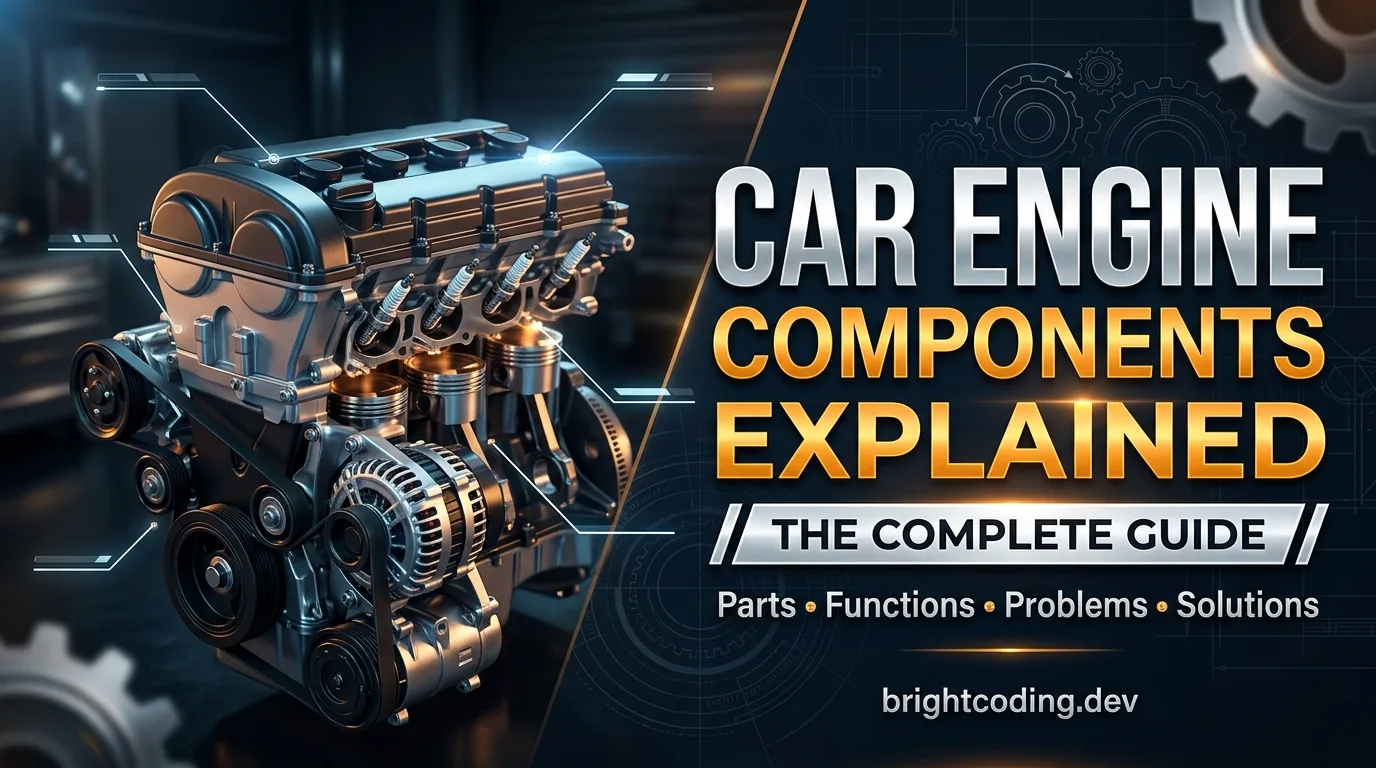
Car Engine Components Explained: The Complete Guide to Parts, Functions, Problems, and Solutions
Your car’s engine is a complex system of parts working together to turn fuel into motion. This complete guide breaks down every major car engine component from the engine block, cylinder head, and DOHC valvetrain to pistons, crankshaft, timing system, fuel delivery, ignition, exhaust, lubrication, and cooling. You’ll also learn common engine problems, warning signs you should never ignore, diagnostic steps, and maintenance tips to keep your engine running reliably
Read the article →