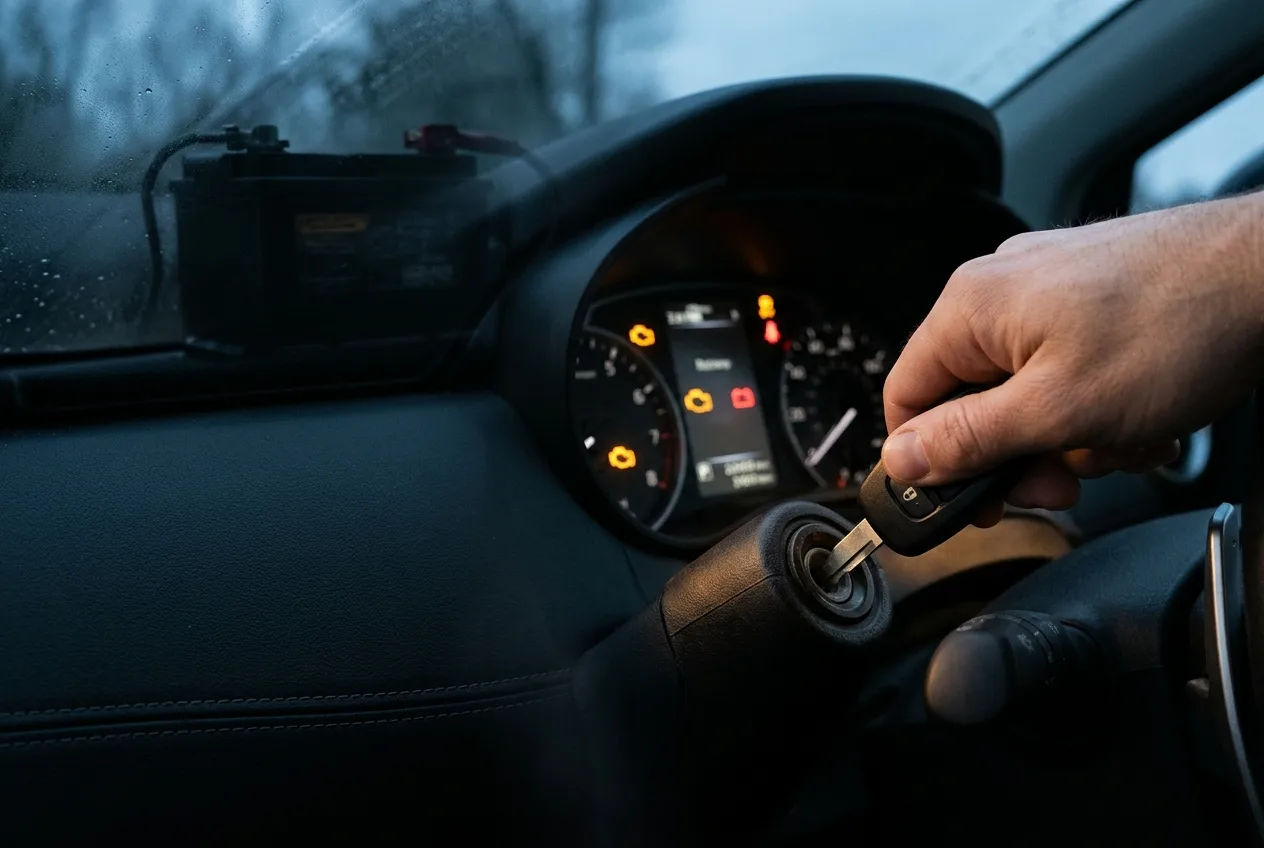
Let’s be honest: nobody thinks about their car battery until the morning it decides to betray them. You turn the key, hear that dreaded click-click-click, and suddenly your entire day is rearranged.
Here’s the frustrating truth: your battery has probably been dropping hints for weeks. We’re just not wired to notice them.
I’ve been there. The slow crank I ignored for a week. The flickering dashboard lights I blamed on “old car things.” Then one cold Tuesday morning, nothing. A $180 tow bill later, I started paying attention.
This guide is about the hidden signs, the ones that don’t scream “your battery is dying” but quietly whisper it. Catch them early, and you’ll save yourself money, time, and a whole lot of roadside frustration.
1. The “Slow Crank” You’ve Been Excusing

You know that sound your car makes when it starts? It should be quick and confident: vroom, done. But lately, it’s been… hesitating. A little lazy. Maybe it takes an extra second or two before the engine catches.
That sluggish turn-over is one of the earliest and most reliable indicators of a weakening battery. The starter motor needs a big burst of current to get things moving. When the battery’s internal cells start to degrade, that burst just isn’t there anymore.
What most people do: blame the cold weather, or tell themselves it’s “always been like that.” What you should do: pay attention. If the crank is noticeably slower than it was six months ago, your battery is asking for help.
2. Lights That Flicker (Even When the Engine Is Off)
This one is sneaky because it happens in plain sight.

Here’s a simple test you can run in your driveway tonight: turn the engine off, turn on your headlights, and watch them for about 60 seconds. If they start to flicker or dim noticeably, your battery is struggling to hold a steady voltage.
And if the lights flicker while you’re driving? That’s often a sign the alternator is struggling to keep the battery charged, which eventually kills the battery too.
The same goes for interior lights. A dome light that pulses or dims when you open the door is another quiet red flag.
3. Your Car’s “Memory” Is Suddenly Terrible

Modern cars are basically computers on wheels. And like any computer, they need a stable power supply to remember things.
If your radio keeps forgetting your preset stations, your Bluetooth won’t pair automatically anymore, or your seat memory has gone blank, that’s not “just a glitch.” It often means the battery dipped below the voltage needed to keep those memory modules alive.
Your battery powers all the electronics when the engine is off, including the computers that store your settings. When it can’t hold enough charge, those modules lose their memory. It’s a small symptom with a big underlying cause.
4. Rough Idling Right After Start-Up

You start the car, and for the first minute or so, the engine feels… bumpy. Maybe it hitches, maybe it jolts, maybe it just feels unsettled. Then it smooths out and drives fine.
This is easy to dismiss as “cold engine behavior,” but it can actually point to a weak battery. Here’s why: some sensors and switches need full power to initialize properly at start-up. If the battery is drained, those components don’t get the voltage they need, and the engine control unit has to compensate, causing that rough idle that fades once things “wake up”.
If you feel a slight pause or hitch right after ignition, don’t ignore it. It’s one of the most overlooked battery clues.
5. The “Physical Tell” Under the Hood
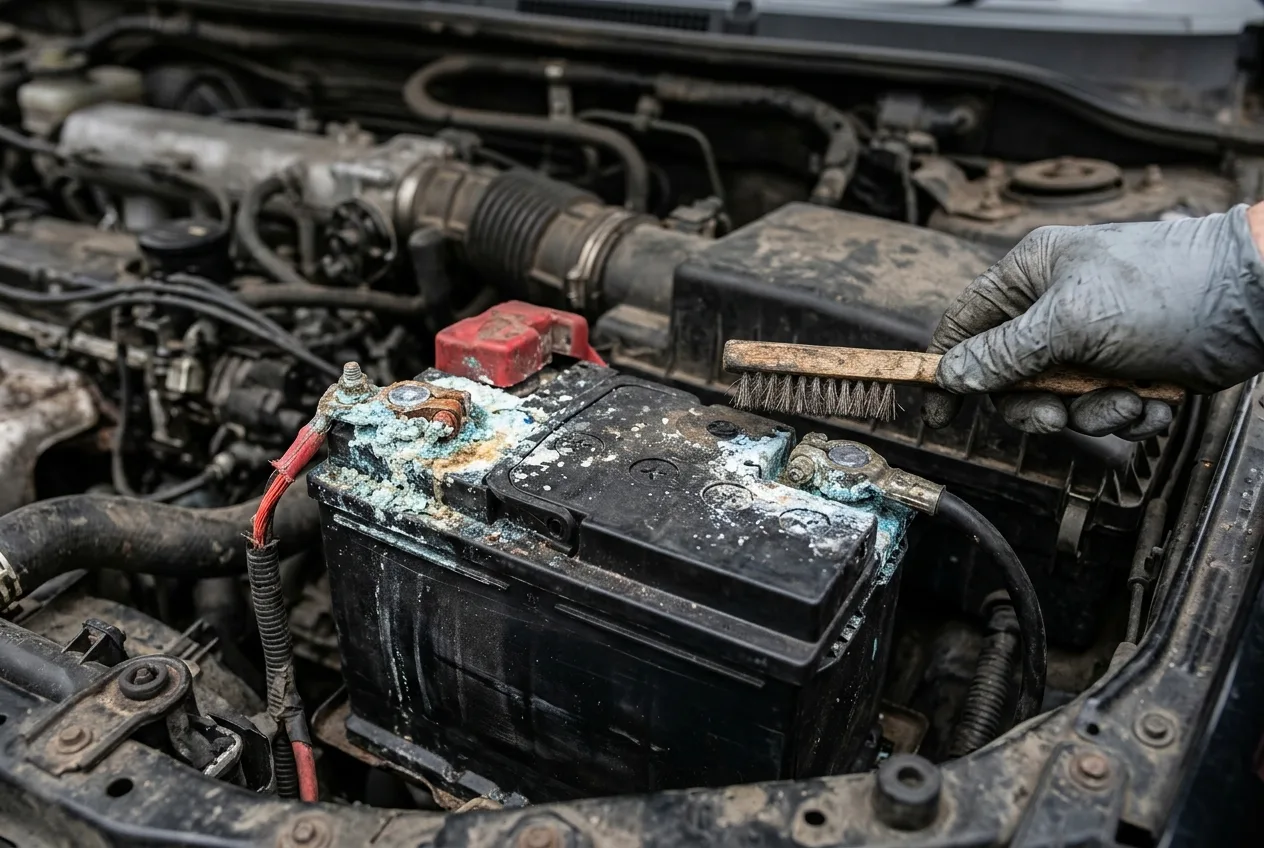
This one requires you to actually look at your battery, but it’s worth the 30 seconds.
Pop the hood and check for two things:
Corrosion: A white or bluish powdery buildup around the terminals. That crust can interrupt the connection and prevent the battery from charging or delivering power properly.
Swelling: If the battery case looks bloated or misshapen, that’s serious. Swelling is often caused by excessive heat or overcharging, and a swollen battery should be replaced, not cleaned and hoped for.
Corrosion can sometimes be cleaned and the terminals tightened. Swelling? That’s a “replace it now” situation.
The 60-Second Home Test (No Mechanic Required)
You don’t need a garage full of tools to get a rough idea of your battery’s health. A basic digital multimeter costs less than a tank of gas and can tell you a lot.
With the engine off and the battery rested for a few hours, touch the red probe to the positive terminal and the black probe to the negative. A healthy 12-volt battery should read around 12.6 volts.
| Resting Voltage | What It Usually Means |
|---|---|
| 12.6V | Fully charged: looking good |
| 12.4V | Partially discharged: keep an eye on it |
| 12.2V | Significantly discharged: time to investigate |
| Below 12.0V | Very low: likely failing or deeply drained |
One important caveat: a battery can show a decent resting voltage and still fail under the heavy load of starting the engine. So if the voltage looks okay but your car still cranks slowly, a proper load test at an auto parts store (usually free) is your next step.
How to Make Your Battery Last Longer (So You’re Not Doing This Again Next Year)
Most car batteries last three to five years, depending on climate, driving habits, and how well you treat them. You can’t control everything, but these habits genuinely help:
- Drive it properly. Short trips don’t give the alternator enough time to fully recharge the battery. Every so often, take a 20-minute highway drive.
- Turn things off before you shut down. Lights, radio, chargers: kill them before you kill the ignition. It reduces the strain on the next start.
- Keep the terminals clean. A wire brush and a little dielectric grease go a long way.
- Don’t ignore the age. Once your battery crosses the three-year mark, get it tested every six months or so, especially before winter.
The Bottom Line
Your car battery rarely dies without warning. It gives you clues: slow cranks, flickering lights, forgotten radio stations, rough idles, crusty terminals. The problem is that those clues are easy to explain away until it’s too late.
You don’t need to become a mechanic. You just need to listen to what your car is already telling you.
Catch a hidden sign early, and you’ll turn a potential roadside emergency into a routine replacement, on your schedule, not your battery’s.