12 Reasons Your Check Engine Light Might Be On
The light came on at 6:42 on a Tuesday morning, halfway through a left turn onto the highway ramp, and I did what everyone does: I stared at it like it had personally insulted my family.
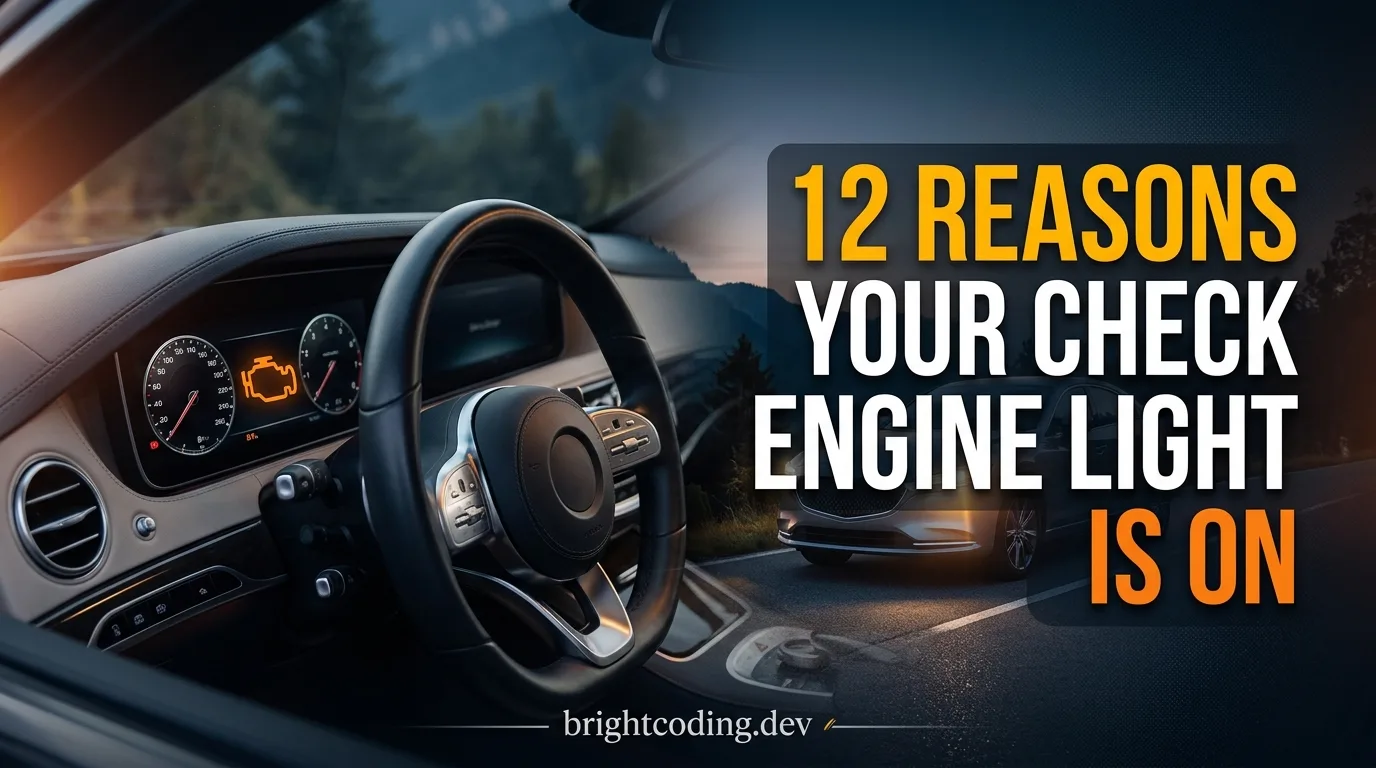
The light came on at 6:42 on a Tuesday morning, halfway through a left turn onto the highway ramp, and I did what everyone does: I stared at it like it had personally insulted my family.
It was a small amber rectangle, roughly the size of a thumbnail, and it managed to ruin my entire commute. I spent the next forty minutes cycling through the same three thoughts. Is the engine about to seize? Do I pull over right now? Can I make it to work and deal with this later?
I made it to work. I dealt with it later. The answer, as it turned out, was a loose gas cap. Forty minutes of quiet panic, two hours of internet doomscrolling, and the actual fix took eight seconds and zero dollars.
That was years ago, and I've since had that cursed light come back on maybe a dozen times across three different cars. Some of those were nothing. One of them was a misfire I ignored for too long and paid for. So here's what I've learned, told the way I wish someone had told me that Tuesday.
The backstory
I'm not a mechanic. I'm the guy who changes his own oil, rotates his own tires, and owns a cheap code reader that lives in the glovebox. That's the whole resume. But that little reader has saved me hundreds of dollars in diagnostic fees alone, and honestly, if you own a car made after 1996, you should own one too.
The check engine light has one job: tell you the computer in your car saw something it didn't like. That's it. It doesn't tell you how bad it is or what's broken. It just says "hey, something's off." Which is why the light is simultaneously the most useful and most annoying thing on your dashboard.
The journey, told in stops
Stop 1: the gas cap, and my own embarrassment
The first time, I was convinced it was catastrophic. It wasn't. A loose, cracked, or missing gas cap is one of the most common reasons that light comes on, because the system that watches your fuel vapor can't hold pressure if the cap isn't sealing.
Tighten it. Drive a few trips. If the light goes out on its own, you're done. A replacement cap costs roughly $10 to $25 depending on your car, and I keep a spare in the trunk now because I've lost one before. Yes, really.
Stop 2: the day I finally bought a code reader
The second time the light came on, I was smarter. I drove to a parts store that pulls codes for free, and the guy behind the counter handed me a printout with a code on it. I had no idea what it meant, so I typed it into the free OBD code lookup and got a plain-English explanation in about ten seconds.
That printout changed everything for me. It told me the code was related to an oxygen sensor, not the transmission, not the engine internals. Suddenly I wasn't panicking. I was just annoyed, which is a much better place to be.
If you want to go one step further than just reading the code, a live-data tool can show you what the sensors are actually doing while the engine runs. That's how you catch things like a lazy oxygen sensor that isn't technically failing yet.
Stop 3: the misfire I ignored
Here's the one that cost me. The light came on, blinked a few times, then went steady. I told myself it was probably the gas cap again and kept driving. Two weeks later, the car was shaking at idle and my fuel economy had dropped noticeably.
A blinking check engine light is a different animal than a steady one. Blinking usually means an active misfire, and driving on it can dump raw fuel into your catalytic converter, which is an expensive part to replace. If your light is blinking, stop driving and get it looked at. That's the one piece of advice from this whole article I'd tattoo on my forearm.
My misfire turned out to be a worn spark plug and a failing ignition coil. Plugs are cheap, usually $8 to $30 each depending on the type. Coils run higher, often $40 to $120 per coil, plus labor if you're not doing it yourself. I did it myself in my driveway on a Saturday, and it took about two hours because I dropped a socket into the engine bay and had to fish it out with a magnet. Twice.
Stop 4: the boring culprits nobody talks about
The more I poked around, the more I realized the check engine light is rarely dramatic. Here are the ones I've personally run into or helped friends diagnose:
- Oxygen sensor failure. Common, usually not urgent, but it hurts fuel economy. Expect around $50 to $200 for the part, plus labor.
- Mass airflow sensor. Dirty or failing. Sometimes you can clean it with a special spray for about $10 and save yourself the replacement cost.
- Catalytic converter. The expensive one. Parts can run from a few hundred to well over a thousand dollars depending on the car. Don't assume this until you've ruled out the cheaper stuff.
- EVAP system leaks. The gas cap family. Small leaks, sometimes a cracked hose, often cheap to fix.
- Spark plugs and wires. Worn plugs cause misfires. Regular replacement is cheaper than the damage they cause.
- Ignition coils. Usually paired with a misfire code.
- Vacuum leaks. A cracked intake hose can cause a rough idle and a lean code. Sometimes a $15 hose.
- Thermostat stuck open or closed. Affects engine temperature and can trigger a code.
- Battery or charging issues. A weak battery can cause weird electrical codes, especially on newer cars.
- Loose or faulty sensors. Sometimes the sensor is fine and the wiring is the problem.
- Fuel injector issues. Clogged or leaking. Sometimes a cleaning helps, sometimes you replace.
- Transmission codes. Less common but possible. These often need a shop.
That's twelve, if you're counting. And notice how many of them are cheap. The light is scary because it's vague, not because it's usually catastrophic.
Honest pros and cons
Pros of learning to diagnose this yourself:
You stop panicking every time the light comes on. You save money on diagnostic fees, sometimes $100 or more per visit. You catch small problems before they become big ones. And you learn your own car, which is a weirdly satisfying thing.
Cons:
You'll get it wrong sometimes. I have. You'll buy a part you didn't need because you guessed instead of testing. You'll spend a Saturday under the hood when a shop could have had it done by lunch. And if you're not careful, you can make a small problem worse by driving on it.
The honest answer is that some things are worth doing yourself and some aren't. Reading a code, replacing a gas cap, cleaning a sensor, swapping spark plugs: those are reasonable. Digging into a catalytic converter or a transmission: that's a shop job, and pretending otherwise is how you end up with a car on jack stands for three weeks.
What it actually cost
These are rough ranges based on what I've paid and what I've seen quoted. Your numbers will vary by car, region, and shop.
| Issue | Part cost (rough) | Labor (rough) | Notes |
|---|---|---|---|
| Loose gas cap | $0 to $25 | $0 | Free if you just tighten it |
| Code reader | $20 to $80 | $0 | One-time purchase, pays for itself |
| Oxygen sensor | $50 to $200 | $80 to $200 | DIY possible on many cars |
| Mass airflow sensor | $80 to $300 | $50 to $150 | Try cleaning first |
| Spark plugs | $8 to $30 each | $100 to $300 | DIY friendly |
| Ignition coil | $40 to $120 each | $80 to $200 | DIY friendly |
| Catalytic converter | $300 to $2,000+ | $200 to $500+ | Shop job, verify first |
| EVAP hose or valve | $15 to $100 | $50 to $150 | Often cheap |
| Thermostat | $20 to $80 | $100 to $250 | Coolant flush usually included |
If you want to sanity-check a symptom before you commit to anything, a symptom finder can point you toward likely causes without guessing.
What I would do differently
- I would buy a code reader on day one. Waiting two years to spend forty bucks was a mistake. It would have saved me at least one pointless shop visit.
- I would stop driving on a blinking light. I got lucky. The next person might not.
- I would test before I replace. I've thrown a part at a problem more than once because I was impatient. Testing first is almost always cheaper than guessing.
- I would write down the code and the date. Codes come back. Having a record helps you spot patterns instead of starting from scratch every time.
- I would learn the difference between "urgent" and "annoying." Most check engine lights are annoying. A few are urgent. Knowing which is which is the whole skill.
Quick practical tips
- Tighten your gas cap first. It's free and it's right more often than you'd think.
- Write down the exact code, not just "the light came on." The code is the whole story.
- Blinking means stop. Steady means you have a little time to figure it out.
- Don't clear the code before you read it. You'll erase the evidence.
- If the light comes back after you clear it, that's your answer: it's real.
FAQ
Can I keep driving with the check engine light on? If it's steady and the car feels normal, usually yes, but get it checked soon. If it's blinking, or the car is shaking, losing power, or overheating, stop driving and deal with it now.
Do I really need a code reader? No, but it's the cheapest tool you'll ever buy for this problem. Many parts stores will also read codes for free if you'd rather not spend the money.
Is it always expensive? No. The most common causes are cheap. The expensive ones exist, but they're the minority, and you usually can't know which you're dealing with until you read the code.
What if I clear the code and it stays off? Then whatever caused it may have been a one-time glitch, or a loose cap. Keep an eye on it. If it comes back, take it seriously.
I still hate that little amber rectangle. But I don't fear it anymore, and that's worth more than the forty bucks I spent on the reader.
If you're staring at your own dashboard right now, start with the code. Everything else is just guessing.
Ready to act on what you just read? Decode that warning light with the free OBD code lookup, run the matching car tools to check the numbers yourself, or browse more practical car articles for ideas.
Related articles

How to Know When Your Tires Need to Be Replaced
You can check your own tires in about 15 minutes with a coin, a pressure gauge and a flashlight. By the end of this guide you will know how to read tread depth, spot the damage that means "replace now," decode the numbers on your sidewall, and judge whether that slow leak is a cheap fix or a new-ti…
Read the article →
What Does It Mean When Your Car Won't Start?
You turn the key or push the button, and nothing. Or worse, that awful click-click-click. Your stomach drops because you know this is going to cost you time, money, or both.
Read the article →
Why Is My Car Shaking? 8 Common Causes Explained
Your coffee is sitting in the cupholder, and it looks like it's trying to escape. Maybe the steering wheel vibrates at highway speed. Maybe the whole cabin shudders when you brake. Either way, a shaking car is one of those problems you can feel in your teeth, and it never fixes itself.
Read the article →
10 Car Noises You Should Never Ignore
Your car talks to you constantly. Most of the time it's mumbling, and you tune it out like a radio ad. Then one day it screams, and you're staring at a repair bill that could have been a $40 part three months ago.
Read the article →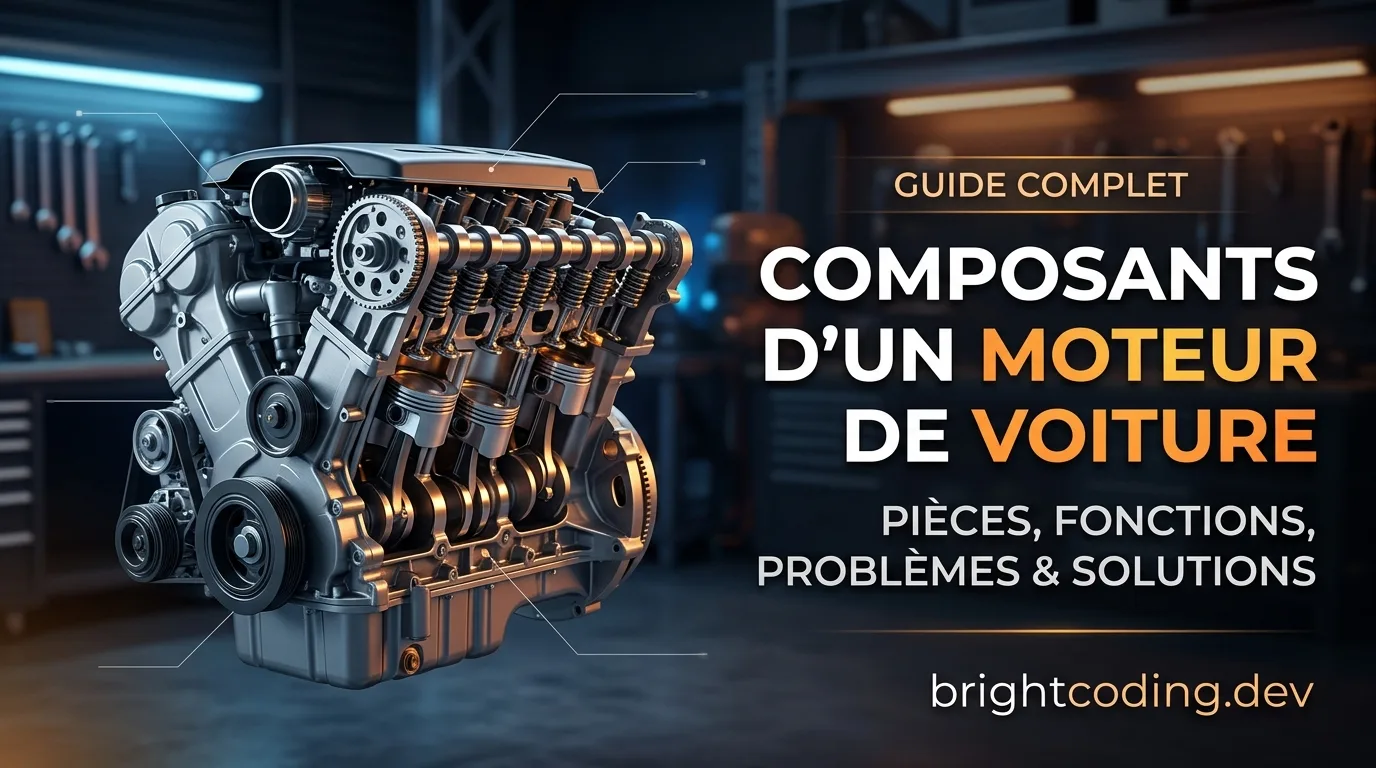
Composants d'un moteur de voiture : guide complet des pièces, fonctions, problèmes et solutions
Le moteur thermique est le cœur de la voiture. Il transforme le carburant en énergie mécanique grâce au cycle à quatre temps : admission, compression, combustion et échappement. Il est composé de nombreuses pièces essentielles comme le bloc moteur, la culasse, les pistons, le vilebrequin, les arbres à cames, les soupapes, ainsi que les systèmes d’admission, d’allumage, de lubrification et de refroidissement.
Read the article →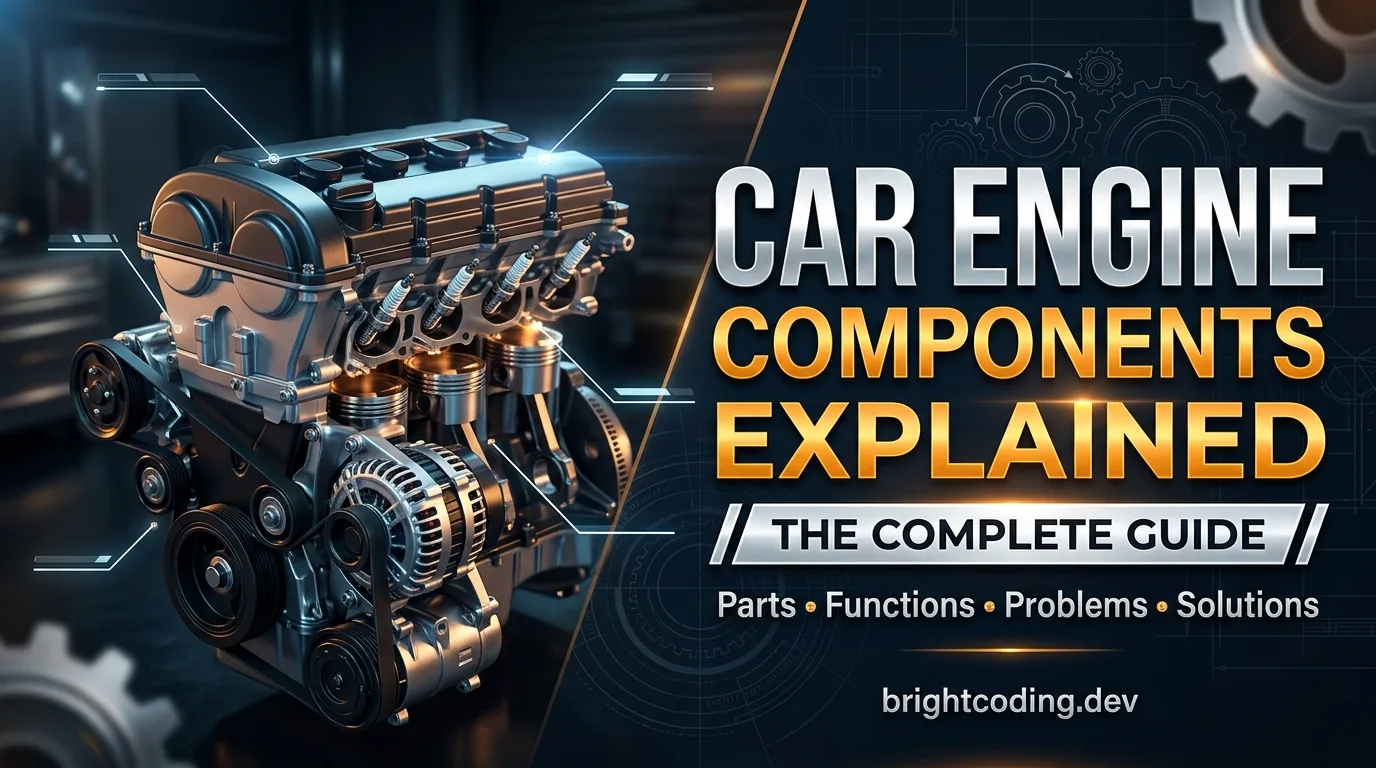
Car Engine Components Explained: The Complete Guide to Parts, Functions, Problems, and Solutions
Your car’s engine is a complex system of parts working together to turn fuel into motion. This complete guide breaks down every major car engine component from the engine block, cylinder head, and DOHC valvetrain to pistons, crankshaft, timing system, fuel delivery, ignition, exhaust, lubrication, and cooling. You’ll also learn common engine problems, warning signs you should never ignore, diagnostic steps, and maintenance tips to keep your engine running reliably
Read the article →