What to Do If Your Car Overheats While Driving
The temperature gauge is climbing past the middle. Maybe steam is curling out from under the hood, or you smell something sweet and hot. Your stomach drops, because you know this can turn a normal drive into a very expensive day.
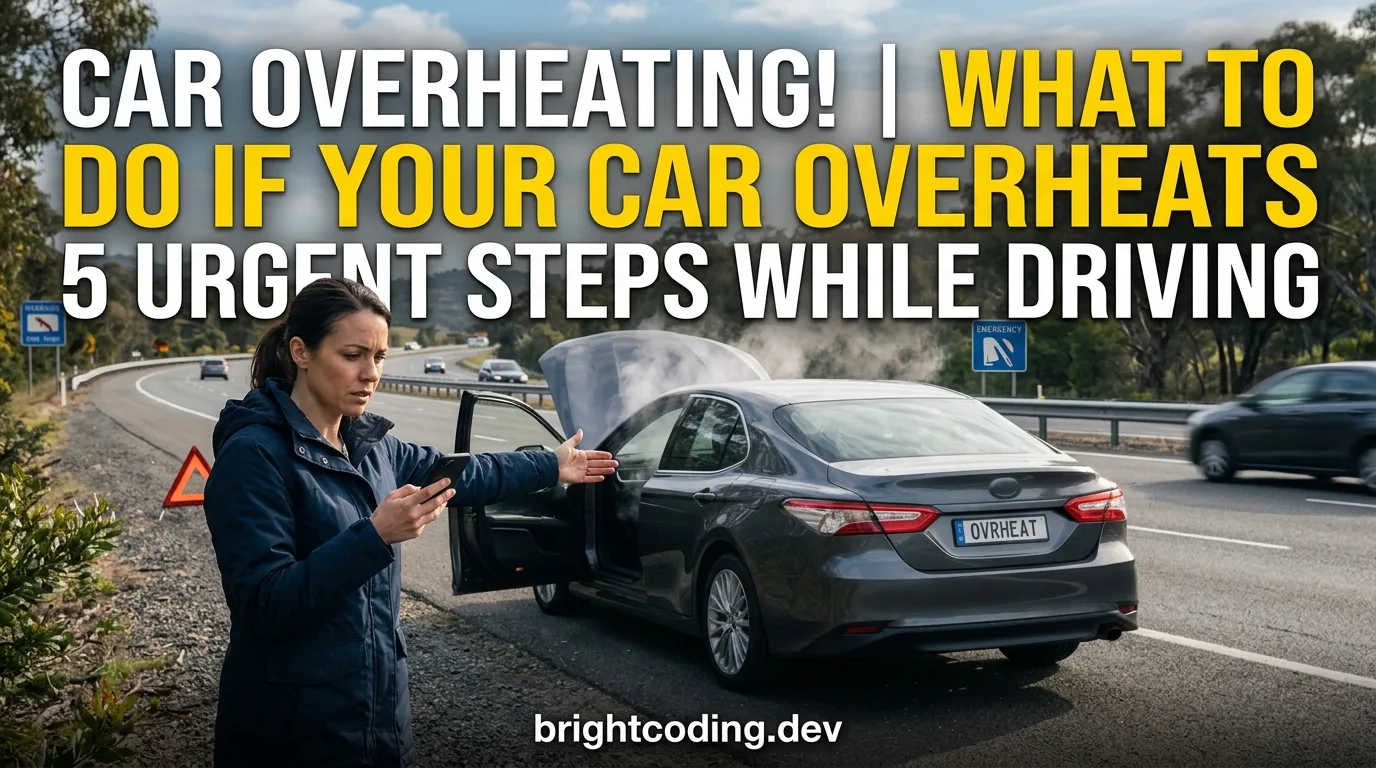
The temperature gauge is climbing past the middle. Maybe steam is curling out from under the hood, or you smell something sweet and hot. Your stomach drops, because you know this can turn a normal drive into a very expensive day.
Here is the good news: what you do in the next two minutes matters more than anything a mechanic does later. Overheating is one of the few car problems where the driver holds the outcome in their hands. Pull over at the right moment and you might spend $20 on coolant. Keep driving and you can warp a cylinder head and turn that into a four-figure repair.
This guide walks you through what is actually happening, why it happens, and exactly what to do if your car overheats while driving, step by step. No panic, no guesswork.
First, what does overheating actually feel like?
You will usually get a warning before the engine is in real danger. Watch for these signs:
- The temperature gauge climbing above its normal resting spot, often toward the red zone
- Steam or vapor rising from the hood
- A sweet, syrupy smell (that is coolant)
- The heater suddenly blowing cold air when you asked for heat
- A warning light shaped like a thermometer, or a message reading "engine temperature high"
- In bad cases, knocking, a loss of power, or the engine stalling
If you see any of these, treat it as real. The gauge is not dramatic. When it moves into the red, the metal inside your engine is getting hot enough to distort.
The mistake almost everyone makes
The single most common error is "just a little further." People push on to the next exit, the next gas station, the driveway at home. That extra mile is exactly where head gaskets fail and aluminum heads warp. The second mistake is opening the radiator cap while everything is hot. More on that below, because it can put you in a hospital.
Why does an engine overheat? The short version
Your engine burns fuel and creates enormous heat. A cooling system carries that heat away using coolant, a water pump, a thermostat, a radiator, and one or more fans. Break any link in that chain and the heat has nowhere to go.
The usual culprits:
Low coolant. A slow leak from a hose, radiator, water pump, or heater core drops the level until there is not enough liquid to carry heat. Sometimes you will spot a puddle, sometimes the leak is internal and invisible.
A stuck thermostat. The thermostat is a valve that opens when the engine warms up to let coolant flow to the radiator. If it sticks closed, coolant never reaches the radiator and the engine cooks.
A failed cooling fan. At highway speed, airflow through the radiator does most of the work. In traffic, the electric or mechanical fan has to step in. A dead fan is why cars often overheat while idling or crawling in a jam but seem fine on the open road.
A bad water pump. It circulates the coolant. When the bearing or impeller fails, flow drops or stops.
A clogged radiator or a failing pressure cap. Scale, debris, or a weak cap that cannot hold pressure all reduce the system's ability to shed heat.
If you want to understand how these parts fit together, the mechanical encyclopedia breaks down each component in plain language.
Not all overheating is the same
A car that runs hot only in stop-and-go traffic points at the fan or a marginal coolant level. A car that overheats at highway speed often points at a clogged radiator, a stuck thermostat, or a failing water pump. The pattern tells you where to look, which is handy when you talk to a shop.
Your options when the gauge climbs
You have three basic paths, and which one you pick depends on how bad it is and where you are.
Option 1: Pull over immediately and let it cool
What it is: Stop in a safe spot, shut the engine off, and wait.
How it works: With the engine off, it stops generating new heat and the coolant can slowly release what it has. Fifteen to thirty minutes of cooling can drop temperatures enough to safely check things.
Pros: Free, safe, and it protects the engine. This is the right move the moment the gauge hits the red or you see steam.
Cons: It costs you time. If you are on a tight schedule, that stings.
When it makes sense: Almost always, the instant things get serious. Never gamble here.
Option 2: Turn the heater on full blast and limp to safety
What it is: Crank the cabin heat to maximum and drive gently to the nearest safe stopping point.
How it works: The heater core is basically a small radiator inside your dashboard. Running the heat pulls some of that engine heat into the cabin and away from the engine.
Pros: Buys you a little time and distance to reach an exit or parking lot instead of the shoulder of a busy highway.
Cons: It is uncomfortable, it only helps a little, and it does not fix anything. It is a bridge, not a solution. Do not use this to push another 30 miles.
When it makes sense: When stopping right where you are is more dangerous than moving a short distance, like on a narrow bridge or a fast highway with no shoulder.
Option 3: Add coolant or water once it is cool, then diagnose
What it is: After the engine cools, top up the coolant and figure out why it was low.
How it works: Restoring the fluid level lets the system carry heat again, at least temporarily.
Pros: Can get you home or to a shop if the problem was simply a low level.
Cons: If you have an active leak, you will lose the new coolant too. Plain water works in a pinch but lowers the boiling point and freeze protection, so it is a temporary fix, not a permanent one.
When it makes sense: When the level was clearly low and you can see where it went. If you cannot find the leak, assume it is still there.
So which one should you actually do?
If the gauge is in the red or you see steam, the answer is Option 1: stop now, safely. Full stop. The "keep going" instinct is the one that wrecks engines.
If you are only running mildly warm and you are in a risky spot, use Option 2 to get somewhere safe, then switch to Option 1. Once things are cool, Option 3 helps you understand what happened. For a busy commuter with no time and no tools, the honest move is often to top up if needed and drive straight to a shop rather than guess. For a DIY owner who wants to find the root cause, this is a great moment to read the stored codes with a free OBD code lookup, since cooling problems often leave a trail.
There is no single "best" answer here, because a $15 hose clamp and a blown head gasket call for very different responses. Match the fix to what you find.
Step-by-step: what to do right now
Here is the sequence. Follow it in order.
- Kill the A/C and turn the heat to full hot. This dumps cabin heat and takes load off the engine.
- Signal and pull over safely. Get as far from traffic as you can. Turn on your hazard lights.
- Shut the engine off. Do not idle to "let it cool down." Off is cooler.
- Do not open the radiator cap or coolant reservoir cap while hot. The system is pressurized. Scalding coolant can erupt and burn you badly. Wait until everything is cool to the touch, which can take 30 minutes or more.
- Pop the hood for airflow, but keep your hands and face clear of steam. Let it breathe.
- Look for obvious leaks once it is cool. Check hoses, the radiator, and under the car for puddles. Note the color: coolant is often green, pink, orange, or blue depending on the type.
- Check the coolant level at the reservoir, and only open the radiator cap when the engine is fully cold.
- Top up if low. Coolant is ideal. Distilled water is an acceptable emergency substitute. Never use straight tap water long term.
- Restart and watch the gauge closely. If it climbs again quickly, shut it off. Something is wrong that topping up did not fix.
- If it stays normal, drive gently to a shop or home. No hard acceleration, no long climbs if you can avoid them.
If the temperature keeps rising, or you see white smoke from the tailpipe, or the oil looks milky, stop driving and call for a tow. Those can signal a blown head gasket, and every mile makes it worse.
A safety note on tools and diagnosis
If you plan to dig in yourself, basic hand tools and a pressure tester are your friends. Our free car tools page covers what is genuinely useful versus what is a waste of money. And if you are chasing a specific warning light or a rough-running symptom alongside the heat, the car symptom finder can point you toward likely causes before you start guessing.
Common mistakes to avoid
- Driving "just to the next exit" when the gauge is red. Fix: pull over immediately. The engine will not forgive you.
- Opening the radiator cap while hot. Fix: wait until it is completely cool. Always.
- Adding cold coolant to a screaming-hot engine. Fix: let it cool first. Thermal shock can crack metal.
- Using only water and forgetting about it. Fix: top up with the correct coolant as soon as you can.
- Assuming it is "just low" without finding the leak. Fix: pressure-test the system or have a shop do it, because the leak is still there.
- Ignoring a fan that never kicks on. Fix: watch the fan while the engine idles with the A/C on. If it never spins, that is your problem.
- Clearing the codes before you read them. Fix: read them first with an OBD scanner, then decide. Stored codes are free information.
When it is worth bringing in a pro
If your car overheats more than once, if you cannot find a leak, or if you see milky oil or white exhaust smoke, hand it to a shop. Cooling system diagnosis, especially head gasket territory, is where a $100 diagnosis saves you thousands. For a deeper walkthrough of the repair process, the step-by-step car guides are a solid companion.
Expert takeaway
The most important lesson is simple: the driver decides how expensive an overheating event becomes. The engine can survive a lot if you stop the moment it tells you something is wrong. It almost never survives the extra mile.
FAQ
Can I drive my car if it is overheating but not in the red?
You can limp a short distance if you must, with the heat on full and the gauge watched constantly. But "not in the red" still means "getting hotter." Treat it as a warning, not permission.
What should I do if my car overheats on the highway?
Turn off the A/C, crank the heat, and get to the shoulder or the next exit as safely as you can. Shut the engine off and wait for it to cool before touching anything. Do not open the cap while it is hot. If you are in a dangerous spot, move to somewhere safer first, then stop.
Is it safe to add water instead of coolant?
In an emergency, yes. Distilled water will get you moving. But water alone boils at a lower temperature than coolant and offers no freeze protection, so drain and refill with the correct coolant as soon as you can. Check your owner's manual for the right type.
How do I know if I blew a head gasket?
Warning signs include white smoke from the exhaust, milky or frothy oil, coolant that disappears with no visible leak, and an engine that overheats again almost immediately after topping up. Only a proper test confirms it, so have a shop check if you suspect it.
Will my car be fine after I let it cool down and top it up?
Maybe. If the cause was a low level and you fixed it, you might be fine. But overheating usually has a reason, and that reason is still there. Find the leak or the failing part, or it will happen again at the worst possible time.
Ready to act on what you just read? Decode that warning light with the free OBD code lookup, run the matching car tools to check the numbers yourself, or browse more practical car articles for ideas.
Related articles

How to Reverse Park Perfectly Every Time
Reverse parking is the one driving skill almost nobody practises after they pass their test. That is why it feels hard. The good news: it is a geometry problem, not a talent contest. Once you know where to put your car and when to turn the wheel, the manoeuvre repeats itself the same way every time.
Read the article →
10 Things You Should Check Before a Long Road Trip
The smell hit me somewhere west of the last exit with a gas station. Sweet, a little sharp, like syrup left on a hot stove. I had the windows down at 70 mph and still caught it, which meant it was coming from me, not the truck in front.
Read the article →
15 Common Driving Mistakes That Increase Accident Risk
Most crashes do not start with a dramatic event. They start with a decision you have made a hundred times without thinking: rolling a stop sign, tailgating the guy who cut you off, fiddling with the radio on the highway. Nothing happens 999 times, so the habit feels safe. That is exactly what makes…
Read the article →
How to Protect Your Engine During Short Trips
Short trips are brutal on an engine, and most people never realize it. If your daily routine is a five-minute drive to the store, the school run, or a commute under ten minutes, your oil never gets hot enough to do its job properly. After reading this, you'll know exactly how to reduce that damage:…
Read the article →
10 Parking Mistakes That Can Damage Your Car
You park a dozen times a day. That's exactly why it goes wrong. Nobody thinks about parking until a mirror is hanging by a wire or a wheel bearing starts humming at highway speed.
Read the article →
How to Drive Safely on Snow and Ice
Snow driving is mostly a set of small decisions made before you ever touch the gas. Get those right and the road stops being scary.
Read the article →