Is Warming Up Your Car Before Driving Still Necessary?
Your neighbor's truck has been idling in the driveway for ten minutes. Your dad swore by it. Your owner's manual says something vague about "moderate driving." So who's right, and does letting your car sit there actually protect the engine or just burn gas for nothing?

Your neighbor's truck has been idling in the driveway for ten minutes. Your dad swore by it. Your owner's manual says something vague about "moderate driving." So who's right, and does letting your car sit there actually protect the engine or just burn gas for nothing?
Here's the practical answer: for almost every modern car, idling to warm up is unnecessary and, in cold weather, genuinely wasteful. But the full truth is more interesting than a simple yes or no, because the right answer depends on your engine, your climate, and what you mean by "warm up."
The Problem: You're Standing in the Cold, Wondering If You Have To
It's 6:40 a.m. In January. You start the car, scrape the windshield, and face a choice: drive off now or sit and let it idle while the heater slowly stops blowing arctic air at your face.
Most people idle because they were taught it protects the engine. Some idle purely for comfort. A few idle because their car runs rough and they're scared to drive it cold.
The mistake isn't idling itself. It's idling for the wrong reason, for too long, and assuming it does something it doesn't. Ten minutes of idling doesn't warm your engine efficiently, doesn't reduce wear the way people think, and on a modern fuel-injected car it mostly wastes fuel and dilutes your oil.
Why Idling Doesn't Do What You Think It Does
Old cars with carburetors needed to warm up. A carb couldn't adjust its fuel mixture on the fly, so a cold engine would stumble, stall, and run rich until it reached temperature. Idling was a crutch to keep it running.
Your car almost certainly has electronic fuel injection. The engine computer reads sensors and adjusts the mixture instantly, so a cold engine runs fine from the first second. The ECU even runs a fast-idle strategy on its own.
The real reason people think warm-up matters comes down to oil. Cold oil is thick, and thick oil flows slowly. But here's the part that surprises most people: an engine warms up far faster under light load than at idle. Driving gently heats the oil and coolant in a couple of minutes. Idling does it in ten or fifteen, all while burning fuel and pushing unburnt gasoline past the piston rings into your oil.
There's one more thing worth knowing. Your oil pump doesn't need minutes to pressurize the system. It takes seconds. By the time you've buckled your seatbelt and checked the mirrors, oil is already circulating where it needs to be.
What Actually Counts as "Warming Up"
This is where the debate usually collapses into confusion, because "warming up" means two different things.
Warming up the engine for mechanical protection? Unnecessary. Warming up the cabin for your comfort and defroster? Totally valid. Warming up a turbocharged engine after hard driving? That's a real thing, just not the way people imagine.
So the useful question isn't "should I warm up my car?" It's "how long should I idle, and how should I drive once I pull out?"
The Solutions: Your Realistic Options
Option 1: Start and Drive Immediately, Gently
This is what most owner's manuals actually recommend. Start the engine, wait the few seconds it takes to settle, and drive off at moderate RPM. Keep the engine under roughly 2,500 to 3,000 RPM and avoid hard acceleration until the temperature gauge starts moving.
Why it works: Light load warms the engine quickly and efficiently. The faster the engine reaches operating temperature, the faster condensation and fuel burn off your oil.
When it makes sense: Almost always, in any climate, for any modern fuel-injected car.
Downside: Your cabin stays cold for the first few minutes. That's a comfort problem, not a mechanical one.
Option 2: Idle for 30 to 60 Seconds, Then Drive Gently
A short idle lets the oil pressure stabilize and gives you a moment to clear frost and fog. On a brutally cold morning, 30 to 60 seconds is a reasonable compromise, especially if you want the defroster working before you move.
When it makes sense: Sub-zero mornings, icy windows, or when you genuinely can't see out.
Downside: Beyond a minute, you're mostly paying for gasoline and adding wear, not preventing it.
Option 3: Use a Block Heater or Remote Starter
A block heater warms the coolant and oil before you ever turn the key. It's the one genuine "warming up" method that actually helps a cold engine, because it reduces cold-start wear and gets your heater blowing warm air faster.
When it makes sense: If you regularly see temperatures well below freezing, a block heater can be worth the modest cost of the unit and the electricity. A remote starter, by contrast, mostly buys comfort, not engine protection.
Downside: Block heaters need to be plugged in, and remote starters encourage long idles if you're not careful.
Option 4: Fix the Reason Your Car Runs Badly Cold
If your car stumbles, surges, or nearly stalls for the first few minutes, idling is a workaround, not a fix. Cold-running problems usually point to a sensor or a fuel issue, like a coolant temperature sensor, a mass airflow sensor, or a thermostat stuck open. A cheap scan tool and our free OBD code lookup can point you in the right direction before you start guessing. If you want to watch what the engine is actually doing in real time, the OBD live-data tool shows coolant temperature and fuel trims as they change.
The Best Choice Depends on Your Situation
There's no single rule that fits everyone, and anyone who tells you otherwise is oversimplifying.
If you drive a modern fuel-injected car in a mild climate, start it, wait 15 to 30 seconds, and drive gently. Done.
If you live somewhere that regularly drops below freezing, a 30 to 60 second idle plus a block heater on the worst nights is a sensible, low-cost routine.
If you drive a turbocharged car, the more important habit is cooling down after hard driving, not warming up before. Let the engine idle for 30 to 60 seconds after a spirited run or a long climb so the turbo can shed heat. That's the turbo habit that actually matters.
If your car runs rough cold, stop treating idling as a fix and diagnose it. That's a mechanical issue wearing a comfort-myth costume.
Step-by-Step Action Plan
- Start the engine and let it settle for 15 to 30 seconds while you fasten your belt, adjust mirrors, and check the gauges.
- Drive off gently. Keep RPM low and acceleration mild until the temperature gauge starts climbing.
- Clear your windows properly before moving. Scraping frost and running the defroster is a safety step, not a warm-up step, so don't confuse the two.
- In severe cold, idle no more than a minute if you need the defroster working before you drive.
- Consider a block heater if you see regular deep freezes. It's the one upgrade that genuinely reduces cold-start wear.
- If the car runs rough cold, scan for codes and check live data rather than idling longer. Our step-by-step car guides walk through common cold-start fixes safely.
- After hard driving in a turbo car, idle briefly before shutting down to protect the turbo.
Safety notes: never leave a running car unattended in a closed garage, since carbon monoxide is deadly. Never idle in an enclosed space. If you're working under the hood while the engine is warm, let it cool first, and never disconnect the battery with the engine running.
Common Mistakes to Avoid
Idling for 10 or 15 minutes "to be safe." It doesn't protect the engine. Drive gently instead.
Believing you must idle before driving in summer. Warm ambient air means there's nothing to warm up. Just go.
Treating a rough cold idle as normal. It usually signals a sensor or fuel problem. Get it scanned.
Revving a cold engine to warm it faster. Cold oil hasn't fully circulated, and high RPM on a cold engine increases wear. Don't do it.
Skipping the turbo cool-down. Hard driving followed by an instant shutdown is the real turbo killer, not a cold start.
Assuming a remote starter warms the engine. It warms the cabin. Those are different goals.
Expert Takeaway
The single most important lesson: modern engines warm up best under gentle load, not at idle. Start it, give it a few seconds, and drive softly. The one warm-up that still earns its keep is a block heater in genuine cold, and the one cool-down that still earns its keep is on a turbo after hard driving. Everything else is habit, not engineering.
If you want to understand what's really happening under your hood when you turn the key, the mechanical encyclopedia breaks down the parts involved in plain language.
FAQ
Do I still need to warm up my car before driving?
No, not for engine protection in a modern fuel-injected car. Start it, wait 15 to 30 seconds, and drive gently. Idling longer wastes fuel and dilutes your oil with unburnt gasoline.
How long should I let my car warm up in winter?
About 30 to 60 seconds at most, mainly so your defroster can clear the windshield. Any longer is comfort, not protection. A block heater is a better answer if you face regular deep freezes.
Does warming up your car damage the engine?
Extended idling doesn't directly damage it, but it doesn't help either. It burns fuel, adds wear, and lets fuel dilute your oil. The bigger risk is treating a rough cold idle as normal when it's actually a sensor problem.
Is it bad to drive immediately after starting?
No. Driving gently is the fastest, most efficient way to warm the engine. Just avoid hard acceleration and high RPM until the temperature gauge starts moving.
Do turbo cars need to warm up?
They benefit more from a proper cool-down than a warm-up. After hard driving, idle for 30 to 60 seconds so the turbo can shed heat before you shut the engine off.
Ready to act on what you just read? Decode that warning light with the free OBD code lookup, run the matching car tools to check the numbers yourself, or browse more practical car articles for ideas.
Related articles
How to Reverse Park Perfectly Every Time
Reverse parking is the one driving skill almost nobody practises after they pass their test. That is why it feels hard. The good news: it is a geometry problem, not a talent contest. Once you know where to put your car and when to turn the wheel, the manoeuvre repeats itself the same way every time.
Read the article →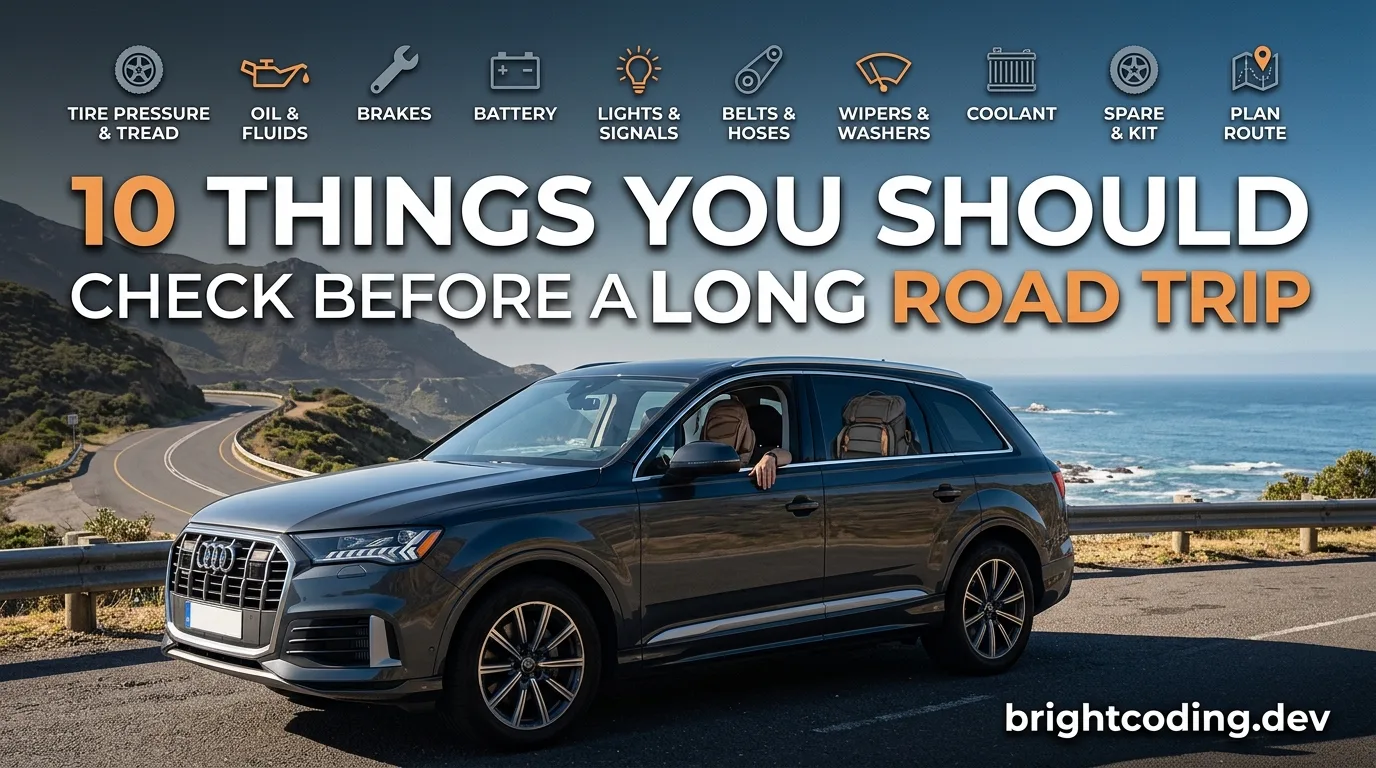
10 Things You Should Check Before a Long Road Trip
The smell hit me somewhere west of the last exit with a gas station. Sweet, a little sharp, like syrup left on a hot stove. I had the windows down at 70 mph and still caught it, which meant it was coming from me, not the truck in front.
Read the article →
15 Common Driving Mistakes That Increase Accident Risk
Most crashes do not start with a dramatic event. They start with a decision you have made a hundred times without thinking: rolling a stop sign, tailgating the guy who cut you off, fiddling with the radio on the highway. Nothing happens 999 times, so the habit feels safe. That is exactly what makes…
Read the article →
How to Protect Your Engine During Short Trips
Short trips are brutal on an engine, and most people never realize it. If your daily routine is a five-minute drive to the store, the school run, or a commute under ten minutes, your oil never gets hot enough to do its job properly. After reading this, you'll know exactly how to reduce that damage:…
Read the article →
10 Parking Mistakes That Can Damage Your Car
You park a dozen times a day. That's exactly why it goes wrong. Nobody thinks about parking until a mirror is hanging by a wire or a wheel bearing starts humming at highway speed.
Read the article →
How to Drive Safely on Snow and Ice
Snow driving is mostly a set of small decisions made before you ever touch the gas. Get those right and the road stops being scary.
Read the article →