What Thieves Look for Before Breaking Into a Car
Most car thefts are not spontaneous. A thief walks or drives past your car first, checks a short list of easy signals, and decides in seconds whether it is worth the risk. This article breaks down what that list looks like, why certain cars get picked over others, and the practical steps that actua…
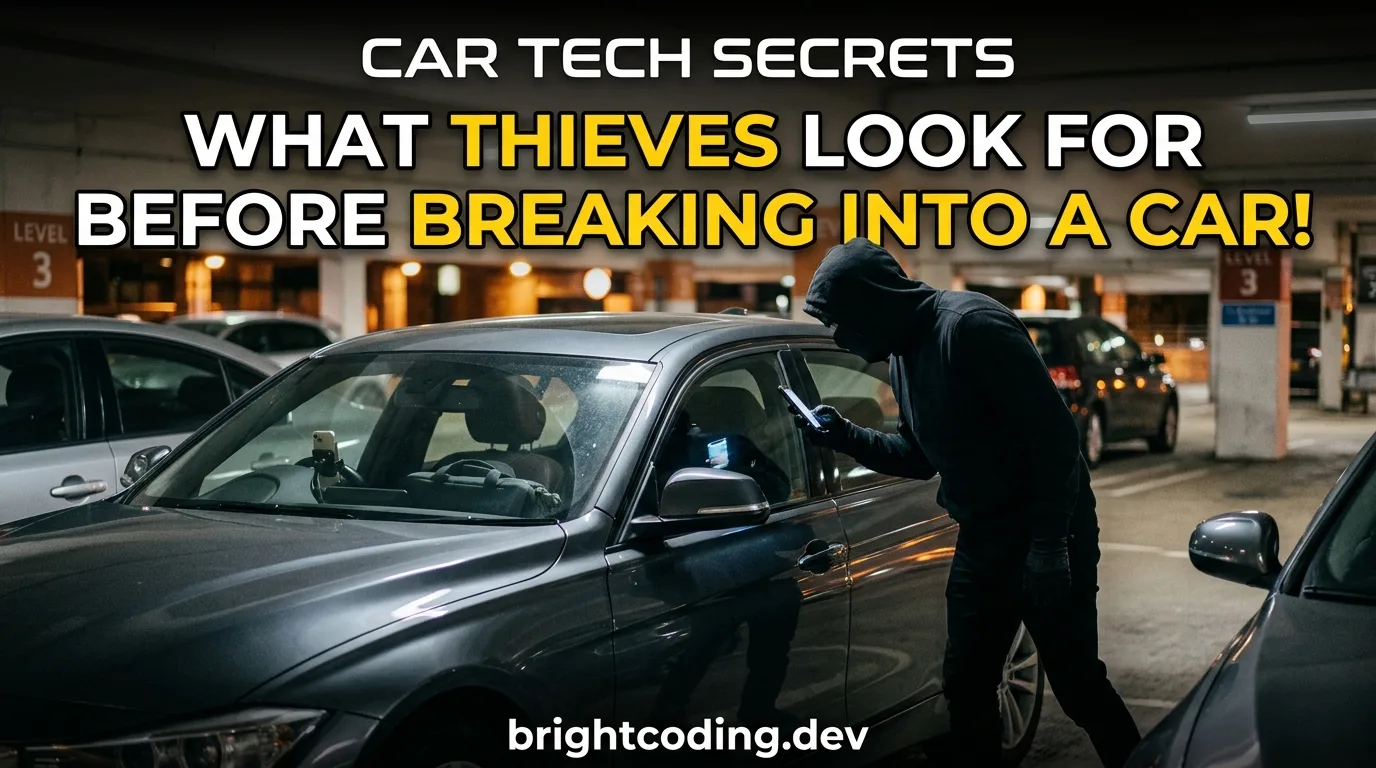
Most car thefts are not spontaneous. A thief walks or drives past your car first, checks a short list of easy signals, and decides in seconds whether it is worth the risk. This article breaks down what that list looks like, why certain cars get picked over others, and the practical steps that actually change a thief's mind.
Quick answers
- What is the first thing a thief notices? Easy access and easy payoff: an unlocked door, a visible bag on the seat, or a window left partway down. Opportunity beats planning almost every time.
- What makes a car a target? Popular models with strong parts demand, older cars with simple ignition systems, and anything that looks abandoned or poorly maintained.
- Do thieves target cars with alarms? Less often. A visible alarm LED, a steering wheel lock, or stickers showing a tracking system all push a thief toward an easier car nearby.
- Does parking matter? A lot. Cars parked in dark, low-traffic spots, especially near exits and on the street overnight, carry more risk than a lit, overlooked spot.
- What do thieves steal from inside a car? Whatever they can see: phones, laptops, bags, tools, loose change in the console, and sometimes the stereo or airbags on older models.
What do thieves actually look for first?
They look for a car that will not fight back. That usually means one of two things: an open door, or a window with something tempting behind it. A surprising number of break-ins happen because someone left the door unlocked or a window cracked on a hot day.
After that, they scan for signs the owner is careless. A phone mount left on the dash, a charging cable hanging out of the USB port, a jacket thrown over the back seat. None of those are valuable on their own, but they suggest there might be something better in the glovebox or under the seat.
The third thing they check is the surroundings. Is the car tucked behind a hedge? Is it at the far end of a parking lot near the exit? Is there a clear path to walk away without being seen? A car that is easy to reach and easy to leave is more attractive than a car that is hard to reach but worth more.
What makes a car a target?
Two factors drive this: demand for parts and ease of entry.
Some models are stolen more often because their parts sell well. If a thief can move a catalytic converter, a set of wheels, or a headlight assembly quickly, the car's make and model matter more than its condition. This is why popular commuter cars and certain pickup trucks tend to appear on theft lists more than you would expect.
Older cars are also easier targets because their ignition systems are simpler. On many pre-immobilizer vehicles, a thief can start the car with basic tools in under a minute. Newer cars with push-button start and factory immobilizers are harder to steal outright, but that does not stop break-ins for valuables.
Then there is the visual signal. A car covered in dust, sitting on flat tires, or with a cracked window tells a thief nobody is watching it. A car that looks maintained and recently cleaned tells the opposite, and that alone can be enough to send a thief to the next vehicle.
Do thieves avoid cars with alarms or visible deterrents?
Often, yes. Not because alarms are unbeatable, but because thieves prefer the path of least resistance. If two cars are parked side by side and one has a blinking LED on the dash, a steering wheel lock, or a window sticker for a tracking service, the other car becomes the easier job.
The catch is that these deterrents work best when they are visible before the thief gets close. A hidden kill switch will not stop a break-in, though it may stop the car from being driven away. A flashing LED costs a few dollars and does more psychological work than most people realize.
If you want to understand how your car's factory security system actually behaves, the mechanical encyclopedia on this site has plain-language explanations of how immobilizers and alarm modules interact, which helps when you are deciding what to add.
Does where you park really matter?
It matters more than most people think. Thieves weigh risk against reward, and parking changes the risk side of that equation.
Street parking overnight in a low-traffic area is riskier than a driveway that sits under a porch light. A parking garage level with no cameras or foot traffic is riskier than a level near the entrance. The pattern is consistent: light, visibility, and the chance of being seen push thieves away.
A few things worth doing without overthinking it:
- Park under a light whenever you have the choice, even if it means a slightly longer walk.
- Avoid spots next to large vans or trucks that block the view of your car.
- If you park the same way every night, vary it occasionally. Predictable patterns are easier to exploit.
- Back into spots in busy lots. It looks deliberate and makes the car harder to approach unnoticed.
What do thieves steal from inside a car?
Whatever they can see through the glass. That is the whole rule. If it is visible, it is a target.
The usual list includes phones, laptops, tablets, gym bags, purses, backpacks, tools, loose change, sunglasses, and aftermarket stereos. On older vehicles, airbags and catalytic converters are common targets because they are valuable and relatively easy to remove.
The mistake people make is assuming a bag with nothing valuable in it is safe. A thief cannot tell what is inside a backpack from ten feet away, and the cost of a smashed window is far higher than whatever was in the bag. If you have to leave something in the car, put it in the trunk before you arrive at your destination, not after. Thieves watch people move things into the trunk.
Do thieves use technology to target cars?
Some do. Key fob relay attacks, where a device amplifies your key's signal from inside your house to unlock and start the car, are a real concern for push-button start vehicles. This is not a theoretical worry, though it also is not something every thief has the gear for.
A few practical defenses:
- Keep your key fobs in a metal tin or a signal-blocking pouch at home, especially near the front door.
- Turn off keyless entry if your car lets you, or check your owner's manual for how to disable the fob's always-on signal.
- Do not leave a spare key inside the car, even in a "hidden" spot. It is one of the first places a thief checks.
On newer cars, the body control module logs events, and some security faults will set a diagnostic trouble code. If you suspect something odd with your car's electronics after a break-in attempt, running the free OBD code lookup at /obd can tell you whether a module flagged anything worth investigating.
Related questions
Is it worth installing a tracking device?
For many owners, yes, especially if you drive a model that shows up often on theft reports. A tracker does not prevent a break-in, but it dramatically improves the odds of getting the car back. The trade-off is a subscription cost, usually somewhere in the range of a few dollars to around twenty dollars a month depending on the service. Check what your insurance offers first, because some policies include or discount tracking.
Can I check my car's security system myself?
To a point. You can verify that the alarm arms and disarms correctly, that the LED blinks, and that door and hood switches trigger the alarm when opened. If something behaves strangely, the step-by-step car guides at /guides walk through common electrical and security checks in plain language. For anything involving wiring or the immobilizer, a shop is the safer call.
What should I do right after a break-in?
Do not touch anything inside if you can avoid it. Call the police and file a report, then contact your insurance. Photograph the damage before you clean up. If the car will not start afterward, note the symptoms and use the car symptom finder at /symptom to narrow down whether it is a battery, ignition, or module issue before you pay for a tow you might not need.
Bottom line
Thieves are looking for the easiest car on the block, not the most valuable one. Lock your doors, keep everything out of sight, park where you can be seen, and make your car look like more trouble than the one next to it. None of that is foolproof, but it changes the math in your favor, and that is usually enough.
Ready to act on what you just read? Decode that warning light with the free OBD code lookup, run the matching car tools to check the numbers yourself, or browse more practical car articles for ideas.
Related articles

25 Amazing Car Features Hidden in Plain Sight That Will Surprise You
Most cars carry a stack of clever features the owner never touches. The manual is 400 pages, nobody reads it, and the salesperson only had twenty minutes. This guide walks you through 25 of those features, one at a time, with what to do, why it matters and a tip that saves you the trial and error.
Read the article →
Gasoline Engine Systems: From Carburetor to Fuel Injection
Your car either has a carburetor or fuel injection, and the difference explains a lot about how it starts, idles, and drinks gas. Maybe you just bought an old truck with a carb under the hood and you are not sure what you are looking at. Or your modern car is running rough and someone told you it i…
Read the article →
Understanding Gasoline Engine Combustion and Air-Fuel Ratio
Your check engine light came on, the car feels gutless, and someone told you it's "running lean." Or maybe you're just curious why your fuel economy dropped two miles per gallon this month. Either way, you've landed on the right question: how does gasoline actually burn inside your engine, and what…
Read the article →
Gasoline Engine: Ignition, Fuel System and Air-Fuel Mixture
Your car cranks fine but won't catch. Or it starts, then stumbles and shakes at idle. Or the check engine light came on and the scan tool says something about a lean condition. Whatever brought you here, you're probably wondering the same thing: is this an ignition problem, a fuel problem, or an ai…
Read the article →
Gasoline Engine: Fundamentals and Operation
You do not need to be an engineer to understand what is happening under your hood. After reading this, you will know the four-stroke cycle well enough to explain it to a friend, understand why your engine needs spark, fuel, air, and compression to run, and be able to diagnose a rough idle or a no-s…
Read the article →
How to Choose Automotive Tools: Sizes, Types, Uses & Buying Tips
You can walk into any parts store, look at three shelves of chrome, and still have no idea what you actually need. That is normal. Most tool advice either assumes you already own a shop or sells you a 300-piece kit you will use twice.
Read the article →